
PPP Rules Out Blanket Support for Government Bills as Dar Meets Bilawal to Steady the Coalition

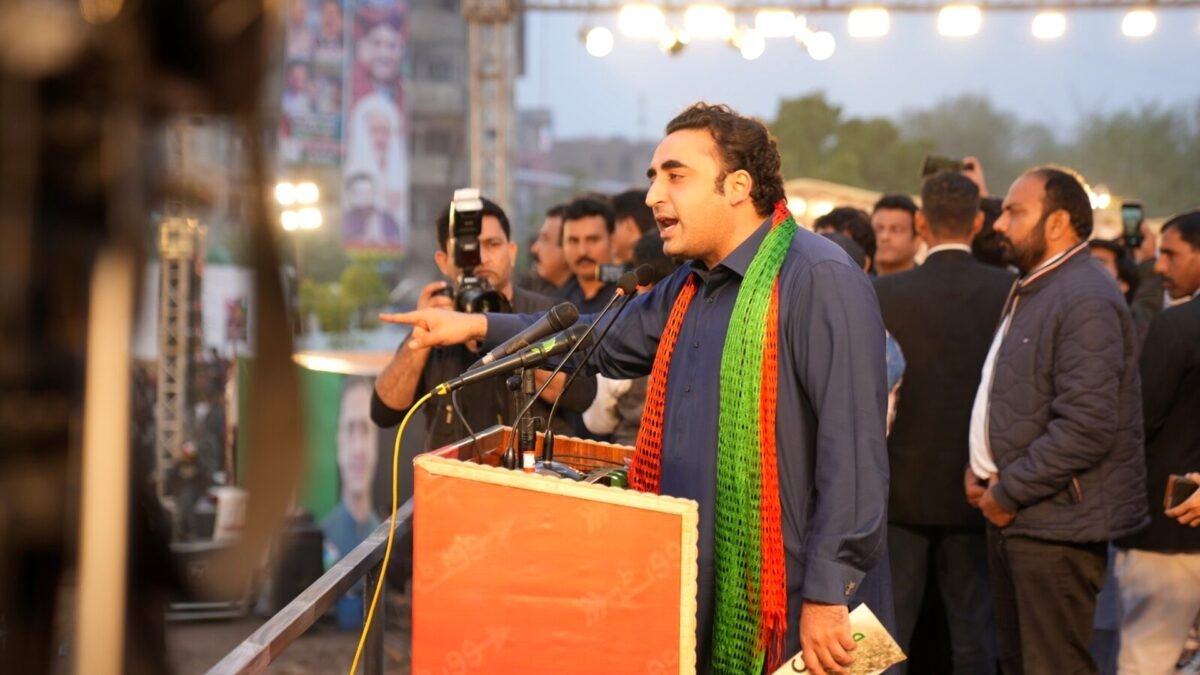
The Pakistan Peoples Party has told the government it will not give blanket support to its legislative programme, and will instead judge every bill on its merits, after a senior government delegation called on PPP Chairman Bilawal Bhutto-Zardari in Islamabad on Saturday 28 November.
The message, delivered face to face to Deputy Prime Minister Ishaq Dar, leaves the ruling coalition intact but puts the government on notice: nothing in the coming parliamentary session can be taken for granted. A PPP leader, speaking to Dawn on condition of anonymity after the meeting, put it bluntly: “No blanket agreement. We never had that. We will see bill by bill.” The same leader said there was no threat to the ruling coalition.
That combination — reassurance on survival, refusal on automatic support — is the clearest statement yet of how the PPP intends to handle the rest of this parliament. The party will stay in the coalition, but it will charge for its votes one bill at a time.
A delegation at Zardari House
The meeting took place at Zardari House in Islamabad, according to a handout issued by the PPP. Mr Dar led the government side, accompanied by National Assembly Speaker Sardar Ayaz Sadiq, Parliamentary Affairs Minister Tariq Fazal Chaudhry and Minister of State for Finance Bilal Azhar Kayani. Senator Sherry Rehman and senior PPP lawmaker Syed Naveed Qamar sat with Mr Bhutto-Zardari.
According to the PPP handout, the two sides discussed the forthcoming parliamentary session and potential legislative agendas. Sources in the PPP told Dawn that the government wanted to reassure the party leadership and build consensus before taking up key legislative business, and that PPP leaders told the delegation the coalition would remain intact despite recent skirmishes over the issue of new provinces.
Mr Chaudhry, speaking afterwards, described the discussions as cordial and focused on parliamentary cooperation. He said Mr Bhutto-Zardari had assured the delegation that the PPP would continue to play its full role as an ally in parliament, had expressed good wishes for Prime Minister Shehbaz Sharif, and wanted the government to complete its constitutional term.
The immediate business is the summoning of parliament. According to people briefed on the talks who spoke to The Express Tribune, Mr Dar proposed convening the National Assembly before the Senate so that pending legislation can be cleared, a sequence Mr Bhutto-Zardari endorsed. A date for the session is expected within a day or two. The parliamentary legislation committee is expected to move to expedite bills pending from various ministries, and Mr Chaudhry said none of those bills related to a proposed 28th Constitutional Amendment.
The Fazl residence row
The meeting was not only about the legislative calendar. Mr Bhutto-Zardari used it to raise the reported raid on the Islamabad residence of Jamiat Ulema-e-Islam-Fazl chief Maulana Fazlur Rehman, and asked Mr Dar to look into the matter personally, including the treatment of the Maulana’s family members, according to The News.
The Capital Development Authority sealed the house used as Mr Rehman’s Islamabad residence on Saturday 28 November, a day after cancelling the property title of its registered owner. The JUI-F says the party chief’s son was arrested during the action.
Soon after the meeting with the government delegation, Mr Bhutto-Zardari telephoned Mr Rehman to express solidarity. According to a PPP spokesman, the JUI-F chief briefed him on the alleged raid and the harassment of his family, including women, and the PPP chairman condemned the reported actions. The News reported that Mr Rehman told Mr Bhutto-Zardari his son had been arrested and women had been forced out of the house and harassed.
The episode matters because it shows the PPP chairman publicly taking up the cause of an opposition leader against actions by the state machinery, on the same day he was assuring the government of his party’s support in parliament. It is a careful straddle: loyal ally in the House, independent voice outside it.
The referendum dispute that will not go away
Behind Saturday’s meeting lies the argument that has strained the coalition for a month: the proposal to create new provinces, and Interior Minister Mohsin Naqvi’s suggestion that the question be put to a referendum. The PPP opposes the plan, and has been emphatic that Sindh, the province it governs, must not be divided.
Mr Chaudhry said the referendum and the creation of new provinces were not discussed at the Zardari House meeting, and that no date has been finalised or announced by the government for any referendum. Explaining the government’s thinking, he said a referendum was being considered as a means of seeking public opinion on new provinces, and was not a substitute for the constitutional procedure for establishing them. He added that if public opinion was unfavourable, the issue would be discarded, while a positive response would pave the way for further steps.
Whether the subject was formally on the agenda or not, the referendum question was present in the room. The PPP’s bill-by-bill position is, in part, a way of keeping leverage over exactly this kind of proposal: a government that needs PPP votes for a two-thirds majority cannot push through a constitutional change the PPP opposes, and the PPP has now said so in the plainest possible terms.
Meanwhile, the shuttle diplomacy continued elsewhere. President Asif Ali Zardari met Mr Naqvi at his residence in Lahore on Saturday. An interior ministry spokesperson said the two discussed the overall situation in the country, particularly measures to maintain law and order, though no further details were shared. A day earlier, the president had met PML-Q chief Chaudhry Shujaat Hussain in Lahore, with Mr Naqvi present.
Charters, continuity and the view from Rahim Yar Khan
Earlier on Saturday, Mr Bhutto-Zardari addressed the foundation-laying ceremony of a Sindh Institute of Urology and Transplantation hospital in Rahim Yar Khan, where he called for continuity in development projects regardless of which party is in power. He acknowledged that the PPP and the PML-N had both discontinued each other’s projects in the past, and said leaders on both sides had learned from those mistakes.
He thanked Prime Minister Shehbaz Sharif for allowing federal funds to reach the Sindh government for the project, and Punjab Chief Minister Maryam Nawaz for not creating hurdles in its execution. Recalling the 2006 Charter of Democracy, signed by Benazir Bhutto and Nawaz Sharif, he said the two parties had agreed to respect each other’s electoral mandate, and urged the government to take decisions through mutual consultation and by constitutional and democratic means.
The Charter of Democracy came up again at Zardari House. Mr Chaudhry said Mr Bhutto-Zardari had referred to the charter during the discussion, and that Mr Dar had responded by raising the idea of a Charter of Economy between the political parties. The exchange captures the two sides’ different preoccupations: the PPP wants the rules of democratic competition honoured; the government wants a shared economic programme that can carry it through a difficult parliament.
A coalition built on arithmetic
The present arrangement dates from the general election of February 2024, after which the PML-N formed a government that depends on PPP support in parliament. The PPP backs the government from outside the federal cabinet, while holding the presidency through Asif Ali Zardari. It is a partnership of necessity rather than affection, and it has been managed, for much of its life, through personal contacts between a small number of leaders rather than through institutions.
Even the formal channels have been irregular. The coordination committees of the two parties met in September after a gap of nearly 18 months, according to The Express Tribune, which indicates that the machinery for resolving disputes has not always been in working order. That makes Saturday’s meeting more significant, not less: when the committees do not meet, the leaders have to.
The friction has been building in public. On 19 November, Mr Bhutto-Zardari hinted that the PPP could move to the opposition benches as the row over new provinces deepened. A day before Saturday’s meeting, he called the PTI a “political reality” and offered reserved seats as a first step towards a democratic reset, a gesture towards the opposition that the government cannot have welcomed. And on Sunday 29 November, the MQM-P postponed its Karachi rally after permission was refused, in the same new-provinces row.
The calendar adds pressure of its own. Officials have described the consultations as an effort to cool tensions and coordinate the legislative agenda ahead of a decision on 11 December on whether to extend Governor’s Rule in Khyber Pakhtunkhwa, where the elected government has been suspended. That decision will itself need careful parliamentary handling, and it is the kind of vote on which the government cannot afford to discover its partner’s position at the last minute.
Analysis: Why It Matters
Saturday’s meeting settled the question that has hung over Pakistani politics for a month — whether the coalition would survive — and replaced it with a harder one: what can this government actually pass?
The answer, on the PPP’s terms, is: whatever it can negotiate, bill by bill. That is a workable arrangement, but it is not a comfortable one for a government. A coalition partner that votes case by case is a partner that must be consulted, persuaded and, when necessary, paid in policy concessions on every significant measure. Legislation will move more slowly. Each bill becomes its own negotiation, with its own price, and the government will have to decide, time and again, whether the concession is worth the vote. For ordinary legislation, where a simple majority suffices, that is manageable. For constitutional change, where a two-thirds majority in both houses is required, it gives the PPP something close to a veto — which is precisely why the bill-by-bill declaration matters most in the context of the new-provinces debate.
There is a second, quieter message in Saturday’s events. By raising the Fazl residence raid directly with Mr Dar and then telephoning Mr Rehman, Mr Bhutto-Zardari has positioned the PPP as a bridge between the government and the opposition, rather than simply as the government’s junior partner. That is a familiar PPP posture, and a deliberate one. The party that can talk to both sides is the party that cannot be ignored by either, and in a parliament where no single party commands a majority, that position is worth more than any cabinet seat. But it also carries a risk: if the PPP is seen to be hedging, the PML-N may start to question whether the party is an ally at all, and the opposition may wonder whether the solidarity is real or performative.
The referendum idea deserves scrutiny on its own terms. Mr Chaudhry’s explanation — that a referendum would merely seek public opinion and would not replace the constitutional procedure — is, on its face, reassuring. But it leaves the central question unanswered: why float a referendum at all on a matter the Constitution assigns to parliament and the provincial assemblies? A referendum on new provinces would be a political exercise, not a legal one, and its real purpose would be to create a popular mandate that parliament would then find hard to resist. The PPP understands that perfectly well, which is why its opposition has been so firm, and why Mr Bhutto-Zardari’s insistence on decisions “through mutual consultation and by constitutional and democratic means” is aimed directly at the proposal. Until the government says plainly whether the referendum idea is alive or dead, the suspicion will remain that it is being kept in reserve.
There is also a lesson in the way the day unfolded. Three sets of meetings — Mr Dar’s delegation at Zardari House, President Zardari’s talks with Mr Naqvi and Chaudhry Shujaat in Lahore, and Mr Bhutto-Zardari’s call to Mr Rehman — all took place within hours of each other. Pakistani coalition management, for better or worse, is conducted face to face, through personal relationships, and the tone of a single meeting can set the terms of an entire parliamentary session. Saturday’s tone was cordial, by all accounts. But cordiality is not agreement, and the PPP made sure the distinction was recorded in public before the delegation had even left the building.
The wider stakes are easy to state. Pakistan’s government needs a functioning parliament to pass a budget, to legislate on the economy, and to manage the constitutional questions — Khyber Pakhtunkhwa, the provinces debate, the relationship between the centre and the federating units — that are now arriving together. A coalition that can only move bill by bill can still move, but it moves at the pace of its slowest negotiation, and every negotiation is a chance for something to go wrong. The alternative, a coalition that fractures, would be worse: it would leave the country with a minority government unable to legislate at all, and with the opposition — the PTI, the JUI-F, and the street — setting the agenda instead.
What to watch next
The first test comes within days, when the dates of the National Assembly and Senate sessions are announced. The order of business — which bills come first, and whether any of them touch the constitutional questions — will show whether Saturday’s cordiality has produced anything concrete. The PPP’s reaction to the first bill put before it will be the truest measure of what “bill by bill” means in practice.
The second test is 11 December, when the decision on extending Governor’s Rule in Khyber Pakhtunkhwa falls due. That decision will reveal whether the two parties can still agree on the hard questions of federal power, or whether the bill-by-bill approach extends to the constitutional order itself.
The third is the referendum. Mr Chaudhry says no date has been finalised. If the idea quietly disappears, the coalition will have survived its sharpest disagreement. If it returns — in a speech, a cabinet decision, or a parliamentary motion — the PPP will have to decide whether its red line on Sindh is a negotiating position or a breaking point. Saturday’s meeting suggests the party has already decided, and has told the government so.
For now, the coalition holds. But it holds on new terms, set out in public, in seven words: no blanket agreement, bill by bill. The government heard them at Zardari House on Saturday. The whole country heard them by Sunday morning.
Sources
The News — Bilawal asks DPM Dar to look into ‘raid’ at JUI-F chief’s residence
KhabarWire — PML-N courts PPP before parliament session (reporting The Express Tribune and Geo News)
Particle — Senior leaders hold rapid consultations as PPP affirms role in coalition

About the Author — Abdul Mannan
Related Articles
MQM-P Postpones November 29 Karachi Rally After Permission Refused in New-Provinces Row
MQM-P has called off its November 29 rally in Karachi after the city administration refused permission, citing security…
Bilawal Calls PTI a ‘Political Reality’ and Offers Reserved Seats as First Step Towards a Democratic Reset
Bilawal Bhutto Zardari has said Pakistan needs a democratic reset through parliament, with the PTI recognised as a…
Pakistan, Saudi Arabia and Türkiye Vow to Step Up Support for Saudi Security in Joint Makkah Pact Declaration
Pakistan, Saudi Arabia and Türkiye have issued a joint declaration after talks in Islamabad, condemning Houthi attacks on…