
MQM-P Postpones November 29 Karachi Rally After Permission Refused in New-Provinces Row

The Muttahida Qaumi Movement-Pakistan (MQM-P) has postponed its rally and public gathering planned for Sunday, 29 November, in Karachi, after the city administration refused permission for the event, citing security concerns. The decision, announced by senior party leader Dr Farooq Sattar at a press conference in Bahadurabad on Saturday, removes the immediate risk of rival political gatherings colliding on the same road on the same day, but it leaves the bitter dispute over new provinces in Pakistan exactly where it was: unresolved, and growing sharper by the week.
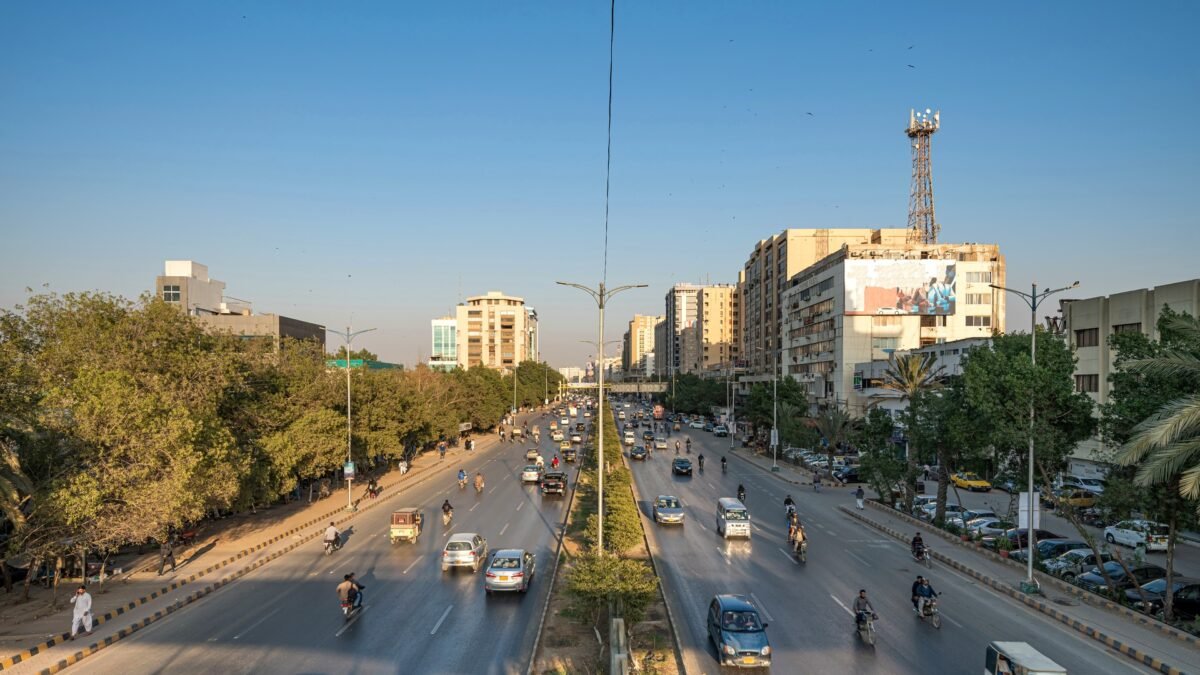
According to the Express Tribune, Sattar said the party had been forced to call off the rally by the Karachi commissioner, who cited security threats. The rally was to have marched along Shahrah-e-Faisal, Karachi’s main artery, with a public gathering at Bagh-e-Jinnah. Sattar said a new date would be announced in December, and the party would continue its campaign for smaller administrative units in other ways, including visits to Larkana and other parts of Sindh.
The postponement ends, for now, a stand-off that had been building for days. The Sindh government had already decided not to allow the rally, and the Sindh Home Department had refused permission on the grounds of the law and order situation. A rival gathering made the calculation harder: the Sindh Taraqqi Pasand Party (STP) and other nationalist groups had applied earlier to hold their own rally on Shahrah-e-Faisal on the same day, 29 November. The two gatherings would have taken opposite positions on the same question, the division of Sindh into smaller administrative units, and officials warned that two simultaneous rallies on the same route could lead to tensions or clashes.
Federal Health Minister Mustafa Kamal, who appeared alongside Sattar at the press conference, said the party had decided to postpone because human life and public safety were more important than holding a political gathering. “By cancelling the rally, we have demonstrated national and political maturity,” Kamal said, according to the Express Tribune. He added that the party would be willing to change the rally’s date even ten times if there was a risk to the life or property of a single individual.
Why permission was refused
The official reason given for refusing permission was security. The Karachi commissioner refused the rally after reviewing police reports, and the decision was communicated to the party through an official letter. According to reports citing the Sindh Home Department, the department had concluded that the law and order situation did not allow a large gathering on that day, and it proposed that MQM-P change both the day and the route.
Kamal said reports from law enforcement agencies had indicated a possible threat of terrorism, and that there was also a risk of confrontation with groups planning to raise slogans for Sindhudesh, the separatist idea of a separate Sindhi homeland. He said the party did not want to risk an untoward incident or provide an opportunity for anyone to blame it for a confrontation.
Sattar, however, rejected the official explanation. He described the Sindh government’s decision as “extremely discriminatory and unjust”, and said: “If there were security concerns, rallies of all political parties should have been banned on Nov 29.” He alleged that the Pakistan Peoples Party (PPP), which governs Sindh, was deliberately patronising nationalist groups to create a confrontation on 29 November, and that the Sindh government had revealed its true intentions through the decision. “They are not merely creating obstacles to the establishment of administrative units; instead, attempts are being made to evade the establishment of administrative units,” he said.
Sattar also alleged that while MQM-P had urged the provincial administration to prove its neutrality by barring all political and nationalist rallies on 29 November, the PPP-led government had restricted only MQM-P while allowing the STP chairman Dr Qadir Magsi’s demonstration to proceed. The Sindh Home Department, for its part, has maintained that no party is being stopped from holding rallies, and that the party which announced its programme first has the first right to hold its event. According to the department, the STP had submitted its application before MQM-P announced its own rally.
The Sindh government’s position was welcomed by its own spokespeople. Sukkur Mayor and Sindh government spokesperson Barrister Arsalan Islam Shaikh welcomed MQM-P’s decision to postpone the rally, according to The AZB.
A week of warnings before the decision
The postponement did not come out of nowhere. On Monday, 23 November, a PPP delegation met MQM-P leaders at the Sindh Assembly in Karachi, in the chamber of the Leader of the Opposition, to ask the party to reconsider its rally dates. The PPP delegation was led by senior party leader Nisar Ahmed Khuhro and included provincial ministers Syed Nasir Hussain Shah and Ziaul Hassan Lanjar, besides Senator Waqar Mehdi. The MQM-P delegation was led by Sattar and included the Leader of the Opposition in the Sindh Assembly, Ali Khurshidi, and other members of the provincial assembly.
According to The News, the PPP delegation requested MQM-P to reconsider the dates of its planned rallies on 29 November and 6 December, warning that simultaneous political gatherings could trigger clashes. Khuhro pointed out that the Sindhi nationalist leader Dr Qadir Magsi had announced his 29 November rally nearly a month earlier, on 11 October, and that the two rallies planned for the same day took opposite positions on the proposed creation of new provinces. The PPP also asked MQM-P to change the date of its 6 December rally, as the day is observed as Sindh Culture Day.
Speaking to the media after the meeting, Khuhro said the PPP did not oppose political rallies and was not asking any party to give up its democratic right to protest. Sattar said his party had announced 29 November well in advance, that the government delegation had approached the party late, and that withdrawing or changing the programme at such a late stage would be an extremely difficult decision. He said the party would consult its central leadership before giving a final response.
The Sindh government then set up a four-member committee to speak with both sides and ask them to cancel their 29 November plans. Party chairman Khalid Maqbool Siddiqui had already said last week that the 29 November rally would be put off over security concerns, according to Sial News. By Saturday, the decision was final.
The new-provinces row behind the rally
The rally was never only about a date on a calendar. It was part of MQM-P’s campaign for new administrative units in Pakistan, including the division of Sindh into smaller units. The party argues that Pakistan’s growing population, poor governance and concentration of political power make greater administrative devolution necessary, and it has proposed new administrative units carved out of Sindh for Karachi, Larkana and Nawabshah.
The current debate began on 30 July, when Interior Minister Mohsin Naqvi called for additional administrative units or provinces as part of a broader overhaul of the country’s governance system. Naqvi argued that meaningful structural reforms were needed to improve governance, deliver justice and create opportunities for young people. The proposal quickly became politically sensitive in Sindh, where the PPP strongly opposed any move to divide the province. Sindh Chief Minister Murad Ali Shah rejected Naqvi’s assessment that the governance system had collapsed, called the proposal outdated, and warned that no bloodshed would be allowed over the creation of new provinces.
The debate widened in August, when MQM-P backed the creation of new provinces and called for a national dialogue with political parties. Defence Minister Khawaja Asif has since backed the idea of up to 12 provinces in Pakistan, while the PPP and nationalist parties in Sindh stand firmly against it. PPP Chairman Bilawal Bhutto-Zardari has rejected the idea of a referendum on new provinces and warned that forcing a division of Sindh would lead to bloodshed on Karachi’s streets.
Sattar said the party had suggested seeking public opinion on the issue through a referendum under Article 48(6) of the Constitution, and questioned why there should be any objection to allowing people to express their views. He alleged that the PPP was threatening to create “Sindhudesh” only to avert the administrative division of the province, and referred to a resolution submitted by MQM-P against the establishment of Sindhudesh on 4 September, saying the party opposed any move aimed at undermining the country’s integrity.
He also referred to a rally held on 22 November at which, he alleged, anti-Pakistan slogans had been raised, and said the provincial government had taken no notice even after Chief Minister Murad Ali Shah pledged punitive action.
What the leaders said about Karachi’s problems
Much of Saturday’s press conference was devoted to MQM-P’s wider case against the PPP’s long rule in Sindh, and the leaders used the occasion to restate grievances that go well beyond the rally itself.
Taking a jab at the PPP leadership, Sattar said: “Even after 20 years of provincial autonomy, Pakistan has not emerged stronger. During the past two decades, the country’s economic growth rate hovered between 2 and 3.5 per cent compared to 6-8% in years before that.” He argued that the experience of the past two decades demonstrated that neither a strong centre nor powerful provinces alone could guarantee effective governance, and that local governments had been rendered ineffective through the withdrawal of powers and resources, leaving elected representatives at the grassroots unable to address public grievances without financial and administrative authority.
Sattar alleged that urban areas of Sindh had faced persistent discrimination during PPP-led rule, and accused “a handful of influential families” of creating obstacles to administrative reforms to protect their political and financial interests. “The days of a handful of families monopolising Sindh are numbered. In 2027, a new dawn of participation for Pakistan’s 260 million people will emerge,” he said.
Kamal accused the PPP leadership of using the quota system to discriminate against Muhajirs, and alleged that the Sindh government was not providing the community with its rightful share of jobs and opportunities. He claimed that fake domicile certificates were being used to occupy positions reserved for the urban quota. He also criticised the provincial government’s handling of public safety, referring to street crime, fatal road accidents and the alleged failure to arrest suspects, and referred to the Gul Plaza tragedy, saying people had continued to call for help while their families watched helplessly, alleging that the authorities had failed to respond adequately.
The minister devoted a significant part of his address to the water shortage in Karachi and the condition of public services across Sindh. He said potable water was unavailable in around 80 per cent of Karachi and that residents had become dependent on private water tankers. He alleged that the “tanker mafia” was backed by influential individuals, including government officials, ministers and police personnel. “If water can be supplied through tankers, why can it not be supplied through pipelines?” he asked, arguing that vested financial interests were preventing improvements in the city’s water distribution system. “Even Bilawal House relies on water tankers,” he added.
Kamal claimed that a Sindh government official had misappropriated Rs8 billion in World Bank funds and said the international lender had subsequently suspended funding, and referred to the Supreme Court’s reported observations on the matter. Turning to rural areas of the province, he said residents were deprived of clean drinking water and basic necessities, including adequate food, clothing and footwear. “Sindh government bagged Rs22,000 billion over 17 years but never helped to improve the living conditions of ordinary citizens,” he said.
He questioned Karachi’s census figures, alleging that 7.3 million residents were initially excluded from the 2023 count before the population was revised to 20.3 million following a 45-day extension, and probed the government’s reluctance to ensure an accurate population count. He said Karachi and Hyderabad account for around 45 per cent of Sindh’s population but lack adequate political representation. “The existing system prevents these urban centres from electing their own chief minister, regardless of their combined population or electoral strength,” he said.
Responding to Bilawal’s remarks about bloodshed in urban areas of Sindh over the creation of new provinces, Kamal said he took the indirect threat “seriously”, since the party was guilty of former incidents of violence. He claimed Bilawal had specifically mentioned unrest in cities where Urdu-speaking people were in the majority. Asserting that it was not the first time the PPP had issued threats against the ethnic minority in the province, Kamal cited killings, sexual violence and property damage during the protests that followed the assassination of former prime minister Benazir Bhutto. “Properties belonging to Urdu-speaking residents were selectively targeted in Karachi and other parts of Sindh,” he said, and called for verification of the figures relating to the violence through historical records.
The wider political backdrop
The rally postponement comes in a week of unusual political turbulence in Pakistan, in which several separate disputes have begun to overlap. On the same weekend, the Capital Development Authority sealed the Islamabad residence of Jamiat Ulema-e-Islam (F) chief Maulana Fazlur Rehman, and JUI-F said his son had been arrested, after the authority cancelled a property transfer citing forged documents and an invalid national identity card. Bilawal Bhutto-Zardari took up the raid on Fazlur Rehman’s home with Deputy Prime Minister and Foreign Minister Ishaq Dar in a meeting in Islamabad, according to Geo News and the Express Tribune, and the two sides also discussed the upcoming session of parliament and potential legislative agendas. President Asif Ali Zardari and Interior Minister Mohsin Naqvi have also discussed Fazlur Rehman and the creation of new provinces, according to ARY News.
Bilawal has meanwhile said the PPP and the PML-N have learned from “past mistakes” and urged continuity in development projects, and has said that unity can prevent the government from being toppled. At the same time, the opposition has been organising: on 25 November, opposition leader Mahmood Khan Achakzai proposed a national government to end Pakistan’s political deadlock at an opposition conference in Lahore, and on 28 November Achakzai said a view within the PTI favoured reaching a compromise by some means to secure the release of the jailed former prime minister Imran Khan, a view he said he opposed.
The federal government has also been under pressure over the imposition of emergency and governor’s rule in Khyber Pakhtunkhwa, the PTI-ruled province, a move that has drawn sharp criticism from the opposition and raised questions about the balance between the centre and the provinces. The new-provinces debate, the Karachi rally row, the action against Fazlur Rehman and the Khyber Pakhtunkhwa emergency are separate issues, but they share a common thread: each one is, at its core, an argument about who holds power in Pakistan, and at which level of government that power should sit.
Analysis: a confrontation avoided, a question deferred
The most important thing about Saturday’s announcement is what did not happen. Karachi did not see two rival rallies marching towards each other on the same road on the same day. That matters, because the city has a long and painful history of political violence, and because the two gatherings planned for 29 November were not merely two parties exercising their democratic rights at the same time. They were two movements taking directly opposite positions on the most emotionally charged question in Sindh politics: whether the province should be divided.
MQM-P deserves credit for stepping back, and Kamal’s language on Saturday recognised the stakes plainly. When a federal minister says his party will change a rally’s date ten times rather than risk the life of a single individual, that is the right standard, and it is worth recording. The Sindh government, too, can fairly say that it acted to prevent a clash, and that it offered MQM-P another day and another route. The four-member committee it set up, and the PPP delegation’s meeting with MQM-P on 23 November, show that at least some effort was made to resolve the clash through conversation rather than confrontation.
But the way the decision was reached leaves serious questions unanswered, and those questions will not go away simply because the rally has been moved to December. Sattar’s central complaint, that the restrictions were applied selectively, is the one that matters most. If the state’s reason for refusing permission was genuinely about security, then the same reason should have applied to every gathering planned for the same road on the same day. The Sindh Home Department’s explanation, that the party which applied first has the first right, is a plausible administrative rule, but it does not fully answer the charge. When a government decides which political gatherings may proceed and which may not, it is exercising one of the most sensitive powers a state holds, and it must be seen to exercise it even-handedly. The perception of partiality can be almost as damaging as partiality itself, particularly in a city where communities already believe the state treats them unequally.
That perception is the deeper problem. MQM-P’s case for new administrative units is not, on its face, an unreasonable one. Pakistan is a country of some 260 million people governed through four provinces, one of which, Punjab, contains more than half the population. The argument that smaller units would bring government closer to citizens, improve service delivery and reduce the concentration of power is a serious argument, and it is made in many countries. It is also an argument that has been made before in Pakistan, and it has always run into the same obstacle: in Sindh, the demand for new provinces is heard by many Sindhis not as administrative reform but as an attempt to break up their province and diminish their political weight. That is why Bilawal’s warning about bloodshed, however irresponsibly phrased, resonated, and why the PPP treats the issue as existential rather than technical.
Both sides, in other words, are arguing about something larger than the number of provinces. MQM-P is arguing that Karachi, a city of more than 20 million people that generates a large share of Pakistan’s revenue, is governed by a provincial administration it did not elect and which, in its view, neglects it. The party’s litany of complaints on Saturday, about water, about the quota system, about census figures, about the Gul Plaza tragedy, was not a distraction from the rally question. It was the rally question. The rally was a vehicle for a much older grievance: that Karachi’s residents pay for a state that does not serve them.
The PPP, for its part, is arguing that Sindh’s unity is not negotiable, and that the demand for new provinces is a stalking horse for ethnic politics. That argument also has force. Pakistan’s history is full of administrative changes that began as technical reforms and ended as political earthquakes, and the PPP’s memory of the violence that followed Benazir Bhutto’s assassination, which Kamal himself invoked on Saturday, is a reminder that the stakes in Sindh are not abstract. When Kamal says the PPP has issued threats against an ethnic minority before, and when Sattar says the PPP is threatening “Sindhudesh” to avert administrative division, both men are reaching for the same dark history, and both are using it to warn the other side.
What is missing from this exchange is any serious, structured attempt to answer the underlying question. A referendum under Article 48(6) of the Constitution, as MQM-P has proposed, is one mechanism, but a referendum on dividing a province would itself be a deeply divisive exercise, and Bilawal has already rejected it. A national dialogue, as MQM-P suggested in August, is another, but no such dialogue has taken place. Instead, the debate has proceeded through press conferences, warnings of bloodshed, allegations of discrimination and, now, the refusal of permission for a rally. Each side has become more convinced of the other’s bad faith, and the space for a negotiated answer has narrowed.
There is also a federal dimension that should not be overlooked. The new-provinces debate is no longer confined to Sindh. The interior minister raised it, the defence minister has backed up to 12 provinces, and the prime minister’s coalition depends on the PPP’s support in parliament. Bilawal has already hinted that the PPP could move to the opposition benches as the coalition row over new provinces deepens, and he has said the PPP wants Shehbaz Sharif to become the first Pakistani prime minister to serve a full five-year term. The coalition’s survival and the provinces question are now entangled: the government cannot settle the provinces debate without the PPP, and it cannot afford to lose the PPP. That entanglement is one reason the debate keeps returning, and one reason it keeps being deferred rather than resolved.
The postponement also fits a wider pattern in Pakistani politics this month, in which the state has repeatedly used administrative powers, permission refusals, property actions and emergency provisions, to manage political opposition. Each individual action can be defended on its own terms. A commissioner can refuse a rally on security grounds. A development authority can cancel a property transfer. A government can impose governor’s rule in a province facing a security crisis. But taken together, and in such a short period, these actions create an impression of a state that is managing politics through administration rather than through politics itself. That impression matters, because it feeds the opposition’s central claim: that the government came to power through money and force, as Achakzai put it on Saturday, and that it governs by controlling the space in which its opponents can operate.
None of this means MQM-P was wrong to postpone. On the contrary, the decision was the responsible one, and the party was right to say that it should not be interpreted as weakness. A party that can mobilise a large rally and chooses not to, in the interest of public safety, is demonstrating strength, not surrendering it. But responsibility on Saturday does not resolve the question that made the rally necessary in the first place, and December is not far away. When MQM-P announces its new date, the same clash of claims will return: the same road, the same rival rally, the same question of permission, and the same dispute over whether the state is acting as a neutral keeper of the peace or as a participant in the argument.
Why it matters
This story matters for three reasons. First, it is about Karachi, a city whose stability affects the whole of Pakistan’s economy. A clash between rival rallies on Shahrah-e-Faisal would have closed the city’s main artery, disrupted business and, in the worst case, cost lives. The fact that it was avoided is genuinely good news, and it should be recognised as such.
Second, it is about the right to peaceful assembly. The right to hold a rally is a democratic right, and any restriction on it must be necessary, proportionate and applied without discrimination. The events of this week will be watched closely by other parties planning rallies, including the PTI and JUI-F, and the precedent set in Karachi will shape how the state handles political gatherings across the country in the months ahead.
Third, and most importantly, it is about a question that Pakistan has been avoiding for years: how a country of 260 million people should be governed. The demand for new provinces will not disappear because a rally was postponed. It will return in December, and it will return in parliament, in the courts and on the streets. The longer it is managed through permission refusals and press conferences rather than through a serious national conversation, the more likely it is to be settled badly, in a moment of crisis rather than in a moment of calm.
What to watch next
Several things will show whether Saturday’s postponement was a genuine de-escalation or merely a pause. The first is the date MQM-P announces in December, and whether the Sindh government grants permission for it. A straightforward approval, on an agreed route and date, would be a sign that the system can accommodate a contentious rally. Another refusal would confirm MQM-P’s claim that it is being singled out.
The second is what happens to the STP rally on 29 November itself. If it proceeds peacefully, the Sindh government’s case that the clash was about timing rather than politics will be strengthened. If it does not proceed, or if it is accompanied by disorder, the questions will only grow.
The third is the 6 December rally, which MQM-P still has planned and which the PPP has asked it to reconsider because the day is observed as Sindh Culture Day. How that date is handled will be the next test of whether the two sides can negotiate a calendar rather than a confrontation.
The fourth is the wider coalition picture. Bilawal’s interventions this week, on the Fazlur Rehman raid, on the new-provinces debate and on the government’s survival, suggest the PPP is using its leverage carefully but firmly. Whether the PML-N government can keep the coalition together while the provinces question remains open is the question that will decide much of Pakistan’s politics in the coming months.
Finally, watch the courts and parliament. MQM-P has spoken of a referendum under Article 48(6), and the debate over new provinces has already reached the federal level. If the issue moves from the streets to the legislature, that would be a step forward. The alternative, a cycle of rallies, refusals and recriminations, is one Karachi has seen before, and it has never ended well.
Sources
Sial News: “MQM-P Calls Off Nov 29 Karachi Rally”
The AZB: “Sindh Government Denies MQM-P Permission for November 29 Karachi Rally”
The News: “PPP asks MQM-P to reconsider decision to hold rally on Nov 29”
Khabr: “Sindh denies MQM-P Nov 29 rally on Shahrah-e-Faisal, urges new date”

About the Author — Abdul Mannan
Related Articles
Bilawal Calls PTI a ‘Political Reality’ and Offers Reserved Seats as First Step Towards a Democratic Reset
Bilawal Bhutto Zardari has said Pakistan needs a democratic reset through parliament, with the PTI recognised as a…

Pakistan, Saudi Arabia and Türkiye Vow to Step Up Support for Saudi Security in Joint Makkah Pact Declaration
Pakistan, Saudi Arabia and Türkiye have issued a joint declaration after talks in Islamabad, condemning Houthi attacks on…

Tarar Tells Fazl to Choose Between Pakistan and the Taliban as Bilawal Turns the Referendum Debate Back on the Government
Information Minister Attaullah Tarar has told JUI-F chief Fazlur Rehman to choose between Pakistan and the Taliban, as…