
OPEC+ Set to Keep Oil Output Unchanged Into 2027 as Iran War and Capacity Rifts Stall a New Deal

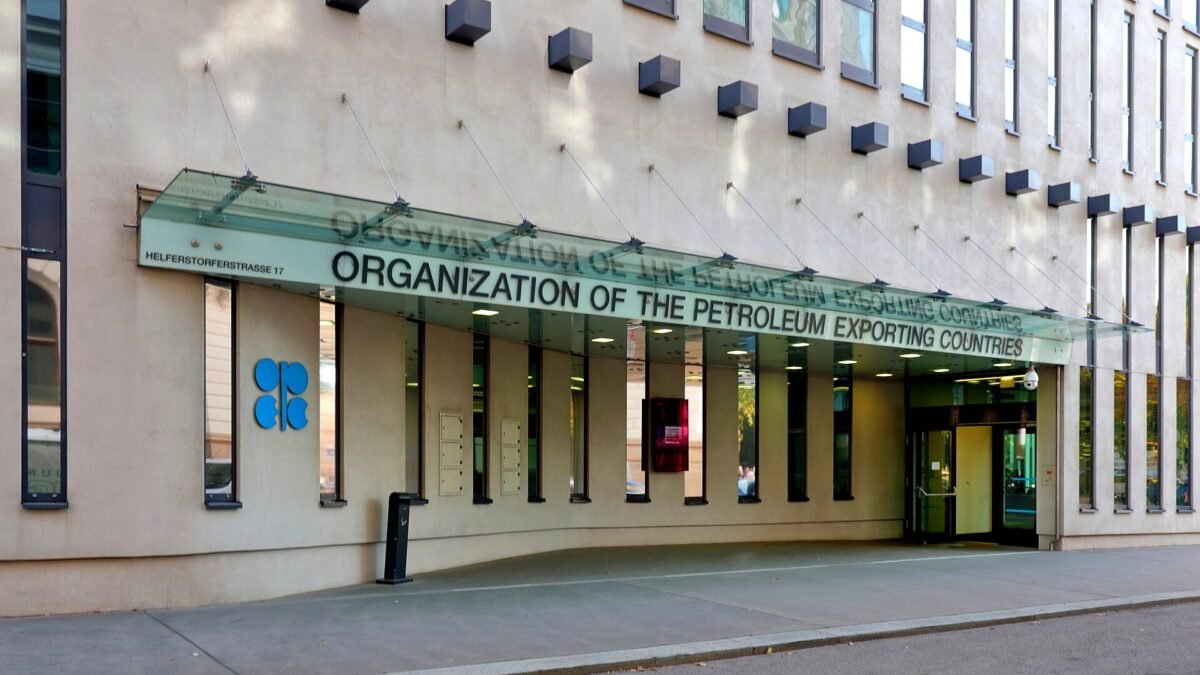
OPEC+ is set to keep its oil output targets unchanged for the first three months of 2027 when ministers meet on Sunday, according to people with knowledge of the discussions, as the war between the United States and Iran disrupts exports from the Gulf and a dispute over how much each member can actually produce stalls a new deal for next year.
The group has reached an agreement in principle to roll over its current targets into the first quarter of 2027, three sources told Reuters on Friday, and ministers are expected to confirm that position when they hold a series of four meetings on Sunday, beginning with a virtual session. No final decision has been announced, and the discussions remain open, but the expectation across the market is now firmly that nothing will change.
That is a holding pattern rather than a policy. OPEC+ had planned to use Sunday’s meeting to set new output targets for 2027, guided by the findings of its first-ever review of members’ production capacity. Instead, the capacity exercise has become a source of tension inside the group, and the war has made any firm commitment for next year look premature.
The decision matters far beyond the meeting room. OPEC+ pumps around 35 per cent of the world’s oil, according to figures cited in coverage of the talks, and its choices set the tone for fuel prices, inflation and government budgets across the globe. A freeze keeps supply steady while the market works out whether shipping through the Strait of Hormuz will keep recovering or slip back, and whether the crude surplus forecast for 2027 will actually arrive.
An agreement in principle — but no final decision yet
The contours of Sunday’s meeting were clear before ministers logged on. OPEC+ oil producers are set to keep first-quarter 2027 output targets unchanged, three sources told Reuters, with uncertainty over the Iran war and disagreements over production-capacity estimates clouding the discussions. The group has an agreement in principle to keep output targets unchanged in the first quarter of 2027, the people said on Friday.
Bloomberg has also reported that delegates expect no change for January through March, according to coverage of the meeting, and the consultancy Rapidan Energy Group expects the alliance to maintain its current targets, citing uncertainty over the duration of the Iran conflict and its effect on crude production and exports.
At its last session on 1 November, a core group of seven producers, including Saudi Arabia, Russia and Iraq, kept December output at September levels, according to the official OPEC statement, and set 29 November as the next date. The group had completed the phased rollback of a 1.65 million barrels per day production cut in September, and it continues to maintain another layer of cuts of around 2 million barrels per day, covering most members through the end of 2026, according to Reuters.
Sunday’s meetings will therefore be a maintenance exercise rather than a strategic pivot. Oil ministers are scheduled to hold four meetings, starting with a virtual gathering, and the expected outcome is a rollover of the existing targets for the first quarter, along with a discussion of the capacity figures that will shape quotas later in the year.
The caution is understandable. With a war under way in the Gulf, no producer wants to lock in numbers that events could make meaningless within weeks. A rollover buys time: three months of unchanged targets while the group watches the war, the shipping lanes and the demand picture, and while it tries to finish a capacity review that has already proved far harder than expected.
The capacity row holding up the 2027 deal
The deeper problem facing OPEC+ is not the war alone. It is that the group cannot agree on how much oil each of its members is actually capable of producing — and without that agreement, it cannot set fair quotas for 2027.
OPEC+ had commissioned its first-ever review of members’ production capacity to help set the targets at Sunday’s meeting. The review, carried out by the Dallas-based consultancy DeGolyer and MacNaughton, was intended to establish each country’s maximum sustainable output and use those figures as the baseline for allocating quotas. It was meant to settle arguments that have dogged the group for years. Instead, it has created new ones.
Iraq and Kazakhstan have challenged the capacity assessments as too low, OPEC+ sources familiar with the discussions said. Iraq is dissatisfied with preliminary findings that assessed its capacity at 4.9 million barrels per day, while Baghdad argues for a figure nearer 6 million, according to sources cited by Reuters. Kazakhstan is also seeking a higher estimate.
The stakes in that argument are enormous. A country’s assessed capacity effectively sets the ceiling on what it is allowed to pump, and therefore on how much oil revenue it can earn. Iraq, OPEC’s second-largest producer, has long argued that its quota does not reflect the scale of its industry, and it has warned that it may leave the group if its quota is not raised. Kazakhstan, meanwhile, is already pumping above its quota, according to coverage of the meeting, which underlines how little authority the existing numbers command when a member believes they are unfair.
Russian Deputy Prime Minister Alexander Novak said on Wednesday that ministers would assess progress on the review and that the group would complete it by the end of the year. That timetable means the capacity figures — and with them the real 2027 quotas — are now a question for December, not for Sunday. The first quarter rollover is, in effect, an admission that the homework is not finished.
This is not the first time the quota question has pushed members towards the exit. Sunday’s meeting comes months after the United Arab Emirates left OPEC and OPEC+ to pump more oil after years of arguing that its quota was too low, according to Reuters. Angola quit OPEC at the start of 2024. Each departure weakens the group’s grip on the market and emboldens those who remain to press their own claims harder.
A war market: prices above $100, then easing
The war has dominated the oil market all year. Oil prices rallied above $100 per barrel due to the war and disruptions this year, according to Reuters, but have eased in recent weeks due to rising Gulf exports and renewed expectations of a crude surplus in 2027.
The volatility has been extreme even within a single week. Brent crude climbed from $89.37 on Monday to a $96.57 settle on Thursday, a gain of about 8 per cent in three sessions, according to coverage of the meeting, after a run of attacks on Gulf energy sites. The Houthis claimed a strike on Saudi Arabia’s Ras Tanura complex on 25 November, and a projectile hit Aramco’s Jazan refinery the next day.
The outlook for oil flows through the Strait of Hormuz is the central uncertainty in the group’s planning. The waterway remains vulnerable to attack, and renewed strikes on tankers and Saudi energy infrastructure have raised concerns over further disruptions to global supplies. According to Kpler data cited in coverage of the meeting, flows through Hormuz stood at about 9.25 million barrels per day in the week to 24 November — roughly 54 per cent of the pre-war level of 17.14 million barrels per day. The International Energy Agency has estimated cumulative losses of 2.8 billion barrels of oil supplies from the Persian Gulf as a result of the war, according to reporting on the talks.
That partial recovery in Gulf exports is one reason prices have eased from their wartime peaks. The other is the surplus that analysts expect next year. Rystad Energy sees a global oil surplus reaching 5 million barrels per day next year, equivalent to roughly 5 per cent of worldwide demand, even if Gulf supplies recover only partially, according to Reuters. A surplus of that size would put steady downward pressure on prices and make any decision to raise output self-defeating.
The group is caught between two fears. Raise output and it risks deepening a surplus that would crush prices. Cut output and it risks handing market share to rivals, above all the United States, which continues to gain ground while OPEC+ argues among itself. As Reuters put it, the war and disagreements over production capacity threaten another difficult year for OPEC+, as rival producer the United States continues to gain market share and exploits divisions within the group.
Analysis: Why It Matters
On the surface, Sunday’s expected outcome looks like a non-event: nothing changes, targets stay where they are, ministers go home. That reading misses what the freeze really signals. OPEC+ is a group that has always governed by agreement on numbers, and it is now unable to agree on the numbers. The rollover is not a decision; it is a postponement of a decision the group can no longer avoid, and the postponement itself tells us how much trouble the alliance is in.
Start with the capacity review, because that is the quiet crisis at the heart of this meeting. OPEC+ commissioned its first-ever independent assessment of what each member can produce precisely because the old system — self-reported figures, negotiated quotas, and a certain amount of looking the other way — had broken down. Members were pumping above their quotas, arguing their quotas were unfair, and in the case of the United Arab Emirates, walking out altogether. An independent review was supposed to replace argument with arithmetic.
Instead, the arithmetic is being argued about too. Iraq’s objection is not a quibble over a decimal point: the difference between 4.9 million and 6 million barrels a day is more than a million barrels of daily output, worth tens of billions of dollars a year at current prices. For a country rebuilding after decades of war and sanctions, that is not a technical dispute; it is a question of national income. Kazakhstan’s complaint is the same argument in a smaller key. When the figures produced by the group’s own chosen consultants are rejected by two members before they are even published, the review has failed in its first purpose, which was to be accepted as neutral ground.
The war makes everything harder, and it does so in two opposite directions at once. On one side, the war has lifted prices above $100 a barrel at times this year, which should have been a gift to producers. On the other, it has disrupted the very exports those prices reward, damaged infrastructure in Saudi Arabia, and left the Strait of Hormuz operating at barely half its pre-war flow. A producer group that cannot be sure how much oil will physically reach the market cannot set sensible targets for how much its members should pump. The uncertainty cited by Rapidan Energy is not a euphemism; it is the central fact of the market.
There is also a structural shift under way that the war has accelerated rather than caused. The United States, which is not a member of OPEC+, keeps gaining market share while the group argues. Every barrel OPEC+ holds back to support prices is a barrel an American shale producer can sell instead, and every member that leaves the group — the Emirates this year, Angola in 2024 — takes its barrels outside the quota system entirely. The group’s share of world output, around 35 per cent, is large enough to move prices but no longer large enough to control them. That is why the threat from Iraq to leave if its quota is not raised carries real weight: it is not a bluff from a marginal player but a warning from the group’s second-largest producer.
For consumers, the freeze is mixed news. Unchanged targets mean no sudden supply squeeze in the first quarter, and the surplus forecast for 2027 points towards cheaper fuel rather than dearer. But the same forecast explains why prices have eased from their wartime highs, and the same war explains why they could spike again without warning. A single successful attack on a Gulf facility — the Ras Tanura claim and the Jazan strike in the space of two days last week showed how quickly that can happen — pushed Brent up 8 per cent in three sessions. The market is calm only until it is not.
For the Gulf producers themselves, the freeze protects revenue in the short term but stores up a harder reckoning. Saudi Arabia, the group’s anchor, needs prices high enough to fund its vast spending plans but not so high that they crush demand or accelerate the shift away from oil. Russia needs the revenue to sustain a war economy. Iraq needs a bigger quota to rebuild. These interests were always in tension; the war and the capacity row have simply made the tension impossible to paper over with another rollover.
The honest way to read Sunday, then, is as a test of whether OPEC+ can still function as a decision-making body at all. A group that can agree on its members’ capacities can set quotas; a group that cannot will keep rolling over the old ones until events overtake it. The review is supposed to be finished by the end of the year. If it is finished, and if its figures are accepted, the group can start 2027 with a real deal. If it is delayed again, or if its figures are rejected as Iraq and Kazakhstan have rejected the preliminary ones, then the rollover will have to be rolled over again — and each time that happens, the group’s authority frays a little further.
What to watch next
The first thing to watch is Sunday’s communique. Look for confirmation of a first-quarter 2027 rollover, and for any language on how the capacity figures will be used once the review is complete. A statement that the review will be finished by the end of the year, as Alexander Novak has indicated, would signal that the group still intends to settle the quota question. Silence on the timetable would suggest the opposite.
The second is the war itself. Hormuz flows, at about 54 per cent of pre-war levels, are the swing factor between the two stories the market is telling: a war premium that could return with the next attack, and a surplus that could arrive with the next recovery in Gulf exports. The Houthi strikes on Ras Tanura and Jazan last week showed that Saudi energy infrastructure remains a target, and the US blockade of Iranian oil continues to shape every calculation in the Gulf.
The third is Iraq. Baghdad’s warning that it may leave OPEC+ if its quota is not raised is the single most consequential threat hanging over the group, after the Emirates’ actual departure. How the capacity review treats Iraq’s claim — 4.9 million barrels a day in the preliminary assessment against Baghdad’s argument for nearer 6 million — will determine whether that warning fades or hardens into a decision.
Finally, watch the surplus. Rystad Energy’s forecast of a 5 million barrel per day surplus next year, equivalent to about 5 per cent of world demand, is the number that will haunt every OPEC+ meeting in 2027. If it materialises, the group will face the choice it has avoided on Sunday: cut output to defend prices, and lose share, or hold output and watch prices fall. The freeze buys three months. It does not buy an answer.
Sources
- Reuters — OPEC+ set to keep oil output unchanged as Iran war, capacity rifts persist
- Kitco (Reuters) — OPEC+ set to keep oil production targets steady, sources say
- The Financial Economy — OPEC+ Meeting: 2027 Quotas, Brent Outlook and India Impact
- Devdiscourse — OPEC+ set to keep oil output unchanged as Iran war, capacity rifts persist
- OPEC — Official website of the Organization of the Petroleum Exporting Countries

About the Author — Abdul Mannan
Related Articles

France Slips Into Recession as S&P Warns of Downgrade on a Grim Day for Europe’s Second Economy
France has slipped into recession and S&P has cut its outlook on the country's A+ credit rating to…
Trump-Backed WLFI Token Crashes More Than 50% to Record Low as World Liberty Sells Ethereum at a $19 Million Loss to Save Its Loan
World Liberty Financial, the crypto venture co-founded by Donald Trump and his family, sold about $20 million of…
Norse Atlantic Files for Bankruptcy and Cancels Every Flight as Fuel Costs Ground the Budget Carrier
Norse Atlantic Airways has filed for bankruptcy and cancelled all flights, leaving thousands of passengers stranded weeks before…