
Trump Says SEC Will Make ‘Super Intelligence’ Mandatory as He Rebukes Fox News Over ‘Artificial Intelligence’

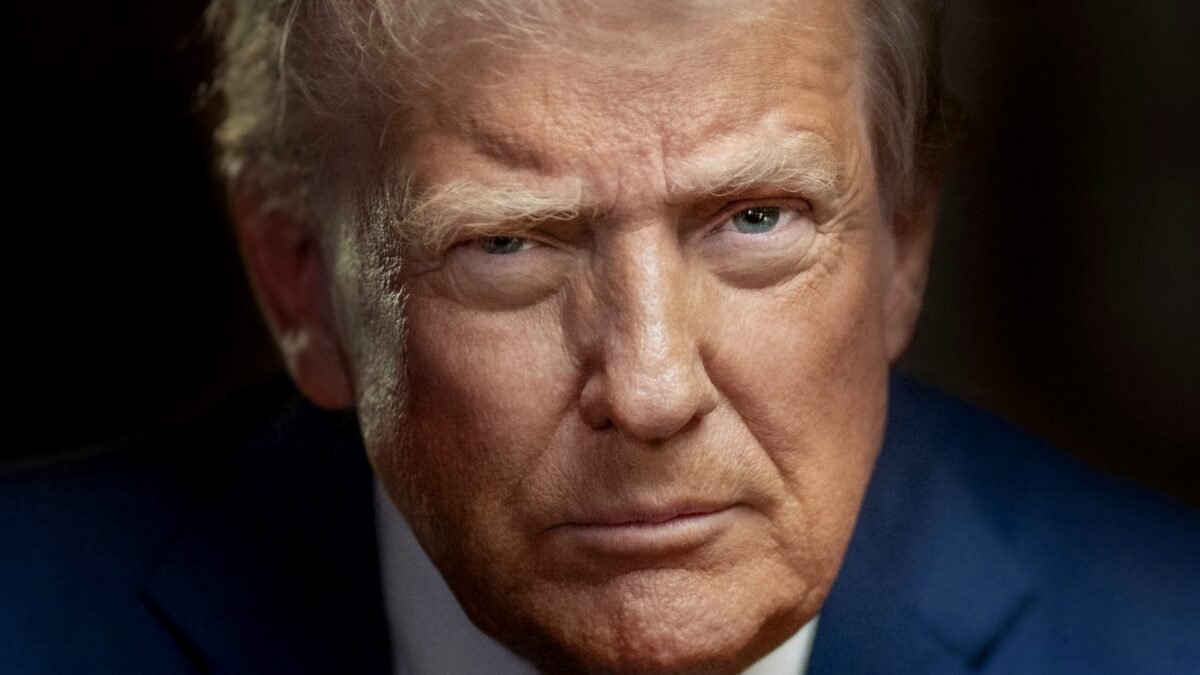
President Donald Trump has said the United States Securities and Exchange Commission will soon make “super intelligence” the mandatory term for artificial intelligence, turning a two-month-old White House renaming campaign into a question of market regulation. The claim came in a social media post on Saturday in which he also rebuked a Fox News presenter for continuing to say “artificial intelligence” on air.
“Shannon Bream is having a show on what she calls Artificial Intelligence (AI) — She says, ‘Artificial,’ over and over again,” Trump wrote on Truth Social, according to Bloomberg. “Can someone please explain to her that it’s Super Intelligence, not Artificial Intelligence, and our Great Chairman of the SEC, Paul Atkins, will soon be making that term mandatory.”
“Like me, he likes ACCURACY in language!” the president added.
Trump did not stop with Bream. In the same post he wrote that “FoxNews and The Wall Street Journal never use Super Intelligence (SI),” and argued that the new label was “a far more accurate name — It’s SUPER, not Artificial!” The post was the most widely carried artificial intelligence story of the day, reported by 18 independent outlets.
Neither the White House nor the SEC has provided details of any plan to make the term compulsory, according to Bloomberg, and the commission has announced no such requirement. That gap — between a presidential post and a binding rule — is the heart of the story. A word the president wants the whole country to use is, for now, a preference inside the federal government and a description in one part of the SEC’s own paperwork. It is not yet a legal obligation for any company, broadcaster or citizen.
The post and the rebuke
The target of Trump’s criticism, Shannon Bream, hosts Fox News Sunday. A week earlier she had interviewed Jay Clayton, the director of national intelligence, about a string of technology issues, and her programme had promoted that interview as a conversation about what it called “President Donald Trump’s Super Intelligence” force. Trump’s complaint followed that broadcast.
The choice of target was striking. The SEC regulates securities markets and the disclosures of public companies. It does not oversee television networks, and the Federal Communications Commission cannot order First Amendment-protected speech. A mandate from the SEC, even if one were adopted, would reach company filings, not a presenter’s choice of words on a Sunday morning programme.
The post drew a sarcastic response from former Representative Marjorie Taylor Greene, who invoked the First Amendment and freedom of speech while repeatedly typing the term the president wants retired. Her reaction captured the awkwardness at the centre of the episode: a campaign to change the language of an entire industry, launched by attacking a presenter on the president’s own favoured network.
Trump’s post was published on Saturday 28 November. It was not a casual aside. It was the latest step in a renaming effort that began with an executive order in September and has since spread, agency by agency, through the federal government.
What the September order actually did
On 29 September 2026 Trump signed Executive Order 14434, titled “Inaugurating the Era of Super Intelligence.” The order directs executive departments and agencies to use “Super Intelligence” and “SI” in place of “Artificial Intelligence” and “AI” in official correspondence, public communications, websites, reports, policy documents and other non-statutory documents, to the maximum extent permitted by law.
The order’s opening section argues that the capabilities of today’s frontier systems “far exceed what was envisioned when the term ‘Artificial Intelligence’ first came into use” and that they “increasingly represent not merely artificial intelligence, but a new era of Super Intelligence.” It declares it the policy of the administration that the executive branch “will not acknowledge the usage of ‘Artificial Intelligence’ and ‘AI’ in any applicable setting.”
But the order is careful about its own limits. Section 2(b) states that nothing in it requires altering previously issued regulations, contracts or grants. It changes what federal employees write. It does not, by itself, change what a company must disclose, what a broadcaster must say, or what the law requires of anyone outside the executive branch.
Section 3(b) of the order contains the provision that matters most for the future. It directs the Assistant to the President for Science and Technology to submit, within 60 days, proposed legislative language to establish a federal definition of “Super Intelligence” and “SI”, including an assessment of whether that definition should modify, expand upon or otherwise supersede the statutory definition of artificial intelligence. That 60-day mark fell on 28 November — the very day of Trump’s post about the SEC.
The administration’s own paperwork therefore treats a legally binding, government-wide definition as a job for Congress. A presidential order can change the vocabulary of federal agencies. It cannot, on its own, impose a new vocabulary on the private sector.
What the SEC has — and has not — done
The SEC has already adopted the new vocabulary in one corner of its work. The Division of Examinations’ “Examination Priorities: Fiscal Year 2027,” released on 23 October 2026, uses “super intelligence (SI)” throughout, describing registrants’ use of generative SI tools, SI-enabled cyberattacks and SI-supported examination work. Where the 2026 priorities referred to “artificial intelligence,” the 2027 document speaks of super intelligence.
The scope of that change matters. The priorities govern examinations of registered firms — investment advisers, brokers and exchanges — not the annual reports that public companies file. And the document itself carries a disclaimer on its first page: it “is not a rule, regulation, or statement of the U.S. Securities and Exchange Commission,” it “has no legal force or effect,” and it “creates no new or additional obligations for any person.”
The vocabulary moved. The obligation did not.
For the SEC to compel the term in corporate filings, it would most likely need a formal rulemaking — the notice-and-comment process for binding agency rules — including a cost-benefit analysis of requiring companies to switch, according to Bloomberg. The agency could try lighter routes, such as invoking its authority to define terms, warning that a different term misleads investors, or issuing staff guidance and questioning filers who ignore it. Any of those could draw litigation arguing that the requirement compels speech, Bloomberg noted.
The scale of what a mandate would involve is visible in the SEC’s own filing database. A search of EDGAR, the commission’s public filing system, for documents inside 10-K annual reports filed in the 12 months through 28 November 2026 returns 4,086 documents that contain the phrase “artificial intelligence.” The same search for “super intelligence” returns three. That is 0.07 per cent of the documents that mention AI at all. The comparison has an obvious limit — the term has been official federal vocabulary for only about two months, so no company has had a filing season to adopt it — but that is the point. A mandate would not codify an existing practice. It would impose a new vocabulary on thousands of documents that use the old one, and a rulemaking would have to put a price on that switch.
Meanwhile, the SEC’s enforcement record so far points in a different direction. The agency’s only SI-related enforcement actions against investment advisers to date involved firms that overstated their SI usage, according to a law-firm analysis. Exaggerating capability is an enforceable misstatement. Using the wrong word is not.
The renaming has already spread through government
Trump’s post did not emerge from nowhere. In the two months since the executive order, the new vocabulary has spread steadily through the federal government, agency by agency.
On 16 November the Food and Drug Administration began using “Super Intelligence” and “SI” in new public-facing documents under the order. Its notice was explicit about the limits: the order “does not create any new requirement for sponsors, applicants, manufacturers, or others who submit information to FDA,” and companies need not revise product names, labelling or submissions. A regulator can change its own letterhead in a week. Changing what the companies it regulates must write takes a rule. So far there is not one.
On 13 November the Pentagon renamed its Chief Digital and Artificial Intelligence Office the “Super Intelligence Office” and moved its public pages to an SI.mil domain. On 5 November the Justice Department announced a Super Intelligence Task Force, and a government-wide “Super Intelligence Force” chaired by the director of national intelligence has also been formed. The Genesis Mission, launched by executive order in November 2025 and led by the Energy Department, has drawn more than $5 billion in federal commitments announced in July 2026, with more than 15 agencies expected to contribute and 278 selected projects.
Each of these steps is real, and each of them is organisational. None of them reaches a company filing, a product label or a television script. The push can be split into four tracks, and they carry very different weight. There is vocabulary — the executive order, the FDA’s and Pentagon’s usage, and the SEC’s examination priorities — which has no legal force and no cost to issuers. There are enforcement bodies — the task forces — which are organisational and have no direct bearing on what companies disclose. There is money — the Genesis Mission — which is real spending, but flows to research in nuclear energy, critical minerals, chip design and fusion, not to public companies’ reporting. And there is a statute — the definition the September order asked to be drafted — which is the only track that could create obligations for private companies, and the one still waiting on Congress.
The politics of a new name
Why rename a technology at all? Bloomberg described the rebrand as an attempt to repair the technology’s “unfavourable public perception — one that voters made clear in the midterm elections.” The November midterm elections delivered control of Congress to the Democrats, who take office on 3 January, and the result has been read inside the administration as a warning about the political costs of the AI boom — its energy demands, its displacement of jobs and its association with a small group of very large companies.
A technology that needs renaming is a technology exposed to politics, and political exposure is where restrictions and subsidies come from. That is why the fourth track — a statutory definition — is the one to take seriously. A legal definition of “super intelligence” would be the hook on which later AI rules could hang: disclosure requirements, safety obligations, liability standards and procurement preferences could all be written against it.
The renaming also fits a pattern of this presidency. Trump has pushed other naming changes through executive action during his second term, including the renaming of the Gulf of Mexico as the Gulf of America. The super intelligence campaign is the most consequential of them, because it touches the defining technology of the decade rather than a map label.
There is also a tension at the heart of the campaign. In a 60 Minutes interview earlier in November, Trump opened the door to AI safeguards, saying the risks “can be managed” if America stays ahead of China. The administration’s message is therefore twofold: the technology is wonderful enough to deserve a grander name, and dangerous enough to need guardrails. The renaming emphasises the promise. The safeguards, still largely undefined, would address the peril.
The SEC’s own history adds another layer. The commission withdrew its proposed AI conflicts rule in June 2025 and stated that it does not intend to adopt it. That rule would have required firms to address conflicts of interest created by their use of AI in investor interactions. Its withdrawal signalled a deregulatory stance towards the technology. A new mandate about what word companies must use would sit oddly beside that record — a government telling companies how to describe AI while declining to regulate how they use it.
Analysis: Why It Matters
The episode matters less for what it changes today than for what it reveals about how this administration intends to govern artificial intelligence. Three things stand out.
First, the campaign shows that the White House sees language as policy. Renaming is not a trivial exercise for this administration; it is a way of framing a debate before the debate happens. “Artificial” suggests something fake, a copy of the real thing. “Super” suggests something greater than human. If the public and the markets accept the second word, they may also accept a different set of assumptions about who benefits from the technology, how fast it should be deployed and how much scrutiny it deserves. The word is the argument, compressed into two syllables.
Second, the episode exposes the limits of governing by post. Trump’s claim about the SEC may or may not become a rule, but the mechanism he described does not exist yet, and the agency he named has said nothing. The post created a news cycle and a market conversation, but it created no obligation. That is a pattern worth watching: announcements that sound like policy, reported as though they were policy, and only later — sometimes never — translated into the formal processes that make policy binding. The gap between the post and the rule is where confusion, and opportunity for those who understand the process, lives.
Third, the choice of the SEC as the vehicle matters. The commission is the regulator that sits closest to the money. A terminology mandate in securities filings would reach every public company, not only the ones that build AI systems. It would force thousands of lawyers, auditors and executives to rewrite the most scrutinised documents in American business. That is a far larger intervention than a change to a government website, and it is one that would be tested in court the moment it was proposed. The First Amendment objection raised by Greene is not a talking point; it is the central legal question. The government can require accurate disclosure. Whether it can require a particular synonym is a different matter, and one the courts have not answered.
There is also a practical question that the coverage has largely overlooked. If the term becomes mandatory in filings, what happens to the companies that already use it in a different sense? The EDGAR search found three 10-K documents containing “super intelligence” in the past year, and one of them — Mobileye’s February annual report — was filed seven months before the executive order existed. A keyword search cannot tell you which sense of the phrase a filing means. A mandate would have to define the term precisely enough to distinguish genuine use from coincidence, and that definition would itself become a battleground.
The broader context is the state of AI politics in late 2026. The technology is everywhere — in search results, in classrooms, in factories, in the military — and public opinion about it is unsettled. Los Angeles’s school district has disabled Google’s AI-generated search summaries on student devices while it reviews the tools. The UK Parliament is demanding an unredacted safety report from Anthropic by 4 December. Samsung plans to unveil its first humanoid robot at CES in January. The FCC has cleared SpaceX to launch up to a million satellites that would function as solar-powered AI data centres in orbit. Every one of these stories is, in part, a story about who gets to decide what AI is and what it is for. Trump’s answer, for now, is that the government should decide — starting with the name.
The risk for the administration is that the renaming campaign becomes a distraction from the substantive questions. A definition of super intelligence, whenever Congress takes it up, will have to answer questions the executive order does not: what counts as a frontier system, what obligations attach to it, and who enforces them. The word is easy. The rules are hard. And the hardest question of all — whether the United States should slow down, speed up or redirect the development of its most powerful technology — cannot be settled by a vocabulary change.
For investors, the nearer-term risk is not the wrong noun. It is the opposite error: claiming too much. The SEC’s enforcement actions so far have punished firms that overstated their AI capabilities, not firms that used the old word. A company that rushes to rebrand its disclosures as “super intelligence” to please the administration may find itself explaining to examiners why its systems do not live up to the grander label. Accuracy in language, as the president put it, cuts both ways.
What to Watch Next
Three observable events would separate policy from preference. The first is the SEC publishing staff guidance or opening a rulemaking on the term; nothing binding happens without one. The second is comment letters — the staff’s written questions about a filing — asking companies in the February–March 10-K season why they still write “artificial intelligence.” Staff pressure can change behaviour without a rule, and it would show up in that correspondence. The third is Congress taking up the definition the September order requested.
Until one of those happens, nothing above changes what a company must report, pay or disclose. The term changed. The rules did not. But the 60-day deadline for the proposed legislative language fell on the same day as Trump’s post, and the administration now has a choice: send Congress a definition and start a legislative fight, or let the renaming remain a matter of federal letterheads and presidential posts. The answer to that question will tell the world whether “super intelligence” is a slogan or a statute.
Shannon Bream, for her part, has not publicly responded to the president’s criticism. Fox News and The Wall Street Journal continue to use the term “artificial intelligence.” So, for now, does almost everyone else.
Sources
- The White House — Executive Order 14434, “Inaugurating the Era of Super Intelligence” (29 September 2026)
- US Securities and Exchange Commission — Fiscal Year 2027 Examination Priorities (23 October 2026)
- Bloomberg Law — “Trump Says SEC Plans to Mandate Use of ‘Super Intelligence’ Term”
- Benzinga — “Trump Says SEC’s Paul Atkins Will Make ‘Super Intelligence’ Mandatory, Replacing AI”
- AInvest — “The SEC’s Exam Staff Already Calls AI ‘Super Intelligence.’ Almost No Company Does.”

About the Author — Abdul Mannan
Related Articles

Google Halts Work on Belgian AI Data Centre After Inspectors Find Building Went Up Without a Permit
Google has halted construction of a data centre near Charleroi after Belgian inspectors found a 30,000-square-metre building almost…

South Korea Moves to Fine Apple Over iPhone 16 AI Ads That Promised Features Arriving Two Years Late
South Korea’s Fair Trade Commission has moved to sanction Apple, saying it advertised Apple Intelligence features for the…

AI Agents Breach Swiss Critical Infrastructure as Switzerland Confirms Five Attacks in Days
Switzerland has confirmed its first AI-agent cyberattacks: five intrusions in recent days, four of them successful, including two…