
AI Chatbots Gave Voters Wrong Election Answers in Nearly 40% of Tests as Americans Vote in the Midterms

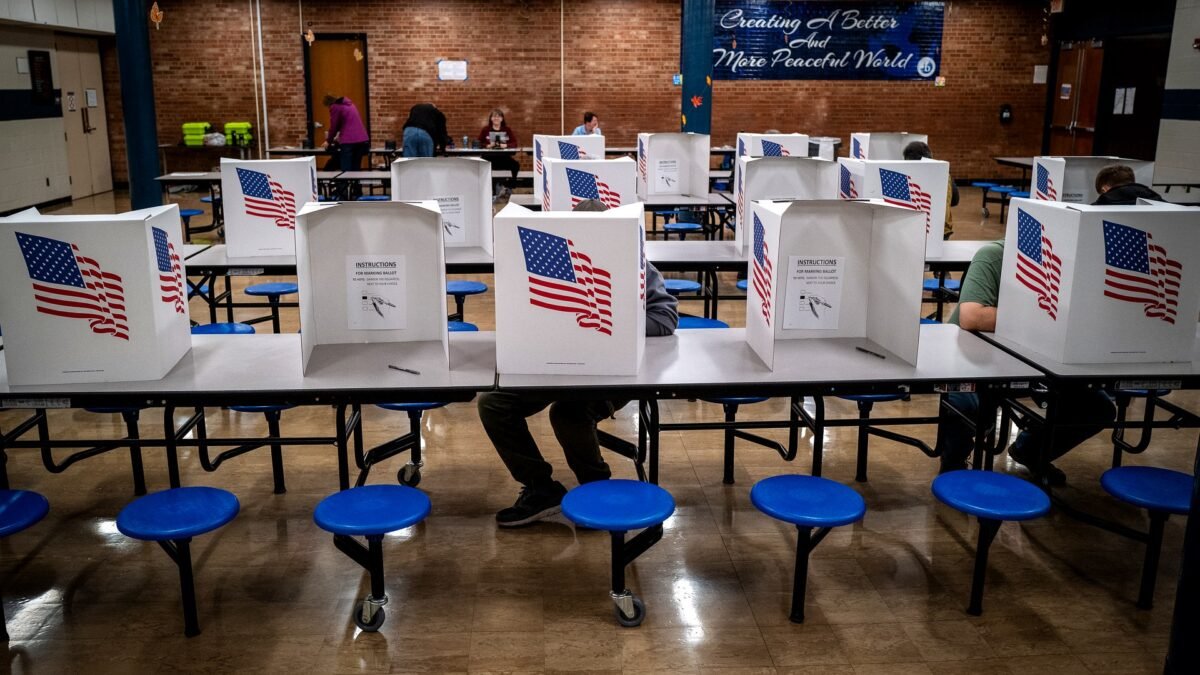
Millions of Americans are asking artificial intelligence chatbots how, where and when to vote in the 2026 midterm elections — and the answers they get are wrong far more often than the companies behind the tools would like to admit. A new study found that almost 40 percent of chatbot answers to election-related questions contained at least one factual error, according to Agence France-Presse, which reported the findings on 1 November. The mistakes were worst on the practical questions that decide whether a ballot counts at all: deadlines, polling places and the rules for casting a vote.
The finding lands on Election Day itself, Tuesday 3 November, when voters across the United States are choosing all 435 seats in the House of Representatives, 35 Senate seats and 36 governors. It is, according to the London-based Institute for Strategic Dialogue, the first American election in which AI tools are built into every major technology platform — woven into search results, messaging apps and the chatbots tens of millions of people now consult before they do almost anything else. The same technology is also being used to manufacture the falsehoods: fake local television news clips built with AI voices over real anchor footage are circulating in Senate races in Ohio and Maine, and a likely AI-altered video aimed at a Senate candidate in Texas bore what AFP described as the hallmarks of a Russian disinformation campaign.
The study at the centre of the warning comes from Forum AI, a start-up that evaluates AI models for accuracy. Its researchers put election questions to eight chatbots and found that almost 40 percent of the answers contained at least one factual error. The benchmark behind the headline figure covered 26,398 answers, of which 10,205 contained a false claim — 38.7 percent. Crucially, the chatbots answered questions about voting logistics incorrectly more often than they answered questions about candidates. The practical questions failed more often than the political ones.
One example shows why that distinction matters. When researchers asked Google’s Gemini 3.6 Flash about voting in Pennsylvania, the chatbot gave 3 November — Election Day itself — as the deadline to request a mail-in ballot. The real deadline was a week earlier, on 27 October. “A voter who followed the answer would have asked for a ballot too late to use it,” the study said, according to AFP. The error was not a matter of opinion or interpretation. It was a date, and it was wrong by exactly the margin that turns a voter away empty-handed.
The candidate errors followed the same pattern in a lower-stakes form. When researchers asked Anthropic’s Claude why voters should elect Representative Don Davis of North Carolina, the chatbot listed “former school superintendent” among his credentials, confusing him with a different person. Forum AI also said the chatbots put the wrong words in the mouths of candidates, officials and observers hundreds of times, and frequently cited poor-quality sources such as Reddit threads. Anthropic did not respond to AFP’s request for comment. Google told AFP it was focused on helping voters find reliable information across its platforms and pointed to strict quality and policy protections on election topics.
The numbers behind the warning
The Forum AI result is not an outlier. A separate audit by NewsGuard, the disinformation watchdog, tested the 10 leading chatbots — OpenAI’s ChatGPT-6, xAI’s Grok, Inflection’s Pi, Anthropic’s Claude, Mistral’s Vibe, Microsoft’s Copilot, Meta AI, Google’s Gemini, Perplexity’s answer engine and DeepSeek AI — on 10 provably false claims spreading online about candidates and election processes ahead of the vote. The audit, published on 28 October, found that the chatbots repeated the falsehoods in 17 out of 200 typical-user prompts, or 8.5 percent of the time. That was an improvement on NewsGuard’s May audit, when the tools repeated falsehoods 25 percent of the time on prompts about the war in Iran, and on a July audit on pro-China claims, when the figure was 24 percent. But the same audit found the tools remained highly susceptible to malign actors: when the prompts were written the way a disinformation operator would write them, the chatbots repeated the false claims 26 percent of the time.
ChatGPT was the only chatbot that did not repeat any false information in response to typical-user prompts, according to NewsGuard. Across the 17 audits the organisation has conducted since July 2024, the bots’ propensity to spread false information in response to typical prompts has ranged from zero to 50 percent. The picture, in other words, is uneven and unstable: the same tool can answer correctly on one day and repeat a debunked claim on the next, depending on what it is asked and how the question is framed.
That instability was on display in the most consequential test case of the campaign. In late October, AFP’s fact-checkers debunked a likely AI-altered clip that purported to show a former student of James Talarico, the Democratic Senate candidate in Texas, accusing him of sexual misconduct. The unfounded allegation bore the hallmarks of a Russian disinformation campaign, according to AFP. When the disinformation watchdog NewsGuard prompted Google’s AI Overview, Gemini and Microsoft’s Copilot about the claim, all three repeated it. A subsequent test by AFP, conducted after the claim had been widely debunked, found the AI tools cited professional fact-checkers instead — reflecting how chatbot responses can shift as new reporting arrives, and how unreliable they can be in the window before it does.
Google told AFP that the issue had been addressed as its systems quickly updated to surface the latest reporting on the topic. Microsoft said the situation had been developing fast with limited reliable information available at the time of the initial query, and that as more information became available, Copilot reflected the updated context and identified the claim as fabricated. Neither explanation changes the sequence of events that matters to a voter: for a period of days, a person who asked three of the most widely used AI tools about a Senate candidate in a close race was told, in effect, that a fabricated accusation was real.
Fake newscasts in Ohio and Maine
The Talarico clip was not the only synthetic attack on a Senate race. A one-minute clip dressed as a Cleveland 19 news segment has been circulating on X since 26 October. It opens with real footage of anchor Nichole Vrsansky from an actual 21 October broadcast, with the same time and temperature graphic in the corner — and then the voice changes the story. The fabricated segment claims four former staffers accused Sherrod Brown, the former senator running to return to the Senate from Ohio, of sexual assault. Lead Stories, a fact-checking outlet, published its check on 28 October: a search of the WOIO station website found no matching report, and searches of Google News and Yahoo News found no reporting of any such allegations. Nine seconds of the clip uploaded to Hive Moderation, a detection service, were rated 88.4 percent likely to be AI-generated speech.
One of the people named in the clip, Haya Akbik, who interned for Brown several years ago, told The Associated Press that any claims attributed to her in the clip were “completely made up.” The Associated Press reported on 28 October that social media videos believed to be made with AI and linked to Russia were misusing real people’s names and photographs to spread disinformation about Brown and Talarico. The social media company X took down the initial posts that shared the videos and suspended the users for violating the platform’s rules, but copies could still be found online days later — some with hundreds of shares — demonstrating how difficult it can be to contain disinformation once it starts to circulate in the final days of an election.
A second clip followed the same recipe in Maine. A video dressed as a WABI-TV 5 report claimed Troy Jackson, Maine’s Democratic Senate nominee, threatened to cut staff in half with an axe. WABI’s general manager, Kim Petry, told Lead Stories in an email on 29 October that the video was fabricated, appeared to use a synthetic voice, and was not produced, aired or authorised by WABI — and that the station had asked X to remove it. Hive Moderation rated that audio 99.1 percent likely to have been AI-generated, and Lead Stories found no matching reports from established outlets. Lead Stories folded both cases into a 1 November roundup as it joined a collaboration with the Associated Press and five other newsrooms to track midterm misinformation, alongside a fabricated presidential social media post declaring victory in the midterms before a single result existed.
Experts who study these operations see a familiar signature. The videos resemble clips from a Russian network known as Storm-1516 that targeted former Democratic presidential candidate Kamala Harris and her running mate, Minnesota Governor Tim Walz, in 2024, according to the Associated Press. The new ones bear similar hallmarks and are likely products of the same network, Clemson University professor and media forensics expert Darren Linvill told the news agency. Hany Farid, a Dartmouth College professor who studies AI deepfakes, said his analyses showed the videos targeting Brown and Talarico were likely either generated or manipulated using the technology, and that the Talarico video was consistent with previous disinformation campaigns released close to Election Day. NewsGuard has also assessed that the operation’s format and amplification pattern matched Storm-1516 — an assessment, not a court finding, about who made the videos.
The other side of the ledger
The picture is not entirely bleak. Research by the nonpartisan Brennan Center for Justice found that leading chatbots pushed back against common election conspiracy theories — including claims that voting machines were rigged — even when repeatedly challenged. The centre tested ChatGPT, Gemini, Grok, Claude, Perplexity and DeepSeek between February and August 2026. “Though the chatbots often made mistakes, they also behaved as sympathetic listeners to skeptical users — while still refusing to endorse conspiracy theories,” the centre said. “This suggests they could play a constructive role in fighting election disinformation.” The distinction matters: a chatbot that refuses to endorse a rigged-election conspiracy is doing something useful, even if the same system can misstate a ballot deadline. The two findings are not contradictory. They describe different failure modes of the same technology — reliable on the big, well-debunked lie, and unreliable on the small, specific fact.
That is also the pattern in the wider research record. An earlier Forum AI study in May, reported by Bloomberg, covered four chatbots and more than 3,100 questions on news topics, and found nearly 36 percent of election answers contained at least one factual error — a similar order of magnitude to the new result, on a different sample and a different set of models. The error rate has not collapsed as the models have grown more powerful. If anything, the persistence of the figure across two studies, six months apart, is the story: accuracy on election questions has not kept pace with the scale at which voters now rely on these tools.
And voters do rely on them. In a recent survey by the nonpartisan National Conference on Citizenship, two in five Americans said they had used AI tools to search for election information, including about candidates or ballot measures. Only 40 percent said they trusted the tools with logistical information, such as when, where and how to vote, and 60 percent said they trusted them “only a little or not at all” to be unbiased about candidates. The public, in other words, is already more sceptical than the products’ marketing would suggest — but a large minority is still using them, and using them for exactly the questions on which they are least reliable.
AI is on the ballot too
The irony of this election is that artificial intelligence is not only the medium through which voters are being misled. It is also, in part, what they are voting about. Voters in at least 10 states could consider ballot measures that would impose new restrictions, permitting requirements or pauses on data-centre development, according to Reuters, which reported on 29 October that at least 41 ballot measures in 38 local jurisdictions would delay, prohibit or impose new requirements on the data centres behind AI. The backlash is driven by the same forces reshaping the technology industry: soaring electricity demand, rising local power bills and the sight of vast warehouse-scale facilities rising on the edges of towns that were never consulted about them.
The politics of AI are also moving through the campaign itself. The Wesleyan Media Project has tracked 220 midterm election advertisements generated at least in part using AI tools, with spending on AI-generated ads exceeding 137 million dollars — a figure the project described as almost certainly an undercount. The ads were put out by stakeholders in both parties, but most stemmed from Republican candidates and organisations. OpenAI, for its part, confirmed it was launching an Election Operations Center this week, running until all votes are counted, to identify the spread of misinformation and combat the potential abuse of tools like ChatGPT. Reuters also reported that analysts expect a Democratic majority in Congress to bring greater scrutiny of AI, potentially pressuring data-storage and memory companies such as Micron, Sandisk and Seagate, and that a Democratic majority would be more likely to use subpoena powers to compel technology executives to testify under oath or hand over records related to harmful AI-agent behaviour.
The companies, meanwhile, are caught between two pressures they have created for themselves. They market their chatbots as general-purpose oracles — ask anything, get an answer — and then, when the answers turn out to be wrong on the questions that matter most, they point to the speed with which their systems correct themselves once professional fact-checkers have done the work. The correction is real, and it is worth noting. But a correction that arrives after the false claim has already been repeated to a voter who never comes back to check is not a remedy. It is a footnote.
Analysis: Why It Matters
1. The most dangerous errors are the boring ones
The debate about AI and elections has been dominated by the spectacular: deepfake videos, fake newscasts, synthetic voices accusing candidates of crimes they did not commit. Those are real, and this campaign has produced them in quantity. But the Forum AI study points to a quieter and arguably more consequential failure. A voter who watches a fake newscast may be misled about a candidate; a voter who is told the wrong deadline for requesting a mail-in ballot may not get to vote at all. The logistics questions — when, where, how — are the questions on which chatbots are wrong most often, and they are the questions on which being wrong has a direct, mechanical consequence. A wrong opinion about a candidate can be corrected by a second source. A missed deadline cannot. That asymmetry is the central fact of this story, and it is why the study’s authors framed the Pennsylvania example the way they did: not as an embarrassment for a model, but as a voter who would have asked for a ballot too late to use it.
2. Hallucination is not an election problem — it is an everything problem
The same week the chatbot study was published, South Korea’s Supreme Court released its first survey of judges on false legal citations linked to artificial intelligence — and the numbers were, if anything, worse. Of 360 judges surveyed between 6 and 16 October, 80.7 percent of those handling civil, family and administrative cases said they had encountered citations of legal precedents that did not exist, and 65.4 percent had encountered precedents cited falsely, according to Yonhap, South Korea’s national news agency. Some filings included fabricated judgments made to look like actual Supreme Court rulings. Nearly 92 percent of respondents said institutional measures were needed, and the court’s National Court Administration said it would consult the Ministry of Justice about amending the Civil Procedure Act and the Criminal Procedure Act to create a legal basis for administrative fines. The parallel is instructive: the same confident, fluent, wrong answer that misstates a ballot deadline in Pennsylvania is misstating case law in Seoul. The technology does not know what it does not know, and it does not say so. Until the systems are built to express uncertainty — or to refuse to answer when they cannot verify — the hallucination problem will keep appearing in every institution that lets an AI draft its documents or answer its questions.
3. The correction window is the vulnerability
Both Google and Microsoft, when confronted with the Talarico episode, gave essentially the same answer: the situation was developing fast, reliable information was scarce at first, and the systems corrected themselves once fact-checkers had done their work. That is a fair description of how these systems behave. It is also an admission of the precise window in which disinformation operators work. A fake clip released on a Friday, debunked on a Monday, has a weekend to circulate — and the chatbots, during that weekend, will repeat it, because their training and retrieval systems treat the loudest available signal as the truth. NewsGuard’s audit quantifies the gap: 8.5 percent of typical prompts repeated a falsehood, but 26 percent of malign-actor prompts did. The tools are not merely passive mirrors of the web; they are more likely to repeat a falsehood precisely when someone is trying to make them do so. Any defence of AI in elections that rests on eventual correction has to answer the question of who is harmed in the meantime — and the answer, in this campaign, includes named individuals whose reputations were attacked by videos that were, in the words of one of them, “completely made up.”
4. Trust is already fraying — and that is a problem of its own
The National Conference on Citizenship survey contains a warning that cuts in the opposite direction from the one the companies fear. Only 40 percent of Americans trust AI tools with voting logistics, and 60 percent trust them little or not at all to be unbiased about candidates. If the tools were reliable, that scepticism would be a shame. Since they are not, the scepticism is rational — but it is also corrosive. A voter who has learned not to trust a chatbot’s answer about a polling place may also stop trusting the legitimate election information the chatbot surfaces alongside it, or may stop asking altogether and rely instead on the loudest voice in their feed. The Brennan Center’s finding that chatbots can play a constructive role — pushing back on conspiracy theories, listening sympathetically to sceptical users — points to the version of this technology that could actually help. But that version requires the tools to be right about the small facts first, and the evidence of this campaign is that they are not. Trust, once lost to a wrong deadline, is not restored by a later correction the voter never sees.
5. The rules have not caught up with the tools
The regulatory response to AI in elections is still patchy and largely voluntary. In the United States, the Federal Communications Commission banned AI-generated voices in robocalls in February 2024, after a fake robocall impersonating President Joe Biden urged Democrats not to vote in the New Hampshire primary — the first major AI election scandal of the cycle. Several states have since passed laws against deceptive AI election content, and the European Union’s AI Act treats the robots.txt file as a machine-readable opt-out for AI training. But there is no federal standard in the United States requiring chatbots to verify election information against official sources, no obligation to cite a state election office when answering a logistics question, and no penalty for a wrong deadline. The companies’ own responses — an Election Operations Center here, a promise of stricter protections there — are welcome but voluntary, and they expire when the election does. The Forum AI study is, among other things, a test of whether that voluntarism is enough. On the evidence of this campaign, it is not: the same companies that promise stricter protections are the ones whose tools told a voter in Pennsylvania that the deadline to request a ballot was Election Day.
What to Watch Next
- Election Day itself: Whether election officials report voters turned away or confused by wrong AI-generated information, and whether any state attorney general or election office issues a formal complaint about a chatbot’s answers.
- The companies’ post-election accounting: Whether Google, Anthropic, Microsoft and OpenAI publish any assessment of how their tools performed on election questions, and whether Forum AI or NewsGuard repeat their audits with post-election data.
- The fake-clip investigations: Whether X, law enforcement or the intelligence community attribute the Ohio, Maine and Texas videos to a specific network, and whether the Storm-1516 assessment hardens into a formal attribution.
- The data-centre ballot measures: How voters in at least 10 states decide the measures that would restrict or pause data-centre development — the first direct electoral verdict on the infrastructure behind AI.
- The South Korea response: Whether South Korea’s National Court Administration follows through on fines, verification duties and mandatory AI-use disclosure for court filings — a model other countries, including the United States, may copy.
Sources
- Agence France-Presse, “Spewing US election falsehoods, AI chatbots face scrutiny” (1 November 2026)
- NewsGuard, “October 2026 Midterms Quarterly AI Audit” (28 October 2026)
- Fast Company / Associated Press, “Fake videos linked to Russia target Democratic midterm candidates” (28 October 2026)
- Reuters, “Sectors bracing for a pivot as US midterm elections loom” (2 November 2026)
- Korea JoongAng Daily, “More than 8 in 10 Korean judges encounter AI-generated fake court rulings” (2 November 2026)

About the Author — Abdul Mannan
Related Articles
OpenAI Signs Four Deals in Abu Dhabi as ADNOC Becomes First Energy Company to Deploy Frontier AI
OpenAI chief executive Sam Altman signed four agreements in Abu Dhabi on Monday, led by a multi-year deal…

Apple Intelligence Finally Reaches China in December as Alibaba’s Qwen Powers Siri, Writing Tools and Visual Intelligence
Apple has confirmed that its AI features will reach iPhone users in mainland China in December, powered by…

OpenAI Cuts Fundraising Target to $20 Billion as Investors Commit Just $11 Billion, Reports Say
OpenAI has cut its latest fundraising target to $20 billion after securing only about $11 billion in commitments,…