
AI Spending Fears Wipe Nearly $1 Trillion From Nasdaq in a Week as Intel and Reddit Plunge 29%

Wall Street delivered its bluntest verdict yet on the artificial intelligence spending boom on Friday, as the Nasdaq Composite slid 2.9 per cent, Intel suffered its worst day in more than half a century and Reddit lost almost a third of its value in a single session. The sell-off capped a week in which close to $1 trillion was wiped from the value of the technology-heavy Nasdaq, according to the Associated Press, and left the index more than 8 per cent below the record closing high it set on 6 October.
The rout was broad and indiscriminate. The S&P 500 fell 1.8 per cent, its worst daily performance since June, according to the Associated Press, while the Dow Jones Industrial Average declined 1.1 per cent. The Nasdaq had fallen more than 3.5 per cent during the session before paring some of its losses into the close, the BBC reported. Reuters estimated that the Nasdaq 100 was on track to lose more than $2 trillion in market value across October alone, and the index was down more than 5.8 per cent for the month, according to market data cited in Friday’s reporting.
At the centre of the selling was a question investors have been circling for months and can no longer avoid: the world’s biggest technology companies are spending staggering sums on artificial intelligence, and the returns are arriving far more slowly than the bills. Five companies — Meta, Alphabet, Oracle, Amazon and Microsoft — have between them committed to spending $800.6 billion on AI-related investment this year, the BBC reported. Morgan Stanley expects overall spending on AI infrastructure to exceed $1 trillion next year. JPMorgan has calculated that spending on AI has reached $1.6 trillion since 2023 and is expected to run at about $1 trillion every single year for the next decade, according to CNN.
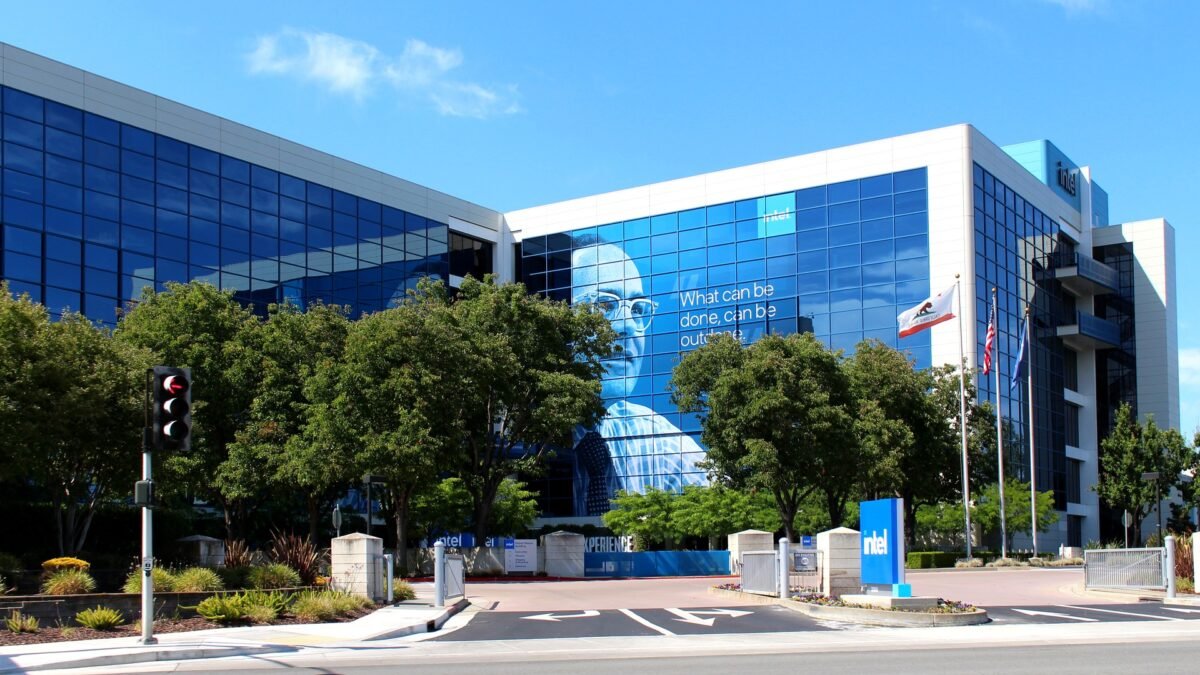
Intel was the day’s most dramatic casualty. Its shares fell about 29 per cent on Friday, the worst single-day decline since 1974, according to the Associated Press, after the chipmaker forecast fourth-quarter earnings below analysts’ expectations. The shares had fallen by as much as 30 per cent during the session, the BBC reported, putting the company on course to lose more than $130 billion in market value. Intel’s finance chief, David Zinsner, told investors on Thursday that the company did not expect to bring in more cash than it spent this year, and the company said it planned to increase spending on AI equipment even as demand for personal computers remained soft.
The pain spread across the semiconductor sector. Nvidia fell 5.3 per cent and AMD dropped 12.1 per cent, while the Philadelphia semiconductor index lost 8.7 per cent, according to Reuters. The declines came despite the fact that demand for the chips that power AI systems remains strong — a tension that ran through the whole session. Investors were not questioning whether customers want AI computing. They were questioning whether the companies supplying it can make the sums add up.
Amazon fell 1.9 per cent on Friday, according to the Associated Press, a day after reporting weaker-than-expected summer earnings. The company disclosed that it had spent $94.8 billion on property and equipment, most of it on AI technology, and that its free cash flow over the previous 12 months was negative $42.4 billion, largely reflecting soaring spending on data centres and other infrastructure. Amazon has committed to $220 billion in annual expenditure for data centres and related infrastructure, the BBC reported, even as its cloud division, Amazon Web Services, grew revenue by 39 per cent.
Alphabet, the parent company of Google, had already set the tone a day earlier. Its shares plunged more than 12 per cent on Thursday, the worst day in the company’s history, wiping about $500 billion from its market value after it revealed that its AI-powered search summaries were affecting its core search advertising revenue. Search revenue grew 12 per cent in the September quarter, its slowest pace in five quarters, while the company said it expected to spend up to $205 billion this year on investment, almost entirely related to AI infrastructure. Alphabet’s shares fell again in early trading on Friday, down about 1 per cent after Thursday’s slide, the BBC reported.
Reddit provided the day’s most striking illustration of how AI is reshaping the internet economy itself. Its shares tumbled 29 per cent on Friday, their biggest single-day drop and their lowest level in more than a year, after the company warned that Google’s AI-powered search was hurting the referral traffic on which its growth depends, Reuters reported. Reddit still appears in Google search results, but it is attracting fewer clicks, because users increasingly rely on Google’s AI tools for direct answers instead of visiting the sites that produced the information.
“When more than a million search referrals a week disappear because Google’s AI answers the question itself, investors are no longer looking just at the next three or four months, but at how much of Reddit’s audience it will really own in the years ahead,” Vitor Madeira, a senior market specialist at Capital.com, told Reuters. Reddit warned that its daily active unique visitors could fall by a low double-digit percentage in the fourth quarter if referral traffic kept declining. If the losses held, Reddit was set to lose more than $7 billion in market value, Reuters reported, and at least 11 brokerages cut their price targets on the stock.
The same forces hit Pinterest, whose shares fell nearly 8 per cent after it missed analysts’ estimates for third-quarter revenue and profit and forecast revenue for the crucial holiday quarter below estimates. At least 13 brokerages cut their price targets on Pinterest, Reuters reported. The trend is also hitting news publishers, educational platforms such as Chegg, and travel and product-review sites, according to Reuters. In a twist that captured the contradictions of the moment, Reddit said on Friday that it had extended its cloud services agreement with Google through 2029, committing to spend $580 million over three years — paying the same company whose AI tools are draining its traffic.
For all the drama, the market’s message was not that AI has failed. It was that the financing of AI has become the story. CNN reported that the bond market — the market that actually funds the buildout — has so far been largely untroubled, with lenders lining up to take on Big Tech’s debt. About a third of Big Tech’s capital expenditure this year is expected to be financed with debt, something like $250 billion worth of bonds from the hyperscalers alone, according to Goldman Sachs, and that share is expected to peak next year at around 35 per cent. Goldman Sachs has calculated that $510 billion of investment-grade debt is available to the biggest hyperscalers, more than double what they are expected to borrow by the end of the year.
That cushion is one reason many analysts resisted calling Friday a turning point. The Nasdaq remained up 7.6 per cent over the preceding 12 months despite the week’s volatility, the BBC reported. Of the 299 S&P 500 companies that had reported third-quarter results through 30 October, 82 per cent had beaten consensus estimates, according to LSEG data cited by Reuters. And Microsoft stood out during the week with strong cloud growth and cash flow despite its own heavy AI investment, a contrast that investors seized on as evidence that the spending can work when it is disciplined.
The yield on the 10-year US Treasury fell to 4.93 per cent on Friday from 4.98 per cent at Thursday’s close, according to the Associated Press, as investors sought safety. But the relief was partial: the same reporting noted that pressure had spread to companies involved in building AI data centres, amid concern that high interest rates could slow their expansion.
Analysis: Why It Matters
1. The question has changed — from whether AI works to whether it pays
For two years, the market’s argument about AI was about capability: how powerful the models were, how fast they were improving, and how quickly they would transform every industry. Friday’s selling suggests that argument is over, and a harder one has taken its place. Nobody on Wall Street seriously doubts that demand for AI computing is real. Cloud revenue across the hyperscalers grew 50 per cent in the second quarter, according to CNN, and Amazon Web Services grew 39 per cent in the latest quarter. The doubt is about arithmetic. When five companies commit $800.6 billion in a single year and the infrastructure bill is heading past $1 trillion annually, the returns have to arrive on a timetable that investors can see. This week they looked at the cash flow statements — Alphabet’s second consecutive quarter of negative free cash flow, Amazon’s negative $42.4 billion over 12 months, Intel’s admission that it will spend more cash than it brings in — and decided the timetable is slipping. That is a different kind of scepticism from the bubble talk of earlier cycles, and it is harder to dismiss, because it is grounded in the companies’ own numbers rather than in speculation about the technology.
2. AI is now eating the business that created it
Reddit’s 29 per cent plunge is the most consequential single number of the week, because it shows the AI revolution turning on its own supply chain. Google’s AI Mode and AI Overviews answer users’ questions directly, which means fewer people click through to the websites — Reddit threads, news articles, product reviews, educational pages — that supplied the answers in the first place. Alphabet itself is caught in the same trap from the other side: its AI summaries are slowing growth in the search advertising business that funds the entire company, which is why its shares suffered their worst day ever on Thursday. This is not a story about one company’s earnings miss. It is a structural shift in how value flows across the internet, and it raises a question nobody has answered: if AI systems consume the open web’s content without sending readers back, who pays to produce the content the AI needs? Reddit’s warning that its daily active users could fall by a low double-digit percentage in the fourth quarter is the first time a major platform has put a number on that damage. It will not be the last.
3. The bond market, not the stock market, will decide how this ends
The most important analysis published this week did not come from an equity strategist but from CNN’s examination of the bond market, and it reframed the whole debate. The stock market can panic for a week and recover; the bond market decides whether the cheques clear. So far, lenders have been remarkably relaxed about financing the AI buildout, and Goldman Sachs’s estimate of $510 billion in available investment-grade debt for the biggest hyperscalers suggests the largest companies have substantial runway left. But the terms are already changing at the edges. Weaker, highly indebted companies that rent out computing capacity — the so-called nanoclouds — are paying far more to borrow, with CoreWeave’s bond yields surging to 15 per cent this month as losses piled up, according to CNN. Elon Musk has predicted a massive shakeout in that corner of the industry. The real risk is contagion: if negative sentiment in the stock market bleeds into the bond market, borrowing costs rise for everyone, and the economics of the buildout change overnight. That is the mechanism by which a correction becomes a crisis, and it is the indicator to watch more closely than any share price.
4. Demand is not the problem — cash conversion is
It is worth stating plainly what Friday’s sell-off was not: it was not a verdict that customers have stopped wanting AI. The evidence points the other way. Agentic AI — software agents that act on a user’s behalf — is driving an explosion in usage, with requests from agents consuming 15 times as many tokens as human-initiated requests, according to OpenRouter figures cited by CNN. Hyperscaler revenue surged 19 per cent over the past 12 months, according to Capital Economics. The problem is the gap between revenue growth and cash generation. Data centres must be built, powered and filled with chips years before the revenue they generate covers the cost, and Goldman Sachs estimates that monetisation arrives somewhere between three months and two years after a data centre is switched on. In that gap, companies must borrow. Microsoft showed this week that the gap can be managed; Intel showed what happens when it cannot. The market is now sorting companies not by how much AI they promise, but by how much cash their AI businesses actually produce — a much stricter test, and one that will separate winners from casualties over the next year.
5. A correction, not a collapse — yet
Perspective matters, and the numbers argue against panic even as they justify caution. The Nasdaq is just over a percentage point away from a correction — a 10 per cent decline from its all-time high — according to CNN, but it remains up 7.6 per cent over the past year. More than four-fifths of S&P 500 companies that have reported so far beat expectations. The sell-off is concentrated in the companies spending the most and converting the least, not in the broader economy. That pattern resembles a repricing of a specific bet rather than a collapse of confidence in technology itself. But repricings have a habit of feeding on themselves: falling share prices raise the cost of capital, which makes the spending harder to finance, which pressures share prices further. The $2 trillion the Nasdaq 100 has lost across October is real wealth, and the $1 trillion lost in a single week is the kind of figure that changes behaviour in boardrooms. Whether Friday marks the bottom or the beginning of something longer will depend less on the technology than on the next set of numbers — and on whether the bond market keeps its nerve.
What to Watch Next
- Monday’s open and the Nasdaq’s distance from correction: the index sits just over a percentage point from a 10 per cent fall from its record high. A further slide early next week would put the word “correction” in every headline and test whether buyers step in.
- The next hyperscaler earnings and spending guidance: Microsoft showed discipline can be rewarded; the market will now demand the same from Meta, Amazon and Alphabet, and any further increase in capital expenditure forecasts without matching cash flow will be punished.
- Bond yields and the cost of AI debt: watch whether the calm in the bond market holds. Rising yields on hyperscaler and data-centre debt would signal that lenders are starting to share the stock market’s doubts.
- Reddit’s fourth-quarter user numbers: the company warned daily active users could fall by a low double-digit percentage if Google referral traffic keeps declining. That figure, when it lands, will show whether the AI-search squeeze is a blip or a structural break for the open web.
- Chip demand versus chip economics: Nvidia and AMD fell sharply despite strong underlying demand for AI chips. Their next updates on orders, pricing and data-centre buildout will show whether the hardware cycle is cooling or simply being repriced.
Sources
- BBC — “US tech stocks see sharp falls as AI spending nears $1tn”
- Reuters — “Reddit shares plunge as Google’s AI search squeezes traffic”
- Associated Press — “Nasdaq falls 2.9% as concerns grow over AI costs”
- CNN — “The real question we should all be asking about AI”
- The AI Innovator — “Nasdaq Tumbles as AI Spending Fears Deepen”

About the Author — Abdul Mannan
Related Articles

Amazon Burns $42 Billion in Cash Chasing AI Growth as AWS Surges 39% and Shares Slide
Amazon burned $42.4 billion in cash over the past year as AI infrastructure spending surged, sending shares down…
Alphabet Loses About $500 Billion in Value as AI Mode Squeezes Search Advertising
Alphabet shares suffered their worst day on record after third-quarter results showed AI Mode queries earning less from…
Google Unveils Gemini 4 Carbon, Its Strongest AI Model Yet, for Cyber Defenders First
Google has unveiled Gemini 4 Carbon, its strongest AI model yet, giving vetted cyber defenders first access to…