
Alan Jones, Australia’s Last Formula 1 World Champion, Dies Aged 80

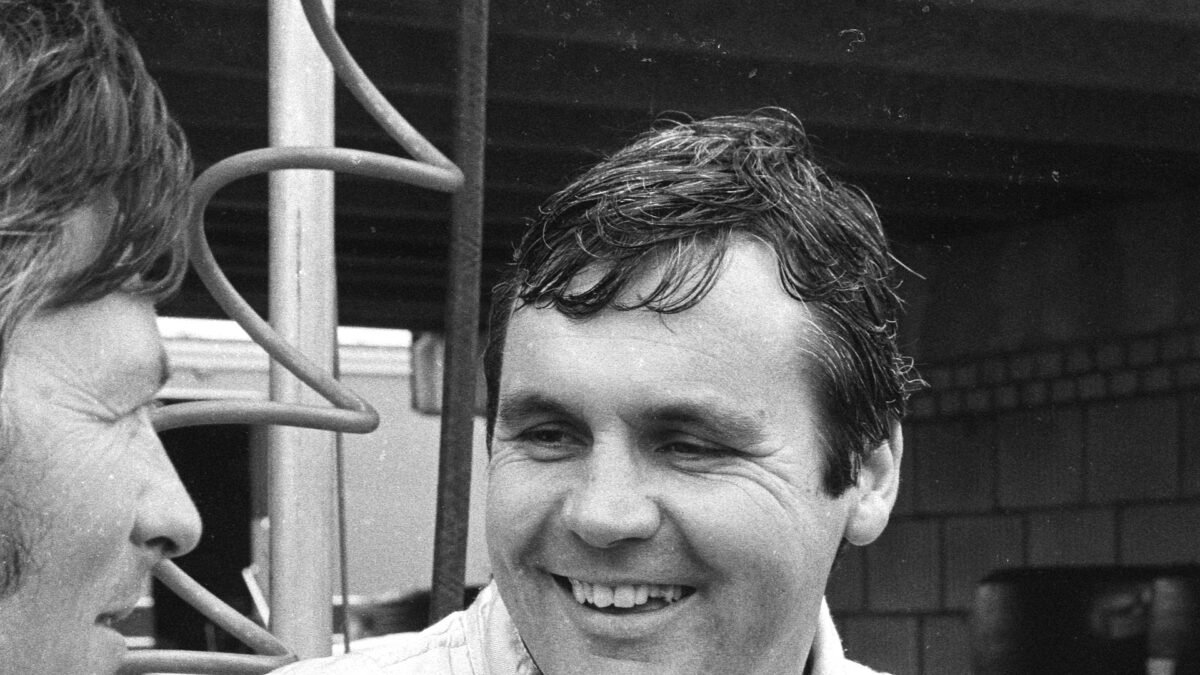
Alan Jones, the 1980 Formula 1 world champion and the first driver to win the sport’s greatest prize with Williams, has died at the age of 80, his family has announced.
Jones died on Thursday 5 November, three days after celebrating his 80th birthday, following a short illness. His wife, Amanda Butler-Davis, confirmed the news in a statement released through Motorsport Australia, the sport’s governing body in his home country.
“We are extremely saddened to announce the passing of our beloved Alan, who passed away on 5 November following a short illness,” the statement said, according to Reuters and the Associated Press. “He will be dearly missed and fondly remembered by those closest to him, as well as the many fans whose support he was always grateful for.”
The Australian Grand Prix Corporation, which organises the race in Melbourne, confirmed the death on Thursday and paid tribute to a driver it described as one of Australia’s greatest racing figures. Australian media reported that Jones had been diagnosed with cancer only weeks before his death, although his family’s statement described only a short illness and gave no further medical detail.
Jones remains, 46 years after his triumph, the last Australian to win the Formula 1 world championship. He was only the second Australian to do so, after the triple world champion Sir Jack Brabham, and he remains the last Australian to win his home grand prix, a race he won at Calder Park in 1980 in the same year he took the title.
He is survived by his wife Amanda and his six children, Christian, Amber, Zara, Jack, Camilla and Emma.
A family statement, and a sport in mourning
The announcement came from Motorsport Australia on Thursday morning, Australian time, and was swiftly followed by tributes from across the sport. The governing body’s president, Andrew Fraser, said Jones was “one of the most significant figures in Australian motorsport history, whose achievements on the world stage brought immense pride to our nation”.
“Alan was a singular character, formidable on and off the race-track,” Fraser said, according to Speedcafe. “His contribution to our sport will be remembered for generations and we extend our deepest sympathies to his family and loved ones.”
Motorsport Australia’s chief executive, Josh Blanksby, said Jones’s death was “a great loss for Australian motorsport and for the many people whose lives he touched throughout his remarkable career”, adding that “generations of fans will remember the excitement, passion and pride he brought to the sport, both on and off the track”.
The Australian Grand Prix Corporation said in its own statement that Jones “holds a special place in the history of our sport”, noting that his 1980 championship “inspired a generation of Australian motorsport fans, while his victory at the Australian Grand Prix that same year remains the last time an Australian driver has won their home grand prix”.
“He leaves an extraordinary legacy in Australian motorsport and will be deeply missed by the motorsport community around the world,” the corporation said.
Mark Webber, the Formula 1 race winner who became only the third Australian to win a grand prix when he triumphed at the 2009 German Grand Prix, was among the first leading figures to pay tribute. Webber, who first met Jones in the 1990s and received his support throughout his own rise through the sport, called it a “sad day for Australian motorsport” and mourned the death of a “warrior”, according to Speedcafe.
Supercars, the Australian touring car championship in which Jones raced for years after Formula 1, offered its condolences to his family and described him as a racing legend. Jones made 186 Supercars starts, claiming five wins, three pole positions and 17 podium finishes, and finished second at the Bathurst 1000 alongside Allan Grice in 1995, according to Speedcafe.
On Channel Nine’s Oaks Day broadcast, the television presenter Eddie McGuire, who worked with Jones for years on the network’s motorsport coverage, recalled him as a straight shooter who “said exactly what he thought” and “one of the greatest commentators and special comments people that I’ve ever worked alongside”. McGuire said Jones’s wife had told him that on his 80th birthday on Monday, Jones had enjoyed his favourite caviar but had “stayed off the Grey Goose for once in his life”.
“Vale, a superstar of the track, of world sport and of broadcasting,” McGuire said.
The motorsport broadcaster Greg Rust wrote on Instagram: “They don’t make ’em like AJ now. No nonsense. No BS. Just said it straight. You gotta love that.” The commentator Leigh Diffey wrote on X: “Sad to see this news. Australia’s last F1 World Champion and a real character. RIP AJ!”
Just days before Jones’s death, the Formula 1 journalist Matt Bishop had marked his 80th birthday with a tribute in Motor Sport magazine, describing him as “the most underrated world champion in the history of Formula 1”.
“He was a race driver in the most elemental sense: powerful, unsentimental and fiercely competitive,” Bishop wrote. “(Gilles) Villeneuve was more incandescent, (Carlos) Reutemann was more dextrous, (Nelson) Piquet was more calculating… But Jones had the lot: the strength to fuel the effort, the stamina to maintain it, the bellicosity to impose himself, and a hefty dollop of sheer white-knuckle speed.”
From Melbourne to London with 50 pounds
Alan Stanley Jones was born in Melbourne on 2 November 1946, the son of Stan Jones, a successful Australian racing driver who won the 1959 Australian Grand Prix. He and his father are one of only three father-son pairs to have won the Australian Grand Prix, according to the Australian Associated Press.
Jones grew up around racing, working in his father’s Holden dealership while competing in a Mini and a Cooper at home. He first travelled to Europe in 1967 to try to make a name for himself, but could not afford even a Formula Ford drive and returned home. He came back to Britain in 1970, this time for good, with 50 pounds to his name, buying and selling second-hand cars with his compatriot Brian McGuire to fund his racing.
The early years were hard. A Formula Three car he had hoped to adapt and sell was written off in a testing accident at Brands Hatch in which he broke his leg. A drive in Brazil in late 1970 ended with engine failure in his first two races and a broken gearbox in the third. But a breakthrough Formula Three win in the 1973 season was scarred by his father’s sudden death only a few weeks beforehand. His father’s coffin was shipped to Australia containing Jones’s laurel victory wreath.
By 1974 he was racing in Formula Atlantic and Formula 5000, and a chance meeting with the team owner Harry Stiller led to a Formula 1 drive. Stiller bought a Hesketh 308 and signed Jones, who made his debut at the 1975 Spanish Grand Prix at the fast Montjuic circuit in Barcelona, a weekend that turned out to be one of the most tragic in Formula 1 history when Rolf Stommelen’s crash killed five spectators.
After four races, Stiller’s team stopped racing, but Jones was named as a replacement for the injured Stommelen on Graham Hill’s team, finishing fifth at the Nurburgring. He earned his first full-time Formula 1 drive in 1976 with John Surtees’ team, in a car famous for its Durex sponsorship, which led the BBC to refuse to cover Formula 1 races during the season. His best result that year was fourth in the final race in Japan.
Jones refused to drive for Surtees again in 1977, preferring to sit out a season than continue with the team. He was racing in the United States when the Shadow team signed him as a replacement for Tom Pryce, who had been killed in a freak accident at the South African Grand Prix. He seized the chance, winning at the Osterreichring in Austria for his maiden victory and finishing seventh in the championship.
By late 1977, he had caught the attention of both Frank Williams and Enzo Ferrari. Ferrari invited him to Maranello, but in the end chose Gilles Villeneuve for the drive. Jones went to Williams instead, a team then struggling for funds and yet to make its name, having been restarted by Frank Williams earlier that year.
The Williams years: 1978 to 1981
Jones’s first season with Williams, in 1978, was a building year. His best result was second place at Watkins Glen, but he also won the North American Can-Am championship that year driving a Lola for the Haas team, winning five of the nine races he contested. The foundations were being laid.
The breakthrough came in 1979, when the Williams FW07, one of the great ground-effect cars of its era, transformed the team. Jones won four races in the space of five events near the end of the season, at Hockenheim, the Osterreichring, Zandvoort and Montreal, and finished third in the championship. It was the springboard to an excellent 1980 campaign.
In 1980, Jones won seven races in total, five of them counting towards the world championship: in Argentina, France, Britain, Canada and the United States. The Spanish Grand Prix, which he also won, was later removed from the championship, and the Australian Grand Prix at Calder Park was a non-championship race. He finished on the podium in all but one of the grands prix he completed, and he clinched the title ahead of the Brazilian Nelson Piquet, beating him by 13 points in the final standings.
The championship was sealed at Watkins Glen, the last Formula 1 grand prix ever held at the famous American circuit. Jones was the first driver to win a world championship with Williams, and the first of what would become seven Williams world champions, a line that would later include Keke Rosberg, Nelson Piquet, Nigel Mansell, Alain Prost, Damon Hill and Jacques Villeneuve.
He had a good chance to repeat his success in 1981, but a very combative relationship with his team-mate Carlos Reutemann led to an intense rivalry that possibly cost both drivers a chance at the championship. Jones won at Long Beach and at the Caesars Palace Grand Prix in Las Vegas, his final Formula 1 victory, and finished third in the championship, four points behind Piquet and three behind Reutemann.
He announced his retirement at the end of the 1981 season, capped by that win in Las Vegas. He was 35 years old, a world champion, and ready to go home.
Comebacks, touring cars and the microphone
Retirement did not quite stick. Jones came back for a one-off drive with Arrows at the 1983 United States Grand Prix West at Long Beach, qualifying 12th but retiring after 58 laps through driver fatigue. A week later he drove for Arrows again in the non-championship Race of Champions at Brands Hatch, finishing third behind the reigning world champion Keke Rosberg and the rookie Danny Sullivan.
He later revealed that Ferrari had contacted him in mid-1982, after the death of Gilles Villeneuve and the injury-enforced retirement of Didier Pironi, about driving for the team. Enjoying life back in Australia, he took too long to answer, and Ferrari instead offered the drive to the 1978 world champion Mario Andretti for the last two races of the 1982 season. Jones later said he regretted the delay, since Ferrari might have kept him for 1983, when the team won the constructors’ championship.
Back in Australia, Jones raced touring cars and sports cars, dominating the 1982 Australian GT Championship in a Porsche 935 in a series of famous duels with the local touring car star Peter Brock, driving a Chevrolet Monza. He formed his own touring car team, and in 1995 he finished second at the Bathurst 1000 alongside Allan Grice.
In late 1985 he made a full-time return to Formula 1 with the new American-owned Haas team, becoming its first driver. The comeback, in a car powered by an underpowered Ford V6 engine against rivals from Honda, TAG-Porsche, BMW, Ferrari and Renault, was unsuccessful, and when the team lost its sponsorship and ran out of money at the end of 1986, Jones retired from Formula 1 for good, having won 12 races, taken six pole positions and set 13 fastest laps across 116 starts.
He retired from competition in 2002 and settled into television commentary, where the belligerence that had endeared him to Frank Williams served him well. He was known, as the Australian Associated Press put it, to “call a spade a bloody shovel”. Last year, asked whether McLaren were sabotaging Oscar Piastri, the latest Australian aiming to join Brabham and Jones as a Formula 1 champion, he told the ABC: “It’s the greatest load of nonsense of all time… it’s absolute crap.”
He was made an MBE and inducted into both the Sport Australia Hall of Fame and the Australian Motorsport Hall of Fame. A statue of him was unveiled at the Australian Grand Prix in Melbourne in 2013.
Analysis: Why It Matters
The end of a 46-year line
Jones’s death closes a chapter that has now lasted almost half a century. When he won the title in 1980, no one in Australia could have imagined that no Australian would win it again for 46 years and counting. Mark Webber won nine grands prix but never the championship. Daniel Ricciardo won eight. Oscar Piastri, the latest challenger, fought for the title in 2025 and remains in the hunt in the current era, but the wait goes on. Jones’s passing will inevitably sharpen the question of when, and whether, Australia will produce another world champion. The longer the wait lasts, the larger his achievement grows in the national memory, and the more it is understood not as the start of an Australian era in Formula 1, but as a solitary peak.
Williams’ first champion, and the making of a dynasty
Jones mattered to Williams as much as Williams mattered to him. When he joined in 1978, Frank Williams’s team was a rebuilding operation with little money and no track record of winning. Jones gave it its first victory, its first championship and its first constructors’ title, and in doing so he established the template for what Williams would become: a team that could beat the sport’s giants on engineering and determination rather than budget. The seven drivers’ titles that followed were built on the foundation he laid. It is no accident that the tributes to Jones have come so strongly from the Williams story; without him, there might never have been a Williams dynasty at all. His death is a reminder that the team’s modern struggles, far from the front of the grid, stand in sharp contrast to the era he helped create.
The most underrated champion?
Matt Bishop’s judgement, written for Jones’s 80th birthday only days before his death, is worth sitting with: the most underrated world champion in the history of Formula 1. The case is strong. Jones won his title against Nelson Piquet, one of the great drivers of his generation, and he did it with a consistency that his rivals could not match, finishing on the podium in almost every race he completed. He beat a team-mate, Carlos Reutemann, who was himself a championship contender. He did it in a car that was quick but not dominant, in an era of ferocious competition that included Piquet, Villeneuve, Laffite, Pironi and John Watson. Yet his name rarely appears in the usual lists of the sport’s great champions. Part of that is timing: he retired at 35, at the top, rather than accumulating wins into his late thirties. Part of it is geography: an Australian champion in a European sport, far from the media centres that build legends. And part of it is character: Jones never cultivated his own myth. He was, as Frank Williams said, a man’s man who never needed propping up, and he let the driving speak. His death is an occasion to correct the record, and to recognise that a driver who won 12 grands prix and a world title against the strongest field of his generation deserves a higher place in the sport’s history than he has usually been given.
A character the modern sport has lost
There is a reason so many of the tributes to Jones have dwelt on his bluntness. Formula 1 today is a sport of media training, sponsor obligations and carefully managed messaging, in which drivers are coached from their teens in what to say and what not to say. Jones belonged to a different era, one in which a driver could call a spade a bloody shovel on live television and be loved for it. His red underwear, worn as a good-luck charm, his refusal to be babysat by his team boss, his willingness to tell a broadcaster that a conspiracy theory was nonsense: these were not affectations but expressions of a man who was, in Frank Williams’s words, determined and bullish and great fun to be with. The sport has gained enormously in professionalism and safety since Jones’s day, and no one would wish back the dangers of the 1970s. But something has been lost too, and the warmth of the tributes suggests that many inside the sport know it. Jones was the last of a breed, and his passing marks the fading of an era when champions could be unpolished, unfiltered and entirely themselves.
What his death says about Formula 1’s memory
There is a poignancy in the timing. Jones died in the week that Formula 1 heads to Interlagos for the Sao Paulo Grand Prix, with a new champion, the 20-year-old Andrea Kimi Antonelli, having been crowned in Mexico only days ago as the youngest world champion in the sport’s history. The contrast is stark: a 20-year-old at the start of his reign, and an 80-year-old at the end of his life, the two of them bookending 46 years of change in the sport. Jones’s career also reminds the modern sport of its own roots. He arrived in London with 50 pounds, bought and sold second-hand cars to fund his racing, and won a world title in a team that had almost no money. That path is unimaginable today, when drivers arrive through academies and billion-dollar programmes. His story is a reminder that Formula 1 was once a sport where talent and bloody-mindedness could carry a driver from nothing to the top of the world, and it is worth asking what the sport has gained, and what it has lost, in closing that road.
What to Watch Next
- Tributes at Interlagos: Formula 1 heads to the Autodromo Jose Carlos Pace in Sao Paulo this weekend for the Sao Paulo Grand Prix, with practice on Friday 6 November and the race on Sunday 8 November. The paddock will have its first chance to mark Jones’s passing collectively, and any formal tribute from Formula 1 or Williams will be closely watched.
- Williams’ response: As the team Jones made champions, Williams is expected to lead the formal tributes. Watch for a statement from the team and for any plans to honour him at a future race, including at the Australian Grand Prix in Melbourne.
- Funeral and memorial details: No funeral or memorial arrangements have yet been announced. Expect Motorsport Australia and the Australian Grand Prix Corporation to announce public tributes in Melbourne, where his statue stands at Albert Park.
- The Australian wait: Oscar Piastri remains the latest Australian chasing the title Jones won in 1980. Jones’s death will renew attention on the 46-year wait, and on whether Piastri, who challenged for the championship in 2025, can finally end it.
- Retrospectives of 1980: Expect broadcasters and publishers to revisit the 1980 season, the FW07 and the Watkins Glen title decider in the coming days, as the sport reassesses the career of a champion many now regard as underrated.
Sources
- Reuters — Australian F1 world champion Alan Jones dies aged 80
- Associated Press via TSN — Alan Jones, the Australian who became the first driver to win an F1 title with Williams, has died
- Australian Associated Press — ‘A man’s man’: Jones scaled Formula One heights
- Speedcafe — Alan Jones’ family speaks as tributes flow for F1 legend
- PlanetF1 — Williams’ first world champion, Alan Jones, dies aged 80

About the Author — Abdul Mannan
Related Articles
At 38, Virat Kohli Is Still Writing History — and the World Is Still Watching
On the eve of his 38th birthday, Virat Kohli's 74 off 51 balls sealed India's rain-hit ODI win…
Rafael Nadal Joins Real Madrid Board of Directors as Tennis Legend Takes Seat in the Bernabéu Boardroom
Real Madrid have appointed 22-time Grand Slam champion Rafael Nadal to their board of directors, with the tennis…

Yamal Breaks Mbappé’s Teenage Champions League Record as Raphinha Brace Seals Barcelona’s 3-0 Win Over Aston Villa
Lamine Yamal became the highest-scoring teenager in Champions League history and Raphinha struck twice as Barcelona ended Aston…