
America Votes in the 2026 Midterms as Control of Congress — and Trump’s Final Two Years — Hang in the Balance

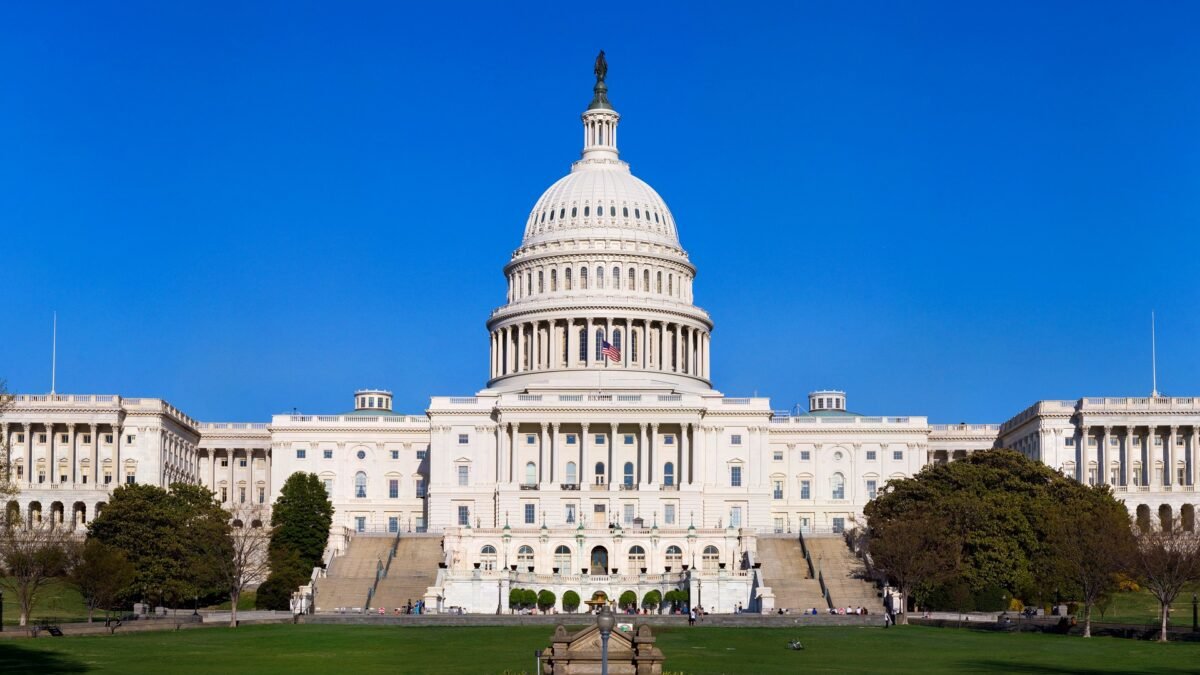
Americans are voting on Tuesday in midterm elections that will decide control of Congress for the final two years of President Donald Trump’s term, in the first nationwide verdict on a presidency that has pushed the country’s politics to their most polarised point in a generation. All 435 seats in the House of Representatives, 35 of the 100 seats in the Senate and 36 governorships are on the ballot, alongside thousands of state and local offices, according to Reuters.
Republicans hold narrow majorities in both chambers of Congress, and Democrats need a net gain of four seats in each to overturn them, according to Reuters. The party is widely expected to reclaim the House, where Republicans hold a 218–214 edge, while the Senate, which Republicans control 53–47, remains too close to call. More than 100 million ballots are likely to be cast if turnout matches the previous midterm election in 2022, according to Reuters, and more than 51 million Americans had already voted by 31 October, a record for that stage of the cycle.
Polls began opening across the country early on Tuesday morning, with the first polling stations closing at 6pm Eastern Time in parts of Indiana and Kentucky. The last polls close at 1am Eastern Time on Wednesday in Alaska’s Aleutian Islands. The first results are expected shortly after the East Coast polls close, but officials and forecasters alike warn that control of Congress may not be known on election night, with close races and slow mail-ballot counts in states such as California capable of stretching the outcome over days.
The election arrives with Mr Trump’s standing at the lowest point of his presidency. His approval rating has fallen to 31 per cent, a record low, according to a Reuters/Ipsos poll, while a New York Times tracker puts his approval at 36 per cent, with 61 per cent disapproving — the lowest approval rating for any president heading into a midterm election in 80 years, according to USA Today. Democrats lead Republicans by 12 points on the generic congressional ballot in the Reuters/Ipsos survey, 47 per cent to 35 per cent, while other polling averages put the Democratic advantage at around eight to nine points.
What Is at Stake
The midterms are, by definition, an election about Congress rather than the presidency. Mr Trump is not on the ballot, and his term continues regardless of the result. But the composition of Congress determines who writes the laws, who chairs the committees, who confirms the president’s nominees and who can investigate his administration — and that is why both parties have treated this vote as a referendum on the president himself.
If Democrats win the House, they would gain control of its committees, the power to issue subpoenas and the ability to open investigations into the Trump administration, according to Reuters. They could also block the president’s legislative agenda in its tracks. If they win the Senate as well, they would gain a say over judicial and cabinet appointments and the power to shape — or stall — the confirmation of the president’s nominees.
If Republicans hold both chambers, Mr Trump would keep a clear, if narrow, path for the final two years of his second term, including the ability to confirm judges and push through legislation with only Republican votes in the Senate. Analysts interviewed by Reuters said that even in that scenario, fights over raising the debt ceiling and funding the government are likely in 2027 regardless of the outcome.
The stakes are also financial. A record $3.8 billion had already been spent on political advertising by 12 October, according to Reuters, making this the most expensive midterm campaign in American history. Much of that money has been poured into a handful of Senate races and a few dozen competitive House districts, where the balance of power will actually be decided.
The Senate Battlegrounds
The Senate is where the night will be won or lost, and it is also where the Democratic path is narrowest. Republicans are defending 22 of the 35 seats on the ballot, but Democrats must win four of them to reach 51 seats and an outright majority. At 50–50, Vice President JD Vance would cast the tie-breaking vote, keeping the chamber in Republican hands.
Decision Desk HQ, a nonpartisan election forecaster, gave Democrats a 64 per cent chance of winning the Senate on Monday, with a projected 52 seats, according to The Hawk News, while another model put the figure near 89 per cent and traders on the Kalshi prediction market priced Democratic control at around 71 to 72 per cent. The Cook Political Report, in its 30 October assessment, described Democrats as slight favourites in the chamber, with seven competitive races likely to decide control.
The races most often cited as decisive span the political map. In Maine, Republican Senator Susan Collins is seeking re-election in a state that Kamala Harris won in 2024, facing Democrat Troy Jackson. In Ohio, former Democratic Senator Sherrod Brown is challenging Republican Senator Jon Husted in a special election for the seat vacated when Mr Vance became vice president. In Texas, Democratic state Representative James Talarico is running against Republican Attorney General Ken Paxton in a race that polling has shown to be unexpectedly close. In Alaska, Republican Senator Dan Sullivan faces Democrat Mary Peltola. In Georgia, Democratic Senator Jon Ossoff — the only Senate Democrat seeking re-election in a state Mr Trump won — is defending his seat. In Michigan, Republican Mike Rogers and Democrat Abdul El-Sayed are competing for an open seat, a contest thrown into the spotlight at the weekend when Democrat Haley Stevens crossed party lines to endorse Mr Rogers. In Iowa, an open seat is being contested with Republican Ashley Hinson favoured, and in Kansas, Republican Roger Marshall faces Democrat Adam Hamilton.
Democrats would need to win several states that Mr Trump carried in 2024, some by double digits, to reach 51 seats, according to The Hawk News. That is a demanding task, and it is why forecasters have consistently rated the House as the more likely Democratic gain. But the Senate map has moved in the Democrats’ favour over the final weeks, and the final set of polls from The New York Times and Siena University showed Democrats ahead in almost all seven of the battleground states that will determine control of the chamber.
The House Map
The House is where Democrats are the clear favourites. Decision Desk HQ gave Democrats an 84 per cent chance of winning the chamber on Monday, with a projected 241 seats, according to The Hawk News, while the Silver Bulletin put the figure at about 95 per cent and prediction markets priced it at around 93 per cent. The Cook Political Report projected in its 30 October assessment that Democrats could gain between 12 and 25 House seats, while Sabato’s Crystal Ball identified 225 seats as at least leaning Democratic, 193 leaning Republican and 17 as toss-ups.
Early results from Republican-held House seats in Florida and Virginia could provide the first clues to the scale of any Democratic gains, according to Reuters. Those states are among the first where polls close, and the size of the swing there has historically been a reliable early indicator of the national mood. Decision Desk HQ rates districts in Iowa, Maine, Pennsylvania, Colorado, Texas, Ohio, Montana, Florida and North Carolina among its toss-ups.
History is on the Democrats’ side. The president’s party has gained seats in the House in a midterm election only twice since 1946, according to The Hawk News, and the party holding the White House has typically lost ground in most postwar midterms. Republicans counter that candidate quality and turnout operations at district level can blunt national trends, and House Speaker Mike Johnson has expressed confidence that his party will defy the historical pattern.
Redistricting has also shaped the map. Republican-led redrawing of district lines in several states means the party is likely to pick up a few deep-red seats, which makes the national environment the main variable in the final result. Even so, the sheer breadth of the Republican defensive position — a 218–214 majority with three seats vacant — means that a modest national swing towards the Democrats would be enough to flip the chamber.
The Issues Driving Voters
Three issues have defined this election, according to a Reuters explainer: Mr Trump’s record-low popularity, voter frustration over the cost of living and a fierce fight over immigration. The cost of living has consistently ranked as voters’ top concern. Half of registered voters surveyed in a recent Reuters/Ipsos poll cited the cost of living as the most important factor in how they will vote.
Just under three in ten likely voters support how the president has managed Americans’ cost of living, according to The New York Times’ final national poll with Siena University, and more than four in ten Republicans expressed dissatisfaction on the issue. Gas prices, linked by analysts to the war with Iran, have become a visible daily reminder of that frustration, alongside food prices and health care costs.
Immigration has been the second great fault line of the campaign. Democrats have said Mr Trump has broken his promises to lower costs and end wars, and have vowed to pursue an affordability agenda and hold the administration to account over alleged corruption if voters give them control of either chamber. Republicans argue that border security measures and tax cuts are working, and say Democrats have moved too far to the left. Mr Trump has predicted his party will hold both chambers.
Polling also suggests the election has become increasingly nationalised. A Pew Research Center survey found that 44 per cent of registered voters describe their midterm vote as a vote “against” Mr Trump, and recent polling has shown corruption rising in importance as an issue for voters — a sign, analysts say, that the election is being fought as a verdict on the president rather than on local candidates.
The war with Iran has also weighed on the campaign. Reuters reported that the conflict has contributed to the president’s weak standing, and Democrats have said a Democratic-controlled Congress would investigate the administration’s handling of the war alongside its immigration enforcement and ethics. The administration, for its part, has pointed to its conduct of the war as a demonstration of American strength.
A Record Early Vote — and a Long Night Ahead
More than 54 million Americans had already voted early as of the final weekend, according to a University of Florida tracker, and Reuters reported on 31 October that more than 51 million had voted by that point — a record for that stage of the election cycle. Opinion polls showed Democrats significantly more enthusiastic about voting than Republicans heading into Election Day, according to Reuters, a gap that could matter in low-turnout midterm contests.
About 210 million Americans are registered to vote, according to Al Jazeera, and Reuters has reported that more than 100 million ballots are likely to be cast in total. The US Election Assistance Commission has cautioned that election-night figures are never the final, certified results, and officials must complete counting mail-in, provisional and other outstanding ballots before certifying the outcome — a process that varies by state and can take days or weeks.
Polls close in stages through the night. The first stations close at 6pm Eastern Time in parts of Indiana and Kentucky, followed by Georgia, Virginia and South Carolina at 7pm, North Carolina and Ohio at 7.30pm, and a large wave of states including Pennsylvania, Michigan and Texas at 8pm. The first key Senate result could come from Georgia after 7pm, and the 8pm wave is expected to set the tone for the night. The last polling places close at 1am Eastern Time on Wednesday in Alaska’s Aleutian Islands.
California, which counts mail ballots that arrive up to seven days after Election Day, could take considerably longer to complete its count, and close races anywhere in the country may not be called for days. The Associated Press and other decision desks call a race only when the trailing candidate no longer has a path to win — not on the basis of forecasts — which is why one contest can be called within minutes of polls closing while another stays uncalled for a week.
Election officials have also warned that close races could spark disputes over voter eligibility, ballot counting and certification, according to Reuters, while long lines, machine malfunctions or challenges by partisan poll watchers could fuel litigation and delay results. The Justice Department plans to deploy about 1,000 monitors nationwide on Election Day, roughly triple the number used in the last midterms, a move some local officials worry could intimidate voters, although the department says those fears are baseless. On Monday, the administration asked the Supreme Court to direct California to set aside mailed ballots cast by anyone on a list of 20,000 registered voters the administration alleges may not be citizens, according to USA Today.
Analysis: Why It Matters
A referendum on Trump
Midterm elections are almost always a referendum on the sitting president, and this one is more purely so than most. Mr Trump has dominated the campaign in a way few presidents have, holding rallies in battleground states and districts for three weeks, attacking Democrats in personal terms and making the election about his record rather than about individual candidates. That strategy carries an obvious risk: if the results are bad, there will be no one else to blame.
The polling suggests the risk is real. A president with approval in the low to mid-30s is historically a drag on his party, and the Reuters/Ipsos finding that Mr Trump’s approval has hit a record low of 31 per cent is the kind of number that, in past cycles, has preceded heavy losses. Polling analyst Nate Silver has suggested that a particularly damaging Republican performance could transform Mr Trump into a “super lame duck”, dramatically weakening his influence during the remaining years of his presidency. That framing matters because it captures what is genuinely at stake: not just seats, but the president’s ability to govern.
Yet the same polls that show Mr Trump unpopular also show the limits of polling as prediction. The final polls are snapshots of a mood, not results, and the last two midterms have shown that late movement, turnout operations and candidate quality can all move individual races by more than the national polls suggest. The gap between the national picture and the district-level reality is precisely where this election will be decided.
The limits of a Democratic win
Even a good night for Democrats would not hand them the power to govern. Mr Trump would retain the veto, and with it the ability to block any Democratic legislation, as well as broad executive authority over tariffs, immigration and foreign policy. Most bills require 60 votes in the Senate, a threshold neither party will reach, which means major legislation would remain difficult under any outcome.
What a Democratic House would deliver is something different: oversight. Control of the committees would give Democrats subpoena power and the ability to investigate the administration’s handling of immigration enforcement, the Iran war and questions of ethics and corruption. That is a real and consequential power, but it is also a double-edged one. Investigations that the public sees as legitimate accountability can damage a president; investigations that look like partisan score-settling can backfire on the investigators. Democrats will have to choose their targets carefully if they win the gavel.
There is also a fiscal reckoning coming regardless of who wins. Analysts and economists interviewed by Reuters said fights over raising the debt ceiling and funding the government are likely in 2027 under any outcome, and a divided Congress would make those fights harder, not easier. The new Congress will be seated in January, and one of the first things to watch will be whether Republicans rush through confirmations of judges and officials before then — a move both parties have used when they sense power slipping away.
The economy test
The most important question this election answers may not be about Mr Trump at all, but about whether the economy still decides American elections. Voters have told pollsters all year that the cost of living is their top concern, and the groups that swung hard towards Mr Trump in 2024 — independents, Latino voters, young voters and low-information voters — have swung back hard towards Democrats, according to polling analysis. If that pattern holds on Tuesday, it will confirm that affordability, not culture or personality, is the decisive force in American politics right now.
That would have consequences beyond this cycle. Both parties would have to reckon with an electorate that is judging governments on prices, wages and the cost of everyday life, and that is willing to punish incumbents of either party when those numbers move against them. The Democratic campaign’s emphasis on living costs and health care, and the Republican emphasis on border security and tax cuts, are two different answers to the same question — and Tuesday night will show which one voters found more convincing.
There is a warning in the numbers for Democrats too. A generic-ballot lead of eight to twelve points is substantial, but it is a national figure in an election decided district by district and state by state. The Senate map, in particular, forces Democrats to win in territory that voted for Mr Trump two years ago. A strong national result that still leaves the Senate in Republican hands would be a victory with clear limits — and a reminder that the American electoral system rewards geography as much as votes.
What the result means for 2028
Midterms are also the first draft of the next presidential election. The result will shape the debate inside both parties about which messages and policies resonate with voters ahead of 2028, according to Reuters. A Democratic sweep would embolden the party’s argument that the country has rejected Trumpism, and would shape the field of potential presidential candidates. A Republican hold would be read as proof that Mr Trump’s coalition endures without him on the ballot, and would strengthen his hand in choosing a successor.
The governor’s races matter here too. Thirty-six states are choosing governors, and those offices control election administration, redistricting in some states and the implementation of federal policy. Forecasters have suggested Democrats are favoured to hold 28 governorships after the midterms, a figure that, if confirmed, would give the party a stronger bench of state-level leaders heading into 2028.
Perhaps most importantly, the election will test whether American democracy can still deliver a result that both sides accept. The disputes already brewing over ballot eligibility in California, the deployment of federal monitors and the warnings about litigation all point to a night in which the count itself may become contested. How the losers respond — and how quickly — will matter as much as the numbers.
What to Watch Next
- The 7pm Eastern hour: The first key Senate result could come from Georgia after 7pm, and early returns from Florida and Virginia House seats will offer the first reliable read on the size of any Democratic swing.
- The 8pm wave: Polls close in Pennsylvania, Michigan, Texas and a dozen other states at 8pm, including the Maine and Michigan Senate races. This is the hour that sets the tone for the night.
- Texas and Ohio: The two most surprising Senate battlegrounds of the cycle. A Democratic win in either would signal a wave; a comfortable Republican hold would suggest the polls overstated the shift.
- California’s count: Mail ballots arriving up to seven days after Election Day mean the full House picture may not be clear for days, and control of the chamber could hinge on a handful of slow-counting California districts.
- The concession speeches: How quickly losing candidates concede, and whether the president accepts the outcome, will shape the days after the vote as much as the result itself — particularly if either chamber remains uncalled into Wednesday.
Sources
- Reuters — Six things to watch as US voters decide control of Congress
- Reuters (via LA Post) — The midterm election outcomes that could shape Trump’s final two years
- USA Today — Trump touts reflecting pool overhaul in final midterm pitch: Live election news
- The Hawk News — What to Watch as America Votes in the 2026 Midterm Elections
- International Business Times — US Election Day 2026: When Do Polls Open and Close, and When Will Results Come In?

About the Author — Abdul Mannan
Related Articles
Democrats Lead in Five of Seven Key Senate Races as Trump Hits Record-Low Approval on Midterm Eve
Final New York Times/Siena polls put Democrats ahead in five of seven battleground Senate races on the eve…

Democrat Haley Stevens Endorses Republican Mike Rogers in Michigan Senate Race as Trump Urges Her to Switch Parties
Democratic congresswoman Haley Stevens stunned her party by endorsing Republican Mike Rogers in Michigan's Senate race two days…

Nine Killed as Learjet 60 Crashes Into Florida Neighbourhood, Second-Deadliest US Crash of 2026
All nine people aboard a Bahamas-bound Learjet 60 were killed when the jet plunged into a Palm Beach…