
Apple Acknowledges iPhone Duo Screen Cracks and Will Replace Affected Units Days After Launch

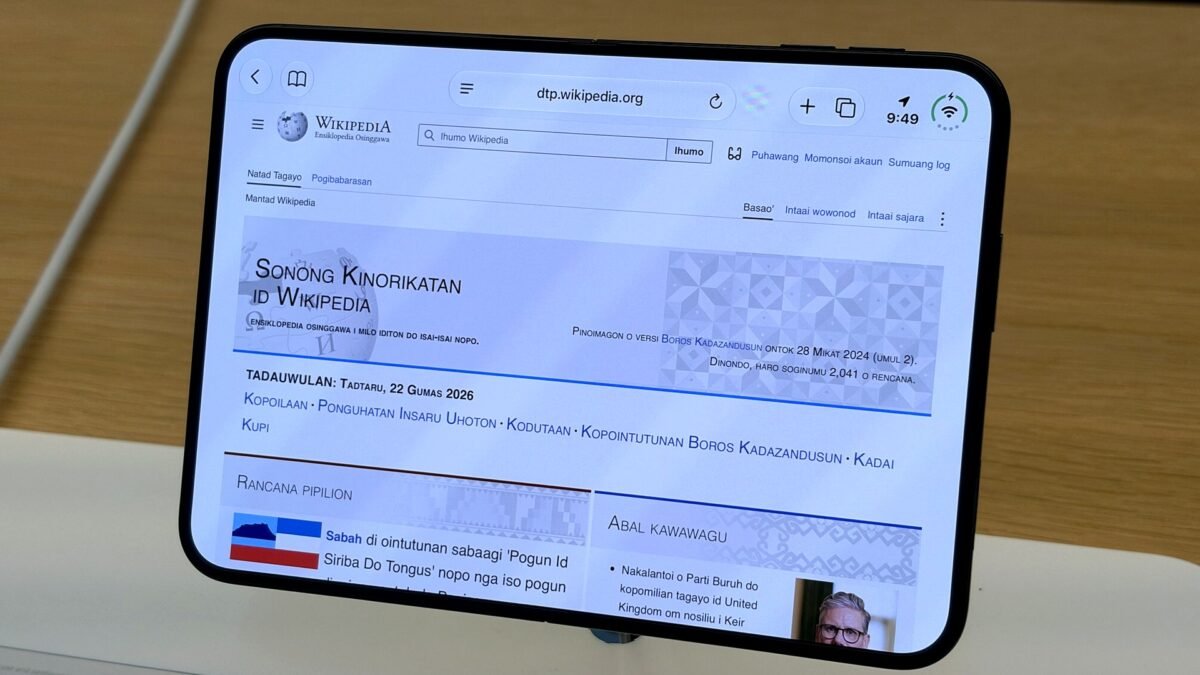
Apple has acknowledged that a small number of its first foldable iPhones are showing problems with the inner display and has said it will replace affected devices, days after the handset went on sale to long queues and rapid sell-outs. The company has not said what is causing the damage, how many units are involved, or whether the fault is confined to a particular batch. What it has offered, in a short statement repeated to several outlets on Monday 26 October, is a direct route to a replacement for anyone whose screen shows the fault.
According to Reuters, Apple said on Monday that affected units tend to show the problem quickly after use. In the statement, Apple said: “We are aware of an issue impacting the inner display on a small number of iPhone Duo units.” The company added: “If users experience issues with their iPhone Duo display, they should contact AppleCare for a replacement.” Apple did not comment on a possible cause, according to Reuters, and did not immediately respond to the technical explanation put forward by the repair specialists at iFixit.
The acknowledgement followed a weekend in which photographs and videos of damaged Duo screens circulated on social media. According to Reuters, the posts showed cracks and lines in the inner display along the central hinge, the line down the middle of the phone where it folds. USA TODAY reported that customers had posted photos and videos of a crack along the hinge of the inner screen, and that online communities had taken to calling the episode “crackgate”. The label is a piece of internet shorthand, not a finding. No regulator, court or independent laboratory has yet described the reports as a defect affecting the model as a whole, and the published accounts so far describe individual handsets rather than a counted population of failures.
That distinction matters, and it runs through everything that follows. This is, on the evidence published so far, a story about a small number of early reports, a prompt corporate response, and an unanswered technical question — not yet a story about a recall, a halt to sales, or a known failure rate. Apple has announced no recall and no pause in selling the Duo. The company’s response, as reported, is replacement on a case-by-case basis through AppleCare, rather than a programme applied to every unit sold.
What owners reported
The clearest early accounts came from buyers who said the damage appeared within hours of first use, after only a handful of openings. The most widely cited case was reported by a buyer in Australia, who said on Reddit that the screen broke about six hours after purchase, after the phone had been opened fewer than 20 times. According to reports of that account in The Times and the New York Post, the buyer felt something catch beneath the display near the hinge while showing the phone to a friend, heard an audible crack as the phone continued to open, and found the screen broken along the hinge. The buyer said there were no marks suggesting the phone had been dropped or caught on anything, and that an Apple Store exchanged the handset for a new one on the spot.
A second account, from Dallas, followed a similar pattern. According to The Times, a buyer there said the hinge became unusually tight after the phone had been folded about four times during set-up, and then made a loud pop when the buyer pushed past the resistance. USA TODAY reported a further account in which a user said the screen cracked less than seven hours after purchase, while the phone was in Apple’s $129 Folio case, and described feeling an impact as the phone reached its fully open position. Another user quoted by USA TODAY said the crack formed less than six hours after purchase and after fewer than 20 openings, and that staff at a local Apple Store apologised and replaced the phone with a new one immediately. That user added that the evening had been spent at the store, before the phone had even been fully set up.
Bloomberg, according to TechCrunch, spoke to individual customers and confirmed that early users had complained of screens cracking after hours or days of use. Some, TechCrunch reported, described hearing a loud crunching noise followed by the appearance of a crack; others described display malfunctions. The Seoul Economic Daily, reporting on 25 October, said owners had begun reporting damage to the inner display on 23 October, the day the phone went on sale, and that some devices showed cracks near the hinge while others developed bright lines across the display. The paper also reported accounts of screens cracking during initial set-up, shared on Reddit and other online communities.
Not every report carries the same weight. The Seoul Economic Daily noted that some photographs circulating online showed broken demonstration units in China, whose history was unknown and where damage by users could not be ruled out. That caution applies more broadly: a photograph of a damaged screen, on its own, does not establish how the damage happened, whether the phone had been dropped, or whether a case, a screen protector or grit in the hinge played a part. The accounts that have carried the story are the ones in which buyers describe ordinary opening, no visible external damage, and a prompt in-store replacement — and even those remain individual accounts, not a survey. The Times reported about ten other reports globally with a similar problem, alongside a forecast from Counterpoint Research that Apple could sell six million Duo units this year. If that forecast is taken as a rough scale, the reported cases would represent a very small fraction of early sales. But a forecast is not a sales figure, and “about ten reports” is a count of published accounts, not a count of affected phones. Apple has not published a number, and no outlet has reported one from the company.
The New York Post, reporting the Australian buyer’s account, added a detail about the replacement process that illustrates how a $1,999 purchase complicates even a straightforward swap. According to the Post, Apple first offered an express replacement that required a hold for the full price of the phone; the buyer instead went to a nearby Apple Store, where staff swapped the damaged handset for a new one on the spot. That is one customer’s experience, not a statement of Apple policy, and Apple’s public statement itself says only that affected users should contact AppleCare. The difference between an express mail replacement with a hold and an immediate in-store swap may matter a great deal to a buyer who has just queued for a scarce device, and it is one of the practical questions Apple has not yet addressed in public beyond the AppleCare direction.
What Apple has — and has not — said
Apple’s statement is notable for what it leaves out. It confirms awareness of an issue, describes its scope as a small number of units, notes that affected units tend to show the problem quickly, and points owners to AppleCare. It does not describe a cause, does not name a component, does not say whether the fault arises in manufacturing, in assembly, in a particular supplier’s part, or in the way the hinge and display interact during the first folds. It does not say whether owners should stop folding the phone, avoid particular cases or screen protectors, or take any precaution while waiting for a replacement. And it does not set out any inspection, software check or serial-number lookup by which an owner could tell in advance whether a particular handset is at risk.
That brevity is, in itself, a familiar pattern for a company facing an early hardware report. A short acknowledgement with a replacement offer limits speculation, gives affected owners a clear next step, and avoids committing to an explanation before engineers have established one. It also leaves the most important technical question entirely open, which is why independent analysis has filled the gap in the days since the first reports.
One further report, treated cautiously here, concerns a support page. The Times reported that Apple appeared to have created a support page titled “iPhone Duo Troubleshooting Hinge Issues”, which suggested steps if the device would not open or close completely or made unexpected noise while opening or closing, including removing third-party cases or screen protectors and checking for particles, dust, dents or scratches. According to The Times, the page was later no longer accessible. That account is reported here as a newspaper’s observation, not as a confirmed Apple publication, because the page could not be verified as live at the time of writing and Apple has not commented on it. If accurate, it would suggest that Apple’s support organisation was preparing hinge-specific guidance in parallel with the public statement. If not, it underlines how quickly unverified details can attach themselves to a fast-moving hardware story. Either way, the public record on cause remains: Apple has said nothing.
A possible explanation, offered by iFixit — and not confirmed by Apple
The most detailed technical account published so far comes not from Apple but from iFixit, the company that publishes teardown reports and repair guides for electronic devices. According to Reuters, iFixit used teardown footage, patents and CT scans to build a three-dimensional simulation of the Duo’s hinge, and compared the simulated hinge with the locations of the damage reported by owners.
According to Reuters, iFixit’s simulations found that the reported damage clustered just below the point where a display cable runs beneath the screen, near a central support bar. The company suggested that the bar might be failing to move out of the screen’s way as the phone folds, “creating a small stress hotspot near the reported break location”. The language is conditional — “might be failing” — and the finding is a simulation matched against photographs, not a physical examination of a failed unit carried out in Apple’s presence. It is a hypothesis with a specific, testable shape: if a support bar does not clear the display during folding, the repeated stress concentrates in one small area, and the first folds are the moment when that stress would show itself. That would fit the pattern in the owner accounts, in which damage appeared within the first few openings rather than after weeks of use.
Apple did not immediately comment on iFixit’s findings, according to Reuters. That silence should not be read as agreement or disagreement. A manufacturer will not normally endorse an outside simulation before its own failure analysis is complete, and iFixit’s work, however careful, cannot by itself establish what happened inside a sealed handset that its authors have not opened after failure. What the simulation does provide is a concrete question for Apple’s engineers and for any later teardown of a returned unit: does the support bar clear the display cable on every fold, on every unit, or does a tolerance, a burr, a misaligned part or a batch variation leave a small number of units with a stress point in exactly the place owners are photographing?
iFixit also reached a conclusion that cuts in Apple’s favour. According to Reuters, the company concluded that the Duo is the most repairable foldable phone it has tested. That finding matters for a different reason from the hinge hypothesis: if a display does fail, the cost and difficulty of repair — for Apple, for its stores, and eventually for owners outside warranty — will shape how painful this episode becomes. A phone that is hard to repair turns a small number of failures into a large service problem. A phone that is comparatively repairable gives the manufacturer more room to fix individual units quickly. Coverage of the durability test has noted a replacement cost for the inner display running to around $1,000 in that test context; that figure is reported in connection with a test unit, not as an Apple price list, and should not be treated as the cost an owner in warranty would face for a fault Apple has acknowledged.
A separate durability test — and why it is not the same story
Running alongside the owner reports, and easily confused with them, is a durability test published by Zack Nelson, who runs the YouTube channel JerryRigEverything. Nelson has tested foldable phones since the first generation of Samsung’s Galaxy Fold, and his standard routine — scratching, covering the device in dust and sand, and bending it — is deliberately harsher than everyday use. It is designed to find limits, not to reproduce them.
According to reports of the test by MacRumors and the Seoul Economic Daily, the Duo’s outer display, protected by Ceramic Shield 2, scratched at level 7 on the Mohs hardness scale, while the flexible inner display scratched at level 2 and took marks from fingernails, although Nelson credited its matte nano-texture coating with hiding the marks. The more consequential part of the test came next. According to MacRumors, as reported by several outlets, dust and sand worked their way into the hinge through several entry points, despite Apple’s IP68 dust and water resistance rating, and built up until the magnets that hold the phone shut could no longer overcome the debris. The hinge jammed. A subsequent bend test, including bending against the folding direction, left a permanent green line across the inner display, and the screen then became unresponsive. Nelson was quoted by MacRumors as saying: “I’ve been testing these folding phones since the first generation seven years ago — most do survive. The iPhone Duo did not.”
That verdict needs careful handling. Nelson’s test subjected one unit to sand, grit and reverse bending in sequence. No owner account describes that sequence. A phone that fails after being packed with sand and bent backwards has not been shown to fail in ordinary use, and a single test unit says nothing about how often any fault occurs. The test’s value lies elsewhere: it probes the hinge’s tolerance for the grit of everyday life — pockets, bags, beaches, building sites — and it asks whether an IP68 rating, which describes resistance to dust and water under laboratory conditions, translates into a hinge that stays clear when real dust arrives. Sand in a hinge is not an exotic accident for a phone that will be carried everywhere; it is a foreseeable condition, and a hinge that jams when grit enters it will worry buyers even if the precise failure in Nelson’s video never happens to them.
There is also a counterweight, reported by AppleInsider and noted here for balance rather than as proof. According to AppleInsider, the publication contacted sources it described as working inside Apple Genius Bars at seven stores, including four major flagship stores, and none reported having seen devices returned or brought in for service because of broken screens. That is a small, informal check, conducted at one moment, through unnamed sources, and it cannot establish how many phones have failed. It does, however, illustrate the gap between a viral set of photographs and a service-desk reality: a story can dominate social media while remaining, at that moment, a small number of cases in stores. The honest position, on the published evidence, is that neither the viral photographs nor the store check establishes a rate. Only Apple’s return and repair data could do that, and Apple has not published it.
How the Duo reached this point
The Duo arrived with unusual weight on its shoulders. Apple announced the phone on 9 September at an event the company called “Surprise and Shine”, according to USA TODAY and TechCrunch, presenting its first foldable as the moment Apple had finally solved a form factor that other manufacturers had been wrestling with for years. The phone folds like a book, opening to a 7.6-inch Super Retina inner display that USA TODAY described as 50 per cent larger than the display of the iPhone 18 Pro Max. It starts at nearly $2,000 — $1,999 for the base model — and was presented by Apple, through executive John Ternus, as a flagship rather than an experiment.
Preorders opened on Friday 16 October and sold out within minutes, with delivery estimates slipping within the hour from mid-November to mid-December and then into late January, according to reporting at the time from outlets including 9to5Mac and Cult of Mac. The phone went on sale on Friday 23 October, according to USA TODAY, drawing queues outside Apple Stores and selling through launch stock within minutes in several markets. Reuters, reporting the screen problems, noted that customers around the world had lined up for tight inventory after initial online orders sold out in minutes, and that analysts expected supply constraints because the Duo, which unfolds like a passport booklet, is complex to manufacture.
Scarcity changes the meaning of a replacement. A buyer who waited, queued, or accepted a January delivery date for a later wave does not experience a swap as a minor inconvenience. An immediate in-store exchange preserves the sense of having the phone at all; a mail-in replacement with a hold for the full price, as described in one account, or a wait for fresh stock, turns a fault into a second queue. Apple’s statement directs owners to AppleCare, which is the correct first step, but the experience of that step — how quickly a replacement arrives, whether a loan or an in-store swap is offered, whether the replacement is drawn from the same early stock — will do as much to shape the story as the statement itself.
The price sharpens the same point. At $1,999, the Duo is not a phone bought casually, and its buyers are, by definition, early adopters of a first-generation Apple foldable. Early adopters accept risk in principle; the bargain is that the risk is priced in and the manufacturer stands behind the product when the risk materialises. The owner accounts that have resonated most are the ones in which that bargain appeared to hold — a store apologised and swapped the phone on the spot — and the ones that have worried readers are the ones in which the bargain appeared to wobble, with a phone failing before it had been fully set up. The distinction between those two experiences, repeated across stores and countries, will determine whether “crackgate” remains a nickname for a weekend of photographs or becomes a shorthand for a product problem.
Analysis: Why It Matters
The facts of this story are, so far, narrow: a small number of reports, a short statement, a replacement offer, and an unconfirmed technical hypothesis. The significance is wider, because the Duo is not an ordinary phone launch. It is Apple’s entry, seven years after Samsung’s first foldable, into a category that has grown without it, at a price that assumes Apple’s version will be the one that finally makes folding feel finished. A fault at the fold, however small in number, strikes at the exact claim on which that price rests.
Speed mattered more than scale
Apple’s decision to acknowledge the reports on the Monday after launch weekend, and to offer replacements immediately, was the most important choice in this episode so far. The alternative — silence while engineers investigated, or a statement that described the reports as isolated without offering a route to a replacement — would have allowed the photographs to accumulate into a narrative of indifference. By moving quickly, Apple gave every owner a next step and gave every subsequent report a context: a company that had seen the problem and was acting on it. Francisco Jeronimo, a vice president at the market research firm IDC, described the quick replacement offer as the “right first step”, according to Reuters. That judgement is about communication as much as engineering. A fast, transparent response does not fix a hinge, but it does contain the damage to trust while a fix is found. The risk of that speed is that it also raises the question Apple has not answered: if the company could move this fast on replacements, what does it already know about the cause, and when will owners be told?
The hinge is the product
Every foldable phone is, in the end, a hinge with a screen wrapped around it. The screen’s size, brightness and colour matter, but they are not what makes the category hard. What makes it hard is asking a flexible display, a cable, a support structure and a set of magnets to survive tens of thousands of folds, in pockets full of grit, without the display creasing, cracking or losing touch response at the one line where it must bend. Apple spent, by all accounts, years on that mechanism, and the Duo’s launch presentation emphasised that the engineering had finally been got right. The reported damage clusters at that mechanism. That is why a handful of photographs carries more weight than a handful of photographs of, say, a scratched camera lens would. A fault at the fold is not a blemish on the product; it is a question about the product. iFixit’s simulation, if it proves to be on the right track, would make the point more precisely: the failure would not be a random weakness in the display, but a specific interaction between a support bar and a cable at the moment of folding. That specificity is, paradoxically, reassuring. A specific interaction can be inspected, measured, and changed. A vague fragility cannot.
A $1,999 first generation carries different expectations
First-generation products are allowed to be imperfect; they are not allowed to be careless. The difference lies in how the manufacturer handles the imperfection. Buyers of a $1,999 first-generation foldable have, in effect, paid for the privilege of discovering problems early, and the implicit contract is that the manufacturer will discover them with them, quickly and without quibbling. The accounts in which Apple Stores swapped phones on the spot honour that contract. The account in which an express replacement required a hold for the full price tests it. Neither account, on its own, proves a policy, but together they show why the replacement experience, not just the replacement offer, will be watched. Owners will also be watching the calendar: a phone bought on launch day is within its return window, and Apple’s one-year warranty, as noted in coverage of the reports, sits behind the AppleCare direction. The practical question for most owners is not legal but logistical — how long they will be without the phone they queued for — and Apple has not yet described that logistics in public.
Independent analysis has filled a silence — with limits
iFixit’s simulation and Nelson’s durability test have done the work that Apple’s statement did not do: they have given the public a picture of what might be happening inside the phone. That is valuable, and it is also limited. A simulation is not a failed unit. A durability test on one unit, subjected to sand and reverse bending, is not a failure rate. A count of published photographs is not a count of failures, and a poll of seven stores is not a service report. Each piece of evidence answers a different question, and none of them, alone or together, answers the central one: how many Duo units have this fault, and why? The danger of this phase of a hardware story is that the most vivid evidence — a photograph of a crack, a video of a hinge jammed with sand — is treated as the most representative. The discipline required of readers, and of Apple, is to hold the vivid and the representative apart until the manufacturer’s own data, or a larger independent sample, arrives. Apple’s silence on cause, while understandable while engineers work, lengthens the period in which vivid evidence stands in for representative evidence. The sooner Apple can say what it has found, even if the finding is that the cause is still under investigation and the affected population is still being counted, the sooner the conversation can move from photographs to numbers.
Samsung in 2019 is both a warning and a playbook
The comparison that every analyst has reached for is Samsung’s original Galaxy Fold in 2019. Review units of that phone began failing within days, with screens breaking, flickering or losing graphics, in some cases after reviewers removed a protective layer that looked like a screen protector and in others after debris entered through the hinge. Samsung delayed the launch, which had been set for 26 April 2019, recalled the review units, and spent months redesigning the phone — extending the protective layer under the bezel, adding caps to the top and bottom of the hinge, adding metal layers under the display, and reducing the gap between hinge and body — before releasing it in September 2019 at the same $1,980 price. The episode was widely described at the time as a public-relations disaster, and CNET drew comparisons with the Galaxy Note 7 battery recalls. Yet the category survived, and Samsung went on to build the foldable market that Apple has now entered.
Jeronimo’s point, as reported by Reuters, is that Samsung’s fast and transparent response contained the damage to the category. The parallel is instructive but not exact. Samsung’s failures were found in review units before the phone reached paying customers at scale; Apple’s have been reported by paying customers after a public launch. Samsung delayed; Apple has, so far, replaced. Delay is a cleaner remedy for a pre-launch fault, because no customer is left holding a broken phone. Replacement is a messier remedy for a post-launch fault, because it depends on stock, on store capacity, and on the experience of each owner. The lesson that does transfer is the one Jeronimo identified: transparency about what is known, what is not known, and what happens next is what prevents a hardware fault from becoming a credibility fault. Apple has taken the first step. The second step — an explanation, or at least a timetable for one — is the one that will decide whether the Duo’s first weeks are remembered as a contained early fault or as the start of a longer problem.
What to Watch Next
- An explanation from Apple. The most consequential next step is a statement of cause, or a clear statement that the cause is still under investigation with a timetable. Watch for whether Apple names a component, a batch, a supplier or a tolerance, and whether it describes an inspection or a manufacturing change. A statement that only repeats the replacement offer, without new technical information, would leave the central question open.
- A number, or a programme. Watch for any figure for affected units, any serial-number or batch check, or any broader programme beyond case-by-case AppleCare replacement. A recall, a free inspection, or a defined replacement window would signal that Apple has characterised the population. Continued case-by-case handling would suggest the population remains small, or still uncounted.
- Independent teardowns of returned units. iFixit’s simulation was built from teardown footage, patents and scans. A teardown of an actual returned unit that shows the reported damage would test the support-bar hypothesis directly. Watch for whether independent repairers can reproduce the stress point, and whether Apple comments on their findings.
- Sales and supply. The Duo sold out within minutes at preorder and at launch, with delivery estimates slipping into January. Watch whether Apple pauses sales, constrains supply to inspect stock, or continues selling while replacements are handled in parallel. A pause would signal a manufacturing concern; continued selling with replacements would signal confidence that the fault is confined.
- What owners experience at the store. Watch for consistent accounts of the replacement process: in-store swaps versus mail-in replacements, holds on payment, waiting times, and whether replacement units are drawn from the same early stock. The pattern of those experiences, across countries, will shape buyer confidence more than any single photograph.
Sources
- Reuters — Apple says it will replace iPhone Duo units showing screen problems
- USA TODAY — Apple confirms a ‘small number’ of iPhone Duo screens are cracking
- TechCrunch — iPhone Duo screen cracking reports, citing Bloomberg
- Seoul Economic Daily — Apple’s first foldable iPhone faces durability complaints at launch

About the Author — Abdul Mannan
Related Articles

Astronomers Find a Galaxy-Sized Cloud of Gas With Almost No Stars — a Possible ‘Dark Galaxy’ 310 Million Light-Years Away
Astronomers have found a vast cloud of hydrogen 310 million light-years away that holds about two billion times…

NASA’s Swift Observatory Ends Its 22-Year Hunt for Cosmic Explosions as It Falls Back to Earth
NASA has switched off the Neil Gehrels Swift Observatory after more than 22 years chasing gamma-ray bursts; the…

US Designates Helium a Critical Material as Chipmakers Warn of a ‘Single Point of Failure’
The US Department of Energy has designated helium a critical material, citing its essential role in semiconductor manufacturing…