
Asian Regulators Rush to Calm Markets as AI Sell-Off Deepens: Taiwan Bans Short Sales, South Korea Readies Rescue Fund

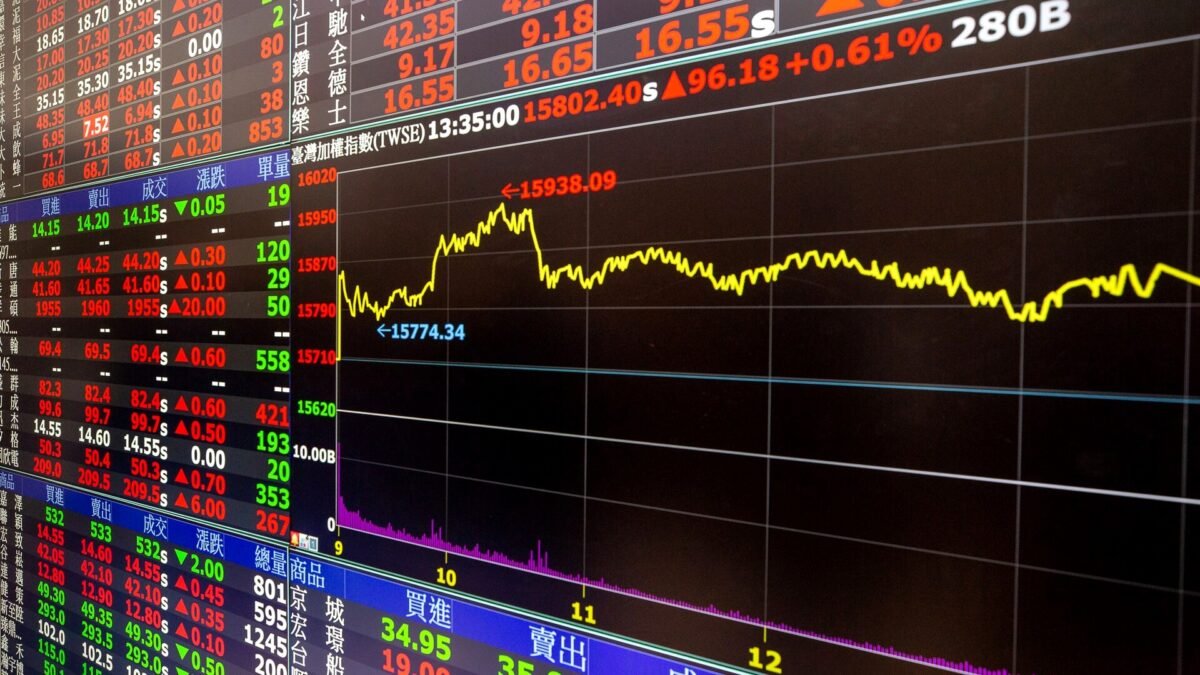
Financial regulators in China, South Korea and Taiwan have rolled out emergency measures to calm the turmoil sweeping through Asia’s stock markets, as a brutal sell-off in artificial intelligence shares that began in the United States spreads across the world’s chip-making heartland.
According to Dow Jones, regulators and market operators in all three economies moved over the weekend and on Monday to steady markets shaken by the global rout in AI stocks. Taiwan banned short-selling in falling shares and raised the cost of betting against the market, South Korea readied a state rescue fund and eased rules on companies buying back their own stock, and China moved to free up tens of billions of dollars of new margin lending.
The measures came after one of the worst weeks for technology shares in years. Last week’s 10 per cent drop in the Nasdaq was its largest weekly fall since the pandemic panic of March 2020, according to Reuters, and the damage was even worse in Asia, where Taiwan’s Taiex index lost about 17 per cent in a week, its biggest weekly fall since 1990.
Markets in the region remained volatile on Monday, but there were early signs that the official action was having some effect. China’s tech-heavy ChiNext index reversed its morning declines to gain 1.2 per cent in afternoon trading, while Taiwan’s Taiex rebounded and was last up 2.9 per cent, according to Dow Jones. South Korea’s Kospi pared earlier losses of as much as 5.8 per cent to sit 3.2 per cent lower. United States stock futures also pointed to a rebound, with Nasdaq 100 futures up about 2 per cent and S&P 500 futures around 1 per cent higher in early trade, according to Reuters.
Taiwan bans short sales in falling stocks
Taiwan, whose market has been hit hardest of all, moved first and furthest. The island’s Financial Supervisory Commission said on Saturday that it had tightened short-selling rules, and from Monday’s open it barred short-selling of any stock trading below its previous day’s closing price. It also raised the minimum margin that short sellers must post to 150 per cent of the value of their position, up from 130 per cent, to discourage traders from taking speculative short positions.
The regulator said stocks had continued to fluctuate sharply and that the measures were meant to maintain the order and stability of the securities market. The ban replaced a narrower set of curbs introduced only days earlier, which had covered stocks down 3.5 per cent or more.
Taiwan has also already activated its own market-stabilisation fund, which has been buying local shares since 6 November. Established in 2000, the fund has about 15 billion dollars of capital at its disposal and steps in during times of crisis, such as the Covid pandemic. The fund said Taiwanese market fundamentals remain strong and that selling by foreign investors has gradually subsided, according to Dow Jones.
The Taiex fell 6.23 per cent on Friday alone to close at 36,033.29, and lost almost 18 per cent over the week, according to market data reported by CNBC TV18. The index had fallen more than 1 per cent at Monday’s open before swinging between losses and gains as the short-selling ban took hold.
South Korea readies a rescue fund
In Seoul, officials announced after an emergency meeting on Sunday that a market-stabilisation fund would be ready for immediate use should the market continue to fall. According to analysts cited by CNBC TV18, the government is preparing a fund of about 10 trillion won, although analysts cautioned that the size looks too small to change near-term sentiment on its own.
South Korea’s Finance Minister Lee Hyoung-il warned on Monday that volatility in the semiconductor sector could amplify fluctuations in the broader economy, noting that external risks remain high amid regulatory uncertainty about AI, geopolitical tensions and rising interest rates.
Officials also vowed to step up scrutiny of trading activity, including illegal short selling and market manipulation, during a three-month period, and said they would ease limits on daily share buybacks for three months starting on Tuesday. Unlike Taiwan, Seoul stopped short of imposing new limits on short selling, a choice that analysts said suggests the government wants companies, rather than regulators, to be the buyers of last resort.
It was not enough to stop Monday’s selling in Seoul. The Kospi opened 2.77 per cent lower and was down more than 4 per cent by mid-morning local time, the first time it had traded in the 4,600s since January, with Samsung Electronics down about 4.5 per cent and SK Hynix about 4.2 per cent. South Korea’s benchmark index has lost nearly 18 per cent so far this month, according to Dow Jones, and slumped to 10-month lows last week, according to Reuters. The fund itself had not yet been used, and analysts in Seoul said the timing and size of any deployment had not been decided.
China cuts margin requirements
In China, the three main stock exchanges said over the weekend that they would cut the minimum requirement for margin financing to 80 per cent from 100 per cent, effective 30 November. The move is aimed at helping to moderately increase leverage, improve market liquidity and promote stable, healthy market development, the exchange operators said.
According to the state news agency Xinhua, the adjustment could theoretically free up nearly 400 billion yuan, or roughly 60 billion dollars, in incremental funds. Earlier this month, the People’s Bank of China had said it would conduct more than 100 billion yuan of swap operations to provide liquidity to securities firms, fund managers and insurers, alongside a relending programme for share buybacks and stake increases, whose interest rate was cut to 1 per cent from 1.25 per cent.
China’s markets have also been under severe strain. The CSI 300 index has slumped into a bear market after an 8 per cent fall in October, its worst monthly performance in more than a decade, as economic weakness and a sharp fall in technology shares weighed, according to CNBC TV18.
The rout that forced regulators’ hands
The emergency measures follow a withering week for the shares at the centre of the AI boom. In the United States, the S&P 500 fell 3.7 per cent on Friday to close at 6,910.39, leaving it 12 per cent below its 6 October high and in a technical correction, while the Nasdaq 100 dropped 5.6 per cent to post its worst week since March 2020 and the Dow Jones Industrial Average lost 1.9 per cent to 48,147.33, according to market data. Wall Street extended its losing streak to seven sessions, and the volatility index climbed to its highest level since April 2025.
Semiconductors took the heaviest losses, with a closely watched chipmaker gauge sinking 11 per cent on Friday. The Philadelphia semiconductor index fell 10 per cent on Friday alone, a drop that pointed to more pain ahead for Asia’s chip-heavy markets, according to Reuters.
Bitcoin also fell, dropping 5.1 per cent to 58,333 dollars on Friday, while the 10-year Treasury yield fell 11 basis points to 4.93 per cent as investors sought safety. Japan’s markets were closed for a public holiday on Monday, but futures indicated selling pressure, and Hong Kong’s Hang Seng dipped 1.8 per cent.
The Nvidia scandal at the heart of the sell-off
At the centre of the storm is Nvidia, the chipmaker that has become the linchpin of the AI boom. According to Reuters, the United States Securities and Exchange Commission is probing Nvidia’s accounting practices, citing two people briefed on the matter. The Wall Street Journal had reported on Tuesday that the SEC was investigating the company, but could not establish the focus of the inquiry. Reuters reported on Friday that enforcement staff are scrutinising potential accounting issues at the company.
Nvidia’s shares fell about 14 per cent on Friday after the Reuters report, wiping out roughly 500 billion dollars of market value in a single session, from about 3.52 trillion dollars to about 3.03 trillion dollars, according to the Motley Fool. The stock closed at less than 126 dollars, down about 48 per cent from its record close of 239.24 dollars on 6 October, and has lost about 2.7 trillion dollars in value in just six weeks. It was the stock’s seventh straight daily fall and seventh straight weekly drop, the longest weekly losing streak since 2008, and at about 3 trillion dollars the company now ranks fourth in market value behind Apple, Microsoft and Alphabet.
Reuters could not immediately determine when the SEC opened its inquiry or exactly what potential accounting issues the watchdog is examining. The SEC declined to comment and Nvidia did not immediately respond. An investigation is not evidence of wrongdoing, and many SEC inquiries close without resulting in enforcement action.
Still, the accounting focus of the probe, which Reuters reported for the first time, increases the pressure on a company whose investors are already reeling from the resignation of co-founder Jensen Huang as chief executive on 11 November, following revelations about his personal relationships, including with a woman United States authorities suspect of spying for China, which China denies. The board has appointed former chief financial officer Colette Kress as interim chief executive and launched an investigation into the circumstances of Huang’s departure.
Two areas of Nvidia’s business could draw scrutiny. The first is how the company reports where its sales come from. Last year, Nvidia changed how it reports geographic revenue, using customer headquarters rather than billing addresses, which it said would better reflect the geographic profile of its revenue. The change resulted in Singapore being removed from its geographical breakdown, and the Financial Times reported that Nvidia had made the change even as sales billed to Singapore soared to almost half its global revenue. Roughly 104 billion dollars of 2025 revenue was booked through Nvidia’s Singapore unit, according to Dealroom.
The second is how Nvidia helps its customers pay for its chips. On its latest earnings call, interim chief executive Colette Kress said Nvidia’s guarantees totalled 118 billion dollars at the end of the quarter, including 105 billion dollars of credit support tied to a single data centre. Investors have been debating so-called circular financing arrangements, in which vendors help fund customers’ data-centre purchases through loans, guarantees or other complex deals.
The SEC probe is only the latest of Nvidia’s legal troubles. The Justice Department has also been reviewing Nvidia’s 12.9 billion dollar deal to buy open-source platform Hugging Face alongside a broader antitrust investigation into the company’s acquisitions and practices, Reuters reported last month. United States authorities have been investigating Megaspeed, a Singapore-based company, since 2024 over possible violations of export controls related to alleged shipments of Nvidia AI chips to China. California Attorney General Rob Bonta issued an investigative subpoena to the chipmaker on Thursday, investigating whether the company or its former chief executive allowed advanced chips to reach China and misled investors. Huang is set to appear before Congress on 1 December for questioning about potential national-security breaches and his reported relationship with a suspected Chinese intelligence operative.
According to Dow Jones, the Nvidia scandal has spurred a wave of sell-offs in AI-related shares as investors worried about the unravelling of billions in financing that Huang orchestrated, and which has underpinned the industry’s growth. A turbulent debut by Anthropic then capped a 4 trillion dollar wipeout in the United States last week. Anthropic, which had surged on its stock market debut, fell 8.5 per cent on its first full day of trading on Friday, according to Reuters.
Why investors are suddenly doubting the AI boom
Investors are questioning whether the vast sums of mostly borrowed money spent building data centres to power AI models will generate returns fast enough to repay lenders and big enough to justify some of the high stock prices, according to Reuters. The AI trade has for several years lifted a wide range of stocks, from switch and cable makers to electricity generators and the manufacturers of anything in the computing supply chain, but those shares have been under pressure in recent months from rising interest rates.
The latest sell-off reflects growing concerns over stretched technology valuations, the scale and financing of AI-related capital expenditure, and uncertainty over the returns on these investments, according to Dow Jones. Analysts have also blamed debt-funded data-centre building, the prospect of tighter United States regulation after the Democrats’ midterm election wins, and margin calls on retail investors who had borrowed to buy chip stocks.
Taiwan and South Korea are where the world’s AI chips are made, and their share markets are dominated by a few makers of chips and memory. When investors start to doubt how quickly the hundreds of billions of dollars being spent on AI data centres will pay off, those companies are sold first and hardest. That concentration explains why the two markets have fallen further and faster than almost anywhere else, and why their regulators have been the first to reach for emergency tools.
Analysis: Why It Matters
The speed with which three governments moved this weekend tells its own story. Regulators do not ban short selling, ready rescue funds and loosen margin rules on a normal Monday. They do it when they fear that a market fall is feeding on itself, when forced selling by leveraged investors pushes prices down, which triggers more margin calls, which pushes prices down further. That spiral is precisely what the measures are designed to interrupt, and the fact that all three were announced within about 48 hours shows how seriously officials in Taipei, Seoul and Beijing now take the risk.
It is worth being clear about what these tools can and cannot do. A short-selling ban can stop traders from piling into falling shares, and a stabilisation fund can put a floor under prices for a day or two, but neither changes the underlying question that is driving the sell-off: whether the enormous sums being poured into AI data centres will ever earn their keep. Taiwan’s fund holds about 15 billion dollars, a meaningful sum, but a small one next to a market that has shed hundreds of billions in a matter of weeks. South Korea’s reported 10 trillion won fund faces the same arithmetic. These are firebreaks, not cures.
The China measures are different in kind. Cutting margin requirements does not put state money into the market; it lets private investors borrow more against the shares they already own. That can cushion a fall, but it can also add leverage to a market that is already being punished for having too much of it. The history of margin easing in a falling market is mixed, and if prices keep sliding, the same borrowed money that supports the market today becomes the forced selling of tomorrow.
There is also a deeper question that the weekend’s announcements cannot answer, which is whether this is a crisis about one company or about an entire investment thesis. If the sell-off were only about Nvidia, then the SEC inquiry, the departure of its chief executive and the questions over its accounting would explain the damage, and the rest of the market would recover once the facts were known. But the fall has spread far beyond one stock: to chipmakers in Taiwan and South Korea, to memory makers, to the miners and power companies that feed the data-centre build-out, and to the crypto market. That breadth suggests investors are repricing the AI trade itself, not just its most famous name.
That repricing has a political dimension that investors cannot ignore. The prospect of tighter regulation in the United States after the Democrats’ midterm victories, the export-control investigations swirling around Nvidia’s chips, and the congressional hearing scheduled for 1 December all point in the same direction: the era in which the AI industry grew with almost no political friction is ending. What replaces it will be a slower, more scrutinised and more expensive business, and markets are only beginning to work out what that is worth.
For ordinary savers, the lesson of this week is an old one. The AI boom was built on borrowed money at every level: companies borrowed to build data centres, customers borrowed to buy chips, and retail investors borrowed to buy the shares. Leverage magnifies gains on the way up and losses on the way down, and the speed of the past fortnight’s fall is what leverage looks like when it unwinds. The regulators’ weekend actions may slow that unwinding, but they cannot reverse the arithmetic behind it.
None of this means the AI boom is over. The demand for computing power is real, the technology is real, and the companies at the centre of it still generate enormous revenues. What has changed is the price investors are willing to pay for growth whose returns are uncertain, and the willingness of regulators to let that price fall without intervening. The intervention itself is the signal: governments in Asia’s chip economies now treat the AI sell-off as a threat to financial stability, not just a bad week for shareholders.
What to watch next
The first test comes when United States markets open on Monday. Futures pointed to a rebound, with Nasdaq 100 futures up about 2 per cent in early trade, but futures have pointed the wrong way before, and the real test will be whether buyers return in size once trading begins. A second day of heavy selling in New York would overwhelm anything the Asian regulators did over the weekend.
The second test is Nvidia itself. The company’s delayed quarterly filing, its results in the coming weeks and the independent board committee investigation will all be watched for answers about the accounting questions the SEC is examining. Huang’s appearance before Congress on 1 December will be another moment of maximum scrutiny, and any new disclosure about the company’s dealings in Singapore or its customer financing could move the stock sharply in either direction.
The third test is whether the Asian measures actually bite. Taiwan’s short-selling ban takes effect from Monday’s open, South Korea’s buyback relief begins on Tuesday, and China’s margin cut takes effect on 30 November. Traders will watch whether Taiwan’s stabilisation fund steps up its buying, whether Seoul actually deploys its fund, and whether the measures are enough to break the cycle of forced selling that has driven the Taiex down almost a fifth in a week and the Kospi down nearly as much in a month.
Finally, watch the bond market and the dollar. The 10-year Treasury yield fell to 4.93 per cent on Friday as investors sought safety, and gold recovered to 3,600 dollars an ounce on Monday as the dollar slipped from 19-month highs. If those haven flows reverse, it will be a sign that investors believe the worst is over. If they accelerate, it will be a sign that the weekend’s interventions have not convinced anyone.
Sources
- Dow Jones via Morningstar — Asian Regulators Step Up Efforts to Calm AI-Driven Market Turmoil
- Reuters — US futures bounce while Asia markets brace for AI wipeout
- CNBC TV18 via TradingView — Stock market regulators in China, Taiwan, and South Korea step up to curb the AI sell-off fallout
- Reuters via Euronext — Nvidia’s accounting is a focus of US SEC investigation, sources say
- Barron’s — Nvidia’s Stock Slide Deepens After Report of SEC Accounting Probe

About the Author — Abdul Mannan
Related Articles
Tata Steel to Sell Tubes Business and Colors Stake to APL Apollo in ₹28,000 Crore Deal
Tata Steel will sell its tubes business and its entire stake in Tata Steel Colors to APL Apollo…

Bayer’s $7.25 Billion Roundup Settlement Wins Court Approval, Capping a Decade of Cancer Litigation
A Missouri judge has approved Bayer's $7.25 billion settlement of Roundup cancer lawsuits, capping a decade of litigation…

CrowdStrike in Talks to Buy Zscaler in a Deal That Would Create a $265 Billion Cybersecurity Giant
CrowdStrike is in talks to acquire Zscaler in a combination worth about $265 billion, Bloomberg reported on Friday…