
Audi to Build $4 Billion Georgia Plant, Its First US Factory, as Trump Credits Tariffs

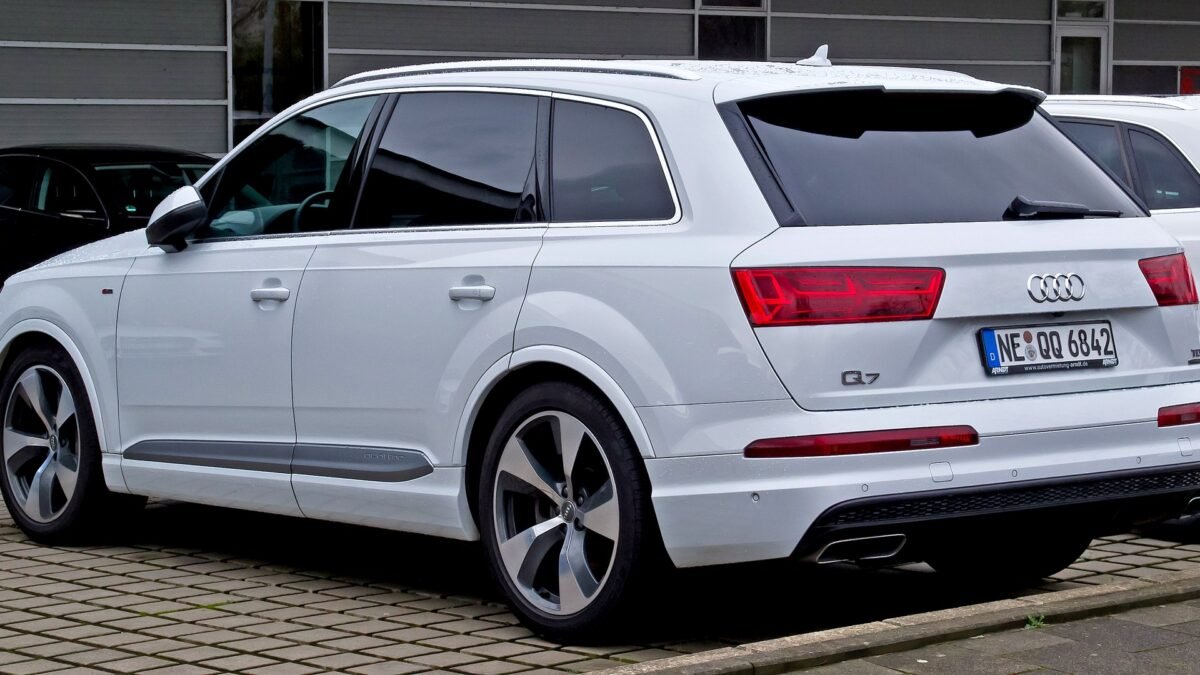
Audi’s first American factory
Audi will build a roughly $4 billion assembly plant near Macon, Georgia, its first factory on American soil, after US President Donald Trump announced the project at a campaign rally in the state on Saturday, 24 October 2026. The plant is expected to produce 200,000 large sport utility vehicles a year and create approximately 4,500 jobs once it reaches full production, according to Reuters.
The German premium carmaker, part of the Volkswagen Group, will build its biggest and most expensive SUVs at the new site: the Q7, the Q8 and the Q9, the flagship model Audi unveiled earlier this year. Construction is scheduled to begin in 2027, with production starting in the early 2030s, Audi said.
Trump unveiled the investment at a rally in Perry, a town near Macon in central Georgia, with Audi chief executive Gernot Döllner standing beside him. “We are planning to bring our biggest and most premium SUVs, and produce them here in Macon, Georgia,” Döllner told the crowd, according to Reuters. “This is a long-term investment because we believe in the American market.”
Trump presented the plant as vindication of his tariff policy. “I am very pleased to announce that a fantastic corporation is making a major auto manufacturing investment in the great state of Georgia,” he said, adding: “Think about it. 200,000 units a year. It’s truly amazing.” He went on to claim it would be “the single largest investment in the history of the American auto industry, in modern times”, and added: “If it weren’t for the tariff, they wouldn’t have come.”
Audi currently imports every vehicle it sells in the United States from Europe or Mexico, which left it fully exposed when Trump raised tariffs on cars, steel, aluminium and parts. According to Reuters, those tariffs cost Audi €1.2 billion ($1.4 billion) last year. The company has also seen its American sales fall by 16% in 2026, according to industry reporting of the announcement.
Alongside the Georgia plant, Audi plans to build a further 25,000 vehicles a year in neighbouring South Carolina, a US official told Reuters. Those vehicles will be assembled at a $2 billion plant belonging to Scout Motors, Volkswagen’s off-road brand, which is under construction in Blythewood, near the state capital, Columbia. Some of the vehicles now built in Europe would be exported from the United States under that arrangement, the official said.
Tariffs at the heart of the deal
The announcement sits squarely in the middle of the argument over Trump’s trade policy. Since returning to office, Trump has pressed carmakers to move production to the United States and has used tariffs on imported vehicles and components as his main lever. Supporters of the policy point to announcements like Audi’s as proof that the pressure works: faced with paying duties on every imported car, a manufacturer instead commits billions to an American plant and thousands of American jobs.
Critics make a different case. They argue that tariffs have pushed up vehicle prices for American buyers, and that the uncertainty around trade policy has delayed some investments rather than accelerating them. Reuters noted that employment in the American vehicle and parts industry has fallen since Trump took office last year, and that Trump has also cut government incentives for electric vehicles, leading to a significant reduction in US electric vehicle and battery production.
Both arguments will now be tested against a single, very long timetable. No Georgia-built Audi will reach a showroom until the next decade. By the time the first Q7, Q8 or Q9 rolls off a Macon production line in the early 2030s, the tariff regime that supposedly pulled Audi across the Atlantic may have changed several times over, through elections, court rulings or new trade deals. That gap between announcement and production is the central tension of the whole project: a decision framed as a response to today’s trade policy will only bear fruit under whatever trade policy exists years from now.
Why Georgia, and why now
Georgia has spent years building itself into one of America’s carmaking states. Hyundai builds electric vehicles near Savannah, Kia has a plant in West Point, and Rivian is building a factory east of Atlanta. Audi’s parent, Volkswagen, already builds cars in Chattanooga, Tennessee, and its Scout brand is building its plant in South Carolina. The new Georgia site puts Audi in the middle of an established south-eastern supply chain, with ports, suppliers and a workforce already geared to car production.
The timing is political as well as industrial. The announcement came ten days before the midterm elections on 3 November, and Georgia has competitive races for the US Senate and for governor. Trump is eager to make the case that his auto tariffs are helping the American economy, according to Reuters, and a $4 billion factory announcement in a swing state, delivered at a rally with the company’s chief executive at his side, is a campaign asset as much as an industrial one. Trump was due to speak at another midterm rally in Port Huron, Michigan, on Sunday.
For Audi, the logic is about more than one election cycle. The Q9, the largest vehicle the brand has ever built at 5.31 metres long, is its new flagship, launched to compete at the very top of the luxury SUV market against rivals such as the BMW X7 and the Mercedes GLS. Building the Q7, Q8 and Q9 in the country where they will be sold removes the tariff exposure that has cost the company so dearly, and it anchors Audi’s most profitable segment in the world’s second-largest car market.
Analysis: Why It Matters
A test case for tariff-led industrial policy
The Georgia plant is the clearest test yet of whether tariffs can rewire where cars are built. If the plant is completed on schedule and its 4,500 jobs materialise, the White House will cite it for years as evidence that protectionism brings factories home. If it slips, shrinks or is quietly scaled back, critics will cite it as evidence that announcements are cheaper than factories. The truth will probably be messier than either version: car plants take years to build under any policy, and companies make location decisions on labour, logistics, energy costs and supplier networks as much as on tariffs. But because Trump has tied his own credibility to this specific claim, “if it weren’t for the tariff, they wouldn’t have come”, the Georgia plant will be read as a verdict on the policy itself.
A decade-long bet on American luxury demand
Audi is betting that American appetite for large, expensive SUVs will still be strong in the 2030s. That is not a trivial assumption. The industry is in the middle of a wrenching transition: electric vehicle incentives have been cut, battery plants have been scaled back, and buyers are more price-sensitive after years of inflation. Building a plant designed around big combustion-engine and hybrid SUVs is a bet that the premium SUV market stays large and profitable even as the powertrains underneath those vehicles change. The Q9’s launch specification, a 3.0-litre V6 diesel with mild-hybrid assistance, shows a brand still hedging between combustion and electrification. The Georgia plant will have to be flexible enough to follow whichever way that bet goes.
The politics will fade faster than the factory
Rally announcements have a short half-life; factories do not. The Perry rally will be forgotten within a news cycle, and the midterm result in Georgia will be settled within days. But the grading work in Peach County, the hiring, the supplier contracts and the training programmes will run for years, through administrations of either party. That is worth remembering when judging the announcement: its political packaging is loud, but its industrial consequences are slow, unglamorous and largely independent of who wins on 3 November. The jobs, if they come, will be real regardless of which speech announced them.
What it means for buyers
For American car buyers, the most important question is price. Tariffs on imported cars tend to raise showroom prices, and Audi’s own €1.2 billion tariff bill last year is a cost that ultimately lands somewhere in the chain, whether on the manufacturer, the dealer or the customer. A Georgia-built Q7, Q8 or Q9 would escape those duties, which could, in principle, ease pricing pressure on Audi’s most expensive models. But that benefit is years away, and it depends on the plant actually opening and on tariffs still applying to imports at that point. In the meantime, buyers face the same arithmetic as before: imported luxury SUVs, priced with tariffs in the mix.
What to Watch Next
- The site and incentives: Georgia and local authorities have not yet said what incentives, tax breaks or infrastructure support they offered to secure the plant. Those details will show how much public money sits behind the $4 billion headline.
- Construction milestones: Grading is due to start in 2027. Any delay to that date will be the first real signal of whether the project is on track.
- Tariff developments: Any change to auto tariffs, whether through courts, legislation or new trade deals, changes the economics of building in Georgia versus importing. Watch for legal challenges to the tariff regime.
- Scout Motors in South Carolina: The 25,000 Audis planned for the Blythewood plant will arrive sooner than the Georgia cars and will show how Volkswagen manages American production of a premium brand for the first time.
- Audi’s American sales: With sales down 16% in 2026, Audi needs the Georgia story to rebuild confidence among American dealers and buyers long before the first Georgia-built car appears.
Sources
- Reuters: Trump announces Audi will build $4 billion US factory in Georgia (via SRN News)
- Reuters: Trump announces Audi will build $4 billion US factory in Georgia (via WNCY)
- StateLine Daily: Audi Georgia plant summary, including Associated Press reporting
- Audi UK: New Audi Q9 press release (Q9 specifications and launch details)

About the Author — Abdul Mannan
Related Articles
Brent Crude Tops $116 as Wall Street Falls and the 10-Year Yield Returns to 5%
Brent crude settled at $116.72 a barrel on Friday as supply fears rattled Wall Street, pushing the Dow…
Volvo Cars Cuts 2,500 Jobs After Q3 Loss as China Sales Collapse and US Tariffs Bite
Volvo Cars will cut about 2,500 jobs, most of them in Sweden, after a third-quarter loss far larger…

Apple’s $1,999 iPhone Duo Goes on Sale Worldwide as Launch-Day Stock Runs Dry Within Minutes
Apple's first foldable iPhone hit stores worldwide on 23 October, with pre-orders selling out in minutes, shipping estimates…