
No Signature, No Boarding: CDC Ebola Declaration Takes Effect for Every US-Bound Flight From Tuesday

From late on Tuesday night, nobody will board an international flight to the United States without first signing a statement about where they have been. Under an order from the US Centers for Disease Control and Prevention (CDC), every person on a US-bound flight — passengers and crew, American citizens and foreign nationals alike, including travellers who are only connecting through a US airport — must attest that they have not been in the Democratic Republic of the Congo (DRC) during the 21 days before boarding. Anyone who cannot or will not sign will not be allowed on the plane.
The requirement takes effect at 11:59 p.m. Eastern Standard Time on Tuesday, 3 November 2026, according to the CDC, and it will remain in force until 18 December 2026 unless the agency changes, extends or rescinds it sooner. The order is the American government’s response to an Ebola outbreak in the DRC that has now killed more than 5,000 people, making it the deadliest in the country’s history and the second largest ever recorded. There is no approved vaccine or treatment for the strain of the virus behind it.
The rule applies to flights departing from any foreign country for the United States at or after the deadline, which falls at 04:59 UTC on Wednesday, 4 November — 08:59 in Dubai and 12:59 in Singapore, according to travel industry reporting. It covers commercial flights, general aviation and private aircraft, including cargo flights, and it applies at airports with US preclearance facilities as well as at ordinary foreign departure points. It does not apply to domestic US flights, or to arrival by land or sea.
Airlines, which have to collect the declarations and enforce the boarding ban, say they were given far too little time to make the system work. Two of the industry’s biggest groups — Airlines for America, which represents United, American, Southwest and Delta, and the International Air Transport Association (IATA), which represents more than 370 airlines in over 130 countries — have written to the CDC asking it to reconsider. As of Monday, 2 November, the CDC had announced no delay and no grace period.
What the rule requires
The CDC signed the original order on 22 October 2026 and issued an amended version on 28 October, which was published in the Federal Register on 30 October. The amendment’s main purpose was to make clear that the requirement covers all people travelling on any aircraft, not only fare-paying passengers — including operating crew and crew travelling off duty to position for another assignment, known in the industry as deadheading.
The form itself, titled “Passenger Disclosure and Attestation to the United States of America”, asks about travel history rather than health. Each traveller must confirm that they have not been physically present in the DRC in the 21 days before boarding. The CDC’s definition of presence is deliberately wide: it includes entering or travelling through the country by air, land or sea, and it expressly includes connecting through an airport in the DRC, even if the traveller never left the aircraft or the terminal. Flying over the country without landing does not count.
The CDC counts the day a traveller leaves the DRC as Day 0, and boarding for the United States can resume on Day 22. A parent, guardian or other authorised person may sign on behalf of a child under 18, or on behalf of an adult who is unable to complete the form themselves. Under the amended order, one authorised representative, such as a travel companion or an adult in the same travelling party, may attest on behalf of each member of that party. Airlines may also accept a verbal attestation, where an agent reads the traveller the declaration language and records their confirmation.
The declaration can be signed on paper, with an authenticated digital signature, or through an electronic checkbox during online check-in. The CDC has encouraged airlines to build the form into their check-in websites and apps, but it has not required a single system-wide digital process, and it has said attestations should not be sent through the Advance Passenger Information System, the separate channel used for passenger data. Airlines that have not built a digital version will hand out paper forms at the counter.
Operators must collect a completed attestation for every person on board and keep it for at least 42 days, handing it to the US government on request. The order states plainly that airlines “must not board any traveler who has failed to complete and present such an attestation”. A traveller who was in the DRC during the preceding 21 days generally cannot truthfully sign the statement, and should wait outside the country until the period has passed before attempting to fly to the United States.
Who has to sign — and what happens if they refuse
With rare exceptions, the answer is everyone. The CDC’s order applies to all people boarding a flight to the United States from any foreign country, including US citizens, US nationals and lawful permanent residents holding green cards. It applies to adults and children, to passengers and crew, and to travellers whose final destination is elsewhere but who are connecting through a US airport. The only exemptions are for aircraft designated as air medical transport carrying people with Ebola under US government authorisation and in line with CDC guidance, and for individuals to whom the CDC has issued a specific exemption on humanitarian or other important government grounds.
The consequences of refusing are immediate and practical: no signature, no seat. “Passengers who do not sign an attestation will not be allowed to board a flight to the United States,” the CDC states. The consequences of lying are more serious still. The attestation warns that wilfully providing false or misleading information may lead to criminal fines and imprisonment under 18 U.S.C. § 1001, the federal false-statements law, and the CDC cites further penalties under 42 U.S.C. § 271 and 42 C.F.R. § 71.2 for failure to comply with its orders.
The declaration is not a new visa application, and it does not ask about symptoms, vaccination or test results. It is a single question about where the traveller has been. That narrowness is part of its design: the CDC has chosen a tool that can be applied at the boarding gate to every traveller, rather than a medical screening programme that would need clinicians, laboratories and time that airports do not have.
Travellers should also be aware that the attestation is not the only restriction in force. A separate CDC order already restricts entry for many non-citizens, including lawful permanent residents, who were in the DRC, Uganda or South Sudan in the preceding 21 days. US citizens are excluded from that separate entry suspension, but they must still complete the new attestation, and recent travel to the DRC can still prevent them from boarding.
Why the CDC is acting now
The order is a response to the scale and the trajectory of the outbreak in the DRC. The country’s health ministry said on 1 November that the outbreak had caused 10,351 confirmed cases and 5,026 deaths, according to reporting by Reuters and the Associated Press, a case fatality rate of 48.6 per cent. Eight of the country’s 26 provinces are now affected, with cases recorded in 67 health zones and active transmission still occurring in 50 of them. A total of 2,788 people have recovered.
The figures make this the second-largest Ebola outbreak ever recorded, exceeded only by the West African epidemic of 2014–2016, which killed about 11,300 people. It is already the deadliest outbreak in the DRC’s own history: in August it passed the 2018–2020 epidemic, which recorded 2,299 deaths. The United Nations says it is the 17th Ebola outbreak in the DRC’s history.
The CDC’s own order, written earlier, cited 9,455 confirmed cases and 4,561 deaths as of 18 October, which shows how fast the totals have been climbing — roughly 900 more cases and more than 460 more deaths in the fortnight that followed. The ministry has also been reconciling its data in Ituri province, the epicentre, where a harmonisation exercise raised the number of deaths recorded there from 3,436 to 3,750, and revised consolidated figures are expected in the coming days. The numbers are therefore moving, and they are moving in the wrong direction.
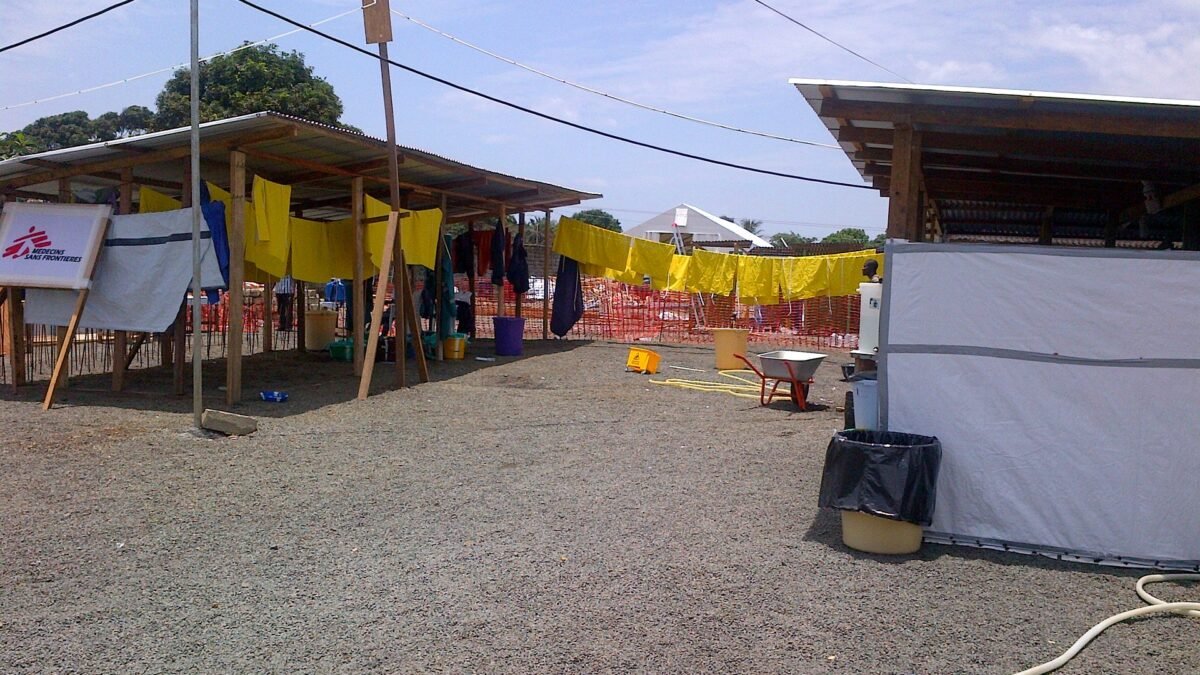
The outbreak was declared on 15 May 2026 in Ituri province, in the north-east of the country, and the World Health Organization (WHO) declared a public health emergency of international concern within days. Ituri remains the epicentre, accounting for about 71 per cent of all confirmed cases, with 7,346 infections and 3,750 deaths recorded there, according to the ministry’s situation reporting. It is also a conflict zone, which has made the virus harder to contain: health workers struggle to reach affected communities, contact tracing breaks down where fighting makes movement dangerous, and frightened families sometimes avoid treatment centres altogether.
The WHO’s Africa office has said that ending the outbreak requires a “continued scale-up of key control measures, greater access to affected areas, and community outreach”. The Africa Centres for Disease Control and Prevention has disclosed that roughly 80 per cent of new infections are appearing outside monitored contact chains, a breakdown that undermines the standard epidemic response. The WHO has also estimated that about one-third of all deaths occurred outside treatment centres, before patients could even be tested.
An outbreak with no vaccine and no treatment
What makes this outbreak unusually dangerous is the virus itself. The strain now spreading is Bundibugyo ebolavirus, a rarer relative of the Zaire strain that caused the West African epidemic and most of the outbreaks clinicians know best. There is no approved vaccine and no approved targeted treatment for Bundibugyo. Clinical trials of vaccines are under way, according to the WHO, and testing and treatment continue, but for now the response rests on the oldest tools in epidemic control: isolation, safe burial, contact tracing and community trust.
The symptoms, according to WHO guidance, begin with sudden fever, headache, extreme fatigue, muscle and joint pain, sore throat, appetite loss and chills. The 21-day window in the CDC’s order reflects the maximum incubation period for Ebola: a person exposed to the virus can take up to three weeks to become ill, which is why the attestation looks back exactly that far.
Cases linked to the outbreak have also been reported beyond the DRC’s borders, including in Uganda, Kenya and Nigeria, according to the Associated Press. Uganda had earlier declared its own linked outbreak over in July, a decision the WHO confirmed in August, but the reappearance of cases in the region underlines why health authorities are watching air routes as well as land borders. The CDC says that no cases linked to the outbreak have been reported in the United States, and that the likelihood of the virus spreading to the US is low — but, as USA Today reported, “it’s not taking any chances”.
The US State Department has issued a Level 4 “Do not travel” advisory for the DRC, citing health, crime, unrest, terrorism and kidnapping. The WHO, for its part, continues to advise against travel or trade restrictions: its last full risk assessment, published on 14 August, rated the risk inside the DRC as very high, the risk for countries sharing a border with the DRC as high, and the risk for the rest of Africa and the world as low. The WHO said on 23 October that it is revising that assessment.
Airlines say they were given too little time
The sharpest criticism of the order has come not from public health experts but from the airlines that must enforce it. Airlines for America wrote to the CDC on 26 October, saying that the changes needed to check-in systems, digital signatures, station procedures and staff training could not be completed in the time allowed, and asking for a “more proportionate” response focused on affected areas and on travellers who had recently been there. IATA called it “unreasonable” to ask carriers worldwide to change their procedures in less than two weeks.
The scale of the task is part of the industry’s argument. Airlines for America told the CDC that US Customs and Border Protection screened about 130 million air passengers in 2025, and that fewer than 25,000 of them had any connection to the DRC — a tiny fraction of the travelling public being asked to sign a new legal declaration, on a system built in days. The association’s point is that a blanket rule covering every passenger on every international flight is a disproportionate instrument for a risk concentrated in one country.
Some carriers have moved faster than others. Delta has published passenger guidance saying travellers can complete the form in its app or on its website, and Avianca advised passengers on 31 October to complete the declaration before reaching the airport, providing an individual digital form for each passenger and warning that anyone who does not present it will not be allowed to board. But many airlines, particularly smaller carriers and those operating from airports without sophisticated check-in systems, will be relying on paper forms at the counter — the slowest and most error-prone way of collecting a signed legal statement from hundreds of passengers at once.
As of Monday, neither industry group had won a delay. The CDC has not announced any change to the 3 November start date, and it has not offered a grace period. It can amend, extend or rescind the order at any time, and the requirement is scheduled to run until 18 December. For now, the message from the industry is that Tuesday night will be a test of how quickly a global system can absorb a new rule — and that the first passengers to feel it will be those on the earliest flights out of Europe, the Gulf and Asia on Wednesday morning.
Analysis: Why It Matters
A border measure, not a medical one
The most important thing to understand about the CDC’s order is what it is not. It does not screen anyone for Ebola, it does not test anyone, and it does not treat anyone. It is a piece of paper — or a checkbox — that asks one question about travel history, backed by the threat of criminal prosecution for lying. Its value lies in deterrence and in information: it forces every traveller to think, before boarding, about whether they have been in the DRC, and it gives the US government a signed record if someone later turns out to have been. That is a modest tool, but it is also the only tool that can be deployed at every departure gate on earth within twelve days of being signed. The choice of instrument tells us how the CDC sees the risk: low enough that medical screening is unnecessary, but real enough that a paper barrier is worth the disruption.
The 5,000-death milestone changes the politics
Outbreaks do not move policy by numbers alone, but numbers create moments. Passing 5,000 deaths — nearly half of everyone confirmed infected — turned a distant epidemic into a story that newsrooms and governments could no longer treat as routine. The CDC signed its order on 22 October, before the milestone was reached, but the milestone explains why the order has not been delayed despite the airlines’ objections: no public health agency wants to be the one that softened a rule in the week an outbreak became the second deadliest on record. The politics of precaution now point in one direction, and the airlines are arguing against a tide that has already turned.
The Bundibugyo problem
The absence of an approved vaccine or treatment for the Bundibugyo strain is the fact that shapes everything else in this story. In the 2018–2020 DRC outbreak, caused by the Zaire strain, ring vaccination with the rVSV-ZEBOV vaccine was a central weapon, and it gave responders something to offer frightened communities beyond isolation and quarantine. In this outbreak, there is no equivalent offer. That makes containment slower, makes communities less willing to cooperate with contact tracers, and raises the stakes of every case that slips across a border — because the medical system that receives it has no specific countermeasure either. It is also why clinical trials now under way in the DRC matter so much: a vaccine for Bundibugyo would change the arithmetic of this outbreak and of the next one.
When 80 per cent of cases escape the contact list
The Africa CDC’s disclosure that roughly 80 per cent of new infections are appearing outside monitored contact chains is the most alarming single statistic in this story, and it deserves more attention than it has received. Contact tracing is the backbone of Ebola control: find everyone an infected person met, watch them for 21 days, isolate them the moment they fall ill. When four out of five new cases arrive from outside that net, the net is failing — because of conflict in Ituri, because of population movement, because families hide illness, or because the system is simply overwhelmed. A travel attestation at foreign airports is, in that light, a confession that the front line in the DRC cannot fully contain the virus, and that the second line of defence has to be built at the boarding gate.
The test on Tuesday night is a test of the system, not of the virus
What happens at 11:59 p.m. Eastern on Tuesday will tell us less about Ebola than about the machinery of global aviation. The order requires every airline in the world to collect a signed statement from every passenger bound for the United States, keep it for 42 days, and refuse boarding to anyone who does not provide one. Large carriers with digital check-in will manage; small carriers, charter operators and airports with paper processes will struggle. The most likely outcome is not chaos but friction: longer queues, confused passengers, a handful of denied boardings, and a wave of complaints that the rule was imposed too fast. The more interesting question is what happens next — whether the CDC extends the order beyond 18 December, whether it narrows it to travellers from affected regions, or whether the airlines’ call for a proportionate response eventually wins. Tuesday night is the beginning of that argument, not the end of it.
What to Watch Next
- Tuesday night at the gate: Watch for reports of delays, denied boardings and paper-form queues at major hubs on the first flights after 11:59 p.m. Eastern on 3 November. The earliest stress points will be the overnight departures from Europe, the Gulf and Asia that land in the US on Wednesday morning.
- Any CDC change of course: The CDC can amend, extend or rescind the order at any time. A delay, a grace period or a narrowing of the rule to travellers from affected regions would signal that the airlines’ objections have landed; silence will mean the agency is holding its line.
- The next ministry update from Kinshasa: The DRC health ministry is reconciling its Ituri data, and revised consolidated figures are expected in the coming days. Watch whether the death toll climbs further and whether the share of cases outside monitored contact chains improves or worsens.
- Clinical trial results for a Bundibugyo vaccine: Trials are under way, according to the WHO. Any signal of efficacy would be the most consequential development in this outbreak, and it would change the case for border measures like the attestation.
- Whether the order is extended past 18 December: The requirement is scheduled to end on 18 December 2026 unless the CDC changes it. If the outbreak is still spreading then, expect pressure to extend it — and renewed argument from the airlines that a blanket rule is the wrong tool.
Sources
- CDC — Order: Requirement for Attestation by All Persons Traveling by Air to the United States
- CDC — Traveler Disclosure and Attestation form (Attachment A)
- USA Today — You won’t be allowed to fly into the US without signing this
- Travel Tourister — CDC Ebola Attestation Nov 3: Airlines Say Unworkable
- Channel One News (Source: BBC) — More than 5,000 die from Ebola in DR Congo’s deadliest outbreak

About the Author — advmannan1
Related Articles

US Doctors Issue First Menopause Treatment Update in 12 Years as Hormone Therapy Returns to First-Line Care
America's leading obstetricians and gynaecologists have issued their first major menopause treatment update in twelve years, restoring hormone…

High-Dose Omega-3 Linked to Longer Survival After Bowel Cancer Liver Surgery, Phase 3 Trial Finds
Patients given high-dose purified EPA before and after liver surgery lived longer in the phase 3 EMT2 trial…

Bodum Recalls 5.9 Million French Press Coffee Makers After 48 Burn Injuries as Glass Carafes Shatter
Bodum USA is recalling 5.9 million French press coffee makers after 70 reports of glass carafes breaking during…