
Cristiano Ronaldo Suspended 30 Days and Fined €255 by Portugal After September Camp Walkout

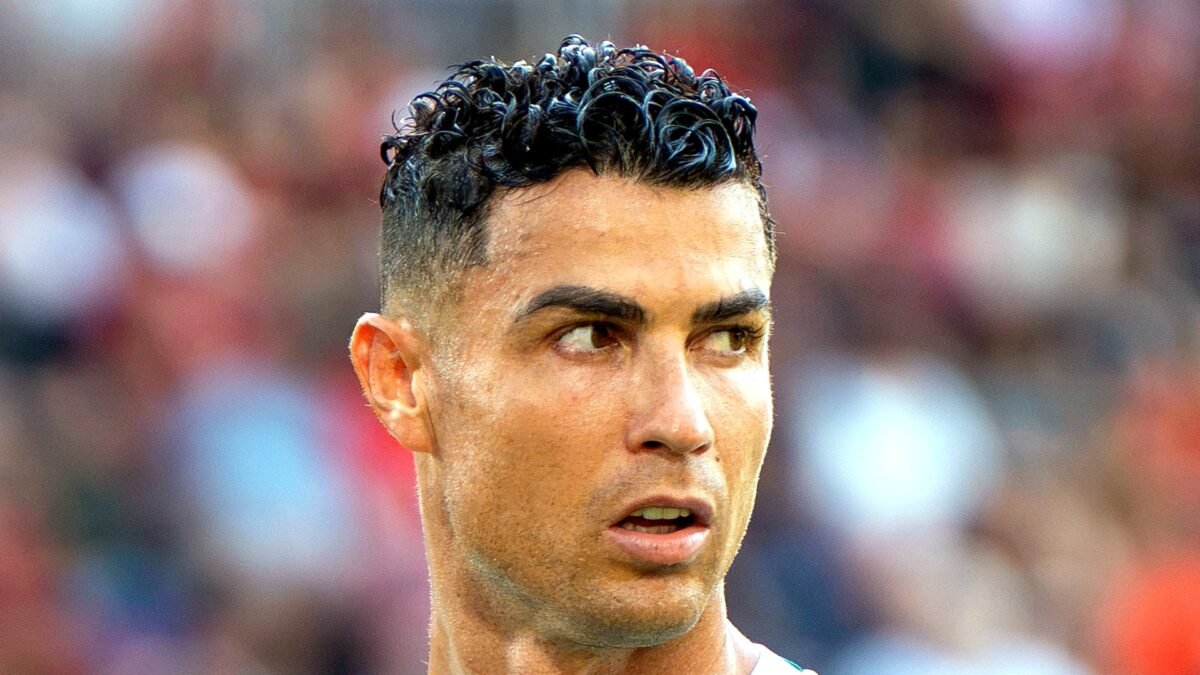
Portugal hands its captain a token punishment
Cristiano Ronaldo has been suspended for 30 days and fined €255 by the Portuguese Football Federation (FPF) for walking out on the national team camp in September, in a disciplinary verdict that will cost the 41-year-old nothing but pride. The punishment, announced by the federation on Monday, October 19, was backdated to the walkout itself, meaning it will expire long before Portugal next plays — a Nations League double-header against Denmark on November 14 and Wales on November 17. Ronaldo will be eligible for both.
According to multiple Portuguese outlets reporting the FPF disciplinary council’s ruling, Ronaldo was found guilty of a deliberate breach of Article 160(1) of the federation’s disciplinary regulations. The council’s statement, carried by several outlets, said: “Accordingly, and on the grounds set out above, the Disciplinary Council – Non-Professional Section – of the Portuguese Football Federation hereby decides, in these proceedings, to uphold the charges in their entirety and, consequently, find the accused, Cristiano Ronaldo dos Santos Aveiro, guilty of committing, on one occasion and intentionally, the disciplinary offense provided for and punishable under Article 160(1) of the RDFPF. As a result, he is handed a 30-day suspension and an additional fine of 2.5 units, amounting to €255.”
The FPF said the player fully admitted the facts underlying the charges through a formal statement, and that his confession and clean disciplinary record helped reduce the punishment, according to the Associated Press. The federation described the punishment as “adequate and sufficient,” noting that the €255 fine was the maximum allowable after mitigating circumstances were taken into account. The 30-day suspension is the minimum the rules allow — the FPF’s regulations set a range of one to six months for a player who walks out on international duty, alongside a fine.
The episode caps one of the most extraordinary public ruptures between a national-team captain and a coach in recent memory, and it ends — for now — with Portugal’s federation choosing the lightest possible hand.
What happened: the Denmark camp walkout
Ronaldo left Portugal’s camp in Denmark on Wednesday, September 30, one day before a Nations League match against Denmark, amid a furious dispute with head coach Jorge Jesus over his role in the squad.
The row began three days earlier, on September 27, when Portugal beat Norway with Ronaldo as an unused substitute. According to Ronaldo’s own account, published in a near-2,000-word social media statement, Jesus asked him during the Norway match whether he was ready to play 30 minutes. “To my absolute surprise, the coach asked me whether I was ready to play 30 minutes [against Norway],” Ronaldo wrote, as quoted by ESPN. “I was completely focused on my physical recovery, integrated with my teammates as always, and thinking that I would not play that day. I had no problem with that.”
Ronaldo said he accepted the request even though it fell outside his physical recovery and training plan, warmed up from half-time, and watched the minutes tick by without ever being called upon. “The coach had broken his word to me,” he said.
After leaving camp, Ronaldo accused Jesus publicly of “breaking his word” and of violating a private agreement over his playing time. He later apologised to his team-mates and supporters for failing to acknowledge the fans after the match and for leaving the squad, and said he remained available for selection and was prepared to accept whatever punishment followed.
Jesus, for his part, has maintained that selection decisions are his responsibility alone, and has not ruled out picking Portugal’s record goalscorer again. The two men’s accounts of their private conversations remain in direct conflict — a disagreement the federation’s disciplinary process was never designed to settle, and did not attempt to.
Why the punishment is so light
The numbers tell their own story. Ronaldo was already serving a provisional suspension when he walked away on September 30, so the final 30-day ban, backdated to the incident, has effectively already been served by the time it was announced. He will miss no Portugal match. Portugal’s next fixtures — Nations League games against Denmark on November 14 and Wales on November 17 — fall comfortably beyond the ban’s end, with RTP reporting the suspension ends on October 30.
The fine is even more symbolic. €255 (about $286, or £215) is the maximum the federation could impose after mitigation, yet for a player reported by Forbes to be worth £900 million and earning over £400 million a year, as The Times noted, it is hardly punitive. One Sky Sports headline calculated he could pay it off in 39 seconds. NBC Sports observed that the fine “wouldn’t be enough to buy a pair of tickets to Portugal’s next home match.”
The leniency was not accidental. The federation stressed that Ronaldo admitted the charges, apologised, and had a clean disciplinary record — and its president, Pedro Proença, has publicly expressed his desire to see Ronaldo return to the national team. Jesus, too, has left the door open. A six-month ban — the maximum available — would have ruptured the relationship between the federation and its most famous player for good. A 30-day backdated ban formally records the offence while changing almost nothing on the pitch.
Portugal without Ronaldo
One fact looms over the reconciliation: Portugal did not miss him. During the October international window, Portugal played three matches without their captain — including the Denmark game he walked out on and a return fixture against Norway — and won all three, scoring eight goals in the process. Those results qualified Portugal for the Nations League quarter-finals.
The timing matters. Ronaldo, now 41 and playing club football for Al-Nassr in Saudi Arabia, is chasing 1,000 career goals, and every game he does not play is one fewer chance to get there. Yet his absence has demonstrated, in the most public way possible, that this Portugal side can function — even flourish — without its talisman on the pitch. That is the subtext to every decision Jesus now makes: the coach has evidence, fresh and emphatic, that the team can win the biggest games in this competition without its captain.
Jesus had already shown he was prepared to make that call on sporting grounds: Ronaldo started the opening Nations League win over Wales in September but was left on the bench for the Norway game that triggered the crisis. The manager’s willingness to treat the 41-year-old as a squad player rather than an automatic starter was the original fault line. The walkout made it public; the subsequent three wins gave the manager’s position a powerful, unspoken validation.
Analysis: Why It Matters
A punishment that punishes nobody
This is the most interesting feature of the ruling: a disciplinary process that exists to assert the federation’s authority over its players has asserted it in the most authority-sparing way available. Backdated suspensions that cover international windows with no matches in them are, in substance, no suspension at all. The FPF has said, in effect, that walking out on the national team is an offence — and that the price is a few hundred euros and a formal guilty finding that nobody outside a lawyers’ file will ever see. Future players, and future coaches, will draw their own conclusions about where the real boundaries lie.
The confession strategy worked
Ronaldo’s approach after the walkout was tactically astute. He admitted the facts, apologised to team-mates and fans, said he accepted whatever punishment came, and put his version of the underlying dispute on record in a 1,966-word statement — all while insisting the door to the national team remained open. That is precisely the posture the FPF’s disciplinary code rewards: admission and contrition as mitigation. The result — the minimum suspension, a nominal fine — is the outcome the strategy was designed to produce. Ronaldo leaves the process with his November availability intact and his version of events unchallenged in the public record.
The real trial is Jesus’s team selection
The disciplinary ruling resolved the formal case but settled nothing about the actual conflict. Jesus and Ronaldo disagree about what was promised in private conversations; only one of them picks the team. The next international break, beginning November 9, will answer the only question that matters: does Jorge Jesus call Cristiano Ronaldo up? The federation president wants him back; the coach has not ruled it out. But the evidence of October — three wins, eight goals, quarter-final qualification — gives Jesus something no coach in Portugal’s history has had when managing Ronaldo: proof of concept for a team built without him. The suspension is over. The negotiation over Ronaldo’s future role is only just beginning.
A symbol of the late-career management problem
Every generation of great players ends with this awkward dance: the captain who believes he is still essential, the coach who needs the squad to move on, and a federation caught between commercial gravity and sporting logic. What makes the Ronaldo case distinctive is its transparency. Most such disputes are managed behind closed doors; this one played out in a 2,000-word social media statement and a disciplinary ruling published for all to read. That openness is a product of the modern player-as-media-brand — Ronaldo is not merely a footballer with a grievance but an institution with an audience. Federations that once disciplined players in private must now do it in public, and the verdict shows: light enough to keep the brand relationship alive, formal enough to defend the rules’ existence.
What to Watch Next
- The November squad announcement: whether Jorge Jesus names Ronaldo for the November 14 Denmark and November 17 Wales fixtures will reveal whether the walkout has changed the captain’s standing or merely postponed the reckoning.
- Ronaldo’s club form: with Al-Nassr, the 41-year-old’s performances and his pursuit of 1,000 career goals will either strengthen his case for recall or quietly make the argument for moving on.
- Portugal’s Nations League quarter-final: the draw and the performance of the Jesus-built side without Ronaldo will test whether October’s results were the start of a pattern.
- The FPF’s precedent: whether the “admit, apologise, minimal sanction” model holds when the next player tests Article 160 — or whether this verdict was, in practice, a one-man exception.
- Any appeal or further comment: Ronaldo has not publicly reacted to the suspension itself; his next statement, or silence, will set the tone for the November camp.
Sources
- USA Today — Cristiano Ronaldo hit with light punishment after Portuguese national team walk-out
- NBC Sports — Cristiano Ronaldo suspended, fined by Portugal after dramatic September walkout
- TSN / The Associated Press — Ronaldo suspended for 30 days and fined for walking out on Portugal camp
- ESPN — Cristiano Ronaldo fined, suspended 30 days after Portugal walk-out
- The Times — Cristiano Ronaldo suspended by Portugal for 30 days and fined £215

About the Author — Abdul Mannan
Related Articles

Russia Challenges US Women’s Gymnastics Crown as China Leads Worlds Qualifying in Rotterdam
A cobbled-together Russian team finished within a point of the US women in qualifying at the Rotterdam world…

Chris Boswell Breaks Gary Anderson’s Steelers Field-Goal Record in Overtime Win Over Buccaneers
Chris Boswell kicked four field goals — tying and then breaking Gary Anderson's 38-year-old franchise record — as…
Pedro Neto’s Double Ends Everton’s Unbeaten Start as Martinez Injury Mars Chelsea’s 2-0 Win
Pedro Neto's brace ended Everton's unbeaten start in a 2-0 Chelsea win overshadowed by goalkeeper Emiliano Martinez's head…