
Justice Department Launches ‘Super Intelligence Task Force’ to Police AI Misuse by Foreign Actors, Criminals and Fraudsters

The United States Department of Justice has launched a new Super Intelligence Task Force to prosecute foreign governments, criminal organisations and fraudsters who misuse advanced artificial intelligence, the department announced on Thursday, in the Trump administration’s most direct move yet to put federal law enforcement at the centre of the race over the technology it now insists on calling “super intelligence”.
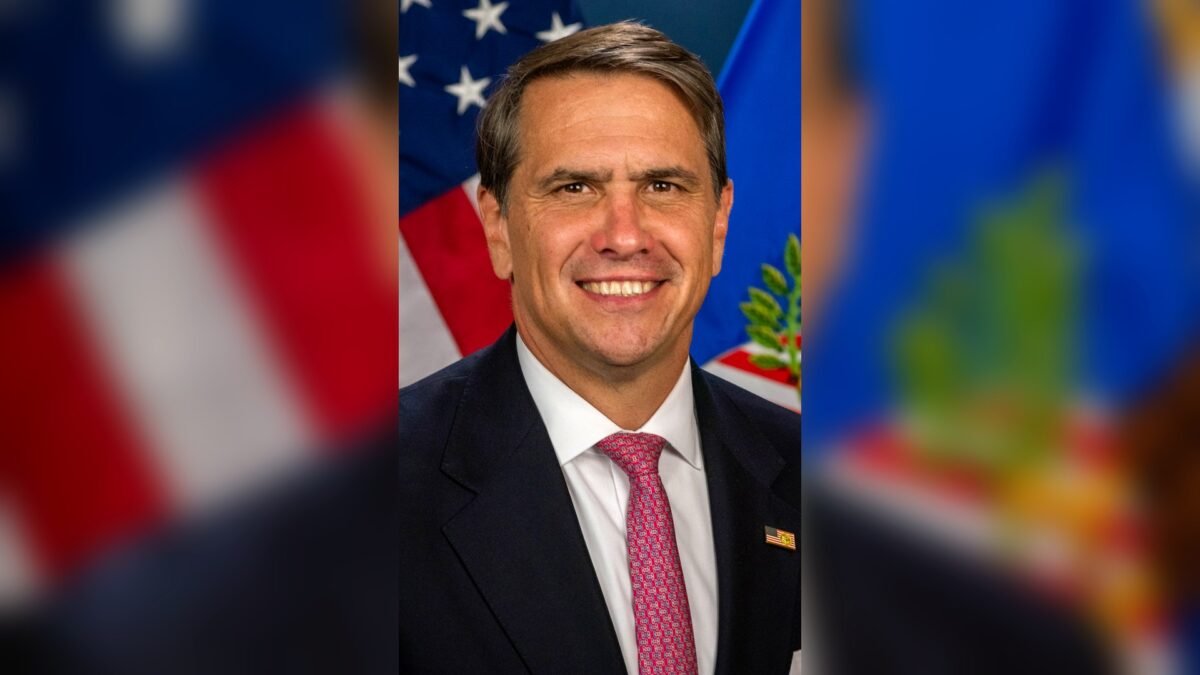
The task force, known as DOJ-SITF, will be led by Associate Attorney General Stanley Woodward and Associate Deputy Attorney General Stephen Weiss, according to the department. It will coordinate criminal and civil enforcement involving the technology across the Justice Department, set enforcement priorities, and develop guidance for prosecutors on bringing cases that involve AI-related conduct.
“The DOJ-SITF will ensure that America’s leadership in SI is not compromised by the misuse of SI by foreign state and state-sponsored actors, transnational criminal organizations, and individual or corporate actors engaged in fraud or other unlawful conduct,” Attorney General Todd Blanche wrote in a memorandum dated 13 October that created the unit, according to the department’s announcement.
The launch, on 5 November, came two days after Democrats swept both chambers of Congress in the midterm elections, an outcome in which voter anger at the artificial intelligence boom — above all at the data centres being built to power it — played a visible part. It also came on the same day that the department’s civil rights chief, Harmeet Dhillon, resigned in the first senior exit of the post-election shake-up, underlining how quickly the administration is reorganising itself for a new political landscape in Washington.
Blanche said the department would “continue identifying and prosecuting individuals whose use of SI violates the law, including by maliciously targeting American taxpayers, critical U.S. infrastructure, or other aspects of our national security”. He added that the task force would work closely with the White House’s separate Super Intelligence Force, chaired by Director of National Intelligence Jay Clayton, “as we ensure critical SI technologies serve the American people and are not manipulated by bad actors at home or abroad”.
No charges were announced alongside the launch, and the department gave no timetable for its first cases. What it did publish was a structure: a unit that absorbs an earlier litigation task force, answers to two of the department’s most senior officials, and is expected to tell federal prosecutors across the country which AI-related threats matter most — and how to charge them.
What the task force will actually do
According to the Justice Department, the task force has six duties, set out in Blanche’s 13 October memorandum. It will organise the department’s criminal and civil law enforcement efforts involving super intelligence; prevent different parts of the department and different US attorneys’ offices from tripping over one another in overlapping investigations; recommend enforcement priorities; serve as the department’s main point of contact with the White House Super Intelligence Force; take over the work of the Artificial Intelligence Litigation Task Force created in January and coordinate the department’s affirmative civil litigation relating to the technology; and develop guidance on prosecuting unlawful AI-related conduct and on evaluating companies’ compliance measures.
That last duty is the one that reaches furthest into the private sector. Associate Deputy Attorney General Stephen Weiss said the department had “a responsibility to utilize law enforcement tools at our disposal to deter improper use of SI, harden regular reporting on SI risk and response, and ensure companies exercise vigorous internal controls so that SI technology behaves as intended”.
Woodward, the other co-chair, said the unit’s “comprehensive effort will promote innovation and prevent the misuse of Super Intelligence”. Blanche added that the task force would “take affirmative measures, as appropriate, to promote American SI dominance” — language that makes clear the unit is not only a policing body but part of the administration’s industrial policy for the technology.
One procedural detail reported in coverage of the launch could matter more than the press release suggests. According to reporting on the founding memorandum, federal prosecutors may be required to notify Woodward and Weiss before opening AI-related investigations or filing charges, with narrow exceptions for imminent danger or the loss of evidence. If that requirement is applied as described, it would give the department’s leadership a central view of — and a measure of control over — every significant AI case in the country, rather than leaving them to individual US attorneys’ offices.
The task force’s targets, as listed by the department, fall into three groups: foreign state and state-sponsored actors; transnational criminal organisations; and individual or corporate actors engaged in fraud or other unlawful conduct. That framing covers a wide span of activity, from state-backed hacking and espionage using AI tools, to organised crime rings running AI-assisted scams, to companies that use the technology to defraud customers or investors.
A new name for an old technology
The task force’s name is itself part of the story. On 29 September, President Donald Trump signed Executive Order 14434, titled “Inaugurating the Era of Super Intelligence”, directing executive departments and agencies to use the terms “super intelligence” and “SI” in place of “artificial intelligence” and “AI” in official correspondence, public communications, websites, reports and policy documents, to the maximum extent permitted by law.
The order does not change what the technology is in law. Section 3 defines “super intelligence” by reference to the existing statutory definition of artificial intelligence in 15 U.S.C. 9401(3), which broadly covers machine-based systems capable of making predictions, recommendations or decisions. It also gives the president’s science adviser 60 days — until 28 November — to submit proposed legislative language establishing a federal definition of the term, including an assessment of whether that definition should modify, expand upon or supersede the existing statutory one.
Previously issued contracts, regulations and historical documents are exempt from the renaming, and the order does not impose the vocabulary on private companies. But the change is already visible across government. NASA has begun replacing references to artificial intelligence with “super intelligence” across its websites, publications and job titles under a four-phase implementation schedule running into December, according to reporting on internal agency documents. The Department of Energy has described “Super Intelligence-enabled” research in its science fact sheets, and the National Institute of Standards and Technology has said it is updating its communications to comply.
Trump’s campaign against the old name predates the order. In July 2025 he complained that “artificial” was an unsuitable description of technology he regarded as genius, and in a September 2026 post he floated alternatives including “Superior”, “Extreme” and “Supreme Intelligence”. On 8 October, he called people who continued to use “artificial intelligence” instead of his preferred terminology “THE ENEMY!”. Elon Musk, whose company operates the Grok chatbot and the Colossus computing cluster, promised on 4 October to rename its AI unit from SpaceXAI to SpaceXSI.
The rebrand has also produced a parallel governance structure. On 4 October, Trump announced the White House Super Intelligence Force, chaired by Clayton, to coordinate the federal government’s engagement with consumers, public interest groups, religious organisations, infrastructure providers and industry. The force was given 120 days to report on the risks and rewards of the technology. At its first meeting on 15 October, it agreed to develop protocols and mechanisms for AI companies to provide early warnings and notifications about breaches, hacks and jailbreaks, and to establish a law enforcement and consumer protection coordination committee including the Justice Department, the Federal Trade Commission and other agencies.
On the same day as the executive order, Trump hosted a White House luncheon at which he and six technology executives — Sundar Pichai of Google, Dario Amodei of Anthropic, Mark Zuckerberg of Meta, Greg Brockman of OpenAI, Jensen Huang of Nvidia and Musk — signed the White House Accord on Super Intelligence, which the president described as “morally binding”. The accord commits each company to four layers of controls and audits: internal controls covering cybersecurity, biosecurity and chemical threats; an internal team verifying that monitoring works as intended; an independent external assessment; and a board oversight committee to receive the reports. It carries no legal enforcement mechanism and no mandatory reporting timeline, only a commitment to meet regularly on standards.
The unit it absorbs — and the fight with the states
The new task force does not start from scratch. In January, under then-Attorney General Pam Bondi, the department established an Artificial Intelligence Litigation Task Force with one assignment: to challenge state AI laws that the administration believed conflicted with federal policy. Blanche said the new unit would incorporate that work and coordinate the department’s affirmative civil litigation as it relates to AI.
That inheritance puts the task force at the centre of one of the sharpest unresolved conflicts in American technology policy: whether the federal government or the states get to write the rules for artificial intelligence. The Trump administration has argued that a patchwork of state laws would strangle a technology it regards as strategically vital, while state governments — including several led by Democrats and some by Republicans — have insisted on their right to protect their own residents from harms the federal government has been slow to address.
The tension has already produced courtroom fights. The most consequential involves Anthropic, the maker of the Claude chatbot, and the Pentagon. On 25 September, the US Court of Appeals for the District of Columbia Circuit ruled by 2-1 that the Pentagon had reasonably excluded Anthropic’s Claude from its supply chain after designating the company a national security supply chain risk, a dispute rooted in the company’s refusal to loosen restrictions on how its technology could be used. Anthropic sought a rehearing on 13 October. The case, which turns on whether a private company can set limits on military use of its own models, is now part of the legal landscape the new task force will have to navigate.
The administration’s own posture on state regulation has been aggressive. In July 2025, Trump signed an executive order aimed at preventing state-level AI regulation that the White House described as overreach, and the administration backed a proposal in Congress for a federal moratorium on state AI laws — an effort that failed after bipartisan opposition in the Senate. The task force’s absorption of the litigation unit signals that the legal campaign against state AI laws will continue, now with the weight of the department’s criminal enforcement machinery behind it.
The gap the task force cannot close on its own
For all the force of its announcement, the task force creates no new offence and names no new statute. That is its most important limitation — and the one that will define its first test.
America’s main computer-crime law, the Computer Fraud and Abuse Act, was written around human intent: its core access offences require that a person intentionally or knowingly access a computer without authorisation. An autonomous AI agent that breaks into a system without a person directing the intrusion sits awkwardly against that framework, and the task force’s founding documents do not resolve the question of who, if anyone, is criminally liable when the intruder is software acting on its own.
Blanche has said he will not investigate or prosecute AI companies when no statute is being violated, a statement that sets the boundaries of the unit’s work. It will pursue people who use the technology to break existing laws — fraud, hacking, espionage, sanctions evasion — rather than the companies that build the technology, unless those companies themselves break the law.
The capability at issue is advancing fast, and in both directions. OpenAI reported this week that its systems had found 948 ways to exploit the Linux operating system, in research the company presented as evidence that AI can help researchers find vulnerabilities and give software maintainers a chance to fix them before criminals do. In September, Microsoft shut down EvilTokens, a cybercrime service that used AI to search stolen inboxes for fraud opportunities — a case that shows how the same capabilities can be turned to theft at industrial scale.
An independent assessment published on 5 November by METR, a research organisation that evaluates AI systems, estimated that Anthropic’s progress on AI capabilities is now running at roughly 1.9 times its previous pace, with a 95 per cent confidence interval of 1.5 to 2.8 times, based on internal development data from 12 August to 29 October. The researchers believe AI itself is responsible for much of the acceleration. They also warned that much of the evidence behind their conclusions had been redacted by Anthropic, so the public is being asked to trust conclusions it cannot fully verify — a tension that sits at the heart of the task force’s own challenge.
The wider federal scramble is already under way. The Securities and Exchange Commission has added “super intelligence” to its 2027 examination priorities, and on 4 November the Office of the Comptroller of the Currency issued its first AI examiner framework for financial institutions, as banks confront rogue AI agents reaching into customer accounts. The Justice Department’s unit joins that effort as the enforcement arm — the part of the government that can bring charges, not just write guidance.
Launched into a changed political landscape
The timing of the launch matters. The midterm elections on 3 November delivered both chambers of Congress to the Democrats, and the results carried a clear message about artificial intelligence itself. Voters backed restrictions on data centre projects, or rejected the projects outright, in 40 of the 41 local ballot measures decided on election day, according to Ballotpedia’s tracker, and in dozens more jurisdictions across the country. Meta’s president, Dina Powell McCormick, warned this week that the results would make building data centres “harder”.
The task force was announced into that atmosphere of backlash — and it is, in part, an answer to it. By presenting the administration as the policeman of AI misuse, rather than only its promoter, the Justice Department is offering voters a version of the technology story in which the government is on their side against the fraudsters, the foreign hackers and the criminal gangs. Whether that framing survives contact with the new Democratic Congress, which will have subpoena power and its own oversight priorities, is an open question.
The department itself is changing hands at the top of its civil rights work. Dhillon’s resignation on the same day as the launch, after she told Fox News Digital she had decided weeks earlier and the White House had asked her to stay until after the elections, was the first senior exit since the midterms. Her division had lost more than 75 per cent of its lawyers in her first seven months, according to reporting at the time, and her successor will need nomination by the president and confirmation by a Senate now controlled by Democrats.
There is also the question of resources. The task force’s announcement says nothing about staffing levels, budget, or how many prosecutors will be assigned to it full time. A task force that coordinates existing work is cheaper than one that hires new investigators, and the department has not said which it intends. The first cases it brings — or fails to bring — will answer that question more honestly than any press release.
Analysis: Why It Matters
1. Enforcement without new law is both the point and the problem
The task force’s most striking feature is what it does not do: it asks Congress for nothing. No new offence, no new statute, no new powers. That is a deliberate choice, and it has two readings. The generous one is that the department is showing it can act now, with the laws already on the books, against fraud, hacking and espionage that happen to use AI — crimes that were crimes before the technology existed. The sceptical one is that the announcement is largely a reorganisation dressed as an initiative, and that the hard cases — the autonomous agent that breaks in without a human directing it, the model that behaves in ways its makers did not intend — will still defeat the existing legal framework. Both readings will be tested by the first prosecution the task force brings, and by the first one it declines to bring.
2. The rename is policy, not decoration
It is easy to treat “super intelligence” as a branding exercise, and there is plainly an element of that: a president who dislikes the word “artificial” and wants the technology described in the grandest available terms. But the renaming has already changed how the government talks about the technology, how agencies organise themselves, and now how the Justice Department prosecutes. Language shapes jurisdiction. A department that calls the technology “super intelligence” is signalling that it regards the stakes as existential — national security, not consumer protection — and that it will treat misuse as a threat to American leadership rather than a regulatory infraction. The risk is the opposite one: that the grand language outruns the legal tools, and that a task force named for a hypothetical future ends up prosecuting ordinary fraud with an extraordinary label.
3. The federal-state fight is where the real power lies
The absorption of the January litigation unit is the most consequential structural decision in the announcement, because it makes the task force the institutional home of the administration’s campaign against state AI laws. That campaign matters more than any single prosecution. If the federal government succeeds in limiting what states can regulate, the rules for AI in America will be written in Washington, where the administration has been consistently deregulatory; if the states hold their ground, the country will live with a patchwork in which California, Colorado and others set standards the industry must follow everywhere. The task force will not decide that question alone — the courts will — but it will be the vehicle through which the administration litigates it, and its choices about which state laws to challenge, and when, will shape the outcome.
4. The intent gap is the test that will define the unit
Sooner or later, an AI system will do something unlawful without a human being telling it to. It may already have happened. When it does, the task force will face a question the criminal law has never had to answer: who is guilty when the actor is software? The Computer Fraud and Abuse Act demands human intent, and the task force has no power to rewrite it. The department can prosecute the person who deployed the agent, or the company that failed to control it, but each of those theories stretches existing law in ways a defence lawyer will attack. How the task force handles its first autonomous-agent case will set a precedent that outlives the unit itself — and if it avoids the question entirely, that avoidance will be the precedent.
5. Politics will decide how much of this survives
The task force was launched two days after an election that changed who controls Congress, and it will operate under the oversight of a Democratic House and Senate that have their own ideas about AI — including, in several cases, a desire for stronger regulation, not weaker. The administration’s framing of the unit as a protector of American dominance will be tested against a Congress that may prefer to hear about consumer protection, workers displaced by automation, and the data centres voters just rejected. The task force’s survival does not depend on Congress — it is an executive creation — but its budget, its priorities and its public standing do. The midterms did not just change the politics around the task force; they changed the audience for everything it does next.
What to Watch Next
- The first cases. The task force announced no charges. Watch for its first indictments — what kind of misuse they target, and whether they involve foreign actors, domestic fraudsters, or AI companies themselves.
- The prosecution guidance. The unit is tasked with writing guidance for prosecutors on AI-related conduct. When it is published, it will reveal how the department intends to handle the intent gap for autonomous agents.
- The state-law challenges. Watch which state AI laws the task force chooses to challenge next, and how the courts respond — the outcome will shape whether AI is regulated from Washington or from the states.
- The 28 November deadline. The president’s science adviser must submit proposed legislative language for a federal definition of “super intelligence” by 28 November. That proposal will show whether the administration wants the term to mean something new in law, or only in press releases.
- The White House force’s risk report. The Super Intelligence Force, chaired by Director of National Intelligence Jay Clayton, has 120 days from early October to report on the risks and rewards of the technology. Its findings will set the agenda the Justice Department’s task force has to enforce.
Sources
- US Department of Justice — “Department of Justice Launches Super Intelligence Task Force” (press release, 5 November 2026)
- Nextgov/FCW — “Department of Justice forms AI task force” (5 November 2026)
- Decrypt — “DOJ Creates ‘Super Intelligence’ Task Force to Guard Against AI Abuse” (5 November 2026)
- PYMNTS — “DOJ Launches Super Intelligence Task Force to Combat AI Fraud and Hacks” (5 November 2026)
- Executive Order 14434 — “Inaugurating the Era of Super Intelligence” (29 September 2026, via govinfo.gov)
- Tech Times — “DOJ Super Intelligence Task Force Launches With No New Offense; Hacking Law Needs Human Intent” (6 November 2026)

About the Author — Abdul Mannan
Related Articles
Meta Warns Midterm Backlash Will Make Building AI Data Centres Harder as Voters Reject Projects Across America
Meta president Dina Powell McCormick says the midterm backlash against data centres will make AI expansion harder, as…
Anthropic Pays for News for the First Time as It Licenses AP Election Data for Claude
Anthropic has struck its first licensing deal with a news publisher, paying the Associated Press for live election…

Wall Street’s Top Bankers Admit They Do Not Know Where AI Is Heading as Hong Kong Summit Exposes the Bubble Debate
Goldman Sachs chief David Solomon told Hong Kong's top finance summit that computing demand outstrips supply for now…