
Boy, 16, and Man, 80, Killed in Light Aircraft Crash Near Drymen, Scotland

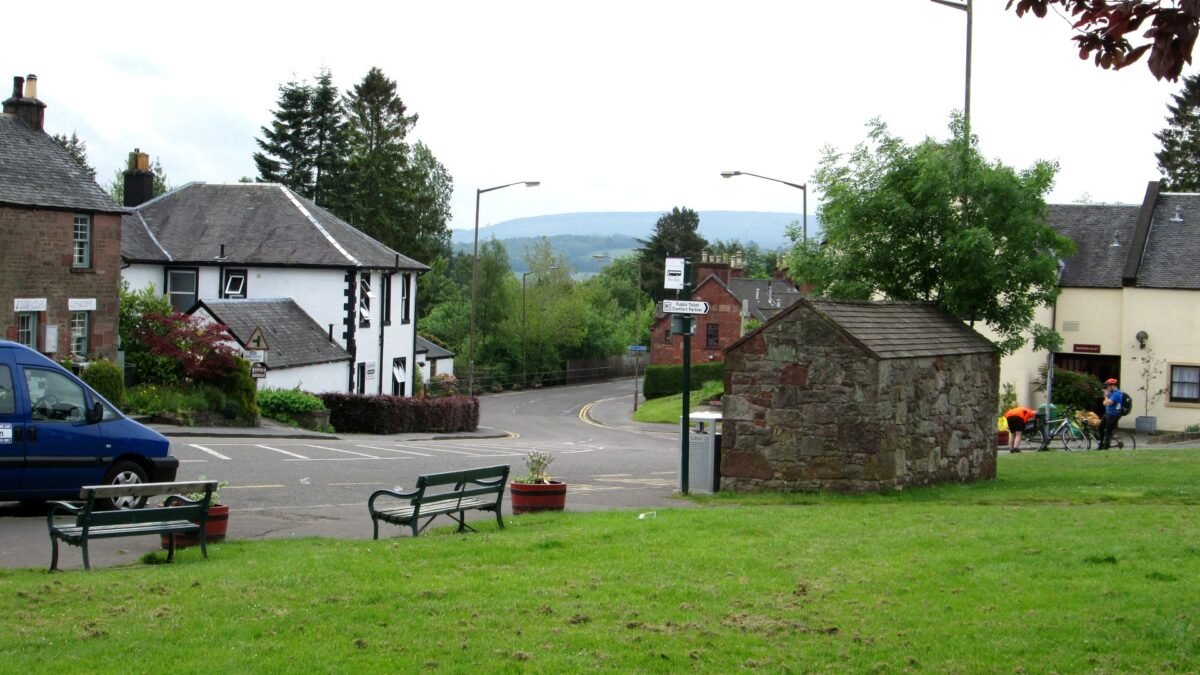
A 16-year-old boy and an 80-year-old man have died after a light aircraft crashed near the village of Drymen in Stirling, Scotland, on Friday afternoon, police have said. The Air Accidents Investigation Branch (AAIB) has begun a safety investigation, and temporary airspace restrictions — including for drones — are in place over the area.
According to Police Scotland, officers received a report of the crash north-east of Drymen at around 4.45pm on Friday, 16 October. Emergency services attended, and the boy and the man were pronounced dead at the scene. Police said their next of kin had been informed.
The aircraft had taken off from Glasgow Airport shortly after 4.15pm and stopped transmitting around 20 minutes later, according to flight-tracking data reported by Scottish media. Glasgow Airport’s managing director, Gavin Birch-Williams, said in a statement: “We are aware of an incident involving a light aircraft that departed from Glasgow Airport. This is a deeply tragic event, and the thoughts and heartfelt sympathies from all at Glasgow Airport are with the friends and families affected.”
What happened on Friday
The flight’s final minutes are being pieced together from radar and flight-tracking data. The light aircraft — identified by tracking data as a Piper Tomahawk II, a two-seat training aircraft — departed Glasgow Airport at about 4.17pm on Friday, according to data reported by newsline24. It circled before coming down north of Drymen, and stopped transmitting at 4.37pm. Police were called to the scene at around 4.45pm.
Earlier that day, the aircraft had been active across central Scotland. Tracking data showed it took off from Cumbernauld Airport at 11.46am, flew to Glasgow Airport, stayed until about 1pm, then flew north-east to Newport-on-Tay, opposite Dundee, before turning round and heading back to Glasgow. It was on the ground there for just over an hour before taking off again on its final flight, according to the same data.
Witnesses described a quiet village thrown into shock. A couple out walking their dogs near Garadhban Forest told the Sun they may have seen the plane as it descended, describing it coming “down at an angle” and “very low … just below the trees”, with a black helicopter circling oddly overhead. Stuart Allan, the bar manager of the Clachan Inn in Drymen, told the newspaper: “It’s obviously a tragedy for the folk involved. You’ve got to think about the family and friends of those poor people. It’s a shame.” He added that police had been “buzzing about all night” in the village, where officers are rarely seen, and that an air exclusion zone had been set up.
Investigation under way
In a statement, the AAIB said: “An investigation has begun into an accident involving a light aircraft which occurred on 16 October 2026. A team has travelled to the accident site near Drymen, north of Glasgow, to make inquiries and gather evidence as part of the process of conducting a safety investigation.”
Police said the airspace restrictions were likely to remain in place for some time to allow the AAIB to conduct its work. A Police Scotland spokesperson warned: “You must check if it is legal to fly in your area. It is a criminal offence to fly in restricted airspace.”
A tent had been pitched near the scene as a makeshift command post for the investigation, according to the Sun, and police continued to guard the area through the night.
Sky News, which first reported the deaths on Saturday morning, and the Guardian both carried the story, with the Glasgow Times and the Scottish Sun also reporting from the scene.
The aircraft and the area
The Piper PA-38 Tomahawk is a two-seat, single-engine light aircraft widely used for flight training around the world since its introduction in the late 1970s. It is a familiar sight at general-aviation airfields across Britain, where it is commonly flown by student pilots and private licence holders.
Drymen is a village in the Stirling council area, on the edge of Loch Lomond and the Trossachs National Park, roughly 20 miles north-west of Glasgow. The surrounding countryside — rolling farmland rising toward the Highlands — is popular with walkers and tourists, and sits under flight paths used by light aircraft operating out of Glasgow and Cumbernauld airports.
Serious light-aircraft accidents are investigated by the AAIB independently of the police inquiry, and the branch’s reports routinely examine everything from pilot decision-making and weather to aircraft maintenance and air-traffic procedures. Its findings are published openly, and past investigations have led to changes in training syllabuses, aircraft maintenance requirements and airfield operating procedures across British general aviation.
Analysis: Why It Matters
General aviation accidents remain rare — and that is why each one reverberates. Britain’s light-aircraft sector carries millions of training hours a year with a strong safety record, so a double-fatality crash in the central belt inevitably draws national attention. The AAIB’s rapid deployment of an investigation team reflects standard practice, but also the seriousness with which the regulator treats any accident involving a training-type aircraft, where questions about instruction, maintenance and flight planning are always examined.
The age gap between the victims invites questions the investigation will have to answer. A 16-year-old and an 80-year-old in the same two-seat aircraft is an unusual pairing, and speculation about who was flying and in what capacity is already inevitable. The AAIB will establish the pilot-in-command, qualifications, medical fitness and the purpose of the flight — but that process takes months, not days. Until then, the identities and relationship of the two people on board remain matters for the families and the coronial process, not for public conjecture.
The flight’s earlier pattern may prove significant — or nothing at all. Tracking data shows the aircraft flew several sectors that day, including a round trip to Newport-on-Tay, before its final departure from Glasgow. Investigators will want the full picture: fuel state, weight and balance, weather along the route, and the pilot’s recent experience. Light-aircraft accidents often turn on a chain of small factors rather than a single catastrophic failure, which is exactly why the AAIB gathers evidence so methodically before drawing conclusions.
Drone restrictions underline how the investigation environment has changed. Police explicitly warned that flying drones in the restricted airspace is a criminal offence — a reminder that accident scenes now attract aerial onlookers within hours. Protecting the integrity of the site, and the dignity of the families, requires controlling the airspace as well as the ground. The AAIB’s work depends on undisturbed wreckage and witness evidence; contamination helps no one.
For the local community, the shock is personal. Drymen is a small village where, as one local put it, “things like that just don’t happen”. The deaths of a teenager and an elderly man — reportedly on an ordinary Friday afternoon flight — will sit heavily in a place where the airport’s statement about “friends and families affected” translates into neighbours, classmates and flying-club friends. The human cost of this story is not measured in airframes.
What to Watch Next
- The AAIB’s preliminary findings: the branch typically publishes an initial report or bulletin within weeks, with a full report following months later. Early factual detail — weather, flight path, wreckage condition — will shape the investigation’s direction.
- Identification of the victims: formal identification and the opening of fatal-accident inquiries will confirm who was on board and in what roles, subject to the families’ privacy.
- The aircraft’s maintenance and flight records: investigators will examine the Tomahawk’s logs, the flight school or operator involved, and the pilot’s qualifications and recent flying history.
- Whether restrictions are lifted: the temporary airspace restrictions over Drymen will remain until the AAIB finishes its on-site work; their lifting will signal the field phase is complete.
- Any safety recommendations: if the investigation identifies systemic issues — with the aircraft type, training practices or airfield procedures — the AAIB can issue recommendations long before its final report.
Sources

About the Author — Abdul Mannan
Related Articles
Norwegian Teen Jailed for 20 Years Over Iran-Linked Murder Plot After Flying to Britain to Kill Unknown Target
Johannes Natland, 19, was jailed at Woolwich Crown Court after being recruited online by the Swedish Foxtrot Network…
Police Assess Social Media Post by Sarah Helm, Wife of UK National Security Adviser, Over Apparent Palestine Action Support
Police are assessing an X post by Sarah Helm, wife of National Security Adviser Jonathan Powell, after she…

Second Woman Testifies Against Russell Brand at London Rape Trial, Describing ‘Wild-Eyed Maniac’ Encounter
A woman told Southwark Crown Court that Russell Brand grabbed her arm and tried to pull her into…