
Government Withdraws Fazlur Rehman’s Security as Police Serve Arrest Warrants on His Secretary in Escalating JUI-F Crackdown

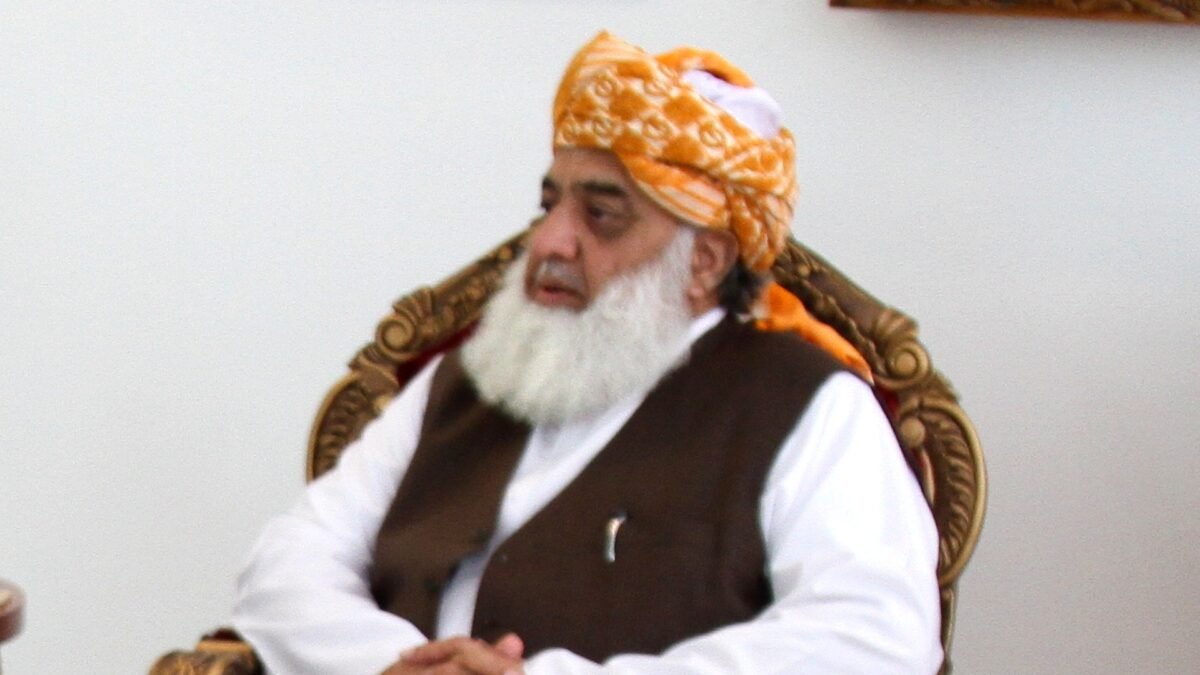
The government has withdrawn the state security of Jamiat Ulema-e-Islam-Fazl (JUI-F) chief Maulana Fazlur Rehman and his son Asad Mehmood, and police have served non-bailable arrest warrants on the cleric’s personal secretary, in a sharp escalation of the confrontation between the ruling coalition and one of Pakistan’s most experienced opposition leaders. The twin moves, reported on Thursday 19 November 2026, came within hours of each other and drew an immediate warning from the JUI-F that its workers should stay ready for a call to protect their leadership.
According to Express News and Daily Pakistan, the Frontier Corps platoon posted at Fazlur Rehman’s residence in Dera Ismail Khan was recalled late on Tuesday night, and orders were issued to end all police security assigned to him. The reports, citing sources, said the step followed instructions from Prime Minister Shehbaz Sharif. Security personnel were told to leave their duties and return within 15 minutes, and the Security Branch of Dera Ismail Khan confirmed that the police security had been closed late at night. District police pulled back the personnel deployed with Fazlur Rehman and his son on Wednesday morning, ending their duties. Geo News also reported that the security had been withdrawn from the JUI-F chief’s residences in Dera Ismail Khan and Islamabad.
The government had given no reason for the decision in the reports available at the time of writing, and no official statement explaining the withdrawal had been issued. That silence has itself become part of the story. In Pakistan, the security of a former opposition leader and the head of a major religious-political party is not a routine administrative matter. It is a political signal, and both sides are treating it as one.
Hours after the withdrawal became public, Islamabad police served non-bailable arrest warrants on Mufti Abrar Ahmed, the personal secretary to Fazlur Rehman, at Masjid Farooq-e-Azam in Sector I-9/4. An anti-terrorism court in Islamabad had issued the warrants in a case registered at the Industrial Area Police Station under FIR No. 1212/26. Police said raids were under way to trace Mufti Abrar, who had not yet been taken into custody. More than 200 people, including JUI-F leader Qari Iftikhar Hussain, have been nominated in the case.
According to the first information report, the case arises from a gathering held on 7 November 2026, which police describe as an unauthorised protest held without the required no-objection certificate. The nominated individuals are accused of violating Section 144, blocking roads and passageways, interfering with police duties, clashing with police personnel, pelting stones at police and damaging government vehicles. The case has been registered under provisions of the Anti-Terrorism Act, including Section 7. The court issued the non-bailable warrants after the accused allegedly failed to comply with court orders and evaded arrest, according to police.
The party’s response: workers told to stay ready
The JUI-F reacted within hours. A party spokesperson told workers to stay ready and said a call could be given at any time to protect the leadership. The spokesperson said false cases had been registered against Mufti Abrar and his family, and that raids had been carried out in Islamabad late at night in the name of arresting him. JUI-F senator Kamran Murtaza said the blockade of the Maulana’s house had begun and that unprovoked actions were continuing. He urged lawyers and workers to remain alert, saying a call could come at any time.
Aslam Ghauri, another JUI-F leader, said the security had been fully withdrawn despite a threat letter, and that the rulers would be responsible if the party leadership came to harm. He asked the government to explain why a crackdown was under way against JUI-F leaders and workers. The party has described the measures as fascism and warned of a strong response, according to Geo News.
The language matters. The JUI-F is not a fringe outfit. It commands a disciplined street organisation, a network of seminaries and a loyal vote bank in Khyber Pakhtunkhwa and Balochistan. When its leadership tells workers to stay ready, it is not a rhetorical flourish. It is a mobilisation instruction to a party that has repeatedly shown it can bring large numbers onto the streets, including in the capital. The warning that a call could come “at any time” is deliberately open-ended, and it is meant to keep the government guessing about the timing and scale of any response.
There is also a personal dimension that the party has been quick to underline. Fazlur Rehman is 73 years old, a former leader of the opposition in the National Assembly and the man who led the Pakistan Democratic Movement, the opposition alliance that removed Imran Khan from office in 2022. His son Asad Mehmood is a former federal communications minister. The withdrawal of security from both men, on the same night, is being presented by the party as a deliberate attempt to expose its leadership to danger. Aslam Ghauri’s reference to a threat letter is central to that argument: the party says the government knew of a threat and removed the protection anyway. The government has not publicly responded to that specific claim.
The case against Mufti Abrar Ahmed
The arrest warrants for Mufti Abrar Ahmed are the legal front of the same confrontation. The case, FIR No. 1212/26, was registered at the Industrial Area Police Station in Islamabad after the JUI-F gathering on 7 November. According to police, the gathering was held without a no-objection certificate, in violation of Section 144, which bans public assemblies in the capital. The first information report alleges that participants blocked roads and passageways, interfered with police duties, clashed with police personnel, pelted stones and damaged government vehicles.
The scale of the case is striking. More than 200 people have been nominated, including Qari Iftikhar Hussain and several other JUI-F leaders and workers. Cases of this size, registered under the Anti-Terrorism Act, are not ordinary public-order prosecutions. Section 7 of the Act carries serious penalties, and non-bailable warrants mean the police can arrest the accused without further court permission. The fact that the warrants were served at a mosque, Masjid Farooq-e-Azam in Sector I-9/4, will also not be lost on the party’s supporters, for whom the symbolism of police action at a place of worship is itself a grievance.
It is important to be precise about what has and has not happened. Mufti Abrar Ahmed has not been arrested. Police said on Thursday that raids were under way and that he had yet to be taken into custody. Some social media posts in recent days have claimed otherwise, but the police position, as reported by multiple outlets, is that the warrants have been served and the search continues. The distinction matters, because an arrest would be a further escalation, and because the JUI-F’s own account — that raids were carried out late at night in the name of arresting him — suggests the party expects the arrest to come soon.
The 7 November gathering itself was part of a wider pattern. The JUI-F had held protests in Sindh and Balochistan on 6 November over what it called a campaign to discredit its chief. On Sunday 15 November, party workers gathered in several cities across Khyber Pakhtunkhwa, including Swabi, despite a district-wide ban on gatherings under Section 144. In Swabi, the district party leader alleged that the administration had imposed the ban after midnight to prevent the demonstration. In Charsadda, local party leaders alleged that drones had been used to monitor Fazlur Rehman’s residence. The party also shared videos it said showed demonstrations in Peshawar, Lower Dir, Shangla, Hangu, Battagram and Lakki Marwat.
How the confrontation built up
The events of this week did not come out of nowhere. The friction between Fazlur Rehman and the federal government has been building for more than a month, and it has a clear starting point: the Centre’s decision to impose governor’s rule and a state of emergency in Khyber Pakhtunkhwa, suspending the provincial government led by the Pakistan Tehreek-e-Insaf (PTI). President Asif Ali Zardari imposed the emergency on 11 October 2026. Fazlur Rehman criticised the decision publicly, arguing that the Centre was depriving the provinces of their constitutional rights.
Within days, the pressure on the JUI-F began to take administrative forms. Late in October, the Capital Development Authority gave Fazlur Rehman 15 days to remove a guards’ room outside his residence in Islamabad’s G-6 sector. His son Asad Mehmood described the notice as an act of political retaliation and expressed concern that political differences were being turned into personal vendettas. The notice, on its face, was about building-control rules. In the political context, it was read as a message.
Fazlur Rehman responded by hosting opposition unity talks. On 5 November, the opposition parties agreed at a meeting he hosted to hold an all-parties conference within ten days to coordinate their response to the emergency in Khyber Pakhtunkhwa. The meeting brought together parties that agree on little else, and its purpose was unmistakable: to build a common opposition front against a government that was, in their view, using emergency powers and administrative pressure to narrow the political space.
The government’s response was to widen the pressure. Notices were issued to businesses and people linked to the JUI-F chief over alleged rule violations. The property and assets of Fazlur Rehman, his son and his brothers were reportedly being examined by law-enforcement agencies over claims that wealth had been acquired through unfair means. A terrorism case was registered against Mufti Abrar Ahmed. Then came the security withdrawal and the arrest warrants. Each step, taken alone, could be described as administrative or legal. Taken together, they form a pattern that the JUI-F, and now the PPP, describe as a campaign of political victimisation.
That description gained weight on Sunday 15 November, when Fazlur Rehman telephoned Bilawal Bhutto-Zardari. According to a statement from the PPP’s media cell, the two leaders discussed the political situation and parliamentary affairs in detail. Bilawal condemned what he called political vengeance by the federal government against the JUI-F. The call was significant for two reasons. First, it was the PPP chairman — the leader of a party that sustains the government in parliament — publicly siding with an opposition leader against the government’s actions. Second, it came at a moment when Bilawal was already in open conflict with the government over a separate issue, the proposal to create new provinces.
The wider crisis: new provinces, the 28th Amendment and a coalition under strain
The Fazlur Rehman confrontation cannot be understood in isolation. It is unfolding at the same time as the deepest crisis yet in the ruling coalition, and the two disputes are now feeding each other.
The wider crisis began on 31 July, when Interior Minister Mohsin Naqvi called at the Pakistan Economic Summit for additional administrative units or provinces, saying the existing governance model had collapsed. The proposal was later developed into a suggestion for a referendum on creating new provinces, with reports that the country could be reorganised into as many as 12 to 14 provinces. The idea drew support from the Muttahida Qaumi Movement-Pakistan, which has long advocated for Karachi as a separate administrative unit, and from ministers who had previously spoken in favour of 12 to 15 smaller provinces.
Bilawal Bhutto-Zardari, whose PPP governs Sindh, rejected the proposal outright. Speaking at the Karachi Press Club on Tuesday 17 November, he warned that any forced division of Sindh would spill blood. He hinted at a 28th constitutional amendment and said the 27th Amendment had been forced on PPP lawmakers. The next day, in an interview on Hum News, he went further, hinting that the PPP could leave the treasury benches and sit on the opposition benches if the government refused to listen to its coalition partners. He accused the government of opening political fronts faster than it was closing them. “The government has been deciding that we will fight the PTI; now the new decision is that they will also fight JUI, and it seems that after my truth, they have also decided they must fight me too,” he said, according to Business Recorder.
On Thursday, in an interview with Geo News, Bilawal said that instead of a referendum, electoral reforms could be introduced within six months, followed by fresh elections. “Hold new elections, and I will win again and come back to show you why the people of Sindh voted for me,” he said, according to The News. He maintained that a referendum on new provinces was unconstitutional, citing Article 239(4) of the Constitution, and said setting the Constitution aside to hold a referendum would not be appropriate. He also said he had not been consulted despite being a major stakeholder, and noted that Mohsin Naqvi, who started the debate, is himself unelected.
The government has pushed back hard. Adviser to the Prime Minister on Political Affairs Rana Sanaullah said Bilawal’s remarks about the 27th Amendment could lead to disqualification. Defence Minister Khawaja Asif asked Bilawal whether his own hands were clean. The exchange has turned a policy disagreement into a personal and institutional confrontation between the two largest parties in the coalition.
Against that backdrop, President Zardari and Prime Minister Shehbaz Sharif met at Aiwan-e-Sadr in Islamabad on Thursday and agreed that all outstanding issues would be resolved through dialogue and mutual consultation, according to the Presidency. Interior Minister Mohsin Naqvi, the man at the centre of the new-provinces dispute, also attended. The two leaders discussed the political situation and regional developments, particularly the situation in the Middle East, and noted that previous constitutional amendments had been introduced through consultation among coalition partners. The meeting was the second between the two men in five days, after their 14 November meeting at the Prime Minister’s Model Town residence in Lahore, and it came as the Prime Minister was set to meet Bilawal in Karachi on 20 November.
The timing of the Fazlur Rehman security withdrawal, on the same day as the Zardari-Shehbaz meeting, is therefore significant. While the president and the prime minister were publicly committing themselves to dialogue and consultation, the government was, according to the reports, withdrawing the security of a third major political figure and serving arrest warrants on his closest aide. Bilawal had warned in his Hum News interview that the government was choosing to fight everyone at once. The events of Thursday suggest he may have been describing a deliberate strategy rather than a series of accidents.
Analysis: Why It Matters
The government is fighting on three fronts at once
The most important fact about this week in Pakistani politics is not any single event. It is the pattern. The government is now in open conflict with the PTI, whose provincial government in Khyber Pakhtunkhwa it suspended under emergency rule; with the PPP, its own coalition partner, over new provinces and the 28th Amendment; and with the JUI-F, whose chief has now lost his security and whose secretary faces arrest under terrorism laws. That is three fronts, and the government opened all three itself.
This is a remarkable position for a coalition that has governed since 2022 and that depends on the PPP’s parliamentary support to survive. Governments normally try to keep their coalition partners close and their opponents divided. This government is doing the opposite. It is pushing its coalition partner towards the opposition benches while simultaneously pressing the opposition’s most experienced organiser. The logic, if there is one, appears to be that the government believes it can impose its will — on the provinces, on the constitutional order and on the opposition — faster than its opponents can organise against it. That is a gamble, and the history of Pakistani politics suggests it is a dangerous one.
Fazlur Rehman is not a target you choose lightly
There is a reason the JUI-F chief has survived in Pakistani politics for decades, through military governments and civilian ones alike. He is a patient negotiator, a coalition builder and, when he chooses, a formidable street mobiliser. He led the opposition alliance that removed a prime minister in 2022. He has hosted the opposition unity talks of the past fortnight. And his party’s organisation — seminaries, workers, a presence in every district of Khyber Pakhtunkhwa and Balochistan — is the kind that can sustain a protest for weeks.
Withdrawing his security and pursuing his secretary under terrorism laws does not weaken a figure like that. It gives him a grievance, a cause and a deadline. The JUI-F has already shown it can bring workers onto the streets in defiance of Section 144. The question now is whether the party’s leadership will call for a larger mobilisation, and whether the PTI, which has its own grievances against the government, will join it. An opposition alliance between the JUI-F, the PTI and a PPP that has walked to the opposition benches would be a political force this government has not faced before.
The security withdrawal is a message, not an administrative decision
Governments do not withdraw the security of a former opposition leader and a major party chief without a reason, and they do not do it at midnight, giving the guards fifteen minutes to leave, without intending the manner of the withdrawal to be noticed. The reports say the step followed instructions from the Prime Minister. No reason has been given. That combination — a high-level decision, carried out abruptly, with no public explanation — is the signature of a political message, not an administrative review.
The message appears to be that no one is untouchable. But messages of that kind cut both ways. They tell the opposition that the government is willing to use the state’s coercive machinery against its critics. They also tell the government’s own allies that the same machinery could be turned on them. Bilawal Bhutto-Zardari, who has watched the pressure on the JUI-F from close quarters and who has now condemned it publicly, will have drawn his own conclusions. The PPP’s threat to move to the opposition benches is, in part, a response to exactly this pattern.
The legal case is the weakest link in the government’s position
The case against Mufti Abrar Ahmed rests on a protest gathering on 7 November that police say was held without a no-objection certificate and in violation of Section 144. The allegations — blocking roads, clashing with police, pelting stones, damaging vehicles — are the standard charges in Pakistani public-order cases, and they are frequently filed in large numbers against opposition workers. More than 200 people have been nominated in this case alone.
That is precisely the problem for the government. When terrorism laws are used against a political party’s secretary for his role in a protest, and when the same laws are applied to hundreds of workers at once, the distinction between law enforcement and political pressure becomes difficult to maintain. The JUI-F calls the cases false. The PPP calls the campaign political victimisation. The government’s critics will note that the cases, the notices, the asset examinations and the security withdrawal all arrived in the same few weeks, and all targeted the same party. A court will decide the legal merits of FIR No. 1212/26. But the political judgement is already being made in public, and it is not favourable to the government.
The coalition’s survival is now the central question
Everything in this crisis leads back to the same question: can the coalition that has governed Pakistan since 2022 hold together? The Zardari-Shehbaz meeting on Thursday produced the right words — dialogue, consultation, consensus. But words are cheap, and the actions of the same day point in the opposite direction. A government that is serious about consultation does not withdraw the security of an opposition leader on the day its two most senior figures meet to promise consultation.
The immediate test comes on 20 November, when the Prime Minister is set to meet Bilawal in Karachi. That meeting will show whether the coalition can be repaired or whether the PPP’s threat to move to the opposition benches is becoming a plan. A second test will come from the JUI-F’s next move: whether it calls its workers out, whether it joins the opposition’s all-parties conference, and whether it seeks a common platform with the PTI. A third test will come from the courts, where the arrest warrants and the emergency in Khyber Pakhtunkhwa are both being contested.
What is clear is that Pakistan’s political crisis has entered a new phase. It is no longer a dispute about a single province or a single amendment. It is a contest over who governs, by what rules, and with whose consent. The government has chosen confrontation on three fronts at once. The coming days will show whether that was a show of strength or a miscalculation.
What to Watch Next
- Whether Mufti Abrar Ahmed is arrested in the coming days, and how the JUI-F responds if he is taken into custody.
- Whether the JUI-F calls its workers onto the streets, and whether the party’s mobilisation extends beyond Khyber Pakhtunkhwa and Balochistan to Islamabad and Punjab.
- The outcome of the Prime Minister’s meeting with Bilawal Bhutto-Zardari in Karachi on 20 November, and whether the PPP moves closer to the opposition benches.
- Whether the government offers any public explanation for the withdrawal of Fazlur Rehman’s security, and whether the Prime Minister’s office confirms or denies that the step was taken on his instructions.
- Whether the opposition’s all-parties conference, agreed on 5 November, produces a joint platform bringing together the JUI-F, the PTI and other opposition parties.
- How the courts handle the terrorism case against Mufti Abrar Ahmed and the more than 200 others nominated in FIR No. 1212/26.
- Whether the debate over new provinces and the proposed 28th Amendment advances towards a parliamentary vote, and whether the PPP’s demand for electoral reforms and fresh elections within six months gains support from other parties.
Sources
- Khabr — Security withdrawn from Fazlur Rehman and son Asad Mehmood
- Capital News Point — Police Serve Court Warrant on Maulana Fazlur Rehman’s Secretary Mufti Abrar Ahmed
- NewsLead360 — Islamabad Police Serve Non-Bailable Arrest Warrants on Mufti Abrar
- The News — No referendum, hold polls in 6 months: Bilawal
- Khabr — Zardari, PM Shehbaz agree to settle issues through consultation
- MNN News — Bilawal Condemns Government’s Actions Against Fazlur Rehman, Calls for Political Tolerance

About the Author — Abdul Mannan
Related Articles
Bilawal Hints PPP Could Move to Opposition Benches as Coalition Row Over New Provinces Deepens
Bilawal Bhutto-Zardari has hinted the PPP could leave the treasury benches and sit on the opposition benches if…

Pakistan Test-Fires Fatah-3 Supersonic Cruise Missile in Third Fatah Launch in Six Weeks
Pakistan has successfully test-fired its Fatah-3 supersonic cruise missile, the military said on Wednesday, the third launch in…
Three PTI Leaders Arrested Outside Peshawar High Court Hours After Judges Granted Them Bail
Police arrested three PTI leaders outside the Peshawar High Court on Tuesday, hours after judges granted them interim…