
Germany Passes Record €556 Billion Budget for 2027 as Defence Spending Soars and Borrowing Nears Post-War High

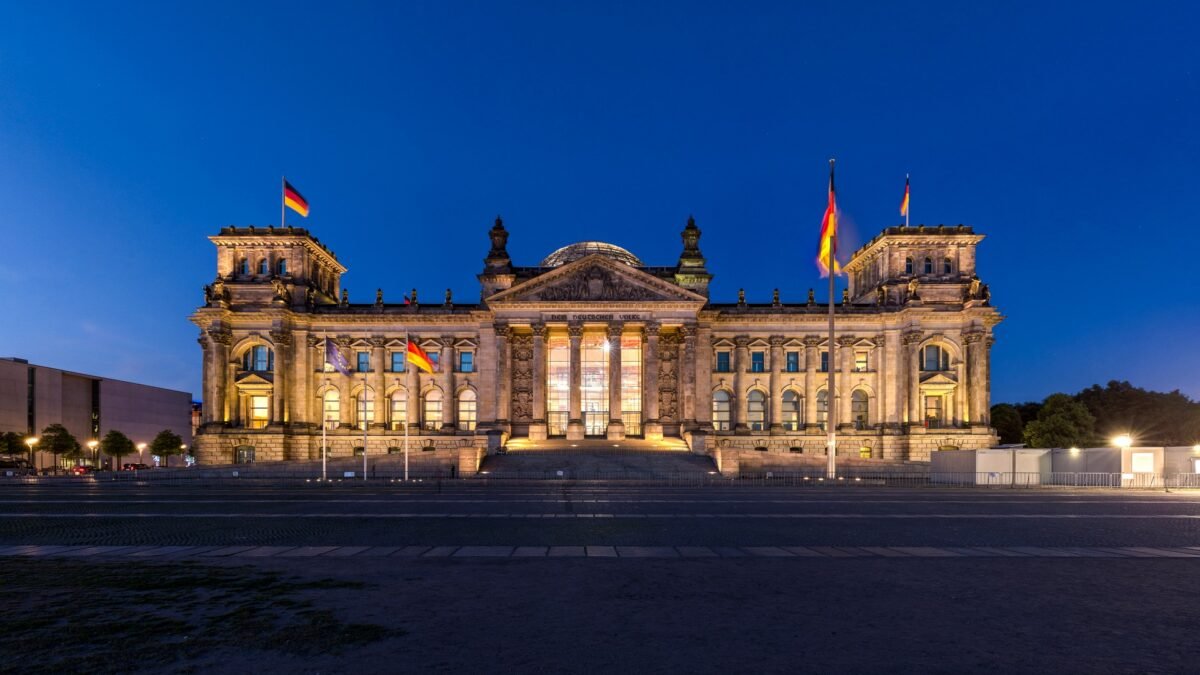
Germany’s lower house of parliament has approved a record €556 billion budget for 2027, funding the biggest military build-up since the Cold War with the second-largest borrowing in the country’s post-war history, according to Reuters.
The Bundestag passed the budget on Friday, 27 November 2026, by 317 votes to 260, after months of haggling inside Chancellor Friedrich Merz’s coalition. The package raises total federal spending by about €31.4 billion — roughly 6 per cent — on 2026, and it is built on new borrowing of €210.4 billion, a figure surpassed only by the €215.4 billion borrowed in 2021 at the height of the coronavirus pandemic.
Defence dominates the increase. Core defence spending will rise to €109.7 billion in 2027, up from €82.2 billion in 2026, and with money from the Bundeswehr’s special fund added in, total defence spending reaches nearly €140 billion — the highest level since the end of the Cold War. Including support for Ukraine and other security spending, the total rises to €150.9 billion, according to Reuters.
Finance Minister Lars Klingbeil, who presented the budget in parliament, defended the scale of the borrowing. “It is right that we invest in the railways and in climate protection. It is right … that we invest in our security,” he told MPs on Friday. “We are putting up the money for defence so that Ukraine can defend its freedom,” he added. “No child born in Germany today should ever have to experience war again.”
The budget is not yet law. It still needs the approval of the Bundesrat, the chamber representing Germany’s 16 states, which convenes on 18 December, and the signature of the federal president before it can take effect on 1 January.
Where the money goes
More than a third of the core budget flows into labour and social affairs, which will receive €203.3 billion — about 36.2 per cent of federal expenditure and roughly €6 billion more than in 2026. That ministry’s budget includes the federal subsidy to the statutory pension insurance system, which is being cut by €3 billion in 2027 under the accompanying legislation.
Defence is the second big block, and it accounts for almost all of the increase in spending. The defence ministry alone accounts for about €27 billion of the €31.4 billion rise in core federal expenditure. The regular defence budget of €109.7 billion is supplemented by €29.6 billion drawn from the €100 billion special fund for the Bundeswehr created in 2022 under former Chancellor Olaf Scholz, bringing combined defence spending to about €139.4 billion.
About €60 billion is allocated for new military acquisitions, and the government aims for Germany to have Europe’s most powerful army by 2039. Berlin’s financial planning envisages reaching NATO-defined defence expenditure of 3.5 per cent of gross domestic product by 2029.
Ukraine will receive €11.6 billion under the 2027 budget, broadly steady on the €11.5 billion allocated in 2026, according to figures cited by German media. The support covers military aid and other assistance as Kyiv continues to defend itself against Russia’s full-scale invasion, now approaching its fifth year.
Investment in the core budget is set at €61.8 billion, up from €58.4 billion in 2026, with additional investment coming from the special funds. The government has vowed to strengthen Germany’s core infrastructure — above all the railways — and to rebuild its military after decades of underinvestment in both areas, according to Reuters.
How the borrowing is structured
The €210.4 billion of new borrowing is split across three channels: about €123 billion in the core budget, €57.8 billion from the special fund for infrastructure and climate neutrality, and €29.6 billion from the special fund for the Bundeswehr.
Much of this spending sidesteps Germany’s constitutional debt brake, the rule that normally limits the federal government’s structural deficit to 0.35 per cent of GDP. A constitutional reform agreed in 2025 created considerably more room for security-related expenditure: qualifying defence and security spending above 1 per cent of GDP can now be financed outside the ordinary borrowing restrictions.
The scale of the borrowing carries a growing price. Interest expenses in the core budget will rise to €41.4 billion in 2027, and the finance ministry expects that figure to reach around €81 billion a year by 2030 — roughly double within three years.
What households will feel
The Bundestag also passed the 2027 Budget Accompanying Act, which contains the measures that will reach ordinary households most directly. The electricity tax will be reduced to the European Union’s minimum rate for all consumers next year, a cut intended to ease energy bills for households and businesses alike.
At the same time, the act freezes the standard basic-income support rates until mid-2028, and the federal subsidy to the pension insurance system will be cut by €3 billion in 2027. Taxes on spirits will rise from 2027, and a new tax on sugary drinks will be introduced from 2028. A planned levy on plastic packaging was dropped during the coalition negotiations.
Klingbeil acknowledged that the budget was a difficult compromise. Passing it was “a big step”, he said, after weeks of haggling between the coalition partners that saw plans for taxes on plastics and sweetened drinks, as well as welfare cuts, dropped or delayed. “We will have no choice but to ask people to make some sacrifices,” he told parliament, adding that negotiations for the 2028 budget would be even more challenging.
A coalition that argued for months
The budget was the first full spending plan of Merz’s government, a coalition of his Christian Democratic Union (CDU), its Bavarian sister party the Christian Social Union (CSU), and the Social Democratic Party (SPD) led in the finance ministry by Klingbeil, who is also vice-chancellor.
The coalition secured 317 votes in favour against 260 opposed. The opposition — the far-right Alternative for Germany (AfD), the Greens and Die Linke — voted against the package.
Merz himself had earlier conceded the difficulty of the process. “The process of drawing up this budget certainly did not deserve a beauty prize,” he told lawmakers earlier in the week, in remarks reported by German media.
The haggling exposed the fault lines inside the coalition. The SPD blocked cuts the conservatives had proposed in housing assistance, alimony advances and other social benefits, while plans for new taxes on plastics and sweetened drinks were dropped or delayed. The sugary-drinks tax survived, but only from 2028.
Economists outside government were unconvinced that the budget settles anything. Marcel Fratzscher, president of DIW, one of Germany’s leading economic research institutes, criticised the government’s plans the day before the vote, saying it lacked the courage to implement reforms, cut subsidies and spending, or raise taxes.
“By the 2028 budget at the latest, there will be a massive conflict,” Fratzscher told Reuters. “That’s why it would have been better to solve the problem now rather than keep putting it off.”
His warning is grounded in the finance ministry’s own figures. The ministry expects a shortfall of around €25 billion in the 2028 budget — and that gap could reach €30 billion if the electricity tax cut is extended beyond 2027.
Analysis: the Zeitenwende, priced in euros
This budget is the moment Germany’s great strategic turn — the Zeitenwende that Olaf Scholz proclaimed days after Russia’s full-scale invasion of Ukraine in February 2022 — stops being a speech and becomes a line-by-line fiscal commitment. The numbers make the scale of the shift plain: defence spending is rising by a third in a single year, the regular defence budget alone is up by more than €27 billion, and the state is borrowing at a pace not seen since the pandemic to pay for it.
For a country that spent the decade after the financial crisis lecturing its European partners about fiscal discipline, that is a remarkable reversal. The debt brake, once treated in Berlin as close to sacred, has been bent twice in four years: first by the €100 billion special fund in 2022, and now by a constitutional reform that exempts most defence spending from the borrowing limit altogether. The message to allies and adversaries alike is that Germany intends to be Europe’s largest military power again, and it is willing to pay for that ambition with debt.
Whether the money buys real capability is a different question, and it is the one that will decide whether this budget is remembered as a turning point or as a spending spree. The Bundeswehr’s problems have never been only about money: procurement is slow, barracks and depots are run down, ammunition stocks are thin, and the armed forces struggle to recruit. Pouring €60 billion into new equipment in a single year will test a procurement system that has repeatedly failed to deliver on time. The budget buys the hardware; the harder work of reforming how Germany buys it has barely begun.
The fiscal arithmetic is equally uncomfortable. Interest payments of €41.4 billion in 2027, rising towards €81 billion by 2030, mean that debt service will soon swallow a sum larger than the entire annual investment budget. That is the quiet cost of borrowing to rearm: every euro of interest is a euro that cannot be spent on railways, schools or pensions. Klingbeil’s warning that people will have to make sacrifices is not rhetoric; it is the arithmetic of a state that is borrowing €210 billion in a year while its economy barely grows.
That tension runs through the whole package. More than a third of the budget still goes to labour and social affairs, and the SPD fought hard to protect welfare spending — yet the pension subsidy is being cut, basic-income support is frozen, and the 2028 shortfall is already put at €25 billion. The coalition has managed to fund both guns and butter for one more year, largely by borrowing. It has not resolved which of the two gives way when the borrowing has to slow.
The timing also matters beyond Germany. On the very same day the Bundestag voted, France — the eurozone’s second-largest economy — slipped into recession, and the ratings agency S&P cut the outlook on France’s credit rating to negative. Europe’s two largest economies are now under fiscal strain at the same time, but in opposite directions: France is being forced to consolidate because markets will not fund its deficits cheaply, while Germany is choosing to borrow because markets still will. That divergence is manageable while German bunds remain the eurozone’s safe asset. It would become a problem very quickly if investors ever doubted Berlin’s ability to service the debt it is now accumulating.
For Ukraine, the budget is reassuring in the short term: €11.6 billion of support, broadly steady on 2026, at a moment when Kyiv’s other partners are under strain. But the figure is flat in nominal terms, and if the war drags on and Germany’s own fiscal pressures mount, the question of whether Berlin can sustain that level of support year after year will return.
There is also a political clock ticking. The Bundesrat must still approve the budget on 18 December, and while that is normally a formality for a federal budget, the states have their own grievances about who pays for what. More importantly, the 2028 budget talks that Klingbeil says will be “even more challenging” begin almost immediately. Fratzscher’s warning of a “massive conflict” by 2028 is not a prediction about opposition parties; it is a prediction about the coalition itself, between a CDU that wants lower taxes and a SPD that wants to protect the welfare state, with a €25 billion hole to fill.
What to watch next
The first test comes on 18 December, when the Bundesrat votes. A smooth passage would put the budget into effect on 1 January as planned; any delay or amendment would be a political embarrassment for Merz in his first year as chancellor.
The second test is delivery. Watch whether the defence ministry can actually spend the money it has been given — on ammunition, air defence, logistics and recruitment — rather than seeing it slip into future years as procurement stalls. The Bundeswehr’s ability to absorb a one-third spending increase in twelve months is unproven.
The third test is the economy itself. The budget assumes that debt-funded investment in infrastructure and defence will lift growth after years of stagnation. If growth does not return, the combination of €210 billion of new borrowing and interest costs doubling by 2030 will become much harder to defend — and the 2028 budget, with its €25 billion hole, will be where that argument is fought.
Finally, watch the bond market. Germany can borrow cheaply because investors trust its credit. The interest bill is the market’s verdict on that trust, and it is already rising fast. As long as it stays manageable, Merz’s gamble — that Germany can borrow its way to security and growth at the same time — holds. If it does not, the budget passed on Friday will be remembered as the moment Germany discovered that even Europe’s strongest economy has a borrowing limit.
Sources
Reuters — German lower house of parliament passes 2027 budget (via Global Banking & Finance)
European Pulse — Bundestag passes record 2027 budget with €210bn borrowing

About the Author — Abdul Mannan
Related Articles

OPEC+ Set to Keep Oil Output Unchanged Into 2027 as Iran War and Capacity Rifts Stall a New Deal
OPEC+ is expected to keep oil output targets unchanged for the first quarter of 2027 when ministers meet…

France Slips Into Recession as S&P Warns of Downgrade on a Grim Day for Europe’s Second Economy
France has slipped into recession and S&P has cut its outlook on the country's A+ credit rating to…
Trump-Backed WLFI Token Crashes More Than 50% to Record Low as World Liberty Sells Ethereum at a $19 Million Loss to Save Its Loan
World Liberty Financial, the crypto venture co-founded by Donald Trump and his family, sold about $20 million of…