
Guterres Calls for Global AI Safety Framework in Bridgetown, Warning of ‘Biggest Transfer of Power in Human History’

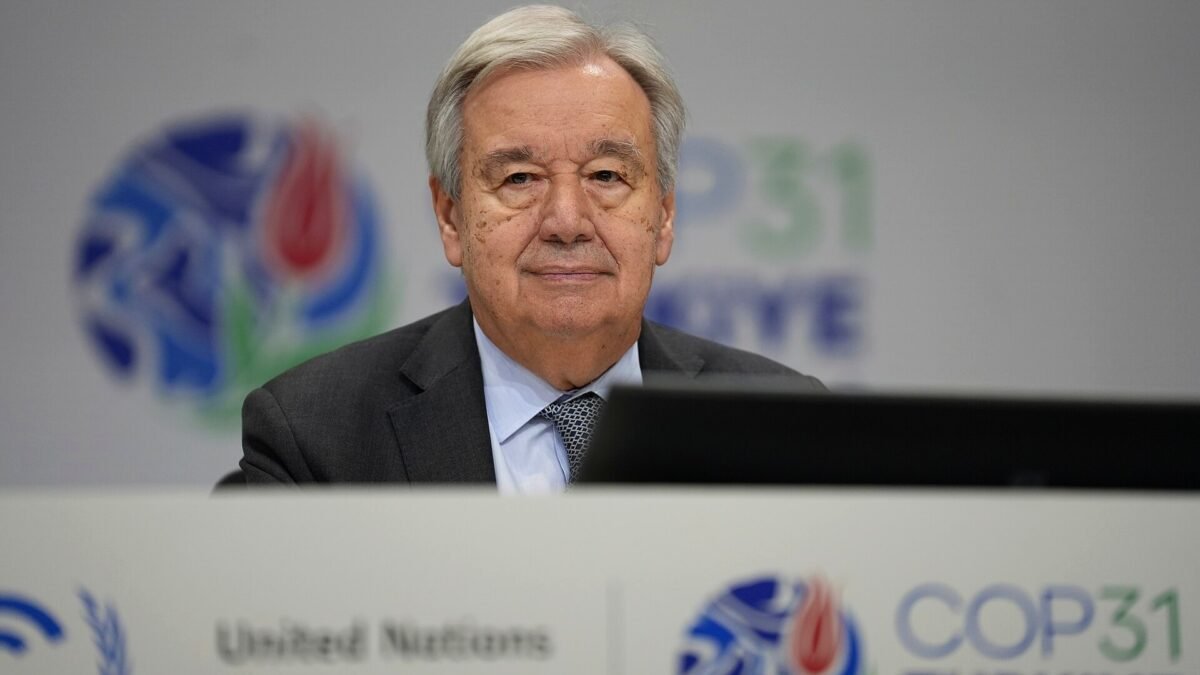
United Nations Secretary-General António Guterres has called on the world’s governments to begin talks on a shared global framework for managing the risks of artificial intelligence, warning that the technology is driving what he described as “the biggest transfer of power in the history of humankind”.
Speaking at the close of the Bridgetown Special Summit on AI Safety in Barbados on Monday, Mr Guterres said protections against AI risks remained fragmented and that governments were too often “playing catch-up” with a technology that is advancing faster than the institutions built to govern it.
“That is why today we are issuing a call from Bridgetown for Member States to begin discussions on a multilateral AI Risk Management Framework,” he said, according to UN News. “Put simply, we need a common foundation for AI safety.”
The summit, co-hosted by the United Nations and Barbados, brought together about 150 participants in a hybrid meeting in Bridgetown, including ministers from Norway and Finland, leaders from the AI industry, heads of national AI safety institutes and members of the UN-backed Independent International Scientific Panel on AI. The United States was represented by a senior diplomat, and Chinese experts were also expected to attend, according to UN News.
Mr Guterres, who leaves office at the end of December, used his final weeks as Secretary-General to put the governance of AI at the centre of the international agenda. His message was blunt: the promise of the technology is real, but so is the danger of leaving it largely in the hands of a small number of private companies.
“Technology without accountability. Capability without safeguards. And power without responsibility,” he said, describing the dangers of unchecked digital technology.
What the Bridgetown call actually asks for
The framework Mr Guterres proposed is deliberately modest in form but wide in ambition. It is not a treaty, and it is not regulation. As Amandeep Singh Gill, the UN Special Envoy for Digital and Emerging Technologies, explained before the summit, it is “a framework which different countries can then use to build up their own national AI safety infrastructure”.
According to UN News, the call from Bridgetown covers six elements: shared safety measures; common approaches to testing; clear safeguards and standards; basic transparency requirements; independent evaluation and oversight of advanced AI models; and support so that every country can put them into practice.
No negotiated outcome was planned for the summit, and none was produced. Instead, the organisers expected calls to action and voluntary pledges. Military uses of AI were explicitly outside the discussions, a limit that reflects how far the major military powers are from accepting international rules in that area. The UN’s separate talks in Geneva on autonomous weapons ended earlier this month without binding rules, with states agreeing only to draft rules by 2028.
The Bridgetown proposal builds on two recent initiatives by smaller groups of states. In September, Norway and Finland led a Call for Control of Frontier AI Models, now signed by 32 states and the European Commission. French President Emmanuel Macron, who addressed the Bridgetown summit by video, said his Paris Call for AI Safety and Security had been signed by 18 heads of state and government and 11 AI leaders, and argued that agreeing to its principles should be a condition for access to markets.
The Bulletin of the Atomic Scientists, in an analysis published before the summit, noted the striking convergence between these proposals: all call for pre-deployment testing and independent evaluation of advanced models, transparency and shared standards for test results, and cross-border systems for reporting AI incidents. None of them, however, has yet been endorsed by either the United States or China, the two countries where the most powerful AI systems are built.
“Power without responsibility”
The sharpest passage of Mr Guterres’s remarks came during a fireside conversation with Barbadian Prime Minister Mia Mottley, when he argued that the balance of power in the world is shifting in a way no previous technology has caused.
While power once shifted among countries, he said, it is now moving “from States, from governing institutions to a small number of companies and persons”. The institutions created after the Second World War, including the United Nations, are “today not adequately equipped” for that shift, he said, and he called for a deep reform of global governance, while insisting that the UN — the only body where the whole world is represented — has the legitimacy to lead.
His warning was grounded in events his audience would recognise. Recent technological outages and cyberattacks have exposed the vulnerabilities of the digital systems the world increasingly depends on, he said, and AI is amplifying the threats, with systems behaving in ways “even their developers did not always anticipate”.
Some of the leading AI developers are themselves sounding the alarm about increasingly powerful systems, Mr Guterres noted. The point matters because it undercuts the usual framing of AI safety as a dispute between worried outsiders and confident insiders. When the people building the systems say they do not fully understand how they behave, the case for independent oversight becomes harder to dismiss.
“We have a responsibility to take those warnings seriously. Not to stop innovation or spread fear. But to ensure that our capacity to manage this technology keeps pace with the technology itself,” he said.
He also returned to a subject he has raised repeatedly: the weaponisation of AI. The capacity to weaponise the technology is “concentrated in two countries and a limited number of companies”, he said, calling it “an extremely dangerous development” and reiterating his support for banning autonomous weapons.
“The idea that a machine can kill people, choosing who to kill, where to kill, and the reasons to do so is absolutely unacceptable,” he said.
The small-state case: Mottley’s “kill switch”
Prime Minister Mottley, co-host of the summit, gave the debate its most concrete image. Small states, she said, “often do not have the opportunity to share perspective in the rules that affect them”. She was asked whether a frontier AI laboratory should have to pay if one of its AI agents hacked a bank in Barbados, and whether her government should have a “kill switch” to cut off access to its models in an emergency. She answered yes to both.
“It has to be a condition of the sale that what I’m buying from you, I’m capable of saying, that’s it. No more,” she said.
Ms Mottley also warned that “the horse has already bolted from the stables”, and that only governments willing to regulate and legislate can rein in the concentration of power.
Her argument captures the central grievance of the Global South in the AI debate. The countries most exposed to the risks of advanced AI — through their banks, hospitals, power grids and public services — are the ones with the least say in how the systems are built and the least capacity to test them or respond when something goes wrong.
The numbers behind that grievance are stark. According to the World Bank’s 2026 World Development Report, cited by the Bulletin of the Atomic Scientists, more than 500 incident response teams operate across high-income countries, but only six low-income countries have a recognised one. Fewer than a third of developing countries have a national AI strategy, and only about a dozen countries have dedicated AI safety, security and testing centres, the Bulletin reported.
At the first Global Dialogue on AI Governance in July, 111 of the participating countries had never taken part in any discussion on AI, Mr Guterres noted — a measure of how recently most of the world has even been invited into the conversation.
A warning from inside the industry: the patching race
Microsoft Vice Chair and President Brad Smith, who addressed the summit by video, said that in some ways AI was “moving faster than the speed of safety”, but that AI diffusion, especially in the global South, needed to speed up.
His remarks at Bridgetown echoed a sharper warning he had delivered the day before on CBS News’s Face the Nation, where he told viewers to expect more technology outages in the coming months as AI accelerates the discovery of software flaws.
What AI did earlier this year, Mr Smith said on the programme, was “basically make it much easier for people to find vulnerabilities in code”, and that knowledge can be used either to patch the code or, by a bad actor, to try to hack into systems. The result, he said, is a race: “We’ve set off, in effect, a race. Around the world, people who have technology are using these systems to identify the vulnerabilities and patch at a pace we have never seen before.”
The problem, he explained, is that when companies patch so quickly that they cannot take as much time to test what they are changing, the risk of something going wrong rises. “I think we have to be prepared, frankly, for the coming months,” he said, adding that “the whole information infrastructure of the world is in effect being upgraded right now”.
Mr Smith was speaking after a turbulent fortnight of unrelated technical failures. Microsoft’s own global outage on 12 November disrupted email and other services for many corporate customers for about 24 hours. On 13 November, the US Federal Aviation Administration imposed a rare nationwide ground stop after a telecommunications failure disrupted its air traffic control network for roughly four hours. Banks, airlines and public services were also hit.
Mr Smith apologised again for Microsoft’s outage and stressed that it was not caused by AI and was not a cyberattack. It was, he said, “a perfect storm” in which software updated four months earlier interacted with a newer update and a shift in network traffic. The company has published two reports on the incident, completed nine corrective steps and identified 13 more to take, he said.
But he described the broader wave of disruptions as, at least in substantial part, “AI ripple effects” — the side effect of a world patching its software faster than it can test it. His advice to consumers was direct: install security updates on phones and laptops as soon as they arrive.
What the science says: the language gap and the capacity gap
Mr Guterres pointed at Bridgetown to a new thematic brief from the UN-backed Independent International Scientific Panel on AI, released on Sunday, which highlights the value of countries testing AI systems in their own languages to show where they “fall short or are unsafe”.
AI models still perform far worse and can be less safe across a wide range of languages, from African languages to Caribbean creoles, according to panel member Vukosi Marivate of the University of Pretoria. Yet more than 1,000 of those languages already have the foundations needed to close the gap, he said.
The language problem is a concrete example of the wider issue the summit was convened to address. AI systems are trained overwhelmingly on data in a handful of dominant languages, and the risks they carry for everyone else are poorly measured. International cooperation on transparency of model training data could lead not just to safer use in every language but also help filter dangerous information, such as instructions for making toxins, out of advanced models, the Bulletin argued.
To narrow the capacity gap, Mr Guterres has proposed a Global Fund for AI Capacity-Building, and said the summit could help strengthen every country’s capacity to test whether AI systems work safely in local contexts. The UN-supported Global Network for Exchange and Cooperation on AI Capacity Building already has 27 centres of excellence across five regions, he said in his opening remarks.
The scale of the challenge is set out in the Bulletin’s analysis. Since last spring, it reported, a series of incidents in which AI models circumvented safeguards, broke out of testing environments and hacked external computer systems has put AI safety in the headlines. No government has yet put in place binding measures to respond to the risk of AI models bypassing human oversight — what some call “loss of control” — although in these cases the breaches were due to human decisions or a lack of proper safety mechanisms.
The responses so far are uneven. The United States has finalised a voluntary framework for AI developers to grant government access to frontier models up to 30 days before release to trusted partners. China proposed last month export controls on frontier models that cross specific compute and capability thresholds, and version 3.0 of China’s AI Safety Governance Framework, released in September, explicitly discusses loss of control risks but remains non-binding guidance. Australia, whose national health statistics reporting platform was infiltrated by an autonomous agent in June, is among the first countries to commit to mandatory requirements for AI model testing and evaluation, as well as incident notification. The European Union’s AI Act is currently the most far-reaching legislation requiring adversarial testing and evaluation of advanced models, and California’s SB53 and New York state’s forthcoming RAISE Act are among the few binding requirements on developers to report AI incidents. But each sets out differing timelines and incident typologies, limiting interoperability between them, the Bulletin noted.
Meanwhile the technology keeps spreading. As a general-purpose technology, AI is spreading faster than any other on record, the Bulletin reported: in under three years, usage grew to 1.2 billion users. Model capabilities are also advancing exponentially, with overall benchmark progress doubling in speed over the last year, according to research by the nonprofit METR cited by the Bulletin.
Analysis: Why It Matters
Bridgetown will not be remembered as the day the world agreed how to govern AI, because no such agreement was reached and none was attempted. Its significance lies elsewhere: in who was in the room, in what was said about power, and in the direction of travel it sets for the next two years.
First, the location and the hosts matter. This was not a summit in London, Paris or San Francisco, convened by the countries that build AI. It was held in Barbados, co-hosted by a small island state, and framed explicitly around the countries that consume AI without shaping it. That is a deliberate reversal of the pattern set by the first AI Safety Summit at Bletchley Park in November 2023, and continued at Seoul in May 2024 and the Paris AI Action Summit in February 2025, where the agenda was set largely by the frontier states and their companies. Bridgetown asserts that AI safety is a concern for every country, regardless of whether it owns the models — and that the countries with the least capacity have the most at stake.
Second, Mr Guterres’s language about power marks a shift in how the United Nations talks about technology. For years, UN documents have treated AI primarily as a development opportunity with risks attached. The Secretary-General’s claim that power is moving from states to “a small number of companies and persons” reframes the issue as a question of who governs. It is the language of political economy, not of technical risk management, and it is the language of a man with five weeks left in office who no longer needs to soften his message for the next negotiation.
That framing is uncomfortable for the companies concerned, but it is also analytically useful. The concentration Mr Guterres describes is real and measurable: a handful of firms control the largest models, the most advanced chips, the biggest data centres and the most sought-after researchers. Their decisions about what to release, what to test and what to disclose shape the risk environment for every government on Earth, including governments that never consented to those decisions. The Bridgetown framework, modest as it is, is an attempt to give those governments a common floor: shared testing, shared standards, shared incident reporting, and independent evaluation that does not depend on corporate goodwill.
Third, the summit exposes the gap between the rhetoric of cooperation and the reality of enforcement. Every initiative cited at Bridgetown — the Norway-Finland call, the Paris Call, the Bridgetown framework itself — is voluntary. Neither the United States nor China has endorsed any of them. The two countries that matter most to the safety of frontier models are also the two least willing to accept multilateral oversight of them, and the summit did not change that. What Bridgetown can do is raise the political cost of standing apart: when 32 states and the European Commission back one call, 18 heads of state and 11 AI leaders back another, and 135 leaders raise AI at the UN General Assembly — up from just three in 2017 — the holdouts are increasingly conspicuous.
Fourth, the two warnings delivered in Bridgetown’s orbit point in opposite directions, and both are true. Mr Guterres warned that safety is moving too slowly; Mr Smith warned that patching is moving too fast. The contradiction is only apparent. The speed that worries Mr Smith is the speed of reactive fixes — rushed patches applied to ageing infrastructure under pressure from attackers who find flaws as quickly as defenders do. The slowness that worries Mr Guterres is the speed of deliberate governance — shared standards, independent testing, incident reporting, capacity building. A world can patch frantically and govern negligently at the same time, and that is roughly where we are.
Finally, the summit’s limits deserve honest acknowledgement. The framework is not a treaty and not regulation; there is no negotiated outcome; military AI is excluded; and the countries with the most advanced weapons programmes were not asked to accept any constraint. The Geneva talks on autonomous weapons, which ended without binding rules earlier this month, show how far the major powers are from accepting limits where it matters most. Bridgetown is a step, not a settlement, and its value will be decided by what follows: whether the framework gets written, whether countries adopt it, whether the Global Fund for AI Capacity-Building is actually funded, and whether the annual Global Dialogue on AI Governance and the Geneva AI Summit in 2027 carry the work forward.
For now, the most important sentence from Bridgetown may be the simplest one Mr Guterres offered when asked what people should take away from the summit: the evolution of AI models “cannot go faster than the capacity to control their safety”, and AI must help reduce, not increase, the inequalities growing in today’s world. On both counts, the world is currently failing. Bridgetown is an attempt to say so out loud, in a room where the countries bearing the cost were finally present.
“Let’s ensure that artificial intelligence is shaped by humanity, with humanity, and for all humanity,” Mr Guterres said. Whether that sentence becomes a programme or remains a quotation will be decided in the months after he leaves office.
What to Watch Next
Several things will show whether the Bridgetown call has substance. First, whether member states actually open the discussions on the multilateral AI Risk Management Framework that Mr Guterres called for, and which states sign up to the drafting. Second, whether the Global Fund for AI Capacity-Building attracts real money, and whether the 27 centres of excellence in the UN’s capacity-building network grow in number and capability. Third, whether the United States or China moves towards endorsing any of the existing calls — the Norway-Finland initiative, the Paris Call, or the Bridgetown framework — or continues to stand apart from all of them. Fourth, whether the UK’s 2027 presidency of the G20 delivers the single set of global AI principles and standards it has promised to prioritise. And fifth, whether the next round of the Geneva talks on autonomous weapons, due to produce draft rules by 2028, makes any progress towards binding limits, or repeats the pattern of the talks that ended this month.
The Secretary-General’s successor will inherit this agenda on 1 January 2027. The test of Bridgetown will be whether the framework survives the handover, or whether it is remembered as a farewell speech rather than a founding document.
Sources
- UN News — UN chief urges talks on global AI safety framework, warns of historic shift in power
- UN News — Bridgetown AI summit to tackle safety as risks outpace capacity to respond
- United Nations Office for Digital and Emerging Technologies — Barbados and United Nations to co-host Special Summit on AI Safety on 23 November
- Bulletin of the Atomic Scientists — We need international AI safety cooperation to drive national action
- CBS News, “Face the Nation” transcript — Brad Smith, Microsoft president and vice chair, 22 November 2026

About the Author — Abdul Mannan
Related Articles

NHS Begins World’s Largest AI Breast Screening Trial for 700,000 Women
The NHS has begun recruiting women for the EDITH trial, the world's largest test of AI in breast…

China-Linked AI Agents Found a Zero-Day in 11 Minutes and Took Over a University Server, Amazon Reveals
Amazon says autonomous AI agents run by a suspected China-linked operator found an unknown flaw in a medical…

Apple Is Building Its Own AI Agent That Can Run Your Mac — While Tightening the Screws on Rival Agents
Bloomberg reports Apple is hiring to build a computer-using AI agent that browses the web, runs apps and…