
Houthis Advance to Within 80km of Aden in Closest Threat to Yemen’s Seat of Government Since 2015


Yemen’s Houthi movement has advanced to within 80 kilometres of Aden, the closest its fighters have come to the seat of the internationally recognised government since the early months of the country’s civil war in 2015, according to Reuters. The advance, confirmed by four military sources who spoke to the news agency on Monday, brings the front line to the gateway of the southern port city that has served as the government’s temporary capital for more than a decade — and opens a volatile new front in a regional conflict that is already drawing in the United States, Israel, Iran and Saudi Arabia.
The Houthis seized the whole of Al-Maqatirah district in Lahj province after launching an assault on government positions there three days earlier, the sources said. Government troops were forced to retreat towards Tur al-Bahah, and fighting was under way on Monday at a military camp guarding the entrance to that district, one of the main approaches to Aden. The camp lies about 50 kilometres from the provincial capital of Lahj and 80 kilometres from Aden itself.
The advance is the most significant Houthi gain towards Aden since 2015, when the group’s fighters briefly entered the city before being driven out with Saudi support. It comes at the end of a two-month offensive that began in September, when the Houthis swept down Yemen’s Red Sea coast and seized territory along the Bab el-Mandeb Strait, one of the world’s most important shipping lanes and a key route for Saudi oil exports to Asia. The speed of the latest push has shaken a government that only weeks ago had expelled Houthi fighters from the same ground.
Yemen’s Presidential Leadership Council responded on Monday by reshuffling key cabinet and military posts, according to the government-run Saba news agency. Council chief Rashad al-Alimi, who is also supreme commander of the armed forces, ordered changes to the high-ranking military leadership overseeing the Tur al-Bahah front, and appointed new ministers for information, civil service and local administration in Prime Minister Shaya al-Zindani’s government. The reshuffle, reported by the Indo-Asian News Service on Tuesday, is a public admission of how seriously the government views the threat to Aden.
The battle for the road to Aden
The fighting matters because of geography. Al-Maqatirah is mountainous country that overlooks the main road linking Aden with Taiz, Yemen’s third-largest city and a vital artery for the whole of south-western Yemen. That road has been the last remaining link between government-held territory and Taiz during the war, and the Houthi advance now threatens strategic positions along it. The sources who spoke to Reuters said the advance also gives the Houthis a chance to outflank government forces holding the mountain range above the Bab el-Mandeb Strait.
Taiz itself has been encircled since early October, when the Houthis cut its main road south to Aden. The siege has displaced more than 100,000 people and caused shortages of food, fuel and medicine in a city that has been on the front line of Yemen’s war for most of the past decade. The United Nations refugee agency said in September that fighting across Yemen had driven more than 130,000 people from their homes since the beginning of that month, with Taiz accounting for more than 60 per cent of the displacement. The International Organization for Migration put the figure at 129,438 people displaced across seven governorates by 21 September, up from 118,086 just three days earlier, with Taiz governorate hosting the largest displaced population at 73,494 people. More than 3,000 people had crossed the Red Sea to Djibouti by that point, a sign that the worsening conflict is pushing Yemenis out of the country altogether.
The Houthis’ September offensive was the largest escalation of the Yemen war in years. According to a chronology of the 2026 fighting, the group launched what was described as a massive offensive in Taiz governorate on 3 September, attempting to cut the road linking Taiz to the coast and deepen the siege of the city, with at least 129 people reportedly killed in the opening clashes. The offensive then rolled down the Red Sea coast, capturing the port of Mokha, the districts of Hays and Al Khawkhah in Al-Hudaydah governorate, Dhubab in Taiz governorate and the Hanish Islands. The advance towards Aden is the latest phase of that campaign, and it has shattered the 2022 United Nations-brokered truce that had largely halted major attacks in a war that began in 2014, when the Houthis drove the government from the capital, Sanaa.
Attacks on Aden itself have intensified in recent weeks. The group struck Aden airport on Wednesday 28 October after warning people to evacuate, according to Reuters, and the presidential palace was also hit in October. A Houthi official, Hamid Rizq, posted a video he said showed the group’s fighters entering Souq al-Rabouh in Maqatirah district, although Reuters said it could not immediately verify the footage. Yemen’s information minister did not immediately respond to a request for comment when Reuters reported the advance.
The fighting has also spread beyond Yemen’s borders. The Saudi-led coalition said in a statement on social media platform X on Monday that it had intercepted and destroyed a ballistic missile and two drones launched by the Houthis towards Saudi Arabia, without providing further details, according to the Indo-Asian News Service. Recent weeks have seen escalating cross-border hostilities between the two sides, with Saudi strikes hitting Houthi-held areas in Yemen and the Houthis launching missiles and drones towards Saudi Arabia, the news agency reported, citing Xinhua. The Houthis have stepped up their attacks on Saudi Arabia, which backs Yemen’s government, while the Saudi-led coalition has responded by stepping up strikes on Houthi positions in Yemen, according to Reuters.
The human cost of the renewed fighting is already visible. Yemen’s internationally recognised government has accused the Houthis of firing a ballistic missile at a health centre in the southern province of Lahj, killing at least five people and injuring 15 others, including medical personnel. The attack targeted the Al-Suqiya Health Centre in the Al-Mudaribah district, according to Yemen’s Ministry of Public Health and Population and government officials, in a statement carried by the state-run Saba news agency. The ministry condemned what it described as a deliberate attack on a civilian medical establishment and called on the international community, the United Nations, the World Health Organization and the International Committee of the Red Cross to investigate and ensure accountability. The casualty figures come from the government and have not been independently verified, and they should be treated as a claim by one side in the conflict rather than an established fact. Government-aligned National Shield Forces said their First Division had carried out drone strikes against Houthi positions along the Bab al-Mandab front, and the Saudi newspaper Asharq Al-Awsat separately reported that clashes had resumed along that front on Monday.
A war that never ended
To understand why the advance towards Aden matters so much, it helps to remember how Yemen’s war began and why it has proved so hard to end. The Houthis, a Zaidi Shia movement from Yemen’s northern highlands that calls itself Ansar Allah, seized Sanaa in late 2014 and drove the internationally recognised government into exile. A Saudi-led coalition intervened in March 2015 in support of the government, and the war that followed became one of the world’s worst humanitarian crises, killing hundreds of thousands of people, most of them from hunger and disease as much as from fighting, and leaving the country divided between Houthi-held north and government-held south.
Aden was the first great prize of that war. The Houthis briefly entered the city in the spring of 2015 before being driven out in July of that year by government forces backed by Saudi and Emirati air power and ground troops. The city then became the government’s temporary capital, the seat of the Presidential Leadership Council, the home of the central bank and the main port through which aid and goods entered government-held Yemen. For eleven years, the front lines stayed far from the city. The Houthis’ return to within 80 kilometres of it is therefore not a routine battlefield gain. It is the closest the group has come to reversing the outcome of 2015, and it puts the government’s seat of power within reach of artillery and missiles for the first time in a decade.
The 2022 truce, brokered by the United Nations, brought the most sustained reduction in fighting the war had seen. It largely held for more than three years, even as it was repeatedly extended in informal form and never converted into a permanent ceasefire. Its collapse this autumn has been swift. The Houthi offensive that began on 3 September has now displaced more than 130,000 people in a matter of weeks, according to the United Nations, and the fighting has spread across multiple front lines at once: the Red Sea coast, the Bab el-Mandeb Strait, the mountains of Taiz and Lahj, and now the approaches to Aden.
The timing is not accidental. The Houthis are aligned with Iran, and their offensive has unfolded alongside the wider war between the United States and Israel on one side and Iran on the other, which began on 28 February 2026. Reuters reported that the latest offensive has opened a volatile new front in that wider war, drawing both the Houthis and Saudi Arabia deeper into the regional conflict. The Houthis have used the war to justify their attacks on shipping and on Saudi Arabia, presenting themselves as part of a regional resistance to the United States and Israel. Saudi Arabia, which has spent the past three years trying to extricate itself from Yemen through talks with the Houthis, now finds itself pulled back in, striking Houthi positions while its own territory comes under missile and drone attack.
The regional dimension is also visible in the diplomacy around the war. The United States has been conducting secret limited strikes against Iran, including an attack on Qeshm Island on Monday, according to the Wall Street Journal, while simultaneously pursuing talks with Tehran through Qatari mediators. Iran has said it could reopen the Strait of Hormuz within two days if its conditions are met. The Houthis’ advance towards Aden adds another lever to that regional contest: control of the Bab el-Mandeb Strait, through which about 12 per cent of global trade normally travels, would give the group influence over one of the world’s great shipping chokepoints, alongside Iran’s leverage over the Strait of Hormuz at the other end of the Arabian Peninsula.
Analysis: Why It Matters
Aden is the government’s last redoubt — and it is now within reach
The most important thing to understand about this advance is what Aden represents. It is not just a city. It is the only place where the internationally recognised government of Yemen actually governs. Sanaa, the capital, has been in Houthi hands since 2014. Aden holds the Presidential Leadership Council, the central bank, the ministries, the port and the airport. If the Houthis were to threaten the city seriously, the government would have nowhere obvious to go. The closest the group has come since 2015 is not a statistic. It is a measure of how far the balance of the war has shifted in two months, and it explains why the government’s first response was a reshuffle of the military command on the Tur al-Bahah front. Rashad al-Alimi’s changes to the high-ranking military leadership are the act of a leader who knows that the next few days at that camp could decide the fate of his government.
The road to Taiz is the real prize
The second thing to watch is the road. Wars in Yemen are fought over roads and mountain passes, and the Aden–Taiz road is the most important of them in the south-west. Taiz, the country’s third-largest city, has been under siege since early October, with more than 100,000 people displaced and shortages of food, fuel and medicine. The road from Aden is its last lifeline. If the Houthis cut it, Taiz would be fully encircled, and the humanitarian consequences would be severe in a city that has already endured a decade of front-line fighting. The Houthis’ seizure of Al-Maqatirah, with its mountain overlook onto that road, is a deliberate step towards that goal. The fighting at Tur al-Bahah is therefore not only about Aden. It is about whether Taiz can still be supplied at all.
Bab el-Mandeb is becoming a second Hormuz
The third point is the strait. The Bab el-Mandeb, the narrow passage between the Red Sea and the Gulf of Aden, is one of the world’s most important shipping lanes, carrying about 12 per cent of global trade in normal times and serving as a key route for Saudi oil exports to Asia. The Houthis’ September offensive along the Red Sea coast gave them positions overlooking the strait, and the latest advance offers them a chance to outflank government forces in the mountains above it. If the group consolidates control of the strait’s approaches, it gains leverage over global shipping to match Iran’s leverage over the Strait of Hormuz. The two chokepoints together would give the Iran-aligned side of the region’s wars a grip on the two entrances to the Arabian Peninsula’s seas. That is why this Yemeni offensive is not a local story. It is a piece of the regional war, and shipping markets and insurers will be watching it as closely as generals.
The truce is dead, and nobody has a plan to replace it
The fourth point is diplomatic. The 2022 United Nations-brokered truce was the one real achievement of years of diplomacy on Yemen. It was never a peace agreement, but it stopped the worst of the killing and allowed aid to flow. Its collapse this autumn has happened without any serious international effort to save it, because the world’s attention has been on the war between the United States, Israel and Iran, and on the American midterm elections. The United Nations’ own position in Yemen has been weakened: a United Nations human rights worker, Mohammad el Shami, died in Houthi custody in October, and dozens of United Nations personnel remain detained by the group. The organisation paused operations in parts of Houthi-held Yemen in 2025. There is no obvious mediator with the leverage to stop the fighting now, and no peace process to return to. The war is being decided on the battlefield because diplomacy has gone quiet.
Saudi Arabia is being pulled back into a war it tried to leave
The fifth point is Saudi Arabia. The kingdom intervened in Yemen in 2015 and spent years fighting the Houthis before turning to talks and a de-escalation that held, more or less, until this autumn. The Houthis’ offensive has now forced Riyadh back into the war: Saudi-led coalition aircraft are striking Houthi positions, and Houthi missiles and drones are being fired towards Saudi Arabia, with the coalition saying on Monday that it intercepted a ballistic missile and two drones. Saudi Arabia’s interest is straightforward. It does not want a hostile, Iran-aligned force controlling the Bab el-Mandeb and threatening its oil exports, and it does not want the government it backs to lose its capital. But the kingdom’s return to the war carries its own risks. The last time Saudi Arabia fought the Houthis at full intensity, the war dragged on for years and damaged the kingdom’s international standing. Riyadh will want a short, sharp intervention. The Houthis have shown before that they do not oblige.
What to Watch Next
- The Tur al-Bahah camp. The military camp at the entrance to Tur al-Bahah district is the immediate front line. If it falls, the road to Aden lies open across flat ground, and the Houthis would be closer to the city than at any point since 2015. If government forces hold it, the advance stalls in the mountains. The outcome of this one battle is likely to set the shape of the war for the coming weeks.
- The new military command. President Rashad al-Alimi has changed the high-ranking military leadership on the Tur al-Bahah front. Watch whether the reshuffle brings reinforcements, fresh tactics or simply new faces. A command change in the middle of a battle can be a sign of resolve or a sign of panic, and the fighting in the next few days will show which it is.
- Taiz and the Aden road. The siege of Taiz has already displaced more than 100,000 people. If the Houthis cut the Aden–Taiz road, the city’s shortages of food, fuel and medicine will worsen sharply. Humanitarian agencies will be the first to report the effects, and their warnings will be a measure of how bad the siege is becoming.
- Saudi and coalition air strikes. The Saudi-led coalition has stepped up strikes on Houthi positions, and the Houthis have escalated missile and drone attacks on Saudi Arabia. Watch whether the coalition’s air campaign expands, and whether the Houthis respond with longer-range attacks, including any attempt on Riyadh, which they have threatened before.
- The regional war and the shipping lanes. The Houthi advance is unfolding alongside the United States–Iran war and the secret American strikes on Iran, including the attack on Qeshm Island. Watch for any Houthi move against shipping in the Bab el-Mandeb, any American or Israeli response, and any effect on oil prices and shipping insurance. The two straits, Hormuz and Bab el-Mandeb, are now the twin pressure points of the regional war.
Sources
Reuters — Yemen’s Houthis advance to within 80 km of Aden, sources say (2 November 2026)
UN News / UNHCR — Displacement on the rise in Yemen as fighting continues (22 September 2026)
JFeed — Houthis advance to within 80 km of Aden, closest since 2015 (2 November 2026)

About the Author — Abdul Mannan
Related Articles
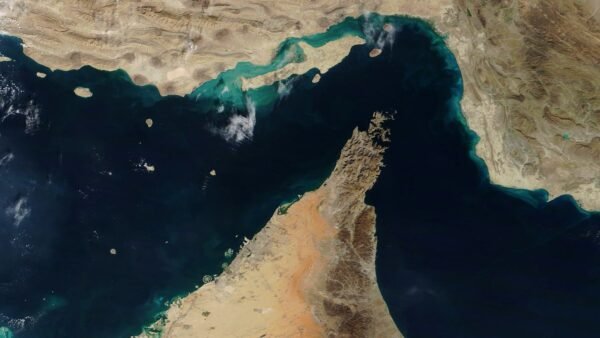
Iran Says Talks to End Eight-Month War Continue as Draft Deal Circulates and Mediators Head to Tehran
Iran says contacts with the United States to end their eight-month war are continuing after days of Qatari-mediated…
Iran Offers Two-Day Plan to Reopen Strait of Hormuz as Oil Slides and Washington Weighs Its Answer
Iran says the world's most important oil chokepoint could reopen within two days if the United States meets…
UN Demands Investigation After Rights Worker Dies in Houthi Custody in Yemen
The UN says Mohammad el Shami, a human rights officer held by the Houthis since June 2024, died…