
India Declare on Record 720 for 9 in Wellington as Pant and Rahul Complete Historic SENA Century Sets

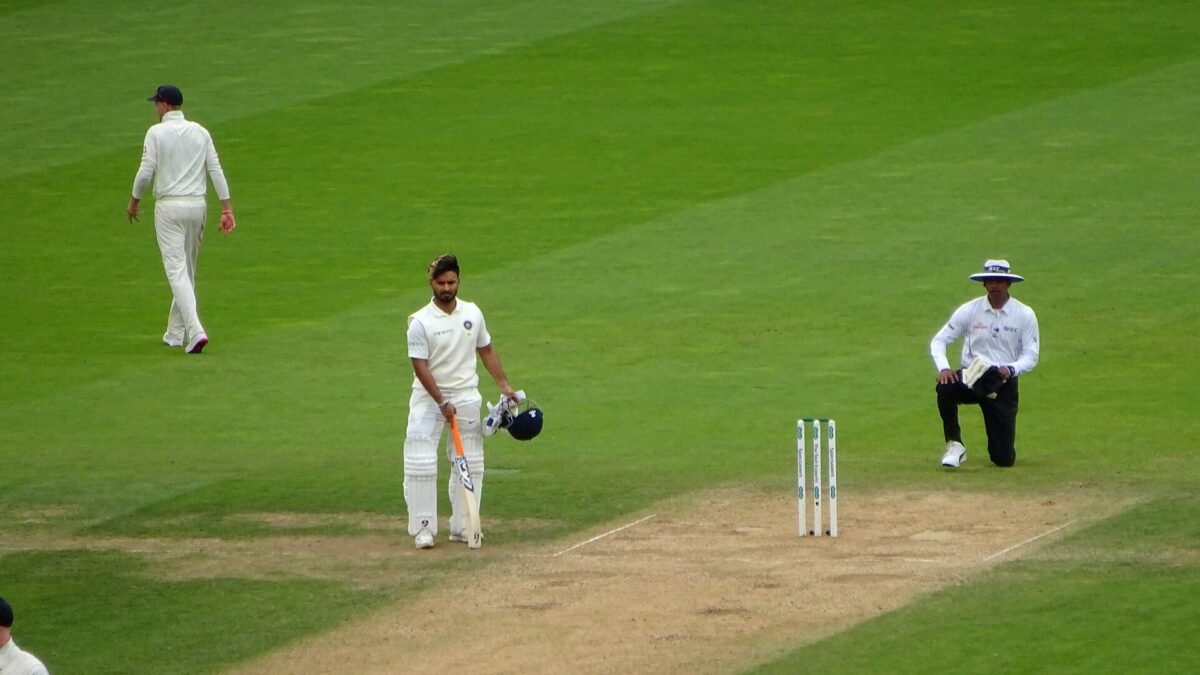
India declared their first innings on 720 for 9 on the fourth day of the first Test against New Zealand at the Basin Reserve in Wellington, the highest total ever scored in a Test match on New Zealand soil, and then reduced the hosts to 119 for 2 by stumps to stand on the edge of a famous away win. The declaration, made at lunch on Sunday with a lead of 352 runs, capped a day of record-breaking batting in which Rishabh Pant and KL Rahul both completed historic sets of centuries in South Africa, England, New Zealand and Australia, the four countries collectively known as SENA.
Pant’s 128 off 153 balls was the headline act. Resuming on 55, the wicketkeeper-batter reached his ninth Test century in characteristically bold fashion, reverse-sweeping Glenn Phillips for four to move to 99 and then launching the off-spinner over mid-off for six to bring up three figures off 135 balls. According to ESPNcricinfo, the innings also carried him past Brendon McCullum into second place on the all-time list of six-hitters in Test cricket, behind only England captain Ben Stokes. Pant finished the innings with 108 Test sixes, having passed McCullum’s career tally of 107.
Rahul’s contribution was quieter but no less historic. The opener made 136 off 290 balls, his 13th Test century, and in doing so became the first Indian opener to score a Test hundred in each of the four SENA countries. Together, the two centurions drove India to a total that no visiting side, and no side at all, had ever reached in New Zealand.
New Zealand, asked to bat again 352 runs behind, lost captain Tom Latham to the second ball of the innings and Henry Nicholls for 31 before Devon Conway and Rachin Ravindra steadied the side. At stumps on day four, the hosts were 119 for 2, still 233 runs behind, with Conway unbeaten on 59 and Ravindra on 27. India needed eight wickets on the final day; New Zealand needed to bat through it to save the match.
A morning of accumulation
India resumed on the fourth morning on 486 for 4, already 118 runs ahead, and the pattern of the day was set almost immediately. According to ESPNcricinfo, nightwatchman Anshul Kamboj hit New Zealand’s most threatening bowler, Kyle Jamieson, for successive fours in the second over of the day, and from that point the home side were simply waiting for the declaration. India added 234 runs in 41 overs before lunch, a rate of scoring that reflected both the flatness of the Basin Reserve pitch and the freedom with which the visitors were batting.
Pant was the entertainer in front of what ESPNcricinfo described as a capacity crowd on a sunny Sunday. He mixed slogging and pulling with audacious strokeplay, and his route to the century summed up his approach: a reverse sweep to reach 99, then a six over mid-off to complete the hundred. He has missed about as many chances of reaching a hundred with a six as he has converted, ESPNcricinfo noted, but that has never dissuaded him. Pant has spoken before about the habit, saying he tries to get to his hundreds with a six, and in Wellington he did exactly that.
The innings ended just before lunch, when Pant top-edged Rachin Ravindra and was caught by Nathan Smith at deep midwicket for 128, an innings of 153 balls containing 10 fours and six sixes. By then, Dhruv Jurel had quietly accumulated 32 off 36 balls on his way to 78 off 79, an innings ESPNcricinfo described as one in which he hardly hit a shot in anger. India declared at the mid-day drinks break, having piled on in a single innings two runs fewer than they managed in total across the whole of their last Test series in New Zealand.
The scale of the batting effort was spread across the whole order. Yashasvi Jaiswal had made 85 off 89 balls at the top, Devdutt Padikkal contributed 80, and captain Shubman Gill fell two short of a century with 98 on the third day. Kamboj, the nightwatchman, made 38. Glenn Phillips, bowling his part-time off-spin, finished with 3 for 154, while Ravindra took 2 for 44. New Zealand’s bowlers were so drained that, according to ESPNcricinfo, India even spared the hosts the expense of a new ball when the third one became available, such was the control the batting side enjoyed.
Pant’s place in history
The century in Wellington completed a collection Pant has been building since his debut. He is now the first Indian wicketkeeper, and the first Asian wicketkeeper-batter, to score a Test century in each of South Africa, England, New Zealand and Australia. Only two other wicketkeeper-batters in the history of the game, Australia’s Adam Gilchrist and England’s Jonny Bairstow, have managed the feat, and Pant is the third.
The journey began at The Oval in 2018, where a 20-year-old Pant scored 114 in his first series in England. He followed it with an unbeaten 159 against Australia in Sydney in 2019, an unbeaten 100 against South Africa in Cape Town in 2022, and 146 against England at Edgbaston later that year. Two more centuries against England at Headingley in 2025 extended the list, and the Wellington hundred, his first on New Zealand soil, completed the set. It was his ninth Test century in all, and his ninth as a designated wicketkeeper, a tally bettered only by Gilchrist, with 17, and Zimbabwe’s Andy Flower, with 12.
Pant is also only the sixth Indian batter, wicketkeeper or not, to score Test centuries in all four SENA countries. The others are Mohammad Azharuddin, Sachin Tendulkar, Rahul Dravid, Virat Kohli and KL Rahul. Tendulkar leads that list with 17 centuries across the four countries. Among the six, Pant is the only wicketkeeper.
The innings was also notable for what it said about Pant’s return to the side. He was playing his first Test since India’s tour of Sri Lanka in August, and the knock was a reminder of the singular value he brings to this team: a wicketkeeper who bats at number five, scores at a strike rate few in the side can match, and changes the shape of a match in a single session. Sunil Gavaskar, commentating at the Basin Reserve, rose to applaud the hundred from the commentary box, a gesture that drew attention given his earlier criticism of Pant’s shot selection during the 2024-25 tour of Australia.
Rahul, the quiet accumulator
If Pant supplied the fireworks, Rahul supplied the foundation. His 136, made off 290 balls with nine fours and two sixes, was the longest innings of the match by some distance, and it was the innings on which the record total was built. Rahul’s century was his 13th in Test cricket, and it completed his own SENA set, making him the first Indian opener to score a Test hundred in each of the four countries.
Rahul’s achievement is a measure of consistency across conditions that have historically troubled Indian openers. A hundred in Australia, where the bounce is steep and the pace is high, is a different examination from a hundred in England, where the ball swings late, or in South Africa, where the seam movement is sharp, or in New Zealand, where the ball moves in the air and off the pitch. To have passed all four examinations is a rare distinction, and to have done so as an opener, facing the new ball in each country, makes it rarer still.
The partnership between Rahul and Jaiswal, worth 130, set the tone for the innings, and Rahul’s stands with Padikkal and Gill kept India moving through the second and third days. By the time he was dismissed, India were in a position from which the only question was how large the lead would become.
A record book rewritten
The total of 720 for 9 broke a series of records at once. According to ESPNcricinfo, it was the highest total ever scored in a Test innings in New Zealand, passing the hosts’ own 715 for 6 declared against Bangladesh in Hamilton in 2019. It was also the highest total ever made at the Basin Reserve, passing the West Indies’ 660 for 5 declared there in 1995, and India’s highest total in an away Test. Among all of India’s Test innings, it ranks third, behind only the 759 for 7 declared against England in Chennai in 2016 and the 726 for 9 declared against Sri Lanka in Mumbai in 2009.
The innings also produced a first in the history of Test cricket: according to ESPNcricinfo, it was the first time that each of a side’s first seven partnerships reached 50. India hit 13 sixes and 75 fours across the innings, and five batters scored at least 80 runs. It was India’s fifth Test innings total above 700, taking them to second place on the all-time list of teams with the most such totals.
The records matter not only as numbers but as a measure of how far the conditions had swung in the batters’ favour. The Basin Reserve pitch offered little seam movement and little pace, and as the match wore on it offered less. New Zealand’s attack, which had bowled India out cheaply on the same ground in the past, found no way through a batting line-up that simply kept coming: every one of the first seven partnerships passed fifty, and the declaration came only when India chose to end it.
New Zealand’s rearguard
New Zealand’s second innings began in the worst possible way. Latham, who had been bowled shouldering arms in the first innings, was dismissed by the second ball of the second innings, following a Jasprit Bumrah delivery that seamed away. Bumrah then came close to removing Nicholls early, but an lbw appeal was saved by the umpire’s call.
Nicholls, who had spent almost the entire match on the field, having made an unbeaten 175 in the first innings, added 31 before he was caught bat-pad off Prasidh Krishna, having scored 206 runs in the match. Prasidh’s dismissal of Nicholls was a product of India’s change of plan: with little seam movement on offer, the bowlers attacked the stumps with catching fielders in front of the wicket, and Prasidh used the field to bowl to his strengths, sticking to good lengths at the stumps rather than relying on the short ball.
Conway and Ravindra then batted together for 22.5 overs, seeing off close to a third of the overs New Zealand needed to survive for a draw. Conway, who survived 137 balls for his unbeaten 59, reached his 14th Test half-century, while Ravindra, on 27 not out at stumps, gave him solid support. Scoring slowed to a virtual halt at times as India’s quicks bowled around the wicket with a packed leg-side field, but the pair held firm, and as the ball softened, survival became easier. The new ball, 35 overs away at stumps, held considerable consequence for the final day.
New Zealand’s first innings had been built on Nicholls’ unbeaten 175 and Glenn Phillips’ 118, taking the hosts to 368. Bumrah took 4 for 92 and Akash Deep 3 for 53. That total, respectable on most days, was dwarfed by what followed, and it left the home side with a task that only discipline and time could solve.
The final day
The final day began on Monday with New Zealand resuming on 119 for 2 and India needing eight wickets. By the first session, the hosts had slipped further: according to ESPNcricinfo’s live scorecard, New Zealand were 139 for 4, with both overnight batters dismissed. Conway, unbeaten on 59 at stumps, and Ravindra, who made 37 off 129 balls before being caught by Rahul off Prasidh Krishna, both fell in the morning, leaving Daryl Mitchell and Tom Blundell at the crease and India needing six more wickets with most of the day still to play.
What happens from here will decide whether this match is remembered as a famous Indian win or as a remarkable New Zealand escape. A draw would keep the two-match series level at 0-0 going into the second Test in Christchurch, which begins on Friday, 27 November. A win for India would be their first Test victory in New Zealand since Hamilton in 2009, and it would put them one result away from a series win in a country where they have won only two of the ten series they have played.
Analysis: Why It Matters
The first thing this innings changes is the story of this series. Before Wellington, the recent history between these two sides was one-sided in New Zealand’s favour. New Zealand whitewashed India 2-0 on India’s last tour of their country in 2020, won the inaugural World Test Championship final between the sides in Southampton in 2021, and then completed a 3-0 whitewash in India in 2024, the first time any side had swept India at home in a series of three Tests or more. India had not won a Test in New Zealand since 2009, and had lost four of their last five Tests there. A total of 720 for 9 does not erase that record, but it is the most emphatic statement India have made on New Zealand soil in a generation, and it reframes the second Test entirely.
The second thing it changes is the way this Indian batting line-up should be judged. This was not a one-man innings. Seven partnerships passed fifty, five batters scored at least 80, and the runs came from the top of the order to the lower middle order. That depth is the difference between a side that can win away from home and a side that depends on two or three players. Gill’s 98, Jaiswal’s 85, Padikkal’s 80 and Jurel’s 78 were not footnotes to the two centuries; they were the reason the total reached 720 rather than 550. A batting line-up in which the sixth and seventh partnerships still add runs at a healthy rate is a line-up that can bat a side out of a match, and that is what India did in Wellington.
The third point concerns Pant himself. His value to India has never been in doubt in the abstract, but it is worth stating plainly what this innings demonstrated: there is no other wicketkeeper in world cricket who bats at number five and scores hundreds at this rate in these countries. The SENA set is not a curiosity; it is a measure of a player who has now scored hundreds in every kind of overseas condition, against every kind of attack, in the most demanding role in the side. His return after a break, and his immediate production of a match-defining innings, strengthens his case as one of the first names on the Indian team sheet in any conditions.
Rahul’s milestone deserves equal attention, even if his innings attracted less of it. Opening the batting overseas is the hardest job in Test cricket, and Rahul has now passed the examination in all four countries where that job is hardest. His 136 was the innings that allowed everyone else to play with freedom. Without a 290-ball anchor at the top, there is no platform for Pant’s 153-ball hundred, and there is no 720. Teams that win away from home are built on innings like Rahul’s as much as on innings like Pant’s.
There are, however, honest limits to what this innings proves. The pitch was flat, the ball did little, and New Zealand’s attack was without a frontline spinner after Mitchell Santner was ruled out with a broken finger. India scored their runs against an attack operating in conditions that favoured batting from the second day onwards, and the same batting line-up will face a different examination in Christchurch. A draw in Wellington, if New Zealand survive the final day, would still leave the series open and would still earn both sides World Test Championship points, and it would say something real about the resilience of a home side that has made a habit of frustrating India.
The other limit is the bowling. India took only two wickets in the final session of day four, and the flat pitch that served their batters so well is the same pitch their bowlers must now take eight wickets on. Bumrah’s early strike and Prasidh’s clever use of the stumps showed the way, but the final day will test the patience and discipline of the attack as much as the technique of the batters. If India win, it will be because they found a way to take wickets on a surface that gave them almost nothing. If they do not, the 720 will stand as a record, but not as a result.
For New Zealand, the task is simpler to state than to execute: bat the day. Conway’s unbeaten 59 showed it can be done, and the side has the batting to survive if the discipline holds. But the new ball, the pressure of a 352-run deficit, and an Indian attack with a sniff of victory make it a formidable assignment. The history of this fixture suggests New Zealand will not give it up cheaply; they have made a habit of denying India in exactly these circumstances.
What to watch next
The immediate question is whether India can finish the job on the final day in Wellington. Six wickets stood between them and victory when New Zealand slipped to 139 for 4 in the first session, and the second new ball, along with the spin of Washington Sundar, will be central to their plans. Watch for how long India persist with pace before turning to spin, and for whether the pitch offers any uneven bounce as the day wears on.
Beyond this Test, the second match in Christchurch, starting on Friday, 27 November, will show whether India’s batting depth travels. A series win in New Zealand would be only India’s third in ten attempts there, and their first since 2009. For Pant and Rahul, the personal milestones are complete; the team milestone is now in front of them. For New Zealand, the question is whether they can regroup after a battering and defend a proud home record that has held for 17 years. Either way, Wellington has already produced a match that will be remembered for the day India made 720, and for the two batters who made history while doing it.
Sources
- ESPNcricinfo — New Zealand battle to save the Test after India batters’ record-breaking day
- Cricbuzz — Conway keeps New Zealand afloat after Pant’s ton powers India to record 720
- ESPNcricinfo — New Zealand vs India, 1st Test, live scorecard (Day 5)
- The Economic Times — 13 sixes, 720 runs: India smash highest-ever Test total in New Zealand
- myKhel — Rishabh Pant becomes first Asian wicketkeeper with centuries in all SENA countries

About the Author — Abdul Mannan
Related Articles

Verstappen Wins ‘Crazy, Surreal’ Las Vegas Grand Prix After 35 Lead Changes as Russell Crashes Late
Max Verstappen won a chaotic Las Vegas Grand Prix after 35 lead changes in 50 laps, beating Lando…

Leeds Batter Chelsea 4-1 at Stamford Bridge as Alonso Admits His ‘Fragile’ Blues Cannot Take a Punch
Noah Okafor scored twice as Leeds United thrashed Chelsea 4-1 at Stamford Bridge for their first win there…

Alcaraz and Zverev Set Up Blockbuster ATP Finals Title Clash After Semi-Final Wins in Turin
Carlos Alcaraz came from a set down to beat Ben Shelton in Turin, while Alexander Zverev swept past…