
Harry Kane Won the Ballon d’Or by Just 28 Points — Then Missed a Penalty in His First Match as the World’s Best Player

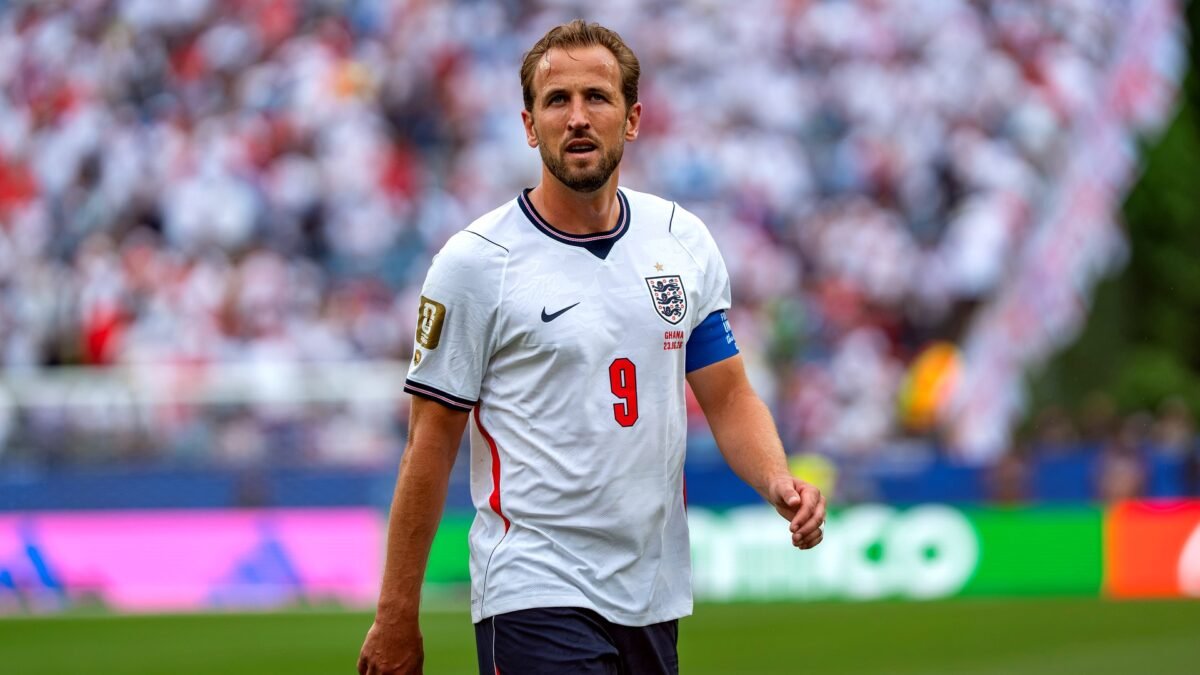
Harry Kane won the 2026 Ballon d’Or by just 28 points, the smallest margin under the award’s current voting system, France Football revealed on Friday, and then endured a miserable first match as the world’s best player as Bayern Munich were held to a 2-2 draw by Borussia Dortmund in Der Klassiker.
The England captain collected 1,055 points from the 100 journalists on the voting panel, edging Real Madrid’s Kylian Mbappé, who finished on 1,027 points, according to theScore. Barcelona’s Lamine Yamal was third on 881 points. Kane received 40 first-place votes, compared with 23 for Mbappé and 13 for Yamal.
The margin is the tightest since the current points system was introduced, beating the previous smallest gap of 41 points, when Rodri edged Vinícius Júnior in 2024. It is also the fourth-closest vote in the Ballon d’Or’s 70-year history, according to talkSPORT. By contrast, last year’s winner, Ousmane Dembélé, finished 321 points clear of Yamal.
Kane, 33, was crowned at a ceremony at the London Palladium on Monday, 26 October, becoming the first Englishman to win the award since Michael Owen in 2001 and only the fifth English winner in the prize’s history, after Sir Stanley Matthews, Sir Bobby Charlton, Kevin Keegan and Owen. The ceremony was held in London to mark 70 years since Matthews won the inaugural Ballon d’Or.
The award rewards a remarkable season in which Kane scored 73 goals in 65 competitive matches for club and country, according to CNN. He scored 36 goals in 31 Bundesliga matches as Bayern won the league and cup double, and he scored six goals for England as the Three Lions finished third at the 2026 World Cup. He also collected the Men’s Striker of the Year award on the night, while Barcelona’s Alèxia Putellas won the women’s Ballon d’Or for a third time.
Five days after lifting the golden ball in his home city, Kane was back at work in Munich, where Bayern presented the trophy to their supporters before kick-off against Dortmund on Saturday. What followed, Kane admitted afterwards, was “a strange night all round”.
A night of woodwork and what-ifs in Munich
Kane missed a second-half penalty, hit the post, and watched Bayern twice surrender the lead as Dortmund snatched a point with an 89th-minute equaliser from substitute Fábio Silva. The 2-2 draw leaves both sides level on 18 points at the top of the Bundesliga after eight matches, with Bayern ahead only on goal difference.
The evening had begun with a hero’s welcome. Kane showed off the Ballon d’Or to the Allianz Arena crowd before kick-off, the first time Bayern’s supporters had seen the trophy in person. He had been an unused substitute in Bayern’s 6-1 German Cup win over Magdeburg on Wednesday, so this was his first appearance since being crowned the world’s best player.
Dortmund thought they had taken the lead in the 34th minute when Jobe Bellingham scored from close range, but the goal was ruled out by VAR for offside. Bayern punished the visitors almost immediately, with Konrad Laimer capitalising on a poor pass from Felix Nmecha to score in the 38th minute.
Bayern had the chance to double their lead early in the second half when Nmecha handled the ball in the area and a penalty was awarded in the 56th minute. Kane stepped up, as he has done so reliably throughout his career, and smashed his effort against the crossbar. It made him the first player since Arjen Robben in 2012 to miss a penalty in Der Klassiker.
Dortmund capitalised within four minutes. Captain Nico Schlotterbeck intercepted a pass from Kane, surged forward and found Carney Chukwuemeka, who laid the ball off for Serhou Guirassy to finish at the near post and make it 1-1 on the hour.
Kane made amends six minutes later, rising to meet Joshua Kimmich’s delivery and directing the ball into the path of Dayot Upamecano, who tapped in from close range to restore Bayern’s lead. But the striker’s frustrations were not over: his low shot bounced off the post in the 75th minute, one of four times Bayern struck the woodwork on the night, with Michael Olise hitting the post in the first half and substitute Lennart Karl striking the crossbar in stoppage time.
Silva’s late equaliser, set up by fellow substitute Konstantinos Karetsas, ensured Dortmund left Munich with a point and preserved both sides’ unbeaten Bundesliga records. It was only the fourth time in the last 18 editions of Der Klassiker that Bayern had failed to win.
“Today probably wasn’t my best performance or the team’s best performance, but that’s just life. It’s part of being a striker and a footballer,” Kane told reporters in the mixed zone afterwards, according to TNT Sports. “I could have been out there [playing] for another hour today and the ball wouldn’t hit the back of the net. You have to take that on the chin sometimes. It was a strange night all round.”
It was the second successive match in which Kane has failed to score, after a prolific start to the campaign, and Bayern’s evening was further darkened by injuries. Ismaël Saibari and Serge Gnabry were both forced off, and Olise was seen limping after the match. Bayern were also without head coach Vincent Kompany, who was discharged from hospital last week after being treated for meningeal irritation and watched from afar as his side dropped points for the first time in the league this season.
The vote that almost went the other way
The publication of the full voting breakdown on Friday transformed the story of Kane’s triumph. On the night itself, the result had felt emphatic: a popular winner, a home crowd, a 25-year wait for England ended. The numbers told a different story — one of the closest races the award has ever seen.
Under the system used by France Football, each of the 100 journalists, one from each of the top 100 nations in the FIFA rankings, names a top ten. First place earns 15 points, second 12, then 10, 8, 7, 5, 4, 3, 2 and 1, meaning the maximum any player can score is 1,500 points. Kane’s 1,055 points represented more than two-thirds of the available maximum, yet it was only just enough.
Mbappé’s 1,027 points were a career best for the Frenchman, whose previous highest finish was third in 2023, and he was left off the top ten entirely by three of the voting journalists, according to L’Équipe. Yamal, who won the World Cup with Spain in the summer, finished 174 points behind Kane, and four ballots omitted the Barcelona winger altogether. France Football’s editor-in-chief described the gap between Kane and Mbappé as “very little”.
The closeness of the vote also revived the debate about what the Ballon d’Or is actually for. Mbappé and Yamal are the game’s great highlight players, capable of deciding a match with a dribble, a burst of speed or a spectacular strike. Kane’s case was built on something quieter: volume, consistency and completeness. He scored more goals than anyone, in more competitions, while also dropping deep to create, pressing from the front and leading two teams.
Kane himself addressed that argument head-on in an interview with France Football published this weekend. “I know that the Ballon d’Or sometimes rewards the player who possesses something special, the one who can turn a match around with a dribble, their speed or a spectacular move,” he told L’Équipe, according to Sports Illustrated. “But that’s also what makes this Ballon d’Or so special in my eyes: I feel that the voters understood that football is based on many different things.”
“I see this Ballon d’Or as a reward for all those less spectacular aspects of the game, which I’m very happy to embrace,” he added. In the same interview he argued that his versatility — operating outside the penalty area almost like a playmaker — could be the future of football, a striking claim from a striker whose reputation was built on finishing.
A career of patience, rewarded at 33
For Kane, the award is the crowning moment of a career that has been defined as much by patience as by goals. He played more than 300 matches for Tottenham Hotspur between 2009 and 2023 and left the club without lifting a trophy, a fact that followed him through his late twenties and became a shorthand for his career. Since moving to Bayern Munich, he has won two Bundesliga titles and the DFB-Pokal, and now he holds the sport’s top individual prize.
He admitted on the night that winning was “beyond his wildest dreams” and said he was happy to put England “back on the map” as the first Englishman to win the trophy in 25 years, according to Sky Sports. The emotion was visible: the 33-year-old was cheered onto the stage at the Palladium by chants of “Harry, Harry” from a home crowd, in the city where he grew up and where he played most of his club football.
The timing matters too. The Ballon d’Or has entered a new era since Lionel Messi and Cristiano Ronaldo, who won all but two of the awards between 2008 and 2023, faded from contention. Rodri won in 2024, Dembélé in 2025, and now Kane in 2026 — three different winners in three years, each representing a different idea of what the world’s best player looks like. Kane is the oldest of the three, and the first out-and-out centre-forward to win it since Karim Benzema in 2022.
His route to the award also says something about how football judges its strikers. Kane did not win it for a single unforgettable night, but for a season of relentless production: 73 goals across 65 matches for Bayern and England, a league and cup double, and six goals at a World Cup where England finished third. It was the kind of season the award was made for, built on numbers so large they could not be ignored, even in a year when his rivals offered more spectacle.
There is also a personal symmetry to the win. Kane was 12 years old when he joined Tottenham’s academy, and he spent his early career on loan at Leyton Orient, Millwall, Norwich City and Leicester City, fighting for a place that was never guaranteed. He was not a teenage prodigy in the mould of Yamal, who has already won a World Cup at 19 and collected the Kopa Trophy for the world’s best under-21 player for a third time. Kane’s path was slower, and the award has arrived at the peak of his powers rather than at their beginning.
What Saturday told us about the season ahead
If the Ballon d’Or ceremony was a celebration, Der Klassiker was a reminder that individual honours guarantee nothing on a Saturday evening. Bayern hit the woodwork four times, lost two players to injury, saw their coach absent through illness, and dropped two points at home to their closest rivals. Dortmund, unbeaten like Bayern after eight matches, will leave Munich believing the title race is genuinely open.
For Kane, the missed penalty will sting precisely because penalties have been his most reliable currency. He has built a career on converting from twelve yards in the biggest moments, including for England at major tournaments, and the sight of his effort crashing against the crossbar with Bayern 1-0 up was the evening’s defining image. That he still contributed, setting up Upamecano’s goal with a clever header from Kimmich’s cross, was a reminder of the all-round game the Ballon d’Or voters had just rewarded.
The result also sharpens the questions around Bayern’s squad depth. With Gnabry and Saibari injured and Olise limping, and Kompany’s return to the touchline still uncertain ahead of Tuesday night’s Champions League game against Atlético Madrid, Bayern face a demanding week with a thinner squad than they would like. Dortmund, by contrast, showed the resilience that has kept them level with the champions, twice coming from behind and scoring with their last meaningful attack.
None of that diminishes what Kane achieved last week. If anything, the closeness of the vote and the frustration of Saturday make the award feel more human: a 33-year-old striker who waited longer than anyone expected, won by the finest of margins, and then walked straight back into the unforgiving weekly grind of trying to score goals. The Ballon d’Or does not pause the season. Kane found that out within five days of winning it.
Analysis: Why It Matters
The voters chose substance over spectacle
Kane’s victory is a statement about what football values in 2026. Mbappé and Yamal offer the moments that fill highlight reels: the dribble past three defenders, the curling finish from nowhere, the burst of pace that breaks a game open. Kane offers something less televisual but harder to replace: 73 goals in a season, hold-up play, assists, pressing, leadership and availability. That 100 journalists, watching the same season, chose the quieter candidate by the smallest of margins suggests the award still rewards the whole footballer, not just the most watchable one. Kane’s own reading — that the voters understood football “is based on many different things” — is the most honest summary of the result. It is also a rebuke to the idea, voiced by Yamal during the campaign, that Kane lacked the “magic” of a true winner.
A 28-point margin changes how the win is remembered
Had the full breakdown never been published, Kane’s Ballon d’Or would be remembered as a coronation: the popular winner, the home crowd, the end of a 25-year English wait. The numbers add tension to the story. Three journalists did not put Mbappé in their top ten at all; four omitted Yamal entirely. A handful of ballots the other way and the golden ball goes to Madrid instead of Munich. That fragility does not weaken Kane’s claim — he won under the same rules as everyone else — but it guarantees the debate will run for years, and it hands Mbappé and Yamal a ready-made motivation for next season. The closest votes in Ballon d’Or history are the ones people still argue about decades later, and this one will join them.
England’s 25-year wait is over, and the timing is perfect
No Englishman had won the award since Michael Owen in 2001, and the drought had become a minor national embarrassment for a country that regards itself as football’s home. Kane ends it at 33, as England captain, in the same year he led the national team to third place at the World Cup. The symbolism is considerable: the award returns to London for its 70th anniversary, to a Londoner, in the city where the first winner, Stanley Matthews, was honoured. For the Football Association and for England’s next generation, Kane’s win is proof that an English player can still reach the very top of the individual game without leaving the sport’s mainstream — and it arrives with a World Cup cycle still in its early stages, giving the national team a Ballon d’Or winner as its captain and figurehead.
Der Klassiker showed the award changes nothing on the pitch
Football has a habit of humbling its newly crowned kings, and Saturday was a textbook example. Kane was presented with his trophy, cheered by 75,000 people, and then missed a penalty, hit a post and watched his team drop two points. It was, as he said, a strange night — but it was also a useful one. It reminded everyone, including Kane, that the Ballon d’Or is a judgement on last season, not a shield for this one. Bayern’s title race is level, their injury list is growing, and their coach is recovering from illness. The award will not score the goals Bayern need against Atlético Madrid on Tuesday or in the weeks that follow. Kane’s response to the missed penalty — an assist six minutes later — was the more revealing moment: the completeness that won him the award is the same quality that will carry him through the misses.
The race for next year’s award starts now, and it is wide open
Three different winners in three years, and now the tightest vote under the current system, suggest the Ballon d’Or has entered its most unpredictable era since Messi and Ronaldo took control of it in 2008. Mbappé, at 27, will believe the award is his to win next season, and he finished second by the width of a single ballot paper in places. Yamal, still a teenager and already a World Cup winner with a third Kopa Trophy, is the future of the award if he stays fit. Kane, at 33, must now defend his crown while carrying the extra scrutiny that comes with it — every missed penalty will be replayed against the golden ball. The 2026 vote was decided by 28 points; the 2027 vote could be decided by fewer. That uncertainty is good for football, and it is the direct consequence of a season in which no single player could claim to be obviously, unarguably the best in the world.
What to Watch Next
- Bayern vs Atlético Madrid on Tuesday: Kane and Bayern return to Champions League action with injuries mounting and Vincent Kompany’s presence on the touchline still uncertain after his hospital treatment for meningeal irritation. A response to the Dortmund draw would steady the week.
- The Bundesliga title race: Bayern and Dortmund are level on 18 points after eight matches, with Bayern top only on goal difference. The Klassiker draw keeps the race open and puts pressure on Bayern’s next league fixtures.
- Kane’s scoring run: The England captain has now failed to score in his last two matches after a prolific start to the campaign. How quickly he returns to the scoresheet will shape the early narrative of his season as Ballon d’Or holder.
- The full ballot debate: France Football’s published breakdown will be picked over for weeks, with the ballots that left Mbappé and Yamal out of the top ten already drawing attention. Expect the voting system itself to come under scrutiny before next year’s award.
- England’s next fixtures: Kane returns to international duty as the reigning Ballon d’Or winner and England captain, carrying the award into a national team that finished third at the 2026 World Cup and will be judged on whether it can go further.
Sources
- theScore — Kane edged Mbappe in tightest Ballon d’Or vote
- USA Today — England star Harry Kane wins first Ballon d’Or
- CNN — Harry Kane and Alèxia Putellas win men’s and women’s Ballon d’Or awards
- talkSPORT — Harry Kane in unwanted 14-year first as Borussia Dortmund stun Bayern Munich
- TNT Sports — Harry Kane unhappy with own performance after missing penalty in Bayern Munich draw to Borussia Dortmund

About the Author — advmannan1
Related Articles
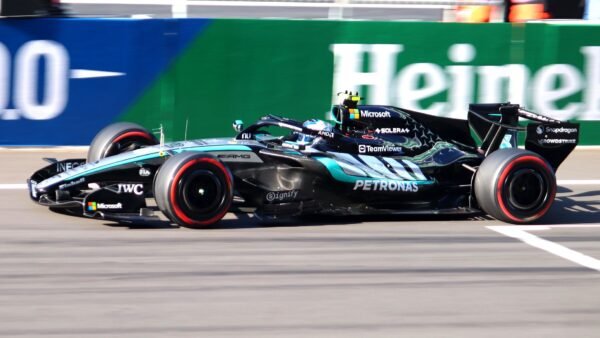
Kimi Antonelli Becomes Youngest-Ever Formula 1 World Champion at 20 as Verstappen Wins Chaotic Mexico City Grand Prix
Twenty-year-old Kimi Antonelli finished third in a chaotic Mexico City Grand Prix to become Formula 1's youngest-ever world…
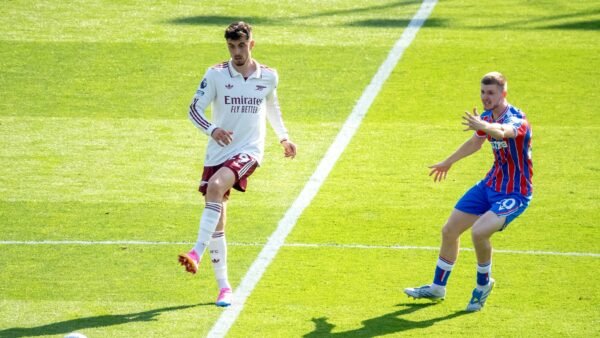
Arsenal End 14-Year Anfield Wait as Havertz Strike Sends Champions Three Points Clear at the Top
Kai Havertz's 16th-minute goal gave champions Arsenal a 1-0 win at Liverpool — their first Premier League victory…
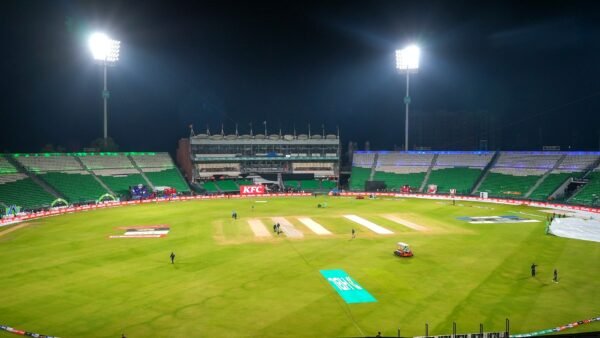
Fakhar Zaman’s 127 Powers Pakistan to Tri-Series Title in Record 326 Chase Against Sri Lanka
Fakhar Zaman's 127 off 99 balls and a blistering 61 from Arafat Minhas carried Pakistan to a three-wicket…