
Eleven Policemen Killed in Kohat Ambush as Militants Target Anti-Gold-Mining Operation

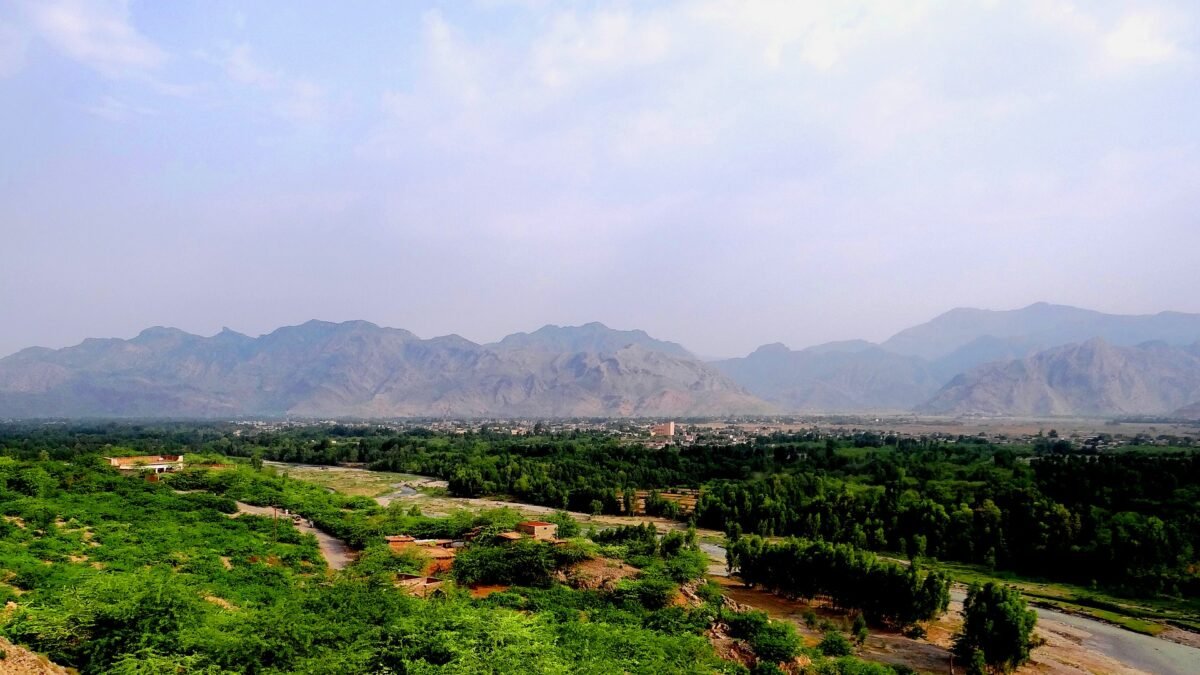
Eleven policemen, including a deputy superintendent of police, were killed and 12 others injured on Wednesday when gunmen ambushed a police team in the Kohat district of Khyber Pakhtunkhwa, in one of the deadliest single attacks on police in the province this year.
The police party was travelling to conduct a raid against illegal gold mining in the Gambat area when it came under fire in the Darbokach Jalandhar Banda area, between Kohat and Karak, according to Kohat police spokesperson Muhammad Nauman Zeb. The attackers opened fire from the hilltops overlooking the road, police said, trapping the convoy in a crossfire before reinforcements reached the scene.
The dead included Deputy Superintendent of Police Gambat Haider Zaman and Sub-Inspector Mukhtiar, Zeb said. Rescue 1122, the emergency service, confirmed that the death toll had reached 11, while 12 injured personnel were taken to hospital. An emergency was declared at the District Headquarters Teaching Hospital in Kohat.
Five police vehicles were set on fire during the assault, according to police accounts reported by The Express Tribune and Anadolu Agency. Police returned fire, a heavy exchange followed, and additional vehicles and a heavy contingent were sent to the area. By Wednesday evening, the Kohat district police officer said the pursuit of the attackers was continuing and that the operation would go on until the last militant was eliminated.
No group had claimed responsibility for the attack by Wednesday evening. The Associated Press reported that suspicion falls on the Tehreek-e-Taliban Pakistan, the Pakistani Taliban, which has stepped up its attacks on security forces in Khyber Pakhtunkhwa. Police described the attackers, in the official language used by the Pakistani state, as militants belonging to Fitna al-Khawarij, the term officials use for the banned Tehreek-e-Taliban Pakistan, along with criminal elements, according to Geo News.
Khyber Pakhtunkhwa Governor Faisal Karim Kundi condemned the attack, sought a detailed report from the police authorities and directed that those involved be brought to justice, according to The Express Tribune. Samar Haroon Bilour, the provincial adviser on information, said the injured should receive the best possible medical care.
A toll that rose through the day
The scale of the attack only became clear gradually, as rescue teams reached the site and the injured were moved to hospital. Geo News reported earlier on Wednesday that 12 policemen had been injured in the firing, including DSP Haider Zaman and Gambat station house officer Ayaz Afridi, but its first account did not report any deaths. Kohat police then confirmed 10 dead, before Rescue 1122 put the figure at 11.
Reuters, citing a rescue group spokesman, had earlier reported that 11 Pakistani police personnel were feared killed in the attack in the Kohat region. The Interior Ministry did not immediately respond to a request for comment from Reuters.
The confusion in the first hours was not unusual. The ambush took place in a remote stretch of road between two districts, the firing continued after the first volley, and the casualty figures changed as the wounded were counted at hospitals. What did not change through the day was the core of the story: a full police party, led by a deputy superintendent, had walked into a prepared ambush, and the attackers had held the high ground long enough to burn five vehicles.
Geo News also reported police as saying that several militants had been killed in the exchange of fire. The Express Tribune did not give a militant casualty figure, and the number of attackers, how long the exchange lasted and whether any escaped had not been independently established by Wednesday evening.
The Khyber Pakhtunkhwa Bar Council announced a complete judicial boycott and strike across Kohat district on Thursday, 12 November, in protest at the attack and in solidarity with the police force, according to the Tribal News Network.
Why the police were there
The police team was not on a conventional counterterrorism operation against an identified militant hideout. It was heading to raid illegal gold mining along the River Indus, in the riverine belt between Kohat and Karak, where police have repeatedly moved against unlicensed mining in recent weeks.
According to Geo News, police said the illegal gold mining in the area had continued because of a nexus between militants and criminal elements. That description matters, because it frames the ambush not as a random attack on a patrol but as a defence of an income stream. The government’s description of the attackers as Fitna al-Khawarij and criminal elements reflects that official view. It is not an independent finding, and no group had claimed the assault by Wednesday evening.
Illegal mining along the Indus has been a persistent problem in the Kohat-Karak belt. The river carries gold-bearing sands, and unlicensed extraction, often with heavy machinery, has drawn both local criminal networks and armed groups that tax or protect the trade. For the police, a raid on a mining site is therefore not a routine administrative action. It is an operation against people who have both the money to arm themselves and a direct financial reason to fight back.
That is the context in which Wednesday’s ambush should be read. The police were attacked not while hunting militants, but while moving against the economy that helps sustain them.
A province where police are the front line
The Kohat ambush is the latest in a series of strikes on police in Khyber Pakhtunkhwa, and it follows a pattern that has grown steadily worse through 2026. On 18 September, a blast and armed assault at Kohat’s Old Police Lines killed 15 police officers among 23 people, with more than 50 wounded, according to The Express Tribune’s account at the time. Police later named a suspect, Zahid Gul, as the mastermind and said he was killed in a joint operation in Lakki Marwat in October.
On 8 October, Station House Officer Daud Khan and his gunman, Farhad, were killed when armed men opened fire on a police patrol near the Karak-Kohat boundary, The Express Tribune reported. On 28 September, three traffic police personnel were killed in Tank district, and on 25 September a Counter-Terrorism Department constable, Muhammad Afaq, was killed during an operation in Peshawar’s Garhi Sherdad area.
The numbers behind those incidents point to a wider pattern. Police data cited by the Associated Press of Pakistan put the number of attacks on police in Khyber Pakhtunkhwa at 680 in the first nine months of 2026, up from 508 in the same period of 2025. The number of police personnel killed also rose sharply: 122 were killed during the first six months of 2026, compared with 63 in the same period a year earlier.
Two security reports presented to the federal cabinet in October found that terrorist incidents in Khyber Pakhtunkhwa had risen by 195 per cent between March 2024 and September 2026, and that 73 per cent of attacks recorded in the province during 2026 had targeted police and security personnel. The Armed Conflict Location and Event Data project, a global monitoring group, counted 2,425 attacks in Pakistan in 2025, nearly four times the 658 recorded in 2022, according to figures cited by The Express Tribune and Anadolu Agency.
The monthly numbers suggest the violence is not moving in a straight line. Figures from the Pakistan Institute for Conflict and Security Studies showed a 37 per cent fall in militant attacks nationwide in October from September, even as kidnappings reached a 12-month high. But police and security personnel remain the most frequent target, and Khyber Pakhtunkhwa remains the centre of the violence.
One month of Governor’s Rule
Wednesday’s attack comes exactly one month after the federal government imposed emergency and Governor’s Rule in Khyber Pakhtunkhwa. On 11 October, President Asif Ali Zardari approved the imposition of emergency in the province under Articles 232 and 234 of the Constitution, on the advice of Prime Minister Shehbaz Sharif. The provincial governor took charge with an advisory council, initially for six months, and the provincial government run by the Pakistan Tehreek-e-Insaf, the party of jailed former Prime Minister Imran Khan, was effectively suspended.
The Prime Minister’s Office said the move followed the provincial government’s deliberate disengagement from the fight against terrorism. Law Minister Azam Nazeer Tarar told a news conference in Islamabad that the arrangement would initially be in place for six months. Shortly after the announcement, PTI lawmaker Junaid Akbar said Sohail Afridi, the chief minister of Khyber Pakhtunkhwa, had been arrested along with the party’s president in the province.
The stated purpose of Governor’s Rule was to restore the state’s grip on security in a province where the police were being killed faster than they could be replaced. A month later, the deadliest single attack on police in the province this year has taken place on the governor’s watch. That does not, on its own, prove that the emergency has failed. A month is a short time to rebuild a police force, and the attackers choose the time and place. But it does raise the question that will dominate the politics of the province in the weeks ahead: what, concretely, has changed since 11 October?
Governor Kundi has said that Rs70 billion is planned for the police and Rs10.3 billion for the Counter-Terrorism Department, and that intelligence-based operations will continue. Those are promises about capacity. Wednesday’s ambush is a test of whether capacity is reaching the officers on the road.
A province in political flux
The attack also comes on a day when the politics of Khyber Pakhtunkhwa were already in the news for other reasons. Reuters reported on Wednesday that former Prime Minister Imran Khan, who is imprisoned in Adiala Jail in Rawalpindi, had been taken to hospital in Islamabad late on Tuesday for medical treatment and returned to prison. Khan, who is 74, had an eye check-up at the Pakistan Institute of Medical Sciences, one of the officials said, and had some blood pressure issues for which he was given treatment before being shifted back to his cell.
Khan’s lawyers say his health has deteriorated in prison and that he has lost significant vision in his right eye. His party’s deputy chairman, Shah Mehmood Qureshi, was also taken to hospital in the eastern city of Lahore from a jail in the same city on Tuesday. A Pakistani court has also ordered jail authorities to allow Khan’s legal team to see him and his wife, his party said.
The coincidence is worth noting, not because the two stories are connected, but because they describe the same province from two directions. In Islamabad and Rawalpindi, the politics of Khyber Pakhtunkhwa are being fought in courts and hospitals. In Kohat, they are being fought on a road between two districts, with gunfire from the hills.
Analysis: Why It Matters
The police are the target, not the bystanders
The most important number in this story is not 11, the number of policemen killed on Wednesday, but 73 per cent, the share of attacks in Khyber Pakhtunkhwa during 2026 that have targeted police and security personnel. The police are not collateral damage in someone else’s war. They are the war’s primary target, and they have been for years.
That is a deliberate choice by the militants, and it is a rational one from their point of view. The police are the most visible face of the state in the districts where the Tehreek-e-Taliban Pakistan operates. They man the checkpoints, they conduct the raids, they are recruited locally and they live in the communities they police. Killing them does three things at once: it removes the state’s eyes and ears, it terrifies the next recruit, and it demonstrates, in the most public way possible, that the state cannot protect its own.
Wednesday’s ambush fits that logic exactly. The attackers did not strike a military convoy or a government building. They struck a police party on its way to shut down an illegal business. The message was aimed at every police officer in the province who might be ordered to do the same job tomorrow.
Gold, guns and the crime-terror nexus
The second thing that makes this attack distinctive is its target: illegal gold mining. It would be a mistake to treat the mining as background colour. In the riverine belt along the Indus, unlicensed gold extraction is a business worth fighting for, and the people who run it have both the money to buy weapons and the incentive to use them.
Police have said the trade survives because of a nexus between militants and criminal elements, and the ambush is consistent with that account. A mining raid threatens a revenue stream. The militants who protect it are not necessarily the same people who dig the gold, but they are paid, in money or in loyalty, to keep the police away. When the police came anyway, the ambush was the answer.
This is the part of Pakistan’s militancy that is hardest to defeat, because it is not purely ideological. A fighter motivated by belief can be argued with, deterred or killed. A business that pays for protection will simply hire new protectors. As long as the gold keeps flowing out of the Indus, there will be someone willing to shoot at the police who try to stop it. Any strategy that treats Kohat as a purely military problem, and ignores the economics underneath it, will keep producing Wednesdays like this one.
Governor’s Rule, one month on
The third question is the political one, and it is the most uncomfortable for the federal government. Emergency rule was imposed in Khyber Pakhtunkhwa on 11 October, explicitly because the provincial government was said to have disengaged from the fight against terrorism. The promise, implicit in the move, was that direct federal control would do better.
One month later, 11 policemen are dead in a single ambush, and the police are still the target in three out of four attacks. It is too early to call the emergency a failure. Security operations take time, the militants choose their moments, and no government can guarantee that a convoy on a rural road will not be ambushed. But the burden of proof has now shifted. The federal government removed an elected provincial government in the name of security. It must now show, in results rather than announcements, that the removal made the province safer.
The figures Governor Kundi has cited, Rs70 billion for the police and Rs10.3 billion for the Counter-Terrorism Department, are the right kind of promise. But money announced in Islamabad is not the same as equipment, training and intelligence reaching a police station in Gambat. The test of Governor’s Rule will not be what is pledged in press conferences. It will be whether the next police party that drives out to raid an illegal mine comes home alive.
The fog of the first hours
The fourth lesson of Wednesday is about information. The first reports spoke only of injuries. Then came 10 dead. Then 11. Reuters reported 11 feared killed while the police were still confirming 10. Geo News reported several militants killed; The Express Tribune did not. The number of attackers, the duration of the exchange and the question of whether any escaped were all still unknown by the evening.
None of this is a criticism of the journalists who reported it. In an ambush in a remote area, the facts arrive in pieces, and the first pieces are often wrong. But it is a reminder of why casualty figures in the first hours should always be treated as provisional, and why the most reliable number in this story is the one that came last, from Rescue 1122, after the bodies had been counted at the hospital.
It is also a reminder of the human cost hidden inside the numbers. Two of the dead have been named: a deputy superintendent and a sub-inspector, both officers with rank, experience and, in all likelihood, families who will now wait for an official notification that has already been overtaken by the news. The other nine had not been named by Wednesday evening. They deserve to be named, and the state owes their families more than a line in a casualty list.
What the state must prove next
The final question is what happens now. The Kohat district police officer has said the pursuit will continue until the last militant is eliminated, and the operation against the illegal mining network will go on. That is the right promise to make in the first hours. It is also the hardest promise to keep.
Three things will show whether it is kept. The first is a claim of responsibility, or the lack of one. If the Tehreek-e-Taliban Pakistan claims the attack, the state will know whom it is fighting. If no one claims it, the suspicion will remain, but the investigation will have to prove the link rather than assume it. The second is the result of the pursuit: arrests, recoveries of weapons, and the dismantling of the mining network that the police were raiding in the first place. The third is whether the crackdown on illegal mining along the Indus continues, or whether Wednesday’s ambush succeeds in its apparent purpose, which is to make the next raid seem too dangerous to attempt.
If the mining continues and the police stop going, the militants will have won something more valuable than a single ambush. They will have established that a road in Kohat belongs to them, not to the state. That is the stake in this story, and it is larger than the casualty list.
What to Watch Next
- Official confirmation of the final casualty list, including the names of all 11 policemen killed and the condition of the 12 injured.
- Any claim of responsibility, and whether the Tehreek-e-Taliban Pakistan or another group acknowledges the attack.
- The outcome of the pursuit operation in the Darbokach area, including arrests and any weapons recovered.
- Governor Faisal Karim Kundi’s detailed report on the attack, and whether the federal government announces new security measures for Khyber Pakhtunkhwa.
- The Khyber Pakhtunkhwa Bar Council’s judicial boycott in Kohat district on Thursday, 12 November, and any wider response from lawyers and civil society.
- Whether the crackdown on illegal gold mining along the River Indus continues, or pauses after the ambush.
Sources
- Reuters — Eleven Pakistani police personnel feared killed in attack, rescue group says
- KhabarWire — 11 policemen killed in Kohat gold-mining ambush
- Zark News — 11 Police Personnel, Including a DSP, Killed in Kohat Ambush
- The Daily Jagran — Pakistan Hit By Major Terror Attack: 11 Police Personnel, Including DSP, Killed During Anti-Gold Mining Operation
- The Islamabad Telegraph — Terrorist Attack Kills 10 Policemen
- News Trend Today PK — At Least 10 Policemen, Including DSP Haider Zaman, Martyred in Terrorist Ambush in Kohat (roundup of Express Tribune, Dawn, Associated Press and Bol News reporting)

About the Author — Abdul Mannan
Related Articles
Pakistan Cuts Petrol Price by Rs8 to Rs338 a Litre and Diesel by Rs7 to Rs371
Petrol falls to Rs338 a litre and diesel to Rs371 as Pakistan's new daily pricing system passes a…
Islamabad High Court Orders One-Hour Lawyer Meetings for Imran Khan and Bushra Bibi as Counsel Warns of Brain Haemorrhage Risk
The Islamabad High Court has ordered one-hour meetings between Imran Khan, Bushra Bibi and their lawyers at Adiala…
Shehbaz Sharif Briefs Nawaz Sharif on Khyber Pakhtunkhwa Security and the Economy at Jati Umra
Prime Minister Shehbaz Sharif travelled to Jati Umra on Sunday to brief PML-N president Nawaz Sharif on the…