
Nineteen Killed in Stampede at Kolkata Durga Puja Pandal as Judicial Probe Ordered

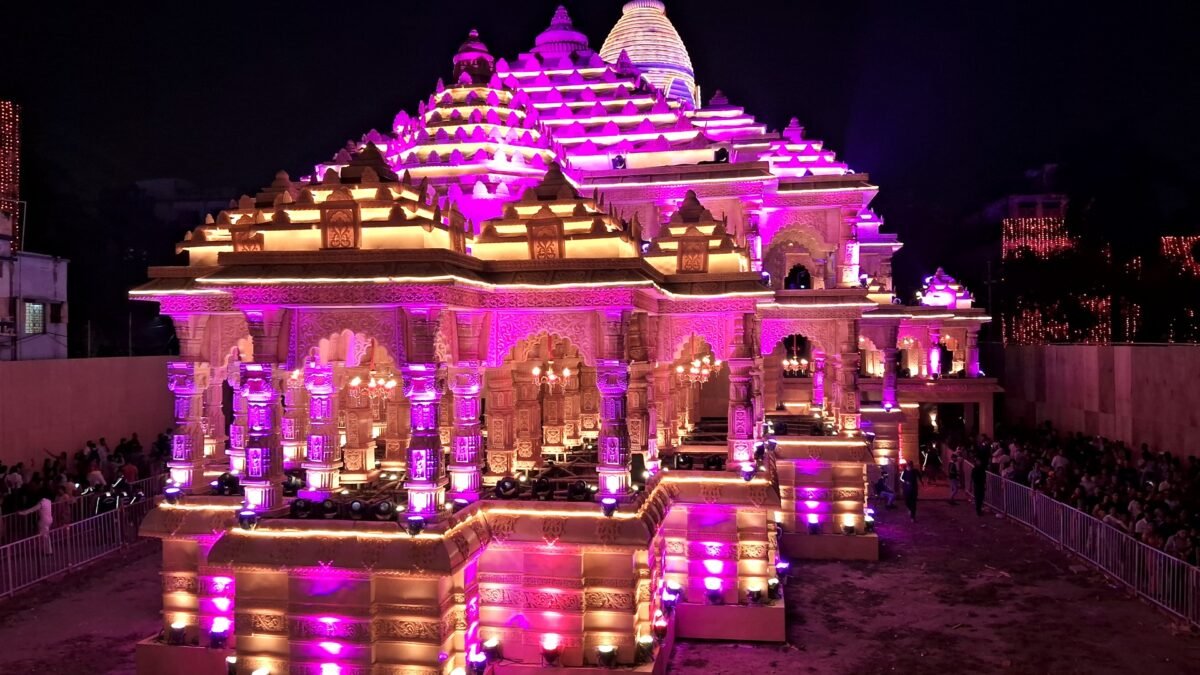
Nineteen people have been killed and around 25 injured in a stampede at a packed Durga Puja pandal in north Kolkata on Saturday evening, in one of the deadliest crowd disasters in the West Bengal capital in years, officials and police said.
The crush occurred at around 7.40pm at the exit gate of the Chorbagan Sarbojanin Durga Puja pandal in the Girish Park police station area, at a time when a sudden downpour had driven large numbers of revellers to surge toward the pandal, according to a statement from Kolkata Police. The pandal has since been closed to visitors.
West Bengal Chief Minister Suvendu Adhikari, who visited Calcutta Medical College and Hospital where the victims were taken, confirmed the latest toll and said 12 people, including the puja organisers, private security guards and on-duty staff, had been detained for questioning.
What happened at Chorbagan
The disaster struck on Maha Saptami, one of the busiest days of the Durga Puja festival, when weekend crowds were at their peak. According to Kolkata Police, the stampede broke out at the exit gate of the Sarada Park (Chor Bagan) Puja Pandal because of heavy crowds of visitors during rain.
The Chorbagan pandal, whose theme this year was “Arava” — rendered as “Beyond Sound” — had gained popularity in recent years and was drawing large numbers of revellers. It sits on the narrow Radha Madhab Saha Lane, off Chittaranjan Avenue in north Kolkata. Eyewitnesses said the pandal featured a circular elevated corridor built around a 360-degree viewing concept, where crowd pressure may have intensified.
According to initial reports cited by the chief minister, an announcement on the loudspeaker by the puja organisers triggered a rush among the revellers. The Hindu BusinessLine quoted Adhikari as saying that, according to officials at the spot, the incident occurred owing to an announcement by the organisers over the microphone — with preliminary accounts suggesting visitors were told the structure could collapse at any moment.
Family members of two of the deceased told the chief minister that the blowing of whistles by private security guards near the pandal also contributed to the rush among people waiting to enter. Several people reportedly fell down a flight of stairs near the exit and were trampled by those pressing forward from behind, according to news reports.
Eyewitnesses speaking to news agency ANI described scenes of chaos: narrow entry and exit gates, a 1.5-hour queue, sudden darkness with no lights in the passage, and people falling as the crowd pushed forward in the rain. “There was not a single light. Two people fell due to the darkness,” one eyewitness said in Bengali. Several injured people were ferried to hospital on motorcycles.
The toll and the victims
The death toll rose through the evening as bodies were brought to Calcutta Medical College and Hospital. Early reports put the figure at 17; by late Saturday, the chief minister said 19 people had died and 25 were undergoing treatment. Six of the deceased had been identified, and arrangements were being made to bring their family members to the hospital.
According to doctors quoted in reports, of the deceased, 13 were women, three were men and one was a child — a seven-year-old girl, according to one account. Two of those killed were from Bihar. One injured person was reported to be in critical condition, while 11 injured people were referred to SSKM Hospital, according to The Daily Jagran.
A senior Kolkata Police officer told the AFP news agency that the crush began when a downpour started and the crowd waiting outside began pushing, pulling and rushing forward, with some falling to the ground. Reinforcement teams, the fire brigade, disaster management teams and ambulances were deployed, police said.
Probe, detentions and official response
The state government has ordered a judicial probe into the incident. Chief Minister Adhikari said he would write to the Chief Justice of the Calcutta High Court seeking the appointment of a sitting judge to head a Special Investigation Team comprising police and members of other departments.
“We will check the footage and take appropriate measures against those who failed to manage the crowd. That could be a member of the puja committee, a homeguard, a temporary worker, a policeman, or a private company security guard. Nobody will be spared,” Adhikari said, according to The Business Standard.
Police have collected CCTV footage from the Chorbagan site and are examining whether lapses in crowd management, confusion over entry and exit routes, and the heavy rain contributed to the disaster. “Those who failed to control the crowd, we will take action against them,” the chief minister told PTI.
Local residents alleged that police deployment at the pandal was inadequate, with personnel mainly stationed near the VIP entrance. “I have not seen adequate police presence this year. This resulted in the mismanagement,” Sanghamitra Bhowmik, a resident of the Chorbagan area, said. Eyewitnesses said announcements about entry, exit and crowd movement were improper, leaving visitors confused during the rush hours.
Prime Minister Narendra Modi wrote on X that the incident was saddening and offered condolences to the bereaved families, while wishing the injured a speedy recovery. His office announced ex gratia assistance of Rs 200,000 from the Prime Minister’s National Relief Fund for the next of kin of each deceased person and Rs 50,000 for each of the injured.
Union Home Minister Amit Shah, who had arrived in Kolkata on Saturday evening and was scheduled to visit puja pandals on Sunday, postponed his engagements and was expected to visit the injured in hospital. Former West Bengal chief minister Mamata Banerjee said she was deeply shocked and prayed for the speedy recovery of the injured.
Compensation and state review
The state government announced compensation of Rs 25 lakh and a Group D government job for the family of each person killed, Rs 5 lakh for each injured person, and full coverage of treatment costs at a hospital of the family’s choice.
Adhikari also announced a high-level committee to review safety arrangements at major Durga Puja pandals across the state following the stampede. The panel will be led by Principal Secretary of Disaster Management Rajesh Sinha, Director General of Fire Services Anuj Sharma and Additional Director General of Police (Law and Order) Javed Shamim, and will review crowd management, exit routes and structural safety, recommending comprehensive guidelines to prevent a recurrence.
The government has advised several popular theme pujas that attract large crowds to temporarily close their pandals following the incident. Nearly 3,500 pandals have been set up across Kolkata to celebrate Durga Puja.
Crowd safety during festival season
Durga Puja is Kolkata’s largest festival, drawing millions of visitors onto streets that were not designed for such densities, and safety at pandals has been a recurring concern. India has suffered a series of fatal crowd disasters at religious and public gatherings in recent years, including a stampede at a religious gathering in Hathras in 2024 that killed more than a hundred people, and a crush at the Maha Kumbh in Prayagraj in January 2025 that killed dozens.
Common threads across these tragedies include narrow access points, sudden surges of movement triggered by announcements or weather, inadequate separation of entry and exit flows, and private security arrangements operating alongside — and sometimes at cross-purposes with — police crowd-control measures. Each of those factors appears in the early accounts of the Chorbagan disaster.
Analysis: Why It Matters
The Chorbagan stampede is not an accident of weather. Rain alone does not kill 19 people. The rain was the spark; the disaster was built, over years, out of design choices and administrative habits that treat crowd management as an afterthought. A 360-degree elevated corridor on a narrow lane, a single constricted exit, a flight of stairs in the escape path, a loudspeaker announcement of questionable origin and whistles from private guards — each of these is a known failure mode, and the combination is lethal. India has paid for this knowledge in blood before, from Hathras to Prayagraj, and the price keeps being paid in the same currency.
The detention of 12 people — organisers, security guards and civic volunteers — within hours suggests the state is moving quickly to assign responsibility, but it also raises the harder question: who permitted a pandal designed around a circular crowd funnel to open on a lane barely wide enough for the queues it was always going to attract? Adhikari himself said the police had granted permission for the pandal. The judicial probe and the SIT under a sitting Calcutta High Court judge will need to follow the chain of approvals, not merely the actions of low-level staff on the night.
The alleged misleading announcement — visitors told the structure might collapse — points to a governance gap that is peculiar to India’s festival economy. Puja committees are civic organisations operating massive temporary infrastructure with huge commercial stakes, policed lightly, and dependent on private security whose first instinct in a crisis is often to create motion rather than calm. Whistles blown into a tense crowd are a stimulus, not a control measure. Until temporary structures are held to the same crowd-engineering standards as permanent venues, this pattern will repeat.
Politically, the timing is combustible. The tragedy arrives in a festival season when lakhs of voters are on the streets, and the response — compensation, jobs for bereaved families, a judicial inquiry, a state-wide safety review — follows a script refined across decades of Indian crowd disasters. The real test is whether the review of 3,500 Kolkata pandals produces enforceable structural and crowd-flow standards before next year’s festival, or whether it dissolves into another file. The temporary closure of popular theme pandals is a start, but closures end; standards persist.
Finally, the Chorbagan disaster should be read alongside the broader national picture: India is urbanising festival attendance faster than it is professionalising crowd science. CCTV is being collected now, after the fact. The data that would have predicted this — queue lengths, density curves on Radha Madhab Saha Lane, exit throughput — was never gathered. A country that runs some of the world’s largest peaceful gatherings should be a global leader in crowd safety engineering. Instead it is a repeat customer at the morgue.
What to Watch Next
- The SIT’s first findings, including what the CCTV footage shows about the minutes before the stampede and who made the announcement that triggered the rush.
- Whether the Calcutta High Court judge-headed probe recommends criminal prosecution of the organisers and security agencies, and what it says about the permissions granted to the pandal.
- The high-level committee’s safety review: whether it produces binding, enforced crowd-management and structural guidelines for all major pandals before next year’s Durga Puja.
- How many of the 12 detained are formally arrested and charged, and whether the investigation reaches officials responsible for granting the pandal permission.
- Whether other state governments act on the same warning — several major festivals across India, including upcoming winter-season gatherings, draw comparable crowds.
Sources
- Reuters — At least 17 killed in stampede at a religious festival in India’s Kolkata
- The Hindu BusinessLine — Kolkata Durga Puja stampede: 19 dead, 25 injured; 12 detained
- The Business Standard — Kolkata Durga Puja pandal stampede toll rises to 19, judicial probe ordered, 12 detained
- The Daily Jagran — Kolkata Durga Puja Stampede Update: Death Toll Rises To 19

About the Author — Abdul Mannan
Related Articles
Guatemala’s Former Anti-Corruption Prosecutor Juan Francisco Solórzano Foppa Shot Dead in Guatemala City
Former prosecutor Juan Francisco Solórzano Foppa, 43, was shot dead at a Guatemala City sports complex; President Bernardo…

Pope Leo XIV Urges Putin to Agree Oleshky Ceasefire So Aid Can Reach Besieged Civilians
Pope Leo XIV used Friday's phone call with Vladimir Putin to press for a ceasefire around the frontline…
Yellow Vests Return as France Is Engulfed by Cost-of-Living Protests — 166 Arrested, Tear Gas in Paris
Yellow-vest protesters joined students and unions on France's streets on Saturday in a nationwide cost-of-living day of action,…