
The Floor That Outlived Its Owner: Lessons from a 2,000-Year-Old Mosaic in Türkiye

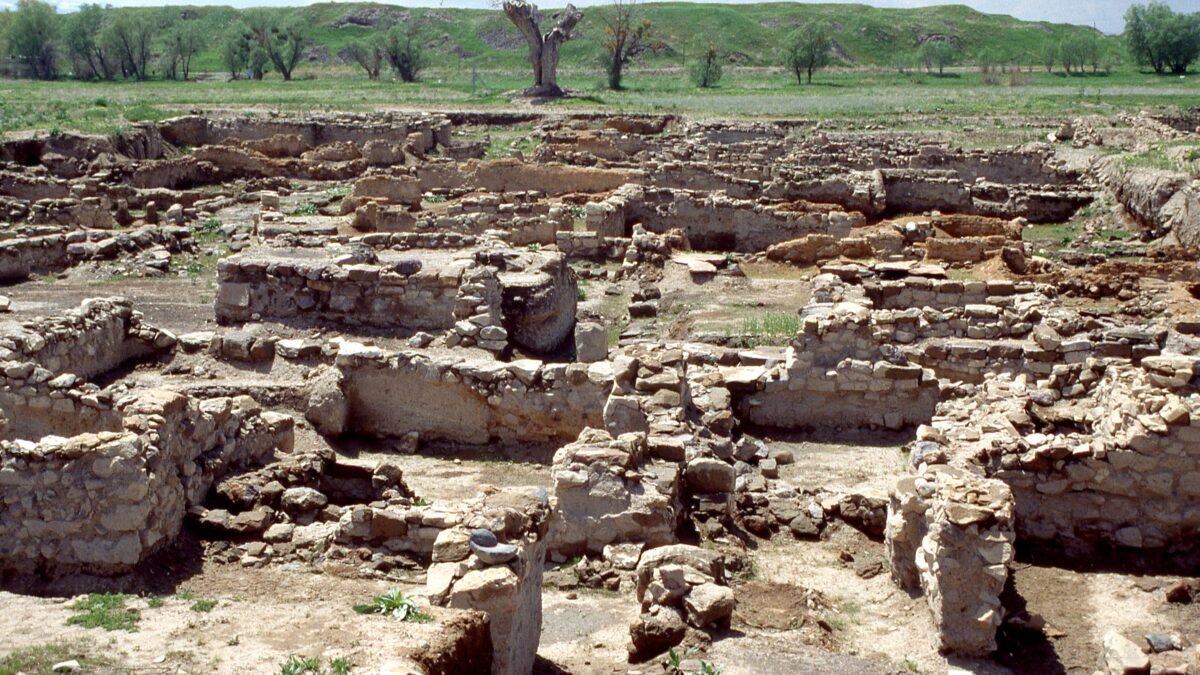
Yesterday, in a trench in the soil of central Türkiye, an archaeologist’s trowel stopped. Under it, laid two thousand years ago by hands no living man remembers, lay a floor of colored stone — a mosaic, patient, unbroken, waiting. It had waited through the rise and fall of everything built above it. It is still there. Its owners are dust. Tell me, reader: which of your possessions will survive you by two thousand years?
That is the question the earth asked this week at Kültepe-Kanesh, near the city of Kayseri. And I confess — when I read the news, I did not feel like a reader of archaeology. I felt accused. By a floor.
A Mosaic After 78 Years of Digging
The announcement came on October 20, 2026: archaeologists working at Kültepe-Kanesh have uncovered a Hellenistic-period mosaic floor, more than 2,000 years old — the first discovery of its kind since excavations began at this settlement in 1948. Seventy-eight years of digging, and this is the first mosaic. Do you understand what that means? For nearly eight decades, generations of archaeologists have scraped this soil looking for exactly this, and the earth gave it up only now.
The find lies east of the Waršama Palace, the great Bronze Age palace of the kings of Kanesh, in an area where a joint Turkish–South Korean team — Türkiye’s Ministry of Culture and Tourism, Ankara University, and South Korea’s National Research Institute of Cultural Heritage, directed by Professor Fikri Kulakoğlu — is working its second season of a cooperation that began in 2025. The surviving section of the mosaic measures roughly 1.6 meters on each side, and fragments scattered around it suggest the original floor covered a much larger area.
Alongside the mosaic, the team identified four successive cultural layers from the Hellenistic period — that is, the centuries between Alexander the Great’s conquests and the rise of Rome, roughly 323 to 30 BCE. A period of Kültepe’s history that, the archaeologists admit, has received far less attention than its famous Bronze Age past. Now the earth is correcting that neglect, one layer at a time.
Here is a detail that should humble you: only about five percent of Kültepe has been excavated. Ninety-five percent of the city still sleeps underground. We are reading the first page of a very long book.
The First Businessmen in History
But the mosaic is only the doorway. Step through it, and you enter the real miracle of Kültepe — the reason I call it the most modern ancient city on earth.
Four thousand years ago, this was Kanesh, capital of a kingdom, and in its lower city stood something the world had never seen before: a karum, a trading quarter, where some nine hundred merchants and their families settled after traveling by donkey caravan all the way from the city of Aššur in Mesopotamia — what is today northern Iraq. They did not come with armies. They came with contracts.
Think about that, reader. No empire sent them. No king commanded the caravans. These were private men — family firms, fathers and sons, husbands writing to wives left behind in Aššur — who built the first long-distance commercial network in human history. They carried tin and textiles east into Anatolia and carried back gold, silver, and copper. Tin: the metal that made bronze possible, and bronze made everything — weapons, tools, the entire Bronze Age. Whoever controlled tin controlled civilization. And the men who controlled it wrote everything down.
That is the second miracle. From the ruins of their burned houses — a fire destroyed the city around 1836 BCE and, like the eruption that preserved Pompeii, froze the archives in clay — archaeologists have recovered some 23,500 cuneiform tablets. Read that number again. Twenty-three thousand five hundred. These are the first written documents in the history of Anatolia, and they are not royal decrees or temple hymns. They are business records. Loans. Lawsuits. Marriage contracts. Divorce settlements. Letters from a wife asking her husband when he is coming home. A receipt for nine and a half minas of silver, carefully sealed in a clay envelope so no one could tamper with it.
The Metropolitan Museum of Art, which holds some of these tablets, describes them plainly: the merchants used a simplified cuneiform to track loans, business deals, and disputes, and sent letters to families and business partners back in Aššur. In 2015, UNESCO inscribed this collection in its Memory of the World Register — under the name “The Old Assyrian Merchant Archives of Kültepe.” The world’s documentary heritage. Not a king’s boast carved on a palace wall. A merchant’s ledger.
Do you see the parallel I am drawing? We are told that globalization is new — container ships, supply chains, multinational corporations. Nonsense. Globalization is four thousand years old. It wore sandals, rode donkeys, and sealed its invoices in mud. The East India Company, which I have written about so often in these columns, was not the first trading empire of the world. It was only the most ruthless. The first were the merchants of Kanesh — and they ruled by contract, not by cannon.
The World Was Already Global
And here is where the mosaic returns to accuse us. Because the Hellenistic floor that was found this week lies above the Bronze Age city. Layer upon layer. The Greek-speaking merchants of the Hellenistic age built their fine houses over the ruins of the Assyrian traders. The Romans would come after them, and the Byzantines after the Romans, and the Seljuks and Ottomans after them. Every age convinced of its permanence. Every age, a layer.
The Waršama Palace itself — five kings reigned from it — was built over an older palace, in the architectural fashion of Old Babylon. It stored the trade goods of passing caravans until customs duties were paid. Customs duties! Four thousand years before our trade wars and tariff debates, a clerk in Kanesh was already calculating what a merchant owed the palace on a shipment of tin. Reader, tell me honestly: what exactly is new about our “new” world order?
We argue today about supply chains as if we invented them. We panic about trade routes as if the donkey caravans of Aššur did not cross a thousand kilometers of mountain and desert with nothing but contracts and courage. We speak of “emerging markets” as if Anatolia was not an emerging market when our ancestors’ ancestors were painting caves. The earth at Kültepe keeps the receipts. We are not the first global civilization. We are only the latest layer.
What Survives Is Not What You Think
And now the moral of the floor — because every column of mine must end in a courtroom, and today the defendant is us.
The merchant who owned that mosaic floor is gone. His name is gone. His fortune — the silver he counted, the deals he closed, the house he decorated with such care — is gone. What survived is the floor itself, and a few doors down in time, the clay tablets of his predecessors: their debts, their lawsuits, their love letters.
Do you understand what the earth is telling us? It did not preserve their wealth. It preserved their words. It preserved the contracts they honored and the disputes they settled fairly enough to write down. The kings of Kanesh built palaces; the palaces are rubble. The merchants wrote receipts; the receipts are in UNESCO’s Memory of the World.
I look at our age — our towers of glass, our fortunes counted in numbers on screens, our deals sealed with a click and forgotten by evening — and I ask: what will the archaeologists of the year 4026 find when they dig through our layer? Our servers will be dust. Our currencies will be unreadable code. Will they find anything we wrote that was worth keeping? Anything we built that was meant to outlast us?
The mosaic of Kültepe survived because someone laid it with care, stone by stone, for a home he loved. The tablets survived because someone wrote the truth on them and sealed it. Care and truth — that is the entire formula. Everything else is a layer waiting to be dug through.
So here is my verdict, reader, delivered from the pulpit of a two-thousand-year-old floor: build as if the future is watching, because it is. Write as if someone will read you in four thousand years, because someone might. The empires will keep layering themselves over your life — that is their nature. But the floor you lay, the word you seal in clay, the contract you honor when no one is watching: that is the part of you the earth will refuse to forget.
The merchants of Kanesh are dead. Their ledgers are immortal. Choose which one you want to be.
Sources & References
- Türkiye Today — “Türkiye’s Kultepe reveals 2,000-year-old mosaic in archaeological first” (October 20, 2026; discovery report, excavation details, Prof. Fikri Kulakoğlu)
- UNESCO World Heritage Centre — “Archaeological Site of Kültepe-Kanesh” (Tentative List, 2014; 23,500 tablets, Waršama Palace, karum trade network)
- The Metropolitan Museum of Art — Old Assyrian Trading Colony collection (merchants of Aššur, donkey caravans, tin and textiles for gold and silver, fire ca. 1836 BCE)
- Turkish National Commission for UNESCO — Memory of the World Register (Merchant Archives of Kültepe, inscribed 2015)
- Google Arts & Culture — Old Assyrian Merchant Archives (community of ~900 traders from Assur settling at Kanesh)
- Republic of Türkiye, Ministry of Culture and Tourism — Kayseri historical ruins (Kültepe stratigraphy, Waršama palace)

About the Author — Abdul Mannan
Related Articles
They Prayed to the God of War on the Edge of an Empire — and the Forest Kept Their Temple
Inches beneath the fallen leaves of a German forest, archaeologists found a temple to Mars — the god…
The City That Chose Fire Over Chains: Paris’s Rediscovered Celtic Fort and the Price of Freedom
Beneath a Paris hospital courtyard, archaeologists have uncovered the fire-scarred wall of Lutetia — the Celtic town its…