
Manchester United Sack Michael Carrick After Dismal Start Leaves Club in Relegation Zone

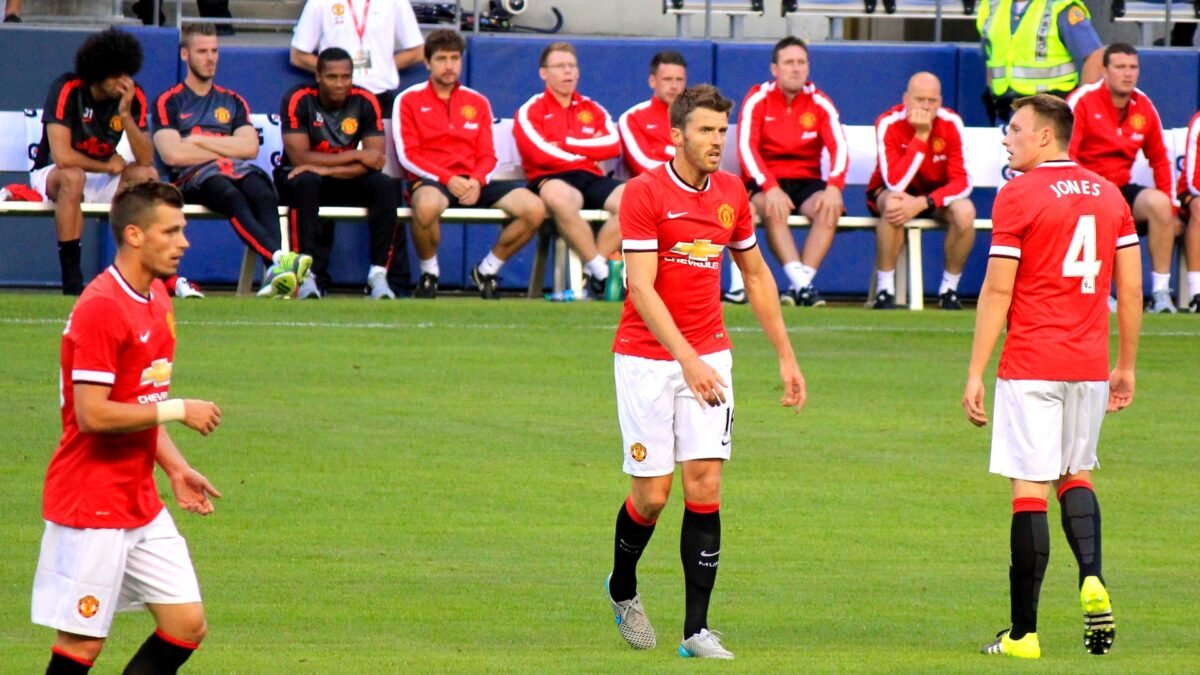
Manchester United have sacked head coach Michael Carrick, bringing an end to a tenure that began with one of the most remarkable revivals in the club’s recent history and collapsed, less than a year later, into the worst start to a league season at Old Trafford in 40 years. The club confirmed the decision on Thursday, 12 November, with United sitting 18th in the Premier League, inside the relegation zone, after winning just one of their first ten league matches.
“After a disappointing start to the season, the club has come to the extremely difficult conclusion that a change is necessary in order to achieve our ambitions,” United said in a statement published on the club’s website, according to Reuters. The club added that it “intends to appoint a permanent successor as quickly as possible.”
Carrick, 45, was informed of the decision at the club’s Carrington training ground on Thursday morning. According to The Times, chief executive Omar Berrada and director of football Jason Wilcox arrived at Carrington before 9am to deliver the news, and the former midfielder left the training ground at 10.15am. His entire coaching staff departed with him, including assistant Steve Holland and first-team coaches Jonathan Woodgate, Jonny Evans and Travis Binnion.
The numbers that sealed Carrick’s fate are stark. United have won only three of their 15 matches in all competitions this season, including a single league victory, leaving them on eight points after ten games and one point above the bottom of the table, according to Reuters. The club’s only league win came against promoted Ipswich Town; their other two victories arrived in the Champions League, against debutants Sabah FK and in a 3-2 comeback win over AS Roma on 3 November. Reuters’ analysis of the season described United as carrying the worst defensive record in Europe.
Carrick becomes the seventh permanent head coach to be sacked by Manchester United since Sir Alex Ferguson retired in 2013, following David Moyes, Louis van Gaal, Jose Mourinho, Ole Gunnar Solskjaer, Erik ten Hag and Ruben Amorim. He is also the third head coach to fail under the watch of minority owner Sir Jim Ratcliffe and INEOS, who took charge of the club’s football operations in 2024, after ten Hag and Amorim, according to CNN.
The week the axe fell
Carrick’s departure had been expected for much of the week, and the manner of it — played out in public while the man at the centre of it carried on working — has already drawn criticism. According to CNN, reports emerged that the club’s hierarchy was due to meet in Monaco on Wednesday to make the decision official, and Carrick took training as normal even when it was clear who United were lining up as his potential replacement.
The Times reported that Berrada and Wilcox had already decided at a review meeting on Monday that the 45-year-old’s position was untenable. They then flew to Monaco to meet Ratcliffe to ratify the decision, returning on Wednesday, before arriving at Carrington on Thursday morning to inform Carrick. He was leaving only six months into the two-year contract he signed in May.
The decision was made during the November international break, which United’s hierarchy regarded as a natural moment to make a change. But the timing also meant Carrick was dismissed days after a result that, on the surface, looked like a rescue. On Sunday, 8 November, United came from behind to draw 4-4 with Aston Villa at Old Trafford, scoring two goals in injury time to salvage a point. According to Reuters, that dramatic draw nevertheless extended the club’s winless league run and confirmed that the familiar defensive frailties had not gone away.
The match that appears to have broken the hierarchy’s patience came a fortnight earlier. United lost 3-0 at home to Bournemouth, a defeat after which fans chanted Carrick’s name but booed the players off the pitch, according to Reuters. Carrick had dropped captain Bruno Fernandes to the bench for that match and did not bring him on even when United were desperate for inspiration in midfield. The club gave him another chance to revive the season, and after clear-the-air talks he restored Fernandes to the starting line-up against Chelsea. Little changed: United were comprehensively outplayed in a 2-0 loss at Stamford Bridge, according to Reuters.
The 3-2 comeback victory over Roma in the Champions League briefly eased the pressure, but the Villa draw exposed the same defensive problems again. By Monday, the review meeting had reached its conclusion. As CNN put it, Carrick “kept his head down and took training as normal — sticking to his philosophy and looking like the only adult in the room” — while reports of his imminent sacking spread.
From miracle worker to casualty
What makes Carrick’s sacking so striking is the distance the club has travelled in ten months. He was appointed on an interim basis in January after Amorim was dismissed, and what followed was one of the great turnarounds of recent Premier League history. United won 11 of their first 16 matches under Carrick, including victories over Arsenal, Manchester City, Liverpool and Chelsea, climbing to third in the Premier League and securing qualification for the Champions League, according to Reuters.
That run was enough to earn him the permanent job in May, when he signed a two-year contract with the club he once played for, CNN reported. The club’s statement on Thursday acknowledged that legacy warmly. “Michael is, and always will be, a Manchester United legend. Just as he did as a player, he has conducted himself with the highest standards of dedication and professionalism throughout his time back with the club. His leadership and achievements last season will always be fondly remembered,” the statement said, according to CNN.
But the momentum did not survive the summer. United won just once in their first ten league matches, and the side that had beaten the division’s best teams last season looked fragile, disorganised and short of belief. Reuters’ analysis noted that the initial recovery had been seen before at Old Trafford — most notably with Solskjaer, Carrick’s former team-mate — and that the hierarchy had mistaken it as evidence that the team’s deeper problems were solved.
There is a legitimate case against Carrick, as Reuters acknowledged: his team’s defensive organisation was poor, performances deteriorated, and his handling of Fernandes — particularly the decision to bench the captain against Bournemouth — invited scrutiny. But the same analysis argued that even the sharpest tactical mind can only mask structural shortcomings for so long, and that no amount of ingenuity can indefinitely compensate for poor squad building.
Pochettino waits in the wings
Carrick is likely to be replaced by Mauricio Pochettino, the United States men’s national team coach, according to reports in British media cited by Reuters. CNN Sports understands that the Argentine has reached a verbal agreement with the club, while The Times reported that United have reached a full agreement with Pochettino, including paying US Soccer compensation of £7.5 million. Talks between United, Pochettino and US Soccer will continue this week before anything is made official, according to CNN, and no appointment has yet been confirmed by the club.
Pochettino, 54, will not be in Manchester until at least next Wednesday, according to The Times. He is expected to remain in charge of the United States for two final matches against Haiti — the first leg of a two-legged CONCACAF Nations League quarter-final in Miami on Saturday, and the second leg in Cincinnati on Tuesday — before any move to Old Trafford. CNN reported that he is expected to be in charge of both matches.
The Argentine is one of the Premier League’s most highly regarded former coaches. He made his name at Southampton before joining Tottenham Hotspur in 2014, where he transformed the London club into a title-challenging side and led them to the UEFA Champions League final in 2019, losing to Liverpool, according to CNN. Spells at Paris Saint-Germain and Chelsea followed before he took charge of the United States in 2024. CNN noted that while his project with the US team took a while to get going, he led the side to an impressive World Cup campaign and the team now looks well set for the future.
Pochettino has been on United’s radar before, but the two parties could never quite line up, according to CNN. Now, with the club in the relegation zone and the World Cup cycle behind him, the opportunity has finally arrived — although the job he inherits is, by common consent, one of the most demanding in English football.
Whoever takes charge faces a daunting first assignment. United’s next fixture after the international break is a trip to Anfield to face rivals Liverpool, according to Reuters — a fixture that has rarely been kind to a club in crisis, and one that will offer an immediate and unforgiving examination of the new manager.
A club that keeps changing the manager
The deeper story of Carrick’s sacking is not about one man. It is about a club that has now dismissed seven permanent managers in 13 years without ever addressing the reasons each of them failed. Ferguson won the club’s 20th league title in 2013 and retired after a trophy-laden 27-year stint, according to Reuters. Since then, United have cycled through big names — Moyes, van Gaal, Mourinho, Solskjaer, ten Hag, Amorim and now Carrick — while remaining convinced that the next appointment will make it all work.
The INEOS era was supposed to be different. When Ratcliffe and INEOS took charge of football operations, their arrival was presented as a fresh start for a club decaying under the much-maligned Glazer family’s ownership, CNN reported. There was an initial injection of excitement: a revamped training facility, plans for a new stadium, and a new management structure that made Berrada the chief executive and Wilcox the sporting director. The two were supposed to overhaul the squad and usher in a new era of success, with an initial goal of winning the Premier League by 2028.
In reality, almost everything has gone wrong since, according to CNN. Carrick is the third head coach to fail under their watch, and millions have been spent on compensation to fix those mistakes while performances have suffered. The handling of Carrick’s departure — news of the Monaco meeting leaking while he continued to take training — was, in CNN’s assessment, “just another example of how poorly the club is being run,” putting the spotlight firmly on the ownership once again.
The recruitment record tells its own story. Reuters reported that United’s summer outlay of £150 million was committed solely to midfield, with Carlos Baleba, Andrey Santos and Youri Tielemans arriving, yet significant weaknesses elsewhere in the squad were left unaddressed, most notably at left back. A team competing on four fronts had only the injury-prone 31-year-old Luke Shaw as an established senior left back. A succession of signings tailored to the short-term needs of individual managers has left United with a costly and often disjointed squad, forcing each new coach to work with players recruited for vastly different tactical approaches, according to Reuters.
The season has also been punctuated by flashpoints beyond results. CNN reported public outbursts from captain Bruno Fernandes and fans turning on many of the players. Yet even when things got ugly under Carrick, the supporters chose to back the former midfielder, putting the blame firmly at the feet of the players and the club’s hierarchy — a detail that captures how far the mood at Old Trafford has shifted from blaming managers to blaming the institution itself.
Analysis: Why It Matters
Carrick’s sacking is a football story, but it is also a case study in how a great institution can lose the ability to learn from its own mistakes. The facts are not in dispute: United are 18th, their start is the worst in 40 years, and a change at the top was, by the end, inevitable. What matters is what the club does with the lesson — because the last 13 years suggest it has not yet learned it.
1. The interim miracle trap
United have now fallen into the same trap twice. A caretaker arrives, the players respond, the results surge, and the club mistakes a honeymoon for a solution. It happened with Solskjaer, whose early run earned him the permanent job before the underlying problems reasserted themselves. It happened again with Carrick, whose 11 wins in 16 games — including victories over Arsenal, Manchester City, Liverpool and Chelsea — were treated as proof that the squad’s deeper problems were solved. They were not solved; they were merely postponed. A new-manager bounce is one of the most reliable phenomena in football, and it is also one of the most misleading. It reflects relief, novelty and a release of tension as much as it reflects tactical mastery. United’s hierarchy twice converted a bounce into a long-term contract, and twice discovered that the bounce has a shelf life. The lesson is not that caretakers should never be appointed permanently — it is that a dozen good games should never substitute for a proper assessment of whether a manager’s methods can survive a full season, a transfer window and a run of adversity.
2. The manager is the symptom, not the disease
Seven permanent managers in 13 years is not a run of bad luck; it is a pattern. Moyes, van Gaal, Mourinho, Solskjaer, ten Hag, Amorim and Carrick arrived with different philosophies, different personalities and different promises, and all of them eventually failed in the same place. As Reuters put it, the common denominator is the club that hired them, backed them and eventually discarded them. Each new coach inherited a squad assembled for his predecessor’s system, each was judged on results produced with players he did not choose, and each was replaced before the structural work — recruitment, academy alignment, a coherent football identity — had time to take root. Carrick’s case is the clearest illustration yet: a manager who delivered third place and Champions League football five months ago was dismissed after ten league games, not because his qualities changed, but because the environment around him never did. Sacking the manager is the easiest decision a failing club can make, and at Old Trafford it has become a substitute for the harder ones.
3. Recruitment without a plan
The most damning detail in Reuters’ analysis of United’s season is not a result but a shopping list. A club that spent £150 million in the summer committed all of it to midfield — Baleba, Santos and Tielemans — while leaving a team competing on four fronts with a single established senior left back, the injury-prone 31-year-old Luke Shaw. That is not a failure of one window; it is a failure of planning. A well-run club recruits to a system and a squad profile that outlasts any single manager. United, by contrast, have spent the post-Ferguson era signing players for the short-term needs of individual coaches, producing what Reuters called a costly and disjointed squad in which each new manager inherits players recruited for vastly different tactical approaches. Pochettino will arrive to find the same problem his predecessors found: a squad that is expensive, unbalanced and incoherent. Unless the recruitment structure changes with the manager, the new coach will be managing the last manager’s team, just as Carrick was managing Amorim’s, and Amorim was managing ten Hag’s.
4. The Pochettino gamble — and its timing
On paper, Pochettino is the strongest appointment United have made since Ferguson retired. He built Tottenham into Champions League finalists, developed young players, imposed a front-foot style, and has now added international experience with the United States. But the circumstances of his arrival carry real risk. He will not reach Manchester until next week at the earliest, after two CONCACAF Nations League quarter-final matches with the US against Haiti, and his first game in charge is likely to be the trip to Anfield — the most hostile away fixture in English football for a new United manager. The £7.5 million compensation reported by The Times is a small price for a club of United’s wealth, but the negotiation itself — conducted in public while Carrick was still taking training — has already damaged the club’s reputation for decency. And there is a larger question: Pochettino is the third head coach of the INEOS era. If the structure that consumed ten Hag, Amorim and Carrick remains unchanged, why should the outcome be different for him? His success will depend less on his coaching than on whether the club finally gives a manager time, a coherent squad and a hierarchy that takes responsibility for its own decisions.
5. A relegation fight is now a real possibility
The most startling fact of this story is the league table. Manchester United — the club that has not won the title since 2013 but has never been relegated from the Premier League — sit 18th after ten games, one point above the bottom. That is not a blip to be laughed off; it is a position from which clubs have been relegated. The international break offers a pause, but the fixture list does not: Liverpool away, then the relentless winter schedule, with a squad that Reuters described as carrying the worst defensive record in Europe. The new manager’s first task will not be to restore United to the top four, as the INEOS plan to win the league by 2028 once imagined. It will be to stop the slide, restore defensive organisation, and get a fragile group of players through the next month without the season becoming a genuine survival battle. For a club of United’s stature, that sentence alone measures how far the decline has gone.
What to Watch Next
- The official announcement: United have said they intend to appoint a permanent successor as quickly as possible. Confirmation of Pochettino — and the terms of his release from US Soccer — is expected in the coming days.
- The Haiti matches: Pochettino is expected to coach the United States in both legs of the CONCACAF Nations League quarter-final against Haiti, in Miami on Saturday and Cincinnati on Tuesday, before travelling to Manchester.
- The interim arrangement: With Carrick’s entire coaching staff gone, who takes training at Carrington next week — and whether a caretaker is needed before Pochettino arrives — will be clarified by the club.
- Liverpool away: United’s first match after the international break is the trip to Anfield. It will be the new manager’s first examination, and possibly the most difficult first game any United manager has faced.
- The January transfer window: Whether Pochettino is backed with signings in the positions United neglected in the summer — above all left back and central defence — will show whether the club has learned anything from the £150 million midfield-only window.
- Bruno Fernandes: The captain’s relationship with the new manager will be an early test. His public outbursts and his benching against Bournemouth were defining flashpoints of Carrick’s final weeks.
- The league table: United are one point above the bottom. Every result between now and Christmas will determine whether this season becomes a recovery story or the first genuine relegation fight in the club’s Premier League history.
Sources
- Reuters — Manchester United sack manager Carrick with club in relegation zone
- Reuters — Carrick pays the price as Manchester United’s cycle of failure continues
- CNN — Manchester United fires Michael Carrick as head coach, lines up US coach Mauricio Pochettino
- USA Today — Man United fires Michael Carrick. Will Mauricio Pochettino be next manager?
- The Times — Mauricio Pochettino to replace Michael Carrick at Manchester United
- Flashscore — Manchester United sack Michael Carrick as head coach

About the Author — Abdul Mannan
Related Articles
Debutant Saqib Khan Takes Seven Wickets as Pakistan Fight Back Against Sri Lanka in Rain-Hit Rawalpindi Test
Saqib Khan, a 31-year-old fast bowler playing his first Test, took seven wickets for 130 runs as Sri…
Hardik Pandya Joins Punjab Kings in Blockbuster IPL Swap as Arshdeep Singh Moves to Mumbai Indians
Mumbai Indians have traded captain Hardik Pandya to Punjab Kings for Arshdeep Singh in a straight swap worth…
Pat Cummins Calls Friday Press Conference as Khawaja’s Sandpapergate Claims Split Australian Cricket
Australia captain Pat Cummins will face the media on Friday after Usman Khawaja claimed the whole 2018 team…