
Markets Steady After $3 Trillion AI Rout as Strong US Jobs Data Pushes Fed Hike Odds Towards 80%

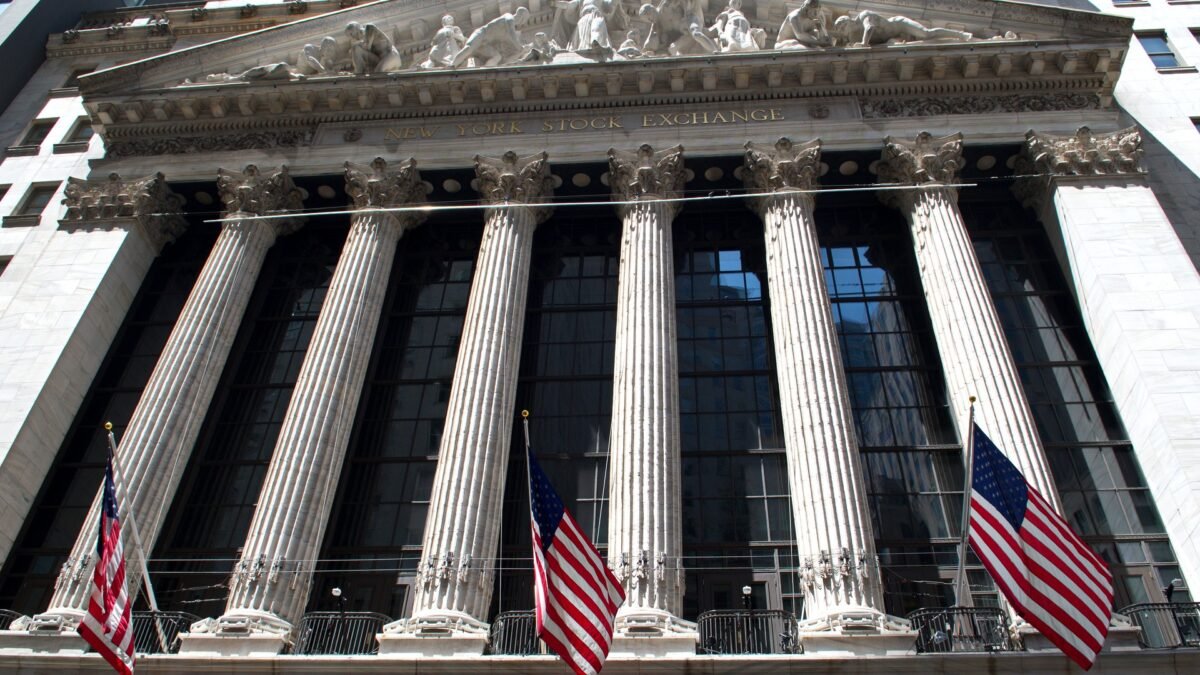
Global stock markets steadied on Monday after one of the most violent weeks in recent Wall Street history, as Asian shares rebounded from a bruising sell-off and a stronger-than-expected United States jobs report pushed traders to bet heavily on a Federal Reserve interest-rate rise in December.
Technology shares, which bore the brunt of last week’s rout, led the recovery in Asia. Japan’s Nikkei index rose about 2.7 per cent, Taiwan’s benchmark climbed around 2.5 per cent, and MSCI’s broadest index of Asia-Pacific shares outside Japan advanced after sliding 4.6 per cent last week, according to Reuters. United States stock futures pointed modestly higher.
The calm, however, is fragile. The rebound follows a week in which doubts about the profitability of artificial intelligence wiped about $3 trillion from the value of American stocks in a single day, dragged the Nasdaq into a correction, and forced investors to confront a question they had spent three years avoiding: what if the most expensive trade in market history is built on spending that never pays for itself?
On Thursday 5 November, the Nasdaq Composite plunged 5.52 per cent to 24,315.00, its biggest one-day fall in 19 months, according to Reuters. The S&P 500 dropped 4.36 per cent to 7,353.73, while the Dow Jones Industrial Average fell 3.44 per cent to 51,523.06. The sell-off erased about $3 trillion in market value from S&P 500 companies in a single session and left the Nasdaq more than 10 per cent below its record high of 6 October, confirming a technical correction.
The damage was concentrated exactly where the boom had been built. Nvidia, the world’s most valuable chipmaker, fell about 9 per cent in a day, slipping back below where it had ended last year. The Philadelphia Semiconductor Index plunged more than 12 per cent. Tesla and other technology giants fell sharply. The rout reversed Wednesday’s post-election rally in brutal fashion: the day after the midterm elections, markets had celebrated the Democratic victories, with the Dow recording its best day in 18 months. By Thursday’s close, that optimism had evaporated.
Friday brought only a partial recovery. The S&P 500 gained 0.32 per cent to 7,376.86 and the Nasdaq rose 1.1 per cent to 24,579.43, while the Dow slipped 0.46 per cent to 51,285.73, according to Saxo Bank. Nvidia jumped 5.6 per cent and the semiconductor index advanced 4.6 per cent. But the weekly damage was severe: the S&P 500 fell 2.68 per cent over the week, its largest weekly percentage decline since the week ended 4 April 2025, and the Nasdaq recorded its fourth consecutive weekly decline.
What changed the mood on Friday was not technology at all, but the labour market. United States employers added 165,000 jobs in October, more than twice the roughly 60,000 economists had expected, while unemployment fell to 4.1 per cent, according to the official report. The figures convinced traders that the American economy is strong enough for the Federal Reserve to raise interest rates again, and market pricing for at least a 25-basis-point increase at the central bank’s December meeting rose to around 80 per cent, up from roughly 70 per cent before the employment report, according to the CME FedWatch Tool cited by Saxo Bank and Reuters.
Comments from Federal Reserve officials reinforced the message. New York Fed President John Williams said United States economic growth had remained remarkably resilient in the face of successive shocks, but that inflation was too high and it was essential to bring it back to the Fed’s 2 per cent objective. St Louis Fed President Alberto Musalem said inflation remained a top concern among businesses in his district, while San Francisco Fed President Mary Daly said the Fed would likely need to raise rates further even with the “painful” technology stock sell-off, according to Reuters.
The dollar surged on the jobs data, posting its biggest single-day gain in about five months, and held near those levels on Monday. The dollar index, which tracks the greenback against a basket of major currencies, traded at about 102.2, according to Reuters. The euro was little changed at about $1.115, the yen traded near 158.2 per dollar, and sterling was around $1.338.
Other markets told the same story of a week in which everything repriced at once. Brent crude fell to about $97.49 a barrel after President Donald Trump said on Sunday that he was highly unlikely to order fresh attacks on Iran as long as talks to end the conflict progress, according to Reuters. Brent had fallen more than 13 per cent the previous week on hopes of a diplomatic breakthrough. Gold rose about 1.1 per cent to roughly $4,114 an ounce. Bitcoin fell more than 2 per cent to about $73,700, while ether dropped about 5 per cent to roughly $2,200, its lowest level in more than two months, as investors worried that a Democratic-controlled Congress would toughen regulation of cryptocurrencies, according to Reuters.
What triggered the rout
The immediate trigger was politics. Tuesday’s midterm elections handed Democrats control of both chambers of Congress, and voters in ten states rejected most local measures concerning data centres. Investors read that as a cap on the American artificial-intelligence build-out: tougher regulation, more scrutiny of data-centre projects, and a slower pace of infrastructure approvals, according to Reuters.
Several newly elected governors have proposed restrictions on large artificial-intelligence projects, particularly those requiring substantial electricity supplies, raising concerns over planned data-centre expansion across several states, according to reports of the election aftermath. Democratic lawmakers are also expected to investigate the economic and environmental effects of the data-centre boom, including electricity demand, water consumption, local permitting, and the possibility that households could bear some of the infrastructure costs generated by artificial-intelligence facilities.
But the political shock landed on a market that was already stretched. The seven largest technology companies — Nvidia, Apple, Google, Microsoft, Meta, Amazon and Tesla — account for more than a third of the value of the S&P 500, according to The Guardian’s market analysis. The Shiller cyclically adjusted price-to-earnings ratio, a widely watched measure of long-term valuation, had reached 41 before the sell-off, a level it had seen only once before in history and far above the 32 recorded just before the 1929 crash, according to the Motley Fool.
Borrowing costs added to the pressure. The yield on the 10-year United States Treasury note was near 5 per cent, raising the cost of the enormous capital spending behind the artificial-intelligence boom and reducing the present value of profits expected far in the future. Investors have grown worried that spending on data centres and chips is outrunning the cash those investments generate, while the earnings season has been underwhelming: the Magnificent Seven companies missed earnings expectations, according to Kyle Rodda, senior financial market analyst at Capital.com, quoted by Reuters.
“The markets are far from being out of the woods yet,” Mr Rodda said. “Following last week’s midterm elections that have led to increased regulatory risk and an overall underwhelming earnings season that’s seen Magnificent Seven companies miss earnings expectations, the momentum remains skewed to the downside.”
UBS chief executive Sergio Ermotti said on Monday that the sharp correction in artificial-intelligence-related equities over recent weeks had been “priced for perfection”, according to Saxo Bank — a blunt acknowledgement that valuations had assumed flawless execution and no political friction at all.
President Donald Trump, for his part, blamed the midterm results for the losses. In a post on 8 November, he described the election outcome as a “giant step back in history” and linked the $3 trillion market decline to the Democratic victories, according to reports of the post. He also said on Monday that immigration policies he described as “too tough” had hurt him in the midterms, according to ABC News.
There was also a company-specific source of volatility hanging over the market. Nvidia’s board opened an independent investigation into its chief executive, Jensen Huang, after he admitted to an affair, amid claims that the woman involved was targeted by Chinese intelligence — a story NEXA NEWS HD reported in full on Monday. Reuters noted that the investigation by the industry bellwether could draw further volatility this week.
A week of records, then a reckoning
To understand why last week hurt so much, it helps to remember how far and how fast the market had climbed. The artificial-intelligence trade has been the dominant force in global equities for three years, carrying the S&P 500 and the Nasdaq to repeated record highs. The Nasdaq’s record close came on 6 October. Chipmakers, cloud providers, power companies, and anyone selling picks and shovels to the data-centre boom were swept along. In Asia, the same trade pushed Taiwan’s benchmark and South Korea’s Kospi to extraordinary heights, and it was precisely those markets that suffered the steepest falls last week: Taiwan’s benchmark recorded its heaviest weekly drop in two decades.
The scale of the spending is genuinely historic. The largest technology companies have committed hundreds of billions of dollars to data centres, chips, and power infrastructure, much of it financed with debt. Their argument is that artificial intelligence will eventually generate revenues large enough to justify the outlay, and that the first companies to build the capacity will capture the market. The sceptics’ argument is that the returns are arriving far more slowly than the spending, that competition will compress margins, and that the whole edifice depends on cheap capital and permissive politics — both of which are now in question.
Last week tested both assumptions at once. The midterm results raised the prospect of a Congress that will ask harder questions about who pays for the power, the water, and the grid upgrades that data centres require, and about whether the benefits of the artificial-intelligence boom are reaching anyone beyond the shareholders of a handful of companies. At the same time, the jobs report and the Federal Reserve’s response reminded investors that borrowing is about to get more expensive, not cheaper.
The combination is what made Thursday so violent. A market that is expensive, concentrated, and dependent on a single narrative is vulnerable to any event that challenges that narrative. The election did not change a single data centre’s revenue. It changed the price investors were willing to pay for the promise of future revenue, and in a market where seven companies are worth more than a third of the index, that repricing is felt everywhere.
There is an important sense in which the sell-off was overdue. The Motley Fool’s analysis of the week argued that the pullback was, in the long run, a healthy event: small corrections shed excess and reset valuations, and a market that never falls is a market that is not pricing risk at all. The Nasdaq had gone months without a serious test. The Shiller ratio at 41 was a warning that had been flashing for some time, and the only question was what would finally trigger the reassessment.
Equally, it would be wrong to read too much into a single week. The Nasdaq is still far above where it was a year ago, the American economy is still adding jobs at a pace that surprises forecasters, and the technology companies at the centre of the storm remain enormously profitable. A correction is not a crash. The Nasdaq’s fall of more than 10 per cent from its record is the market’s way of saying that the price was too high, not that the technology is worthless.
Analysis: Why It Matters
The concentration risk is now impossible to ignore
The most important fact about last week is not that the Nasdaq fell 5.5 per cent in a day. It is that seven companies now account for more than a third of the S&P 500, and that the entire market’s fate is therefore tied to a single bet: that artificial intelligence will justify the largest capital-spending programme in corporate history. When that bet wobbles, pension funds, retirement accounts, and index trackers all feel it, whether or not their owners have ever bought a technology share. Concentration on this scale means that a sector-specific shock becomes a market-wide event, and a market-wide event becomes a political event. The election results and the market sell-off are not two separate stories. They are the same story told from opposite ends: voters are asking who benefits from the artificial-intelligence boom, and investors are asking the same question with their money.
The Federal Reserve has a new problem
The jobs report has put the Federal Reserve in an uncomfortable position. For months, the central bank’s challenge was a weakening labour market and the risk of recession. Now the economy is adding jobs at twice the expected pace, unemployment is falling, and traders expect a rate rise in December. But raising rates into a technology correction is a delicate operation: higher borrowing costs are precisely what makes the artificial-intelligence spending programme harder to finance, and a further sell-off could tighten financial conditions far faster than the Fed intends. The Fed’s officials are signalling that they will prioritise inflation over market comfort — Mary Daly’s comment that the Fed will likely need to raise rates further even with the “painful” technology sell-off was unusually blunt. The consumer price report due on Tuesday will now be watched even more closely than usual: a hot reading would cement the December hike, while a soft one could give the Fed room to pause. Either way, the era in which markets could count on the Fed to cushion every fall looks over, at least for now.
Regulation has become a market variable
For three years, the artificial-intelligence trade was treated as a technology story. Last week it became a political story, and that changes how it must be analysed. Data centres need land, power, water, and permits, and all four are controlled by politicians who answer to voters. The rejection of data-centre measures in ten states and the proposals by newly elected governors to restrict large projects are not abstract policy debates: they are direct constraints on the industry’s growth plans. Companies that assumed they could build wherever they liked, at whatever scale they liked, now face a world in which local communities can say no, and in which Congress may ask whether households should subsidise the infrastructure of the world’s richest companies. This does not mean the build-out stops. It means it gets slower, more expensive, and more uneven — and that the revenue forecasts built on the old assumptions will need to be revised. Investors who priced the boom as if politics did not exist have now been reminded that it does.
The earnings test comes this week
The most immediate test of whether the sell-off was an overreaction or a rational repricing will come from the companies themselves. Earnings reports due this week from CoreWeave, Applied Materials, and Cisco Systems are set to put the profitability of artificial-intelligence ambitions to the test, according to Reuters, and the market will be listening for one thing above all: evidence that the enormous spending is turning into revenue and profit, rather than simply into bigger data centres. If the numbers disappoint, the correction could deepen. If they reassure, the rebound that began in Asia on Monday could extend. Either way, the days when technology shares rose on the promise of artificial intelligence alone are over. From now on, the industry will have to show its work.
What it means beyond Wall Street
The consequences reach well beyond American shareholders. The sell-off hit Asian markets hardest of all, because the artificial-intelligence supply chain runs through Taiwan, South Korea, and Japan: the chips, the memory, and the equipment are made there, and the factories that make them are among the most valuable assets in those economies. Taiwan’s heaviest weekly drop in two decades is a reminder that the global economy is now wired together through a single industry, and that a political decision in Washington can erase billions of dollars of value in Taipei within hours. The dollar’s surge, meanwhile, tightens conditions for every country that borrows in dollars, and the fall in oil prices — welcome for consumers — reflects a market that is suddenly less sure about global demand. The artificial-intelligence boom was never just an American story. Its correction is not one either.
What to Watch Next
- United States consumer prices on Tuesday: the inflation report will be the next major piece of evidence for the December Federal Reserve meeting, and a hotter-than-expected reading would push hike odds higher still, according to Reuters.
- Technology earnings this week: CoreWeave, Applied Materials, and Cisco Systems report, and their numbers will test whether artificial-intelligence spending is producing the profits the market assumed.
- Federal Reserve speakers on Monday: Michelle Bowman, Austan Goolsbee, and Thomas Barkin are all scheduled to speak, and their comments will be parsed for any sign that the central bank is worried about the market turmoil, according to NordFX.
- The Nasdaq’s next move: Friday’s partial rebound and Monday’s Asian recovery suggest the panic has eased, but the index remains in correction territory and the momentum, as one analyst put it, remains skewed to the downside.
- Data-centre politics: whether the new Democratic Congress and the newly elected governors follow through on proposals to restrict or scrutinise large artificial-intelligence projects, and how the technology companies respond.
- Nvidia’s investigation: the independent inquiry into Jensen Huang is an additional source of volatility for the world’s most valuable chipmaker, and any findings could move the whole semiconductor sector.
- Oil and the dollar: Brent crude near $97 and a dollar index around 102.2 reflect the twin forces of diplomacy hopes in the Middle East and a Federal Reserve that is turning hawkish again, and both could move sharply on the week’s data.
Sources
- Reuters — Asian stocks steady as AI, Mideast jitters recede; dollar firm on Fed bets
- Reuters — US dollar holds onto payrolls gains, NZ dollar rises after election
- Saxo Bank — Morning Brew, 9 November 2026
- NordFX — Market Pulse, 9 November 2026: AI Rebound, Fed Hike Bets
- Reuters via Metrobank Wealth Insights — Nasdaq posts biggest daily drop in 19 months on fears of AI regulations
- The Motley Fool — Why Last Week’s Market Sell-Off Was a Good Thing

About the Author — Abdul Mannan
Related Articles
China’s Factory Inflation Hits Four-and-a-Half-Year High as Consumer Prices Cool, Exposing a Split-Screen Economy
China's producer prices rose 5.7% in October — the fastest in nearly four and a half years —…

Nvidia Opens Independent Investigation as CEO Jensen Huang Admits Affair Amid Claims He Was Targeted by Chinese Intelligence
Nvidia's board has opened an independent investigation into reports that chief executive Jensen Huang was targeted by a…
Sensex Soars 8.8% in Best Week Since 2021 as Record Foreign Buying Powers India’s Market Rebound
India's Sensex posted its strongest weekly gain since February 2021, rising 8.8% to 81,028 as record foreign inflows,…