
Messi Earns Record 18th FIFPRO World 11 Selection as Ballon d’Or Winner Harry Kane Is Left Out

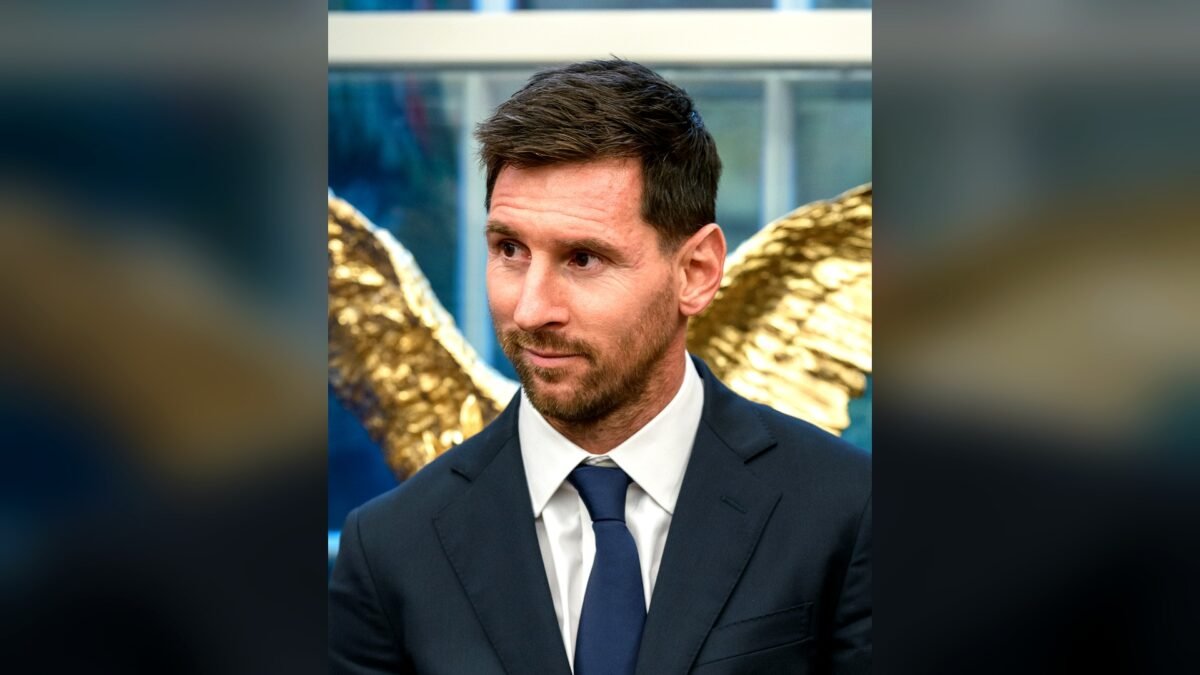
Lionel Messi has returned to the FIFPRO World 11 for a record-extending 18th selection, but the team chosen by professional footballers themselves has delivered one of the biggest surprises in the award’s history: Harry Kane, the winner of the 2026 Ballon d’Or, has been left out entirely.
The two teams were announced on Monday, 9 November, by FIFPRO, the global players’ union. The men’s team was voted for by 19,806 professional footballers from 73 countries, while the women’s team was chosen by 6,511 players from 64 countries. In total, 26,317 professionals from 75 countries took part, making the World 11 the only major global football honour decided exclusively by the players themselves, according to FIFPRO.
Messi, 39, was named in the forward line alongside Manchester City’s Erling Haaland, Real Madrid’s Kylian Mbappe and Barcelona’s Lamine Yamal. It is the Inter Miami forward’s first selection since 2023, and it extends a record that already stood alone. No other player in the history of the award has been chosen as often. Cristiano Ronaldo, the second most-selected player, has 15 selections, and his wait for a 16th goes on: the Portuguese forward was on the 26-man shortlist but did not make the final team.
The headline, however, is the absence of Kane. The Bayern Munich striker won the Ballon d’Or only last month after a season in which he scored 73 goals in 65 games for club and country, yet his fellow professionals did not vote him into their team. According to World Soccer Talk, he is the first Ballon d’Or winner since 2005 to miss out on the FIFPRO World 11 in the same calendar year. It is a split verdict between the two great honours of the game that has rarely, if ever, been this stark.
The announcement lands at the end of a year that has reshaped the landscape of world football. Spain won the 2026 World Cup, beating Argentina 1-0 in extra time in the final, and Messi announced his international retirement in August before playing his final match for Argentina in October. Kane captained England to the World Cup semi-finals. And in the women’s game, England’s Lucy Bronze became the first woman to earn nine selections, while Zambia’s Barbra Banda continued a run of history-making appearances of her own.
The 2026 FIFPRO Men’s World 11
The men’s team, as announced by FIFPRO and reported by Reuters, reads as follows:
Goalkeeper: David Raya (Arsenal, Spain)
Defenders: Pau Cubarsi (Barcelona, Spain), Achraf Hakimi (Paris Saint-Germain, Morocco), Nuno Mendes (Paris Saint-Germain, Portugal)
Midfielders: Jude Bellingham (Real Madrid, England), Rodri (Manchester City, Spain), Vitinha (Paris Saint-Germain, Portugal)
Forwards: Erling Haaland (Manchester City, Norway), Kylian Mbappe (Real Madrid, France), Lionel Messi (Inter Miami, Argentina), Lamine Yamal (Barcelona, Spain)
Three of the eleven are Spain’s World Cup winners: goalkeeper Raya, defender Cubarsi and midfielder Rodri, who were joined in the team by their fellow world champion Yamal. Paris Saint-Germain, the dominant club side of the season, supplied three players in Hakimi, Nuno Mendes and Vitinha. Only two players from the Premier League made the cut, according to TNT Sports: Raya and Haaland.
For Raya, the selection is a first. The Arsenal goalkeeper, who has established himself as Spain’s first choice, earned his maiden World 11 place. Cubarsi, the 19-year-old Barcelona defender, also made his debut in the team. Bellingham kept his place from last year’s side, as did Hakimi, Nuno Mendes, Vitinha, Mbappe and Yamal.
Yamal’s inclusion carries its own piece of history. At 19, he became the first player ever to earn two World 11 selections before turning 20, having also been named in last year’s team. It is a measure of how quickly the Barcelona winger has moved from prodigy to established great in the eyes of his peers.
The 2026 FIFPRO Women’s World 11
The women’s team, announced at the same time, was dominated by players from England and Spain, with one exception:
Goalkeeper: Hannah Hampton (Chelsea, England)
Defenders: Lucy Bronze (Chelsea, England), Alex Greenwood (Manchester City, England), Mapi Leon (Barcelona and London City Lionesses, Spain), Irene Paredes (Barcelona, Spain)
Midfielders: Aitana Bonmati (Barcelona, Spain), Alexia Putellas (Barcelona and London City Lionesses, Spain), Ella Toone (Manchester United, England)
Forwards: Barbra Banda (Orlando Pride, Zambia), Claudia Pina (Barcelona, Spain), Alessia Russo (Arsenal, England)
Five of the eleven play for England and five for Spain. The eleventh place belongs to Banda, the only player from outside those two countries in the side. The Zambian striker, who plays for Orlando Pride in the United States, has now been selected for a third consecutive year, becoming the first African woman to earn three successive World 11 selections, according to Zambian Football. She also holds the record for the most World 11 selections by an African woman.
Bronze, 35, made history of her own. Her selection is her ninth, a record for the women’s award that no other player has reached. She is one of five England players in the team, alongside Hampton, Greenwood, Toone and Russo. The Spanish contingent is made up of Leon, Paredes, Bonmati, Putellas and Pina.
The midfield contains two of the most decorated players in the modern women’s game. Bonmati and Putellas are the only players ever to have won the Ballon d’Or Feminin three times, according to Reuters, after Putellas claimed her third award in October. Their presence, alongside Bronze and Banda, gives the women’s team a blend of established greatness and the continuing dominance of Barcelona and the England national side.
How the World 11 Is Chosen
The FIFPRO World 11 works differently from every other major individual honour in football. There is no panel of journalists, no committee of coaches and no fan vote. The players vote, and only the players vote. FIFPRO created the award in 2005, and has invited the world’s professional footballers to choose the men’s team every year since, with the women’s team added in 2015. Since the 2024 edition, FIFPRO has managed the award independently, under its original name.
For the 2026 edition, voters were asked to judge performances between 4 August 2025 and 19 July 2026 for the men, and between 4 August 2025 and 16 August 2026 for the women. To be eligible, a player had to have made at least 30 official appearances in the men’s category and at least 20 in the women’s category. Each voter picks three players in each position: goalkeeper, defender, midfielder and forward.
The selection then follows a fixed formula. The goalkeeper, the three defenders, the three midfielders and the three forwards with the most votes take ten of the eleven places. The final place goes to the outfield player with the next highest number of votes, regardless of position. That is how the team ends up with its shape: in the men’s side this year, four forwards and three defenders, with the extra place falling to the attack.
The system explains both the authority of the award and its occasional surprises. A player can win the Ballon d’Or, voted for by 100 specialist journalists, and still miss the World 11, because the two electorates are asking different questions. Journalists weigh the season as a story. Players weigh it as a job: who was hardest to play against, who made the difference on the pitch, who earned the respect of the dressing room.
Messi’s Year: A World Cup Final and a Farewell
Messi’s return to the World 11 caps a year that has been, by any measure, extraordinary for a 39-year-old. He captained Argentina to the final of the 2026 World Cup, where they lost 1-0 in extra time to Spain, and he won the Silver Boot as one of the tournament’s leading scorers. He finished fifth in the Ballon d’Or voting. Then, in August, he announced his international retirement.
His final match for Argentina came on 6 October, a 3-0 win over Benin in Buenos Aires. He scored a penalty to close his international career on his 208th senior appearance, with his 126th goal for his country, according to ESPN. It was, as ESPN described it, an emotionally charged night, the end of a career in the shirt that had brought him a World Cup and two Copa America titles as captain.
At club level, there has been no sign of decline. Messi has just won the MLS Golden Boot for a second consecutive season, becoming the first player in league history to win the scoring title in back-to-back years, according to the Associated Press. He scored a league-high 26 goals in the 2026 regular season, added 17 assists and led the league with 43 goal contributions. He edged out FC Dallas striker Petar Musa, who scored 22, and Nashville’s Sam Surridge, who scored 21.
The numbers behind the season are striking. In 2025, his first full Golden Boot season, Messi scored 29 goals and provided 19 assists. This year, despite the World Cup and his international farewell, he produced 26 and 17. Across all competitions in 2026, ESPN’s tracker records 41 goals and 19 assists in 47 games for club and country. He has now scored 107 goals in 124 appearances for Inter Miami.
Inter Miami, the defending MLS Cup champions after winning their first title in 2025, finished second in the Eastern Conference and now face the Columbus Crew in a best-of-three first-round playoff series. Messi, who won the Landon Donovan MLS MVP award in 2024 and 2025, could become the first player to win it three times, according to talkSPORT. He has finished as the top scorer in a domestic league ten times in his career.
That is the season his fellow professionals were judging: a World Cup final, a Silver Boot, a second straight Golden Boot and a goal contribution in almost every game he played. It is a record that explains why, after two years out of the team, the players put him back in it.
Kane’s Snub: 73 Goals and No Place
The omission of Kane is the story that will be argued about longest. The numbers from his 2025-26 season are, on their face, almost absurd. He scored 73 goals in 65 games for club and country: 61 for Bayern Munich and 12 for England. According to TNT Sports, the only player ever to score more goals in a single season is Messi, with 82 in 2011-12. Kane’s tally included six goals at the 2026 World Cup, where he captained England to the semi-finals.
With Bayern, he won a domestic treble: the Bundesliga, the German Super Cup and the DFB-Pokal, scoring a hat-trick against Stuttgart in the cup final. He won the European Golden Shoe for a second time. In October, he became the first English winner of the Ballon d’Or since Michael Owen in 2001, beating Mbappe narrowly in a vote of 100 specialist journalists, with Yamal third. He has since signed a new contract with Bayern running until 2029, and he has scored 156 goals in 161 matches since joining the club from Tottenham in 2023, according to Sky Sports.
And yet, when the players voted, Kane did not make the cut. According to MyKhel, he received 27.6 per cent of the forward votes, falling behind Haaland, Messi, Mbappe and Yamal. Only four forwards could be chosen, and Kane was fifth in line.
There are several ways to read that result. One is that the forward places were simply the most competitive positions on the ballot, and that a player can have a historic season and still finish fifth among four chosen. Another is that the players who vote are judging something narrower than a season’s statistics: the eye test, the memory of facing a player, the sense of who was truly unplayable. A third reading is that Kane’s style works against him in a vote of this kind. As TNT Sports noted in its analysis of his Ballon d’Or win, Kane often drops deep, receiving the ball near the centre circle and linking play, and that can lead to criticism that he is too far from goal, even as he scores at a rate no striker in Europe can match.
Whatever the explanation, the result is a genuine split between football’s two great honours. The journalists said Kane was the best player in the world. The players said he was not among the four best forwards. Both electorates watched the same season. They simply saw different things in it, and that disagreement is now part of the story of the 2026 Ballon d’Or itself.
Ronaldo’s Wait Goes On
Ronaldo’s absence from the team is less surprising than Kane’s, but it is significant in its own way. The Portuguese forward was back on the 26-man shortlist for the first time since 2021, when he earned the last of his 15 selections. He and Messi had shared the record for most World 11 appearances for years, with Messi on 17 and Ronaldo on 15 before this year’s announcement took Messi to 18.
The two players made the team together every year from 2007 through 2021, with only the occasional gap, and their joint presence defined the award for a decade and a half. In 2024, for the first time since 2006, neither of them was selected. The 2024 team was built around the new generation: Haaland, Mbappe, Vinicius Junior, Bellingham, Rodri and their peers.
Ronaldo’s return to the shortlist this year suggested that the players had not forgotten him. He scored goals for Al-Nassr and for Portugal during the voting period, and he was again among the 26 most-voted players in the world. But the final step, from the shortlist to the eleven, eluded him once more. At 41, and playing outside Europe’s top five leagues, the case for his inclusion depends on reputation and longevity as much as on the season just played, and the voters this year chose the players whose seasons were in front of them.
Whether Ronaldo ever returns to the World 11 is now an open question. His 15 selections remain the second-highest total in the award’s history, and the gap between him and Messi, now three, is unlikely to close. What this year’s vote confirms is that the era in which the two of them were automatic choices is over, and has been for two years.
Analysis: Why It Matters
The players and the journalists disagree, and that is the point
Football has two great individual honours, and they are built on opposite ideas of authority. The Ballon d’Or asks 100 journalists to judge the season as a story: who achieved the most, who carried their team furthest, whose numbers were the most remarkable. The FIFPRO World 11 asks more than 26,000 professionals to judge it as work: who was hardest to play against, who changed games, who earned the respect of the people on the pitch with them. This year the two electorates gave different answers, and the difference is the story.
It is worth being precise about what happened. The journalists did not get it wrong and the players did not get it wrong. They measured different things. Kane’s 73 goals are a fact, and they won him the Ballon d’Or. The players’ preference for Messi, Mbappe, Haaland and Yamal is also a fact, and it won them the World 11. The disagreement tells us something real about how football is seen from the inside versus how it is seen from the press box, and it is a disagreement the sport should welcome rather than resolve. An award that always agreed with the Ballon d’Or would have no reason to exist.
What Kane’s omission says about how strikers are judged
There is a narrower lesson in Kane’s omission, and it concerns the way his game is perceived. He is the most complete striker of his generation: a finisher who also drops deep, links play and creates for others. That completeness is the reason his managers build teams around him and the reason he won the Ballon d’Or. But it may also be the reason his fellow professionals did not pick him.
A vote of players rewards the vivid and the unforgettable: the winger who beats his man, the striker who scores from nothing, the forward whose pace terrifies a defence. Kane’s genius is quieter. He scores from the penalty spot and from the edge of the area, he holds the ball up, he passes like a midfielder. Opponents respect him enormously, and they say so, but respect is not the same as fear, and fear is what wins a vote of peers. The irony is that the very quality that makes Kane unique as a striker, his willingness to do the unglamorous work, may have cost him a place in a team chosen by the people who know that work best.
Messi at 39, and the meaning of a return
Messi’s selection is not a lifetime achievement award, and it should not be read as one. His season justifies it on its own terms: a World Cup final, a Silver Boot, a second consecutive Golden Boot and a goal contribution in almost every match he played. But the return carries a meaning beyond the numbers. He had been out of the team for two years, and the 2024 selection, the first without either him or Ronaldo since 2006, had been read as the formal end of their era.
His return does not reverse that reading. It complicates it. The generational change is real: Yamal, at 19, is now a two-time selection, and the team around Messi is built from players in their twenties. But the vote also says that greatness, when it is still being produced on the pitch, does not expire on a schedule. Messi is 39, he has retired from international football, and his fellow professionals still regard him as one of the four best forwards in the world. That is a judgement about the present, not the past, and it is a remarkable one.
The women’s team and the concentration of power
The women’s team tells a different story, and it is one about concentration. Ten of the eleven players come from just two countries, England and Spain, and the clubs are equally concentrated: Barcelona supplied five players, Chelsea three. Only Banda, from Zambia and Orlando Pride, breaks the pattern. That is not a flaw in the vote. It reflects the reality of the women’s game as it stands: the best club football in the world is played in Spain and England, and the best international football too.
But it is also a challenge. A sport in which the world’s best eleven can be drawn from two countries and three clubs is a sport whose competitive map is narrow. The growth of the women’s game in the United States, where Banda plays, and the emergence of African talent, which Banda represents, are the counterweights. Her third consecutive selection, and her status as the first African woman to achieve it, matters precisely because she is the exception. The vote honours her, and it also exposes how much of the women’s game still runs through Barcelona and London.
What the vote says about the World Cup’s shadow
Every World 11 is shaped by the tournament that precedes it, and this one is no exception. The eligibility window for the men ran from 4 August 2025 to 19 July 2026, covering the full club season and the World Cup itself. Spain’s triumph in the final is written into the team: four world champions, including the goalkeeper, a defender, a midfielder and the teenage winger who lit up the tournament.
That is how the award has always worked. A World Cup does not just decide a trophy; it decides reputations, and the players who vote are the people most sensitive to that. Argentina’s run to the final kept Messi in the frame, England’s run to the semi-finals should have kept Kane in it, and the fact that it did not is the puzzle at the heart of this year’s announcement. The World Cup shapes the vote, but it does not determine it, and the gap between those two things is where the argument lives.
What to Watch Next
- The Ballon d’Or debate: Kane’s omission will be cited in every argument about the Ballon d’Or for years to come, and it will be used both by those who think the journalists got it right and by those who think the players did.
- Messi’s MLS play-offs: Inter Miami face Columbus Crew in a best-of-three first-round series as they defend their MLS Cup title, with Messi chasing a third consecutive MVP award.
- Kane’s response on the pitch: Bayern’s striker has a habit of answering doubt with goals, and his form in the Bundesliga and the Champions League will be watched more closely than ever.
- Ronaldo’s next move: Whether the 41-year-old can force his way back into the World 11, or whether his 15 selections will stand as his final total, depends on another season of goals for Al-Nassr and Portugal.
- Yamal’s rise: At 19, with two selections already, the Barcelona winger is on course to challenge the appearance records that Messi and Ronaldo built over two decades.
- The women’s game beyond England and Spain: Banda’s continued presence is the benchmark for whether the next generation of African, American and Asian talent can break into a team currently drawn from two countries.
- Next year’s vote: The 2027 World 11 will be the first chosen without Messi as an active international, and the first real test of whether the post-Messi era has a settled shape.
Sources
- Reuters: Messi returns to FIFPRO World 11, Ballon d’Or winner Kane misses out
- MyKhel: FIFPRO World 11 2026 Announced: Lionel Messi In; Harry Kane, Cristiano Ronaldo Out
- TNT Sports: Harry Kane misses out and just two Premier League players included in FIFPRO Men’s World 11
- TNT Sports: How Harry Kane reinvented the striker position to win Ballon d’Or
- Sky Sports: Harry Kane wins Ballon d’Or
- Sportsnet (Associated Press): Lionel Messi wins MLS Golden Boot for second straight season
- ESPN: Messi tracker: Goals, assists, key moments in 2026

About the Author — Abdul Mannan
Related Articles

Manchester United Set to Sack Michael Carrick as Pochettino Emerges as Front-Runner to Take Over
Manchester United intend to sack Michael Carrick, according to The Athletic, with a change expected before the Liverpool…
College Football Playoff to Expand to 24 Teams in 2027 as ESPN Strikes $1.7 Billion Deal and Conference Title Games End
The College Football Playoff will double to 24 teams from 2027 under a new five-year ESPN deal worth…
Caleb Williams Survives Four Interceptions as Cairo Santos’ Walk-Off Field Goal Lifts Bears Past Buccaneers 27-24
Caleb Williams threw four interceptions and still delivered when it mattered, finding Colston Loveland for 38 yards to…