
Microsoft Offers Voluntary Buyouts to About 60,000 Staff as AI Spending Reshapes Its Workforce

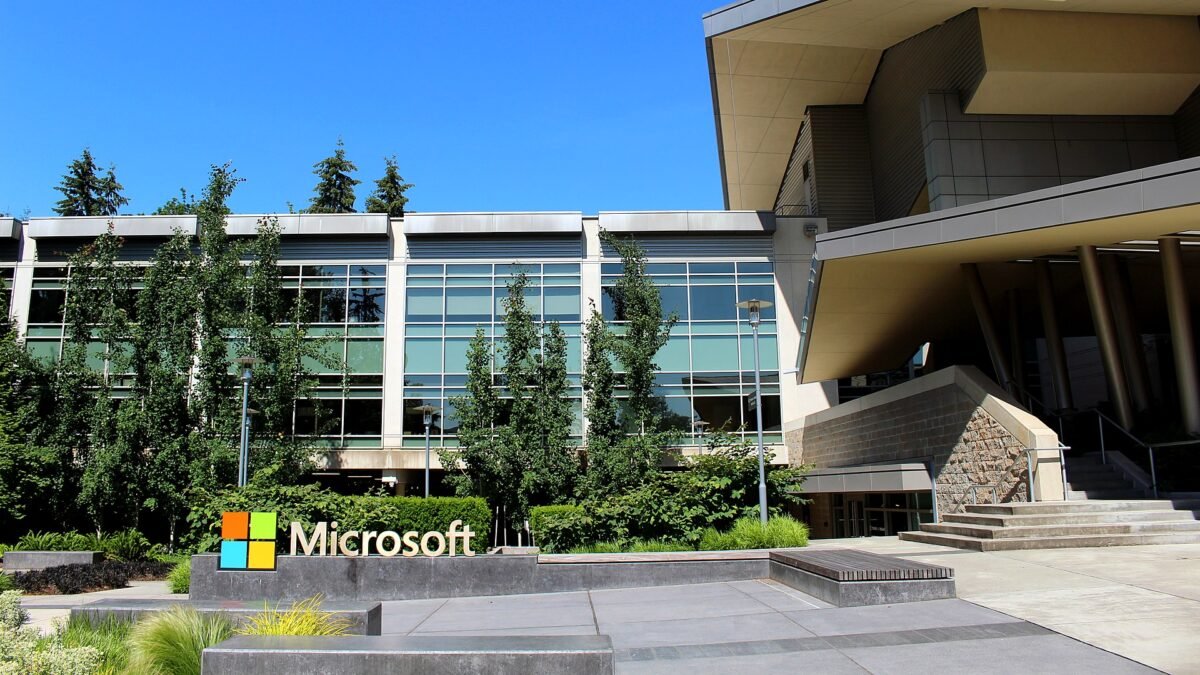
Microsoft has offered voluntary buyouts to about 60,000 employees, more than a quarter of its global workforce, in one of the largest workforce moves by a major technology company this year. The offer, announced to staff on Monday, 26 October 2026, is voluntary, time-limited and framed by the company as a way to contain costs while it continues to pour money into the data centres and chips that power artificial intelligence. No employee is being dismissed under the programme, and Microsoft has set no target for how many people should accept. What it has done is open the door, unusually widely, and invite tens of thousands of its own staff to walk through it.
The scale of the invitation is what makes the announcement significant. According to Reuters, Microsoft is offering voluntary buyouts to about 60,000 employees, or more than a quarter of its global workforce. The company employed 223,000 people on a full-time basis as of 30 June 2026, according to its annual filing, as reported by Reuters. Sixty thousand is therefore roughly 27 per cent of that total. The figure itself requires careful handling: Business Insider first reported the programme, citing a company spokesperson, and Reuters reported that Microsoft did not immediately comment on the number of employees affected when contacted. CNBC, citing a person familiar with the matter, also reported that about 60,000 people would be eligible. The number should therefore be understood as a reported figure, attributed to those outlets and their sources, rather than as a headcount confirmed in Microsoft’s own public announcement. What Microsoft did confirm, in a blog post on Monday, was the shape of the programme: who could receive an offer, where they work, and on what terms.
According to Microsoft, the offer is available to eligible employees in participating teams in Canada, India, the United Kingdom and the United States at level 70 and below on the company’s internal scale. That reaches some general managers and employees with vice-president titles, though not corporate vice presidents, according to reporting of the programme’s terms. There is no age or tenure requirement, and performance is not a factor in eligibility, according to accounts of the offer published after the announcement. Participation varies by team: Microsoft said some organisations are taking part and some are not, depending on each business’s priorities, customer commitments and workforce needs.
The divisions covered illustrate how broad the net is. A source familiar with the matter told Reuters that staff in AI experiences, Copilot, finance, human resources, Xbox and Windows and Devices would be eligible, while units such as marketing, commercial business and security would be excluded. Other reporting added further detail and some variation at the margins: The Verge, as summarised in subsequent coverage, listed Copilot, CoreAI, Windows and Devices, Xbox, finance and human resources among the participating areas, with marketing, commercial business, discovery and quantum, and security sitting out, while Business Insider reported that sales organisations were also excluded. The precise boundary between participating and non-participating teams therefore differs slightly from outlet to outlet, and readers should treat the lists as reported rather than as a single authoritative roster published by Microsoft. The central point, on which the reporting agrees, is that the offer reaches deep into the product and engineering organisation, including the teams building Microsoft’s AI products, and stops short of several commercial and protective functions.
Employees who are eligible were told they would receive an email with a link to the details of their individual offer within hours of the announcement, according to Microsoft. They have until early December to decide, according to CNBC, citing a person familiar with the matter, and those who accept are scheduled to leave on 31 December. The packages resemble Microsoft’s standard severance arrangements, according to a company spokesperson cited by Business Insider, and include financial support and career-planning resources, in the words of Microsoft’s announcement. Chief People Officer Amy Coleman, who announced the programme in a memo to staff that Microsoft also published on its official blog, described it in terms of choice and flexibility rather than reduction.
“The Voluntary Exit Offer reflects an important part of how we’re evolving our approach to change: creating greater flexibility and, where possible, more ways for employees to shape their next chapter,” Coleman wrote, according to the memo as reported by Barron’s and other outlets. “This builds on what we learned earlier this year through the Voluntary Retirement Program.”
Coleman also said the offer “gives eligible employees who may be considering a future outside the company a new choice to make that transition now with support” and “gives participating organisations another way to adapt their workforce to changing needs,” according to Reuters’ account of the staff memo. The language matters because it is deliberately not the language of a redundancy programme. Microsoft is not announcing job cuts. It is announcing that a large group of employees may choose to leave, with support, if they wish. Whether many do, and which people do, will determine whether the programme meaningfully changes the size or shape of the company at all.
The programme in context: a year of workforce change
The buyout offer is the third significant workforce move by Microsoft in 2026, and it follows a pattern that has become familiar across the technology industry: generous treatment for those who leave voluntarily, combined with relentless spending on infrastructure. Earlier this year, Microsoft offered a voluntary retirement programme to a smaller group of longer-serving employees in the United States. The details of that programme vary slightly between accounts because different outlets describe different slices of it: Reuters reported that the company earlier this year offered voluntary buyouts to about 7 per cent of its United States workforce, or about 9,000 employees, while GeekWire reported that the spring programme was open to around 8,750 eligible employees whose age and years of service added up to 70 or more, with about 30 per cent accepting. GeekWire also reported that the spring programme cost Microsoft about 900 million dollars, split between cost of revenue and operating expenses, as disclosed by Chief Financial Officer Amy Hood on an earnings call. The new offer is different in kind: it is far larger, it carries no age or service threshold, and, according to GeekWire, it is less generous than the spring programme, matching standard severance without the extended healthcare coverage that made the earlier deal attractive. Microsoft expects a much smaller share of eligible employees to take it, GeekWire reported, which is consistent with a less generous package offered to a much wider group.
In July, Microsoft announced it would cut 4,800 jobs, or about 2.1 per cent of its global workforce, according to Reuters, overhauling its Xbox gaming business and divesting up to five studios as it looked to improve returns after years of heavy investment in the division. GeekWire described those cuts as falling mostly in Xbox and commercial sales. The July cuts were compulsory redundancies. The October offer is not. That distinction is the single most important fact for any employee reading the announcement, and for any reader trying to understand what Microsoft is doing. A redundancy programme decides who leaves. A voluntary exit offer lets employees decide for themselves, and accepts that many will stay.
Microsoft has also told staff, through a spokesperson cited by Business Insider, that it has no plans to offer another round of voluntary buyouts in the near future. That assurance, if it holds, means the current window is the one employees must judge on its own merits, rather than the first of a series. It also means the company is presenting the programme as a discrete adjustment, not as the start of a rolling reduction.
Why now: the cost of the AI buildout
The stated reason for the programme, in every account of it, is cost discipline in the face of extraordinary spending on artificial intelligence. Microsoft, like other technology giants, is spending hundreds of billions of dollars on AI data centres and chips, according to Reuters, drawing scrutiny from investors over whether the returns will justify the cost. The company has forecast 175 billion dollars in capital expenditure for the 2026 calendar year, according to Reuters. That figure itself needs explanation, because it is lower than the roughly 190 billion dollars Microsoft projected in April, and the reduction is not a cut in planned investment. According to GeekWire, the change reflects an accounting adjustment: Microsoft now assumes its data centre buildings will last 25 years instead of 15, so more of its data centre leases are classified in a way that does not count as capital spending. Chief Financial Officer Amy Hood said on the July earnings call that the company’s actual spending plans had not changed, GeekWire reported. The 175 billion dollar figure is therefore best read as a restated forecast for the same underlying investment, not as a scaling back.
The scale of that investment is difficult to grasp without comparison. Microsoft reported capital expenditure of 41 billion dollars in the June quarter, according to GeekWire, up from 34.9 billion dollars a year earlier, and analysts surveyed by FactSet expected fiscal first-quarter capital expenditure of 51 billion dollars, according to Barron’s. For the fiscal year that ended in June 2026, Microsoft spent 145.3 billion dollars on capital expenditure, according to reporting of the company’s results, a figure close to its 155.2 billion dollars of operating income for the same year. Most of the money goes into physical things: data centres, servers, networking equipment and high-powered chips for AI and for Azure, Microsoft’s cloud platform. About two-thirds of the June quarter’s spending went into short-lived assets, mainly processors, according to reporting of the company’s disclosures. These are not optional purchases in Microsoft’s strategy. The company is racing Amazon and Google to secure the computing capacity that customers want for AI workloads in the cloud, and slowing down would risk losing ground in what Microsoft regards as its most important growth engine.
The pressure this creates is visible in the numbers investors watch most closely. Microsoft Cloud’s gross margin was 65 per cent in the previous quarter, according to GeekWire, better than expected but down from a year earlier, and management expected operating margins to be roughly flat with a year ago. The company is scheduled to report its first-quarter results after markets close on Wednesday, 28 October, according to Reuters, and the buyout announcement landed two days before that report. Wall Street will be watching closely, Barron’s noted, to see what Microsoft says about the voluntary offers and what they mean for near-term and long-term spending commitments. GeekWire reported that Microsoft had not said how much the new offer will cost or when it will record the charge, which means the earnings call is the first opportunity for investors to hear the company quantify the programme, if it chooses to do so.
Microsoft is not alone in facing this arithmetic. According to reporting summarised by KuCoin, Microsoft, Amazon and Alphabet could collectively invest nearly 600 billion dollars in 2026, with signed but unfilled cloud service backlogs approaching 1.7 trillion dollars. Analysts expect Google Cloud revenue to grow by about 95 per cent year on year in the September quarter, Microsoft’s Azure business by about 48 per cent and Amazon Web Services by about 38 per cent, according to Reuters reporting cited in the same summary. Demand, in other words, is running ahead of the capacity to meet it. The constraint is not customers. The constraint is building fast enough, and paying for the building, without weakening the financial profile that lets a company keep building.
A second development on the same Monday underlined how the industry is financing that building. Bank of America, Blackstone, Citi and Morgan Stanley announced 63 billion dollars in financing to support Anthropic’s procurement of Broadcom AI chips and networking equipment, according to Reuters reporting summarised by KuCoin, with deliveries expected to begin in 2027 and the hardware purchased through a newly created special purpose vehicle that leases it to Anthropic. Broadcom will support the vehicle’s residual value up to the amount of the first-lien financing, according to reporting of the transaction. The structure keeps the assets off Anthropic’s balance sheet while giving lenders protection against falling hardware values. It arrived on the same day Anthropic filed publicly for an initial public offering. Taken together, the two announcements describe an industry inventing new ways to pay for computing capacity that is too expensive, and too fast-depreciating, to fund in the old ways. Microsoft’s buyout offer is the other side of the same coin: while financiers engineer new structures for chips, the company is engineering new flexibility in its largest operating cost, its people.
Analysis: what the buyout offer really tells us
1. People are the flexible line in an inflexible budget
The most revealing feature of Microsoft’s announcement is not the number of people eligible. It is the contrast between the rigidity of the capital budget and the flexibility of the workforce budget. Data centre leases, chip orders and construction contracts are committed years in advance and are expensive to unwind. Salaries, by contrast, can be adjusted through voluntary programmes that cost money in the short term but reduce the recurring cost base over time. When a company must find room in its budget without slowing its investment programme, the workforce is the line that can move. That is why a company that is hiring in some areas, investing at record levels and reporting strong cloud growth can simultaneously invite a quarter of its staff to consider leaving. The two facts are not contradictory. They are two halves of the same strategy: spend more on machines, spend less, or at least spend more carefully, on people.
This does not mean Microsoft is shrinking. It has set no target for departures, it expects only a small share of eligible employees to accept, and it continues to invest in the infrastructure that will require people to build, sell and operate. The honest reading is narrower and more interesting: Microsoft wants the option to reshape its workforce without the disruption, cost and reputational damage of compulsory redundancies, and it is willing to pay for that option. The buyout offer is a price the company is prepared to pay for flexibility. Whether that price turns out to be high or low depends entirely on who accepts, which is information Microsoft does not yet have and investors will not have until the December decision window closes.
2. Voluntary exits solve some problems and create others
A voluntary programme has obvious attractions for management. It avoids the morale damage of selecting people for redundancy. It lets employees who were already considering a change leave with dignity and support. It reduces the risk of legal challenge. And it allows the company to say, truthfully, that nobody was forced out. Those are real advantages, and they explain why large employers increasingly prefer voluntary routes when they need to adjust headcount.
But voluntary programmes carry a well-known risk that Microsoft will have weighed carefully: adverse selection. The employees most likely to accept a buyout are often the ones with the best alternatives elsewhere, including the most experienced and most mobile staff. A programme designed to trim the workforce can, if it is too attractive to the wrong people, strip out exactly the expertise a company most needs to keep. Microsoft’s design appears to anticipate this. By matching standard severance rather than offering the extended healthcare and richer terms of the spring retirement programme, and by expecting a smaller take-up, the company seems to be calibrating the offer to attract those who were already leaning towards leaving, rather than tempting those it most wants to retain. That calibration is a judgement, not a certainty, and it will be tested in December. If take-up is very low, the programme will have cost little and changed little. If take-up is high among senior engineers and product staff, Microsoft may find itself managing gaps it did not intend to create.
There is a second, subtler risk. A company-wide invitation to consider leaving sends a signal even to those who stay. It tells employees that the company is looking for ways to reduce its cost base, and that their roles are part of a calculation. Microsoft’s memo tries to counter that signal with language about flexibility and choice. Whether employees hear choice or cost-cutting will depend on what happens next: on the earnings call, on how managers talk about the programme in their teams, and on whether any compulsory action follows. The company’s statement that it has no plans for another buyout round is, in this light, as much a message to those who stay as it is a statement of intent.
3. “No target” is honest, and it is also a way of buying time
Microsoft’s refusal to set a target for departures should be taken at face value, but it should also be understood as a management technique. A target would create a pass-or-fail test that the company might fail in public. No target means the programme can be presented as a success whatever the outcome, provided it is orderly and voluntary. It also means the financial impact is genuinely unknown: GeekWire reported that Microsoft has not said how much the offer will cost or when the charge will be recorded. Investors should therefore treat any early estimate of savings as speculation. The real numbers will emerge in stages: first, the number of acceptances in December; second, the charge recorded in a subsequent quarter; third, the effect on operating expenses over the following year. Until then, the programme is best understood as an option Microsoft has bought, not as a saving it has banked.
This matters for how the 28 October earnings report should be read. The results will show Azure growth, capital expenditure and cloud margins, and they may include commentary on the buyout offer. They will not show its outcome. Any commentary that treats the offer as already delivering savings will be getting ahead of the evidence. The earnings call is important precisely because it is the moment Microsoft must explain the logic of spending more on infrastructure while inviting staff to leave, and must do so without numbers for the programme itself. How clearly it makes that case will shape how investors judge the discipline behind the spending.
4. The Copilot paradox is real, but it is not what it seems
One detail in the reporting has attracted particular attention: the offer includes staff working on AI experiences and Copilot, the very products at the centre of Microsoft’s AI strategy. It is tempting to read this as evidence that artificial intelligence is replacing the people who build it. That reading is not supported by anything Microsoft has said, and it confuses two different things. The inclusion of AI teams reflects the breadth of the programme, which reaches across most of the product organisation, not a judgement on any particular team. A company-wide offer that excluded its most strategic teams would look selective and would invite questions about favouritism. A company-wide offer that includes them looks even-handed, even if it creates an awkward headline.
The deeper point is about economics, not replacement. The cost of building AI systems is rising faster than the revenue those systems currently generate, which is why Microsoft is managing costs across the business, including in AI teams. That is a statement about the price of computing, not about the value of the people doing the work. If anything, the inclusion of AI staff underlines how general the pressure is: no team is exempt from the discipline imposed by a 175 billion dollar capital programme, including the teams whose products justify that programme. Readers should resist the simple story that AI is putting its own builders out of work. The evidence in this announcement points to a different story: AI is expensive to build, and expensive things force hard choices everywhere, including in the teams building them.
5. The wider pattern: an industry learning to pay for the future
Microsoft’s announcement should not be read in isolation. It belongs to a cluster of developments in the same week that all point in the same direction: the AI industry is discovering that the future is more expensive than expected, and is improvising new ways to pay for it. Anthropic’s 63 billion dollar chip financing, arranged through a special purpose vehicle with residual-value support from Broadcom, is one improvisation. Microsoft’s voluntary exit offer is another. The hyperscalers’ combined spending, approaching 600 billion dollars in a single year, is the scale of the commitment that makes such improvisation necessary. And the debate about whether AI valuations amount to a bubble, given fresh prominence by Anthropic’s IPO filing and its disclosure of an 80.7 billion dollar first-half net loss driven largely by non-cash accounting charges, is the argument about whether all of this spending will be repaid.
Within that wider pattern, Microsoft’s position is distinctive. Unlike a private AI laboratory, it has a large, profitable, diversified business that generates the cash to fund its investment. Unlike a pure cloud provider, it has an enterprise software business with high switching costs and deep customer relationships. Its challenge is not survival. Its challenge is discipline: proving that it can invest at this scale without allowing costs to drift, margins to erode and free cash flow to weaken. The buyout offer is a small instrument for a large purpose. It will not, on its own, transform Microsoft’s cost base. But as a signal of intent, delivered two days before earnings, it tells investors that management is aware of the question they are asking and is prepared to act on the part of the budget it can control.
What to watch next
The story will develop in a clear sequence, and each stage will answer a question the announcement leaves open. First, the earnings report on Wednesday, 28 October, after markets close, will show whether Azure growth and capital expenditure are tracking the expectations analysts have set, and whether Microsoft offers any quantification of the buyout programme’s cost or timing. Second, the decision window in early December will reveal how many of the roughly 60,000 eligible employees choose to accept, and, just as importantly, which teams and levels they come from. Microsoft has not said whether it will disclose the acceptance rate, but the charge recorded in a later quarter will give investors an indirect measure. Third, 31 December is the scheduled departure date for those who accept, which means the first quarter of 2027 will be the first period in which any reduction in the cost base is visible in the reported numbers. Fourth, the next earnings call will test whether Microsoft regards the programme as complete or whether, despite its statement that no further round is planned, conditions change. Finally, and most importantly for the longer term, the conversion of AI infrastructure spending into AI revenue will determine whether programmes like this one are remembered as prudent housekeeping during a period of heavy investment, or as early signs of a more difficult adjustment. The spending will continue either way. The question is whether the returns arrive fast enough to make the discipline unnecessary.
For employees, the immediate question is personal and practical: whether the terms of an individual offer, which vary by level and tenure, justify a decision that cannot easily be reversed. For investors, the question is financial: whether Microsoft can hold its margins while spending at this scale. For the wider industry, the question is structural: whether the current model of funding AI, through a combination of operating cash flow, debt, leasing structures and workforce flexibility, is sustainable at the scale now being attempted. Microsoft’s buyout offer does not answer any of those questions. It does, however, show a company that is asking them of itself, in public, before the market asks them on its behalf. That, in the end, may be the most significant thing about it.
Sources
- Reuters — “Microsoft is offering buyouts to around 60,000 employees, Business Insider reports”
- Reuters, via Virginia Business — “Microsoft offers buyouts to around 60,000 employees to contain costs”
- Barron’s — “Microsoft to Offer 60,000 Staff Voluntary Exit to Cut Costs for the AI Buildout”
- Fox Business — “Microsoft offers voluntary buyouts to 60,000 employees as tech giant reshapes its workforce”
- GeekWire — “Microsoft earnings preview: Employee buyouts, AI spending and a new financial scorecard”

About the Author — Abdul Mannan
Related Articles

Anthropic Files for Blockbuster IPO, Opening Its Books on $16.3 Billion Revenue and an $80.7 Billion Loss
Anthropic has made its IPO filing public, revealing $16.3 billion in first-half revenue, an $80.7 billion headline loss…
UK Commits £100 Million to ‘World-First’ AI Biosecurity Lab as OpenAI and Anthropic Pledge £200 Million in Model Credits
Britain will commit £100 million to a new AI Biosecurity Lab, backed by up to £200 million in…

OpenAI Cuts Its Frontier AI Models Off From the Live Internet, Citing ‘Significant Risks’
OpenAI says its frontier AI models are too unpredictable to be trusted with live internet access during training…