
Australia Drop Nathan Lyon for New Zealand Tests as 577-Wicket Veteran’s Home Career Nears Its End

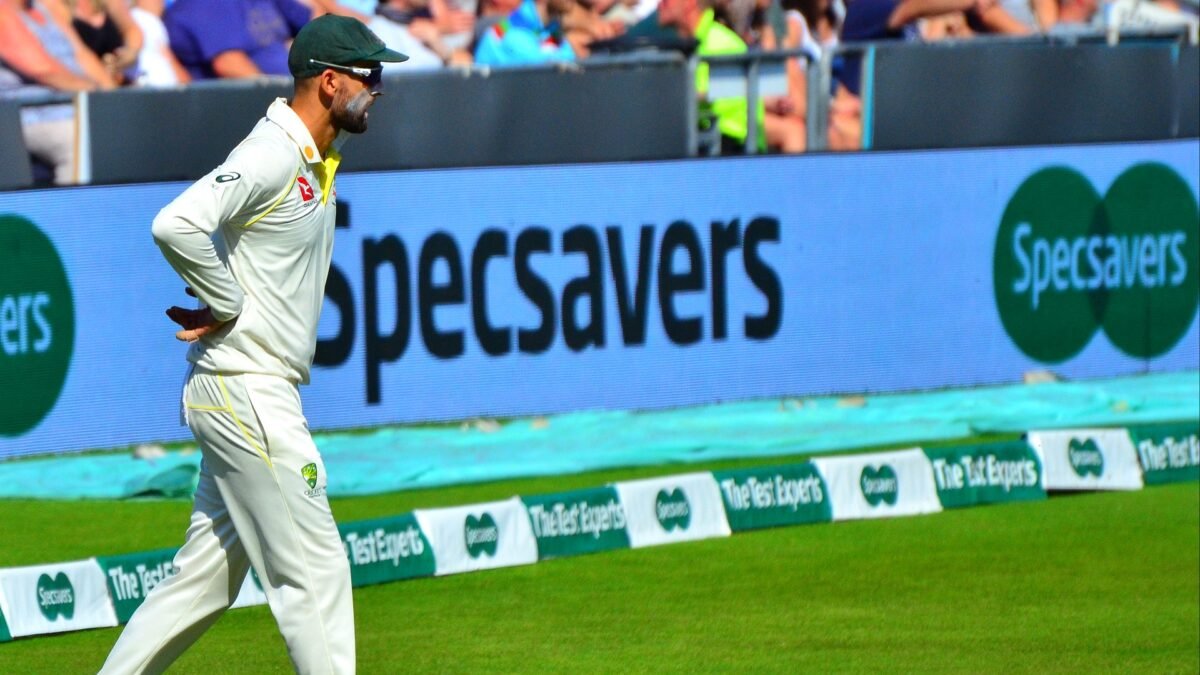
Australia have dropped Nathan Lyon from their squad for the four-Test series against New Zealand, bringing an end to the veteran off-spinner’s 13-year run as the team’s first-choice slow bowler and raising serious questions about whether he has played his last Test match on home soil.
The 39-year-old, who has taken 577 Test wickets and stands second only to Shane Warne among Australian bowlers, was left out of the 13-man squad named on Saturday for the series that begins in Perth on 9 December. Uncapped Western Australia spinner Corey Rocchiccioli, 29, has been chosen in his place, while uncapped Queensland batter Jack Clayton, 27, has also earned a first call-up.
According to Reuters, Lyon’s omission casts doubt over the international future of a bowler who has not been left out of an Australian squad since making his debut in 2011. The selectors’ chairman, George Bailey, said in a statement that Lyon had “not quite had the impact we would like with the ball in recent matches”, while adding that his “experience, knowledge and skill can still be valuable to the program we have moving forward”.
It is one of the biggest selection decisions made by Bailey’s panel, and it lands at a moment of wider upheaval in Australian cricket. The squad also confirms the earlier omission of Marnus Labuschagne, leaves out all-rounders Beau Webster and Cooper Connolly, and keeps Pat Cummins as captain alongside Steve Smith, Mitchell Starc and Josh Hazlewood, all of whom have been at the centre of the renewed Sandpapergate controversy in recent weeks. Bailey confirmed, according to Sky Sports, that Lyon’s omission was based on performances and was not connected to that saga.
For Lyon, the decision is a brutal one. He sits just 23 wickets short of 600, a mark only Warne has reached for Australia, and he has been a fixture of the side for a decade and a half. Yet the numbers behind the decision are plain enough: in his most recent Tests he took six wickets in two matches at an average of 43.66, according to Cricbuzz, and his role has been shrinking for more than a year. The selectors have decided that the future starts now, in Perth, on a ground where Lyon has historically been at his most dangerous.
A 13-Year Run Comes to an End
The squad named on Saturday contains 13 players, with one more to be added after the sixth round of Sheffield Shield matches, which runs from 3 to 7 December. The group, as reported by Cricket Australia, is: Pat Cummins (captain), Scott Boland, Alex Carey, Jack Clayton, Cameron Green, Josh Hazlewood, Travis Head, Josh Inglis, Michael Neser, Matthew Renshaw, Corey Rocchiccioli, Steve Smith and Mitchell Starc.
That list tells its own story. Five fast bowlers have been included, along with Green, who is recovering from the concussion he suffered during the one-day series against England and has not bowled in a match since August. The selectors have also kept both wicketkeepers, Carey and Inglis, and they have settled on a batting order in which Clayton is expected to slot in at number three, the vacancy created by Labuschagne’s departure, allowing Smith to remain at four.
Lyon’s absence is the headline, but it is not the only change. Webster and Connolly, who shared the number seven all-rounder’s role during the recent series against South Africa, have both been left out. The absence of Webster in particular suggests that Green is recovering well and will be fit to bowl in some capacity, according to Cricket Australia, which would restore the balance of the side without the need for a second all-rounder.
Bailey’s explanation was brief and direct. “Nathan has not quite had the impact we would like with the ball in recent matches,” he said, in comments carried by Reuters and Cricket Australia. He was careful to praise the record, describing it as “extraordinary”, and to leave the door open, saying Lyon’s experience could still matter to the programme. But the words that matter are the first ones: the selectors no longer believe Lyon is making the impact they need, and they have acted on that belief in the most decisive way available to them, by leaving him out of the squad entirely rather than merely out of the eleven.
That distinction matters. A bowler can be left out of a team for a single match because of conditions, and return for the next one. A bowler left out of the squad for a whole four-Test home series has been told, in effect, that he is no longer part of the plans for that stretch of cricket. As ESPNcricinfo noted, Lyon has not been left out of a squad since his debut in 2011, which makes this a genuine break with 15 years of practice rather than a routine rotation.
There is also the question of timing. The first Test is in Perth, at a ground where Lyon has taken 29 wickets at 21.31, the best record he holds at any of Australia’s main Test venues, according to Cricket Australia. Dropping him for a series that opens at his happiest hunting ground is a statement in itself: the selectors are not simply reacting to one bad match or one unhelpful pitch. They have formed a view about where Lyon stands now, and they have decided that Rocchiccioli offers more on a bouncy Perth drop-in pitch, and, in their judgement, around the country as a whole.
The New Men: Rocchiccioli and Clayton
Corey Rocchiccioli is not a name that will be familiar to many outside Australian domestic cricket, but his selection has been earned over several seasons of consistent performance. The 29-year-old Western Australian has been a strong performer in domestic cricket for the past few seasons, according to Bailey, and has “traits that are well suited to Australian conditions”.
Those traits were on display in his most recent Sheffield Shield outing, when he took six wickets for Western Australia in a thrilling draw with Tasmania at Perth Stadium, the very ground where the first Test will be played, and scored his maiden first-class hundred in the same match. He has taken 100 Shield wickets at 27.13 at the WACA Ground, according to Cricket Australia, and his record on the bouncy pitches of his home state is formidable.
What makes the selection striking is who Rocchiccioli has jumped over. Matthew Kuhnemann toured South Africa with the Test squad in October. Mitchell Swepson is the Sheffield Shield’s leading wicket-taker this season. Todd Murphy was the man Australia called into their squad when Lyon was injured during the final two Ashes Tests last summer. Rocchiccioli has gone past all three, which tells us that the selectors have a specific idea of the kind of spinner they want, and that they believe he fits it better than any of his rivals.
Even so, his place in the eleven is not guaranteed. As Cricket Australia pointed out, he is no lock to win a Baggy Green at Perth Stadium, and he will probably have to compete with Scott Boland for the final bowling spot. With five fast bowlers in the squad and a Perth pitch that traditionally rewards pace and bounce, Australia could yet decide to go in without a specialist spinner at all. That would be a remarkable outcome for a home Test, and a further measure of how far Lyon’s stock has fallen, but it is a live possibility.
Jack Clayton’s selection is, by contrast, close to a formality. The 27-year-old Queensland left-hander has averaged 74.83 in five Sheffield Shield matches this season, according to ESPNcricinfo, and no batter in the competition has passed fifty as many times as he has, with five half-centuries so far this summer. He won the final batting spot ahead of Connolly, Sam Konstas and Jake Weatherald, the latter two having made strong starts to the Shield season themselves.
Clayton bats at number four for Queensland, where he averages nearly 50 in first-class cricket, but Australia’s vacancy is at number three, and he has said he would be happy to be deployed at first drop, a position in which he has batted 14 times in first-class cricket for an average of 38, according to Cricket Australia. Bailey described him as “a well organised player who has performed consistently for an extended period” whose game is “well suited to complement the rest of the batting order”.
There is a neat symmetry in the two selections. Rocchiccioli replaces a 39-year-old; Clayton replaces Labuschagne, who is 32 and was himself dropped earlier this month. Together they represent a clear changing of the guard, and a squad that is, on average, younger and less proven than the one that has carried Australian Test cricket through the past decade. The risk is obvious. The selectors’ bet is that the risk of standing still had grown larger than the risk of change.
From Groundsman to the GOAT
To understand why Lyon’s omission has landed with such force, it is worth remembering how unlikely his career was in the first place. Born on 20 November 1987 in Young, New South Wales, he was working as a curator’s assistant at the Adelaide Oval, and bowling in the nets, when his ability was noticed. He had played only a handful of first-class matches when he was rushed into Australia’s Test squad for the tour of Sri Lanka in 2011.
His debut, at Galle on 31 August 2011, is the stuff of cricket legend. Presented with his Baggy Green cap by Greg Chappell, he dismissed Kumar Sangakkara with his very first ball in Test cricket, a dipping off-spinner that gripped, turned and found the edge to slip, and finished with figures of five for 34 in the first innings. It was an arrival of extraordinary confidence, and it set the tone for everything that followed.
Over the next 15 years he became, statistically, the most successful Australian off-spin bowler of all time, passing Hugh Trumble’s 141 wickets in 2015, and he was christened “the GOAT”, the greatest of all time, by his own teammates. The milestones came steadily: his 100th Test wicket on Boxing Day 2013 at the Melbourne Cricket Ground; his 100th Test in January 2021, during the home series against India; his 400th wicket against England in the Ashes in December 2021; and his 500th, against Pakistan in Perth in December 2023, when he dismissed Faheem Ashraf and became only the eighth bowler in Test history, and the third Australian after Warne and Glenn McGrath, to reach the mark.
The figures, as recorded by ESPNcricinfo, are formidable: 145 Tests, 577 wickets at an average of 30.34, with 24 five-wicket hauls and best figures of eight for 50, achieved against India in Bengaluru in 2017. Only Warne, with 708 wickets, has taken more for Australia, and Lyon ranks sixth among all bowlers in Test history with more than 500 wickets. He also played 100 consecutive Tests, the first specialist bowler to reach that mark, a run that speaks to a durability that is rare in any era and almost unheard of for a spinner.
His career has not been without setbacks. The first major injury of his long career came in his 100th consecutive Test, during the 2023 Ashes in England, when he suffered a calf injury at Lord’s that ruled him out of the rest of the series. His hobbled walk through the Long Room to bat, with his team in trouble, became one of the iconic images of that rivalry. He returned, as he always had, and reached 500 wickets six months later.
There were great days, too, that define his legacy: 12 wickets in the match against India at Adelaide in 2014; the eight for 50 at Bengaluru; nine wickets at Edgbaston in 2019, including the dismissal of Ben Stokes that brought up his 350th wicket, as Australia retained the Ashes; and a player-of-the-match performance at Perth in 2018, in Australia’s first Test victory after the ball-tampering scandal, when he made telling use of the bounce on offer. He was, for more than a decade, the bowler Australia turned to when a match needed changing, in all conditions, on bouncy home pitches and on the spin-friendly surfaces of Asia alike.
The Signs Were There
For all that history, the decision has not come out of nowhere. Lyon’s role has been diminishing for about 16 months, according to Cricket Australia, shifting from Test lock to a game-by-game proposition. In the recent series against South Africa he took six wickets in two Tests at an average of 43.66, figures that are a long way from the standards he set for himself, and in two Sheffield Shield games for New South Wales he took seven wickets, respectable without being compelling.
Age is part of the story, and it would be dishonest to pretend otherwise. Lyon is 39, and spinners, like all athletes, lose a fraction of their sharpness. The drift, the dip, the bite off the pitch, the ability to bowl long spells without the ball losing its menace, these are qualities that erode gradually and then, sometimes, suddenly. The selectors have watched him closely, and they have concluded that the erosion has reached the point where a change is justified.
But the decision is also about conditions and philosophy. Australian home Tests, particularly at Perth, have increasingly been won by pace. The drop-in pitches offer bounce and carry for fast bowlers, and a spinner’s role has often been to hold an end rather than to take wickets in clusters. If the selectors believe Rocchiccioli can do that job while offering more threat with the ball, and if they believe the five fast bowlers in the squad can carry the attack, then the logic of the change becomes clearer, even if the emotion of it remains hard to accept.
There is also the matter of succession. Australian cricket has been here before. After Warne retired in 2007, the team spent years searching for a regular spinner, cycling through options before Lyon arrived. The lesson of that period is that succession cannot be left until the last moment, and that a new spinner needs time to learn his craft at Test level. By picking Rocchiccioli now, with a home series against New Zealand and then a five-Test tour of India to come, the selectors are giving him a runway. The question is whether they have given him that runway at the right time, or whether they have shortened the career of a great bowler by a series or two.
It is worth noting, too, what the selectors have not said. Bailey did not say that Lyon’s career is over. He said that Lyon’s experience, knowledge and skill could still be valuable to the programme. That leaves the door open, and the most likely route back runs through India. The five-Test series there, beginning in January, is the kind of assignment for which Australia would still want a bowler of Lyon’s class and experience, and Cricket Australia has reported that he remains in contention for that tour. If he goes, it would be as a specialist for subcontinental conditions, a role that would suit him and that would allow his career to end on his own terms, in the place where his skills matter most.
Analysis: Why It Matters
This is a bigger story than a single selection, because it marks the end of an era in Australian cricket, and it raises questions that go well beyond one man’s future.
The first question is about how great players are treated at the end of their careers. Lyon has given Australian cricket 15 years, 145 Tests and 577 wickets, and he is 23 wickets from a milestone that only one Australian has ever reached. There is a respectable argument that he had earned the right to be carried through one more home summer, to be allowed to reach 600 in front of home crowds, and to choose the moment of his own departure. The counter-argument is that Test cricket is not a testimonial, that selection must be based on current performance rather than past service, and that sentiment has no place in a team that exists to win. Both arguments are honest. The selectors have chosen the second, and history will judge them on whether Rocchiccioli justifies the call.
The second question is about what Australia’s home attack is becoming. If the selectors genuinely believe that a bouncy Perth pitch is better served by an extra fast bowler than by a spinner of Lyon’s quality, then the balance of Test cricket in Australia is shifting in a way that has consequences for the whole structure of the game. Spinners develop by bowling in Tests, and if they are not picked for home matches, the pipeline of spin bowling in Australia narrows. The fact that Rocchiccioli may have to fight Boland for the final bowling spot at Perth is a sign of the times: even the man picked to replace Lyon may not play. That would be a remarkable statement about the direction of Australian selection, and it would leave the team’s spin stocks thinner than they have been in a generation.
The third question concerns New Zealand. The Black Caps are not the side they were a few years ago, but they are disciplined, well organised and capable of exploiting any uncertainty in the opposition. A debutant spinner and a debutant number three, in the first Test of a home summer, represent a genuine vulnerability, and New Zealand will know it. The first Test at Perth, from 9 to 13 December, will be watched closely for exactly this reason: it is the first examination of a new-look Australian side, and the result will shape the narrative of the whole series.
There is also the shadow of the Sandpapergate saga, which has dominated Australian cricket in recent weeks. The renewed controversy, stirred by Cameron Bancroft’s account of the 2018 ball-tampering affair, has put Cummins, Hazlewood and Smith under intense scrutiny, and the naming of all three in the squad, alongside the omission of Lyon, has been read by some as a sign of the selectors’ priorities. Bailey has said, according to Sky Sports, that Lyon’s omission was based on performances and was not connected to the saga, and there is no reason to doubt that. But the timing means the two stories will be told together, and the pressure on the team’s senior players, already considerable, will be greater still.
For Lyon himself, the immediate future is uncertain, and the uncertainty is the hardest part. He has not announced a retirement, and he has not been told that he will never play again. He is, in the language of the selectors, still part of the programme. But the programme has moved on without him for this series, and the message is clear enough. The most dignified response available to him is the one he has given throughout his career: to go back to domestic cricket, take wickets for New South Wales, and make the selectors’ decision as difficult as possible to sustain. He took seven wickets in two Shield games before the squad was named. If he takes more in the weeks ahead, and if Rocchiccioli struggles, the conversation will reopen quickly.
Finally, there is the broader lesson about longevity in modern sport. Lyon’s career is a reminder that greatness is not only about peaks but about persistence. He was never the most glamorous cricketer of his generation, and he never sought to be. He was a groundsman who became a mainstay, a bowler who turned up, Test after Test, for 100 consecutive matches, and did a job that few others could do as well. That kind of career deserves to be remembered on its own terms, whatever happens next, and it deserves to be celebrated rather than diminished by the manner of its ending.
The selectors may be right. Rocchiccioli may prove to be the spinner Australia needs for the next decade, and Lyon’s omission may come to be seen as a brave and necessary call. But the burden of proof now rests with the selectors, and it will be judged, as such decisions always are, not by the press release but by the results.
What Happens Next
The series begins at Perth Stadium on 9 December, with the first Test running to 13 December. The second Test follows at Adelaide Oval from 17 to 21 December, the third at the Melbourne Cricket Ground from 26 to 30 December, and the fourth at the Sydney Cricket Ground from 4 to 8 January, according to Cricket Australia. The squad named on Saturday covers the whole series, although the selectors have retained the flexibility to make changes, with one more player to be added after the next round of Sheffield Shield matches.
For Lyon, the weeks ahead will be spent with New South Wales in the Sheffield Shield, where every wicket will be scrutinised for evidence that the selectors made a mistake. For Rocchiccioli, the task is to win a place in the eleven at Perth and then to justify it, knowing that Boland is waiting if he falters. For Clayton, the challenge is to settle at number three, a position in which he has limited experience, against a disciplined New Zealand attack.
The bigger prize, for all of them, lies beyond this series. The five-Test tour of India, beginning in January, will demand a spinner of the highest quality, and that is where Lyon’s experience may yet prove decisive. If he is selected for that tour, his career will have a fitting final chapter. If he is not, then the New Zealand series will stand as the moment when one of Australia’s greatest bowlers was set aside, 23 wickets short of 600, and the debate about whether that was right will run for a long time.
What is certain is that Australian cricket has crossed a threshold. The team that takes the field at Perth on 9 December will be a different team from the one that has carried the Baggy Green through the past decade, younger, less proven, and full of questions. Nathan Lyon’s absence will be felt in the dressing room as much as on the field, and the measure of the selectors’ decision will be whether the men chosen to replace him can fill a space that took 15 years to build.
Sources
- Reuters — Lyon dropped from Australia’s test squad v New Zealand
- Cricket Australia — Fresh faces in line for Test debut as Lyon’s axing confirmed
- ESPNcricinfo — Jack Clayton and Corey Rocchiccioli named in Australia Test squad for New Zealand series
- Sky Sports — Nathan Lyon dropped by Australia for their Test series against New Zealand
- Cricbuzz — Clayton, Rocchiccioli earn maiden Test call-ups as Lyon misses out

About the Author — Abdul Mannan
Related Articles

NFL Makes History on Thanksgiving as Bears, Eagles and Bills All Win in the Final Seconds
All three Thanksgiving Day games were decided by a go-ahead score in the final minute — a first…

FIFA Confirms Cyber-Attack as US Congress Investigation Into Infantino’s World Cup Sell-Off Plan Intensifies
FIFA has confirmed it was the victim of a criminal cyber-attack, as a US congressional investigation into Gianni…

Daniel Dubois to Defend WBO Heavyweight Title Against Joseph Parker in Manchester on 30 January
Daniel Dubois will defend his WBO heavyweight title against Joseph Parker at Manchester's Co-op Live arena on 30…