
Nvidia Board Prepares to Oust Jensen Huang After Second Affair Report as Shares Plunge

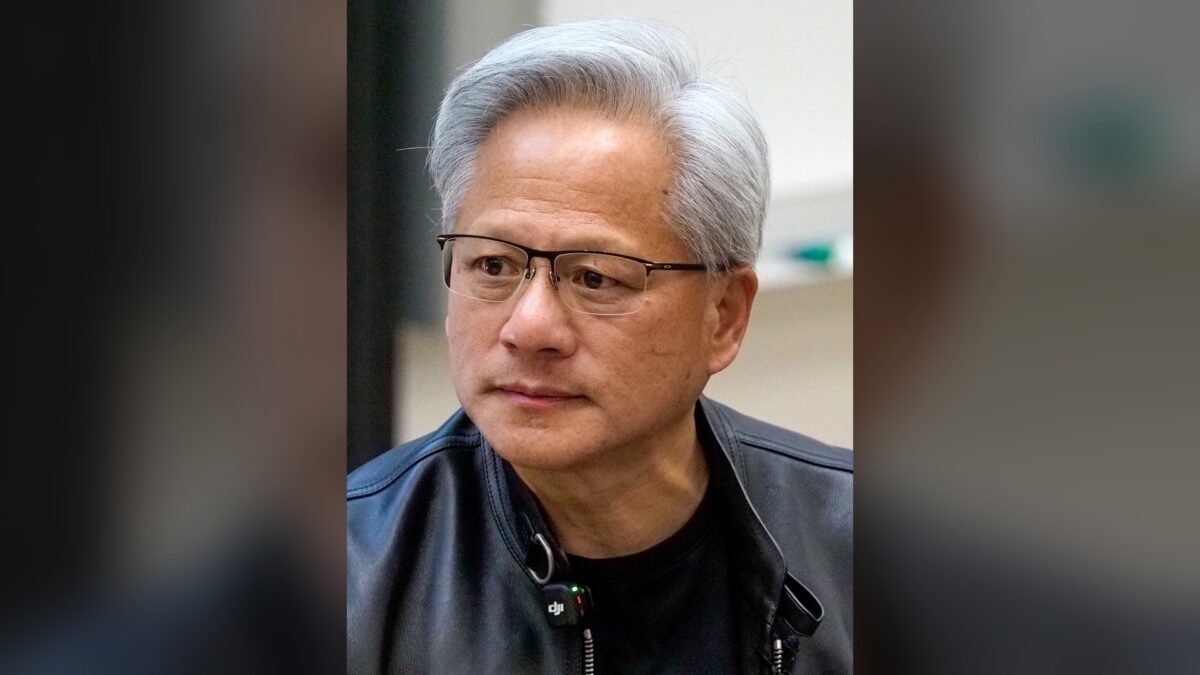
Nvidia’s board of directors is preparing to remove Jensen Huang as chief executive, according to a report in The Wall Street Journal, after a second alleged extramarital affair involving the founder of the world’s most valuable chipmaker came to light on Wednesday.
The board was meeting late on Wednesday to decide Huang’s future, a person familiar with the matter told Reuters, with all options on the table including his dismissal. As of the early hours of Thursday, no decision had been announced and Huang remained chief executive, according to Reuters.
The Journal reported that directors could gather as soon as Wednesday to determine whether the 63-year-old, who co-founded Nvidia in 1993 and turned it into the engine room of the global artificial intelligence boom, should stay in the job he has held for more than three decades.
The report landed hours after The New York Times reported that Huang had also had a relationship with a senior Nvidia executive who reports directly to him. The Times said five current or former employees described the relationship with Kimberly Powell, the vice-president who runs Nvidia’s healthcare business. Neither Huang nor Powell has confirmed the account, and the Times said it had not seen a video described by some employees that it reported showed the pair being affectionate at a hotel in San Jose in March.
The developments sent Nvidia’s shares sliding by about 8 per cent in after-hours trading on Wednesday, extending a sell-off that has already wiped hundreds of billions of dollars from the company’s market value in a matter of days. The stock closed at $168.89 on Wednesday, down almost 10 per cent across the two trading sessions since Huang admitted to staff on Sunday that he had been unfaithful to his wife, a loss of more than $400 billion in market value, according to figures reported by the financial press. Reuters, measuring the slide across the whole week, put the sell-off at $600 billion and said it had knocked Nvidia from the top of the global market-value rankings into second place.
The crisis now reaches far beyond one man’s private life. It has become a test of whether a company that sits at the centre of the artificial intelligence revolution can survive the sudden loss of the leader who is synonymous with it, and a national-security and political storm in Washington over the company’s business in China.
How Wednesday unfolded
The day began with the Times report on the second relationship. The newspaper said Huang’s relationship with Powell, 48, had not been disclosed publicly before, and that rumours about it had circulated inside the company for years. Powell joined Nvidia in 2008, rose to senior director of artificial intelligence business development in 2016, and has run the healthcare business since late 2017. Her biography on Nvidia’s website says she is responsible for hardware and software platforms for medical imaging, life sciences, drug discovery and healthcare analytics.
SiliconANGLE, reporting the Times account, noted that Powell has no background in health or science despite her senior role in the healthcare unit, a point that had fuelled internal gossip. She delivered a keynote at Nvidia’s annual GTC conference in San Jose in March, the same event at which the Times reported the pair were filmed together at a hotel. Powell has not commented publicly and has not been accused of any wrongdoing.
About an hour after the Times report appeared, the Journal published its account of the board’s thinking. The Journal, citing people familiar with the matter, said directors were preparing to remove Huang and could meet as soon as Wednesday. The newspaper said the board’s deliberations followed the second report, and that Huang, who has roughly 60 direct reports, has said he does not believe in succession planning.
Reuters later confirmed that the board was meeting late on Wednesday to decide whether to oust Huang, citing a source familiar with the matter. Nvidia did not immediately respond to requests for comment on the meeting, according to Reuters. The Journal said Huang had returned to the office this week and apologised to executives for the affair he admitted on Sunday.
The market reaction was swift. Shares fell by about 8 per cent after the closing bell, on top of a slide of more than 9 per cent in late trading reported by SiliconANGLE. Asian markets wobbled at the start of trading on Thursday as the news spread, according to Reuters, with Nvidia’s fall weighing on the wider technology sector. The stock is now about 30 per cent below its record high of early October, and SiliconANGLE reported that it was heading for a sixth consecutive weekly decline.
The first affair, and the spy allegation
The affair Huang admitted on Sunday involved Alice Huang, a Chinese businesswoman who was formerly chief executive of Megaspeed, a Singapore-based data company. The two share a surname but are not related. According to the Times, United States intelligence officials concluded that Alice Huang had been recruited by China’s Ministry of State Security, and that she had a close relationship with Jensen Huang. Beijing has called the claims a smear.
In a letter to employees on Sunday, Huang acknowledged that he had been unfaithful to his wife, Lori, to whom he has been married for four decades, and apologised for breaking the trust of his family and his staff. He did not name the other person involved. Nvidia has said the relationship was not unusual, and the board has said it sees no evidence that national security or company secrets were compromised, according to CNBC.
The story first surfaced publicly in October 2025, when the Times reported that the two had been seen socialising together and that federal investigators were examining Megaspeed’s activities and possible exports of advanced chips to China. Reuters has reviewed video footage showing the pair attending a private dinner in Taipei in May 2025, and the two were photographed together at the Computex conference in Taiwan in June 2024.
Megaspeed, which changed its name from 7Road International in March 2023 as it expanded into cloud computing focused on artificial intelligence infrastructure, is Nvidia’s largest customer in Southeast Asia and has faced months of United States scrutiny over suspected chip smuggling, according to Bloomberg. On 10 November, The Information reported that Huang’s affair had facilitated the shipment of at least $7.5 billion worth of Nvidia chips to Chinese firms. The Justice Department is now leading multiple investigations involving Alice Huang, according to people familiar with the matter cited by the Journal.
Reuters has published a detailed timeline of the affair and its fallout. It records that in the spring of 2026, Secretary of State Marco Rubio oversaw the drafting of a classified memorandum warning senior Trump administration officials that Huang was in a close relationship with Alice Huang. In May, President Donald Trump added Huang at the last minute to a United States delegation visiting China ahead of a two-day summit in Beijing. In October, Trump awarded Huang the National Medal of Science.
On 29 October, the Times reported that United States intelligence officials were concerned Alice Huang was acting on behalf of Chinese intelligence and had a close relationship with Huang. On 5 November, senior Republican lawmakers in the House of Representatives sought a closed-door briefing from Huang on 18 November on the allegations. On 8 November, Huang sent his note to staff and the board launched an independent investigation into reports that its chief executive had been targeted by a foreign intelligence effort.
The board’s investigation
The board moved quickly after Huang’s admission. On 8 November it opened an independent investigation, and two days later it retained Joon Kim, a partner at the law firm Wachtell, Lipton, Rosen and Katz and a former acting United States Attorney for the Southern District of New York, to lead the inquiry. Kim’s practice includes internal investigations and white-collar defence.
The investigation is examining whether Huang was targeted by a foreign intelligence operation and whether any company secrets were leaked. The board has said it sees no evidence so far that national security or company secrets were compromised, according to CNBC, but the inquiry is continuing and its outcome is unknown.
The question facing directors is no longer only about the first affair. A relationship with a suspected foreign intelligence asset raises questions about judgement and vulnerability. A relationship with a direct report raises a different set of questions, about workplace conduct, power and the company’s own rules. Together, the two reports have left the board weighing whether the man who built the company can continue to lead it.
According to Fortune, the board is expected to consider an interim leader, with lead independent director Stephen Neal among the contenders. Reuters reported that some members of the board favour appointing chief financial officer Colette Kress as interim chief executive, citing a report by Semafor. No decision had been announced by the early hours of Thursday.
The succession vacuum
If the board does remove Huang, Nvidia faces a problem it has never prepared for. The company has no public succession plan, and Huang has never anointed a successor. He is Nvidia’s largest individual shareholder, holding a 3.56 per cent stake, and he has appointed family members to key roles in the executive team. His brand has become synonymous with the company itself.
Analysts and investors see two people as the most likely candidates, at least in the short term, according to Reuters: Ian Buck, Nvidia’s leading engineer, and Colette Kress, the chief financial officer.
Buck, who is about 49, joined Nvidia in 2004 and helped launch artificial intelligence on its chips. He was a leader in developing CUDA, the software platform that keeps developers tied to Nvidia’s hardware, and he now manages the company’s artificial intelligence hardware and software products as head of product for hyperscale AI. He holds a doctorate from Stanford University for work that led to his artificial intelligence-focused software at the California chip designer.
“Ian Buck is the strongest long-term internal candidate given his role in creating CUDA and leading Nvidia’s hyperscale business,” Shay Boloor, chief market strategist at Futurum Equities, told Reuters. “My bigger concern is next decade, because Jensen isn’t simply Nvidia’s CEO but he’s the person who has consistently identified where computing is going.”
Kress, who is 59, joined Nvidia in 2013 after a long career at Microsoft, Cisco and the chipmaker Texas Instruments. She has been chief financial officer for 13 years and fronts every earnings call alongside Huang, making her a familiar and trusted voice for the market.
“Colette Kress is the obvious choice to steady the ship. She has been CFO for 13 years and fronts every earnings call alongside him, so she’s a familiar and trusted voice for the market at a time when it badly needs one,” Josh Gilbert, lead analyst at the trading platform eToro, told Reuters. He added that the permanent job was a different story, because Nvidia’s edge comes from its technology and the board would likely want an engineer in the chair.
Other names have been mentioned in speculation reported by Reuters, including Rene Haas, chief executive of the rival chip designer Arm and a former Nvidia executive, Jeff Fisher, a 32-year Nvidia veteran, and even one of Huang’s two children, both of whom are executives at the company. Armina Rosenberg, a portfolio manager at Minotaur Capital in Sydney, which owns Nvidia shares, told Reuters that the most realistic route might be an interim co-chief executive structure, with Kress steadying the business and finances alongside a product and technology leader such as Buck.
Prediction markets are pricing in a departure. Odds on the prediction market website Polymarket showed an 83 per cent chance that Huang would resign or be removed by the end of the year, according to Reuters, with Buck favoured as his successor and Kress second, although trading volume on that market is small.
“Jensen Huang is a rockstar in the industry. He’s outspoken and synonymous with the Nvidia brand, and a leader like that is very hard to replace,” Anna Wu, founder of Floodlines Research in Sydney, told Reuters.
Washington takes an interest
The affair has also become a Washington story, and the political pressure has been building all week. On Monday, Republican Senator Kevin Cramer called for Huang’s resignation. Senate Democratic leader Chuck Schumer called on Congress to pass the AI Overwatch Act, which would give Congress power over advanced chip exports. House Democratic leader Hakeem Jeffries called for the House to pass the annual defence bill with restrictions on chip sales to China included.
On Wednesday, senior Democratic Senators Elizabeth Warren and Chris Coons asked the Trump administration to preserve all documents tied to Nvidia’s chip exports to China, amid growing scrutiny of Huang’s relationship with the suspected Chinese intelligence operative. “Questions also remain regarding whether or not prudent defensive counter-intelligence action was taken or national security recommendations were overruled,” the senators wrote, according to Reuters.
A proposed class action was filed against Nvidia and Huang on 9 November, accusing them of defrauding shareholders by concealing Huang’s ties with the suspected Chinese spy. The House Republicans’ closed-door briefing with Huang is scheduled for 18 November, the day after Nvidia reports its quarterly results.
President Trump, who has been one of Huang’s closest allies in Silicon Valley, has defended him. Trump said on Monday that he was “amazed” by the revelations, and has said Huang is an “honourable man” who told him he had no idea the woman was a spy, and that he believed the chief executive. Reuters reported that Trump had previously been told about Huang’s relationship with the suspected Chinese spy but decided to take no action. Trump has also said Huang faces an FBI investigation as well as the board meeting to decide his future.
The political stakes go beyond Huang himself. The controversy has intensified a long-running debate in Washington over whether the United States should allow its most advanced artificial intelligence chips to be sold to China. In December 2025, Trump said the United States would allow shipments of Nvidia’s H200 artificial intelligence chips to China after reaching an agreement with the chipmaker. Critics of that decision now have a new argument, and supporters of tighter controls have a new champion in the scandal.
A company built around one man
To understand why the board’s deliberations have shaken markets so badly, it helps to understand what Nvidia has become. The company controls around 90 per cent of the global market for the computer chips used in artificial intelligence, according to SiliconANGLE, and its brand has become synonymous with the technology itself. Until this week it was the most valuable company in the world, with a market value that at one point this year stood at about $5.57 trillion, according to figures reported in September.
Huang built the company from processors for video games into an artificial intelligence machine, and in doing so made himself one of the wealthiest and most influential people in the world. As of November 2026, Forbes estimates his net worth at around $145 billion to $148 billion, making him the eleventh-wealthiest individual in the world, according to his Wikipedia biography.
He is also a close ally of President Trump, whom he has met many times since the president returned to the White House in January 2025, as Nvidia sought to sell advanced chips to the Chinese market and lobbied for looser restrictions on Chinese access to its sophisticated chips. In March 2026, the White House announced Huang as part of a 13-member council, and in September he took the president’s telephone call during a live taping of the annual All-In summit, where the two spoke against proposals to slow artificial intelligence development.
The business itself, for now, remains strong. Nvidia is scheduled to report its fiscal third-quarter results on Tuesday 17 November, after the market closes. The company has guided to revenue of about $108 billion for the quarter, and analysts expect about $109 billion, up roughly 91 per cent from a year earlier, with earnings per share of about $2.47 to $2.49. The guidance assumes no data centre revenue from China. The results will be the first full trading test of whether investors still believe in the artificial intelligence story without the man who has personified it.
Analysis: Why It Matters
A founder’s dilemma, played out in public
Companies built around a single founder face the same question eventually: what happens when the founder becomes the risk? Usually the question arrives slowly, through age or a planned handover. At Nvidia it has arrived in a week, through a newspaper investigation and a board meeting held in the middle of the night. The board’s problem is that the two things that made Huang irreplaceable are the same things that now make him a liability. His personal relationships opened doors in Beijing and Washington that no successor can inherit, and his judgement in those relationships is now the subject of an investigation by his own board, the Justice Department and the FBI.
A board with no plan B
The most damning detail in this story may not be either affair. It is that a company worth trillions of dollars, with a workforce in the tens of thousands and a product that powers the world’s artificial intelligence infrastructure, has no succession plan. Huang has said he does not believe in succession planning, and has roughly 60 people reporting directly to him. That structure worked while he was the unquestioned centre of the company. It is a governance failure now that the centre cannot hold. Investors are not only pricing in the loss of a chief executive. They are pricing in the discovery that there was never a plan for the day after him.
The second report changes the calculus
The first affair, on its own, might have been survivable. Huang admitted it, apologised, and the board opened an investigation while publicly saying it saw no evidence that secrets had been compromised. The second report is different in kind, not just in number. A relationship with a direct report is a governance issue that boards cannot wave away, whatever the personal circumstances, because it goes to the integrity of the chain of command and the fairness of the workplace. It also removes the argument that the first affair was a private matter that happened to have a national-security dimension. Two relationships, in two different settings, suggest a pattern of conduct rather than a single error of judgement. That is why the Journal’s report of an ouster, rather than a warning or a fine, followed the Times report within hours.
Washington now owns the story
The scandal has already escaped the business pages. Senators are demanding documents be preserved, a class action has been filed, a House briefing is scheduled, and the president has been drawn in as a character witness. The danger for Nvidia is that the political process now has its own momentum, independent of what the board decides. If Huang stays, Congress will ask why a chief executive who was the target of a suspected foreign intelligence operation still runs the company that makes America’s most strategically important chips. If he goes, Congress will ask what he did with the access he had, and whether the chips that reached China did so because of him. Either way, the debate over selling advanced chips to China, which the company has lobbied hard to keep open, will now be argued in the shadow of this affair.
The market’s real fear is the AI trade itself
The $600 billion sell-off this week is not only a verdict on one man. It is a reminder of how much of the global market rally has been built on a single company and a single story: that artificial intelligence demand will keep growing, that Nvidia will keep supplying it, and that the man who saw it first will keep steering. The rebound in global stocks on Wednesday, led by a revival in the artificial intelligence trade, showed how quickly sentiment can turn. The Nvidia slide shows how quickly it can turn back. If the company that sits at the heart of the artificial intelligence revolution can lose its chief executive in a week, investors will ask what else in the trade is more fragile than it looked.
What to Watch Next
- The board’s decision. Directors met late on Wednesday. Any announcement, and the terms on which Huang stays or goes, will move the stock and set the tone for everything that follows.
- Nvidia’s results on 17 November. The fiscal third-quarter report, with revenue expected at about $109 billion, will be the first test of whether the business can speak for itself while its leadership is in question. The earnings call will be watched for any comment from Huang or the board.
- The House briefing on 18 November. Republican lawmakers have asked Huang to appear behind closed doors. What he says, and what he refuses to say, could shape the political fallout.
- The Wachtell investigation. The board’s independent inquiry, led by Joon Kim, has yet to report. Its findings on whether secrets were leaked, and whether Huang was targeted by a foreign intelligence operation, will matter more than either affair on its own.
- The Justice Department and FBI inquiries. The Journal reported that the Justice Department is leading multiple investigations involving Alice Huang, and Reuters reported that Huang faces an FBI investigation. Any charges or findings would change the story entirely.
- The succession race. If Huang goes, watch whether the board turns to Ian Buck, Colette Kress, an outsider such as Arm’s Rene Haas, or an interim arrangement. The choice will signal whether Nvidia intends to stay a technology company first or become a more conventionally governed one.
- China chip policy. The scandal feeds directly into the debate over advanced chip sales to China. Watch for new export restrictions, or for the administration to hold the line on the H200 decision it took in December 2025.
Sources
- Reuters — Nvidia is preparing to oust CEO Jensen Huang, WSJ reports
- Reuters — How Nvidia CEO Jensen Huang got entangled in a China chip and spy scandal
- Reuters — Who would be next CEO at Nvidia? Top engineer and CFO favored as candidates
- Reuters — Asian stocks fragile, Nvidia plummets as board to decide CEO’s fate
- SiliconANGLE — Nvidia’s board reportedly preparing to oust CEO Jensen Huang after reports of a second affair
- The Wall Street Journal — Nvidia Is Preparing to Oust CEO Jensen Huang

About the Author — Abdul Mannan
Related Articles

Global Stocks Roar Back as CoreWeave Revives the AI Trade and Europe Hits a Record High
Global stocks surged on Wednesday as CoreWeave's strong results revived the AI trade, Europe's STOXX 600 closed at…
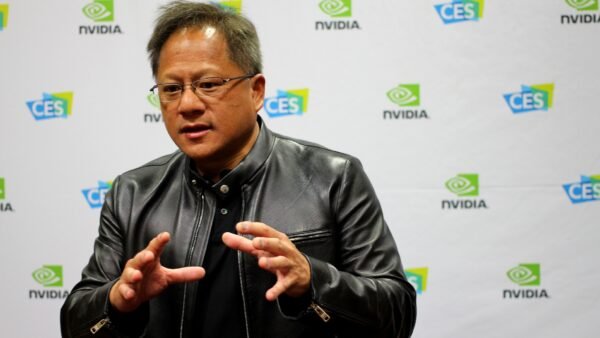
Nvidia Loses $430 Billion in Two Days as $7.5 Billion China Chip Claim and a Resignation Call Deepen the Huang Crisis
Nvidia has lost about $430 billion in market value in two days as a report alleged Jensen Huang's…
Hot October Inflation Puts the Fed on Course for a December Rate Hike — and a Half-Point Move Is Now on the Table
US consumer prices rose 0.4% in October and core inflation held at 0.3% for a third straight month,…