
Ohio State Routs Michigan 45-0 in Record Shutout as Jeremiah Smith Sets Big Ten Touchdown Mark

Ohio State delivered the most emphatic statement in the long history of its rivalry with Michigan on Saturday, thrashing the Wolverines 45-0 at Ohio Stadium in a result that rewrote the record books and turned a disappointing season into a day the Buckeyes will remember for decades.
According to the Associated Press, the 45-point margin was the largest Ohio State has ever recorded against Michigan in the 122 meetings between the two programmes, surpassing a 38-point victory from 1935. It was also the first time the Buckeyes had shut out their arch-rivals since 1962, and it gave head coach Ryan Day his first home win over Michigan in three attempts.
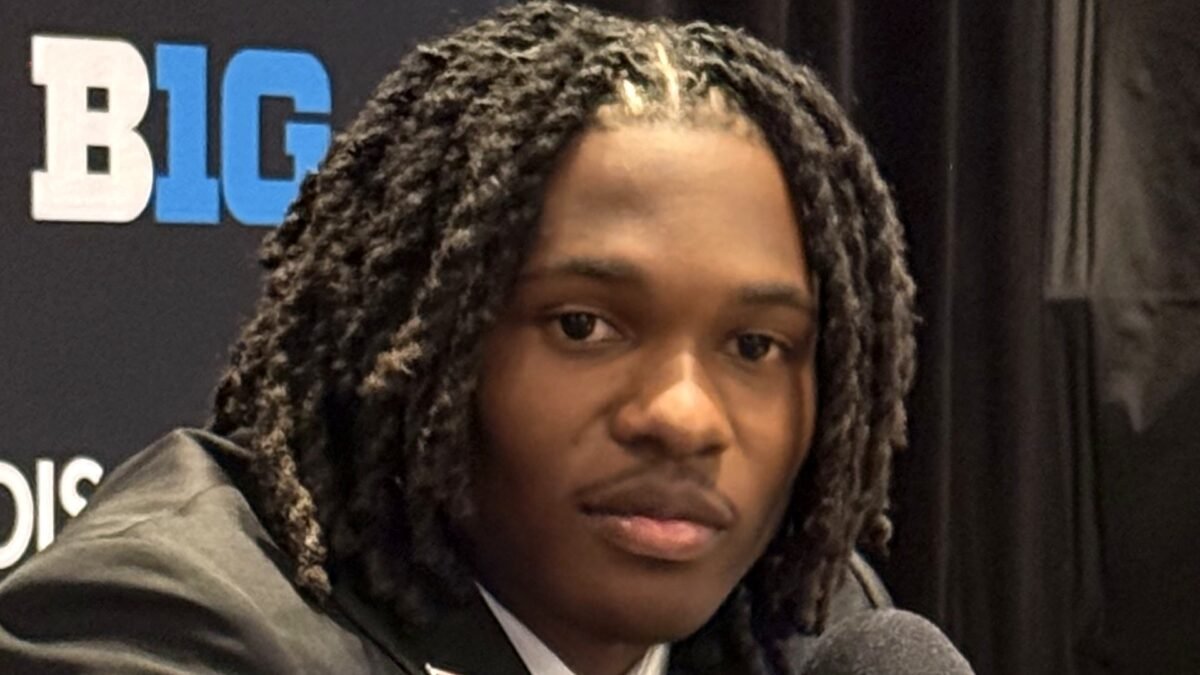
The driving force was wide receiver Jeremiah Smith, who caught three touchdown passes and set the Big Ten Conference single-season touchdown record in what is expected to be his final home game for Ohio State. Smith finished the afternoon with eight receptions for 90 yards, and his third score of the day — a 30-yard catch in the left corner of the end zone with 1 minute 45 seconds remaining — took him past the mark of 19 touchdowns set by Michigan’s Desmond Howard during his Heisman Trophy-winning campaign in 1991.
Running back Bo Jackson was equally destructive, according to the Associated Press, rushing for 170 yards and three touchdowns on 24 carries, while Ohio State’s defence held Michigan to just 150 yards of total offence, sacked Wolverines quarterback Bryce Underwood three times and forced one turnover. The Buckeyes outgained their visitors 484-150, won the first-down battle 26-7 and held the ball for more than 35 minutes in front of 105,708 fans in Columbus.
For a team that entered the day ranked No. 25 in the Associated Press poll and No. 21 in the College Football Playoff rankings, with an 8-4 record and no conference title or playoff place to play for, the scale of the victory was extraordinary. Michigan, who arrived at 6-6, suffered their most lopsided defeat since a 58-12 loss to Cornell in 1891, their worst shutout loss since 1889 and their first shutout defeat of any kind since 2014, according to 247Sports.
A Rivalry Game That Was Over Early
The tone was set before the football had even begun. According to the Associated Press, there was pushing and shoving between both teams in the south end zone near the visitors’ tunnel during pregame warmups, and the hostility carried straight into the opening kickoff, when Michigan safety Nico Andrighetto hit Ohio State returner Devin McCuin after he had signalled for a fair catch, drawing a 15-yard penalty.
Ohio State needed only six plays to find the end zone on their opening possession. Jackson powered in from a yard out to cap a 60-yard drive, and the Buckeyes were ahead 7-0. On their next drive, freshman quarterback Luke Fahey — starting in place of the injured Julian Sayin — found Smith on a five-yard screen pass for a 14-0 lead. That catch was Smith’s 18th touchdown of the season, already an Ohio State single-season record, passing the 17 scored by Terry Glenn in 1995.
Jackson added a 29-yard touchdown run around the left end in the second quarter, and the Buckeyes went into half-time ahead 21-0. The second half brought no relief for Michigan. An 11-play, 51-yard drive ended in a field goal to make it 24-0, and Jackson’s third touchdown, an eight-yard run, stretched the lead to 28-0 in the third quarter.
Michigan’s best chance of avoiding the shutout came with 11 minutes 35 seconds remaining, when Aisea Moa returned a fumble by Jackson 70 yards for what looked like a touchdown after Jyaire Hill had punched the ball loose at the 21-yard line. But the officials overturned the score on replay, ruling that Jackson’s knee was down when the fumble occurred. It was one of three realistic chances Michigan had to get on the board — Jacob Baggett had missed a 30-yard field goal on the Wolverines’ opening drive, and Underwood was sacked on fourth down in Ohio State territory in the third quarter — and all three went begging.
Smith then supplied the exclamation point. He caught a two-yard touchdown with nine minutes left in the fourth quarter, and after having another touchdown wiped out by an offensive pass interference call on the previous play, he came straight back on the next snap, hauling in a 30-yard pass from Fahey over Michigan cornerback Zeke Berry to make it 45-0. The catch was his 20th touchdown reception of the season, breaking Howard’s Big Ten record outright.
The final indignity, for Michigan at least, came with two minutes remaining, when Ohio State’s stadium played “Mr. Brightside” — the Wolverines’ traditional victory anthem — over the public address system as the home crowd celebrated.
Jeremiah Smith’s Record-Breaking Day
Smith’s afternoon was the centrepiece of the game, and the numbers he finished with underline just how remarkable his season has been. According to Ohio State’s own official report, he ended the regular season with 94 catches for 1,572 yards and 20 touchdowns, and he has now caught a touchdown pass in nine consecutive games, tying Terry Glenn’s programme record from 1995.
The records did not stop at the single-season marks. Smith is now the Ohio State and Big Ten career leader in receiving yards, with 4,130, and in touchdown catches, with 47, and he became the first receiver in Big Ten history to reach 4,000 career receiving yards, according to Sports Illustrated. His 257 career receptions are also an Ohio State programme record, and he sits just one catch short of Jaxon Smith-Njigba’s single-season school record of 95, set in 2021.
He is the favourite for the Heisman Trophy, and the frontrunner for the Biletnikoff, Maxwell and Walter Camp awards, according to Ohio State. His three touchdown receptions against Michigan were the most ever by a Buckeye in a single game in this rivalry.
There was a sense of finality about the occasion, too. Smith becomes eligible for the NFL Draft after this season, and The Lantern, Ohio State’s student newspaper, reported that he likely played his final game as a Buckeye on Saturday. Before the game, as a featured speaker at the traditional Skull Session pep rally, he had made a promise to the crowd. “I promise you we’re walking off that field victorious with another pair of Gold Pants,” he said, referring to the small gold trousers charms Ohio State players receive for beating Michigan. He was, as The Lantern put it, a man of his word.
Smith’s head coach was effusive in the aftermath. Day, who improved to 3-4 against Michigan with the win, could not hide his delight in a Fox Sports postgame interview on a field full of celebrating fans, telling the network in blunt terms that his team had dominated their rivals. It was a cathartic moment for a coach who had heard sustained criticism from his own fanbase after the Buckeyes lost three of their last four games following Sayin’s midseason injury, and who had never beaten Michigan at home before Saturday.
A Season Salvaged, A Rival Humiliated
The context made the result all the more striking. According to the Associated Press, it was the first time since 1966 that both teams had arrived at this fixture with at least four defeats each. There was no Big Ten championship or College Football Playoff place at stake, which is what is usually on the line in this contest. Yet the game carried all the bitterness of a title decider, and then some.
The chippiness never really subsided. After the opening-kickoff incident, Ohio State offensive lineman Austin Siereveld was involved in a scuffle with a couple of Michigan players following Jackson’s opening touchdown. Officials regained control only after the sidelines cleared when Jackson was tackled out of bounds by Michigan’s Troy Bowles with two minutes left in the first half, and Ohio State defensive end Epi Sitanilei appeared to throw a couple of punches in the melee. Remarkably, no players were ejected.
For Michigan, the afternoon was a disaster from start to finish. The Wolverines managed only seven first downs, and eight of their drives lasted no more than four plays. They ran just 11 plays in Ohio State territory all game, according to The Lantern, and were out-rushed 231-64. Underwood, the young quarterback, was under pressure throughout, and the offence never found any rhythm against a Buckeye defence that had been heavily criticised for much of the season.
The defeat leaves serious questions hanging over Michigan head coach Kyle Whittingham, whose future was already under scrutiny before the game and will be even more so now, according to the Associated Press. A 45-0 loss to your fiercest rival, in a game that doubles as the programme’s most important annual fixture, is the kind of result that ends coaching tenures. Michigan finish the regular season at 6-6, still eligible for a bowl game, but with little to celebrate and much to explain.
Ohio State, by contrast, finished 8-4 and 6-3 in the Big Ten, and secured a second consecutive win over Michigan for the first time since their eight-game winning streak in the rivalry during the 2010s, according to The Columbus Dispatch. Both teams will learn their bowl destinations on 6 December, and Ohio State’s attention now turns to National Signing Day on 2 December.
Analysis: Why It Matters
To understand why a 45-0 result in a game between two teams with four losses each matters so much, you have to understand what this fixture is. Ohio State against Michigan — “The Game”, as it is known in the United States — is one of the great rivalries in world sport. The two universities have met 122 times, making it the 14th most-played rivalry in the top division of American college football, according to 247Sports. Michigan still lead the all-time series, 62 wins to Ohio State’s 54 with six ties, and the series is dead level at 29 wins each, with two ties, in games played in Columbus.
In a rivalry that old and that close, margins like Saturday’s simply do not happen. The previous biggest Ohio State win over Michigan was 38-0, back in 1935 — more than 90 years ago. The Buckeyes had not shut out Michigan since 1962, when they won 28-0 at the Horseshoe. Michigan had not been held scoreless by anyone since 2014. These are not the kinds of records that fall in ordinary games; they fall when one team is utterly dominant and the other is utterly broken on the day.
That is what makes the result so significant for both programmes, and why it will be talked about long after the 2026 season is forgotten. For Ohio State, it salvages something real from a campaign that had threatened to unravel completely. The Buckeyes lost their starting quarterback midseason, dropped three of four games, watched their conference title and playoff hopes disappear, and arrived at the rivalry game with their coach under pressure from a fanbase that measures seasons almost entirely by this one result. A narrow win would have been enough to buy Day goodwill. A 45-0 demolition, the biggest in the history of the fixture, buys him something more valuable: a story his players and supporters will retell for years, and a reminder of what this team can do when it plays to its full potential.
For Michigan, the damage goes beyond the scoreline. Losing is one thing; losing like this, in the game that defines your season, is another. The Wolverines were not merely beaten, they were outclassed in every phase — outgained by more than three to one, shut out for the first time in 12 years, and humiliated in front of a national television audience that included their own fans watching their victory anthem played back at them. Results like this do not just hurt a season; they shape the conversation around a programme for months. Whittingham’s position, already uncertain, is now the central question of Michigan’s off-season, and the athletic department will have to decide whether one catastrophic afternoon outweighs everything else he has done.
There is also the wider question of what this tells us about the balance of power in the Big Ten. For much of the last decade, these two programmes have taken turns dominating the conference, and the rivalry game has often decided the title race. This year it decided nothing — and yet it produced the most one-sided result in the fixture’s history. That paradox is worth sitting with. It suggests that even in a down year, with both teams flawed and neither in the national championship picture, the rivalry still produces performances of extraordinary intensity. Ohio State played like a team with everything to prove; Michigan played like a team that had nothing left. The gap between those two mindsets, on the day, was 45 points.
Then there is Jeremiah Smith himself. College football produces great receivers every year, but players who rewrite both their school’s and their conference’s record books in the same afternoon are rare. Smith did it as a junior, in his final home game, against the programme whose great player held the record he broke. Howard won the Heisman Trophy in 1991 with those 19 touchdowns; Smith now has 20, and the Heisman is his to lose. He leaves Ohio State as the most productive receiver in the history of the Big Ten — the first to 4,000 career yards, the career touchdown leader, the single-season touchdown leader. Whatever happens next in his career, whether he declares for the NFL Draft as expected or returns for another season, his place in the history of this rivalry is secure. The 30-yard catch in the corner of the end zone, with 1 minute 45 seconds left, will be replayed in Columbus for as long as people talk about this game.
It is also worth noting what the result does not do. It does not put Ohio State in the College Football Playoff. It does not erase the three defeats that preceded it, or the injury to Sayin, or the questions about the Buckeyes’ consistency. It does not give Michigan an excuse, and it does not answer the questions about Whittingham. What it does is give both programmes a defining moment to build around — one as a triumph, the other as a warning. In a rivalry this old, defining moments are what matter. Saturday produced one of the biggest of them all.
Finally, there is the simple sporting truth that days like this are why rivalries endure. Two teams, both flawed, both out of contention, produced a game that will be remembered far longer than most championship deciders. The 105,708 people inside Ohio Stadium on Saturday saw something no crowd had seen in 122 meetings between these teams: a 45-0 shutout, the largest margin in the history of the fixture, delivered by a receiver who set a conference record and a running back who ran for 170 yards and three touchdowns. That is the kind of afternoon that keeps a rivalry alive for another century.
What to Watch Next
The immediate future for both teams is the bowl season. Ohio State and Michigan will learn their destinations on 6 December, and the Buckeyes will hope that Saturday’s performance earns them a more attractive opponent than their 8-4 record might otherwise suggest. For Smith, the weeks ahead will bring the awards season — the Heisman Trophy ceremony, the Biletnikoff Award for the nation’s best receiver, the Maxwell and Walter Camp awards — and then, in all likelihood, a decision about the NFL Draft. He becomes eligible after this season, and his performance against Michigan will only have strengthened his case as one of the best prospects in the country.
For Michigan, the focus shifts to the future of the coaching staff and the rebuilding of a team that finished 6-6. Whittingham’s fate will be decided in the coming days and weeks, and the Wolverines will have to find answers for an offence that managed 150 yards and a defence that gave up 45 points to a team playing with a freshman quarterback. National Signing Day on 2 December will be an early test of whether the programme can still attract the talent it needs.
And for the rivalry itself, the countdown to the next meeting has already begun. Michigan will host the 123rd edition of The Game next season, and the Wolverines will carry the memory of 45-0 with them into that game. Ohio State, meanwhile, will carry the memory of the day they made history. In a series that has been played 122 times, with Michigan still leading overall, Saturday was a reminder that history in this rivalry is never settled — it is rewritten, one game at a time.
Sources
- NBC Sports — No. 25 Ohio State routs Michigan 45-0 as Jeremiah Smith sets Big Ten touchdown record (Associated Press)
- theScore — Smith logs 3 receiving TDs as Ohio State steamrolls rival (Associated Press)
- Ohio State Buckeyes — No. 21 Buckeyes Capture Second Straight Win Over Michigan
- The Columbus Dispatch — 4 things we learned from Ohio State football’s win over Michigan
- 247Sports — Ohio State gains sense of redemption with 45-0 shutout of rival Michigan

About the Author — Abdul Mannan
Related Articles

Brentford Thrash Manchester United 4-0 as Pochettino’s Home Debut Turns Into a Nightmare at Old Trafford
Brentford thrashed Manchester United 4-0 at Old Trafford in Mauricio Pochettino's first home game in charge, leaving the…

Ilia Malinin Shatters Nathan Chen’s World Record and Wins NHK Trophy in Tokyo
Ilia Malinin scored 114.81 points in Tokyo to break Nathan Chen's short-programme world record, then won the NHK…

Marc Marquez Announces Shock MotoGP Retirement After Record-Equalling Eighth Title
Reigning world champion Marc Marquez has announced his retirement from MotoGP, with this weekend’s Valencia Grand Prix set…