
OpenAI Buys Drug-Development Startup Orchestra Bio to Put AI Agents Inside Pharma’s Longest Process

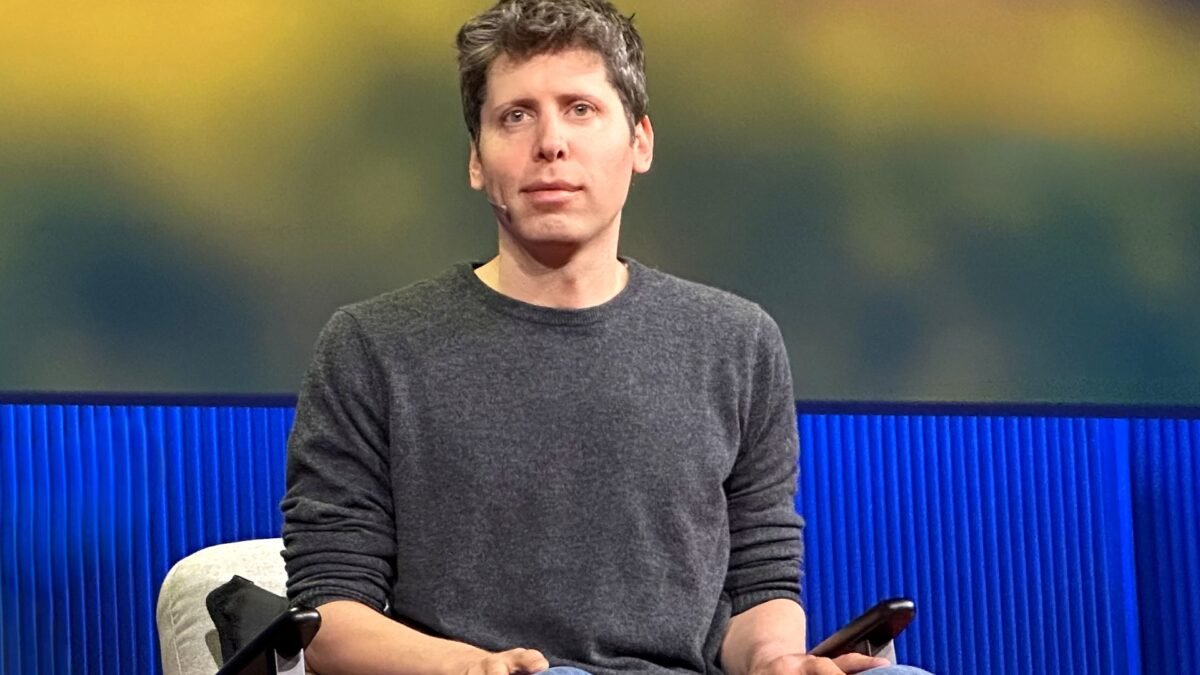
OpenAI Buys Drug-Development Startup Orchestra Bio to Put AI Agents Inside Pharma’s Longest Process
OpenAI has acquired Orchestra Bio, a four-year-old startup whose artificial intelligence agents help pharmaceutical teams manage the grind of drug development, the company announced on Tuesday. The deal, whose financial terms were not disclosed, will see Orchestra’s team and technology folded into Rosalind, OpenAI’s suite of AI models and tools for life-sciences research.
The company shared the news exclusively with Axios on Tuesday and published its own announcement on its website. “We’ve acquired Orchestra Bio, a platform that helps biopharma teams coordinate the complex process of drug development,” OpenAI said in the announcement. “Together, we’ll build on Rosalind, our AI models and tools for life sciences research, to streamline those operations and help new treatments reach patients.”
Orchestra Bio builds what it calls an “agentic operating layer” for drug programmes — software that sits on top of a medicine’s development pipeline and coordinates work across its many stages. According to reporting on the deal by TechCrunch and SiliconANGLE, the startup’s AI agents can be delegated tasks such as monitoring studies, tracking drug-development timelines, flagging potential delays and resolving scheduling problems in clinical trials. The idea is to connect scientific findings with the decisions and next steps required to advance a potential treatment, automating the operational heavy lifting while scientists keep the final call.
OpenAI did not give a timeline for when Orchestra’s agents will appear in its products, and it did not disclose what it paid. The startup, founded in the autumn of 2022 by Ashoka Rajendra, had raised around $20 million as of 2025 from backers including Andreessen Horowitz, Atria and 8VC, according to TechCrunch.
The company framed the acquisition around a stark arithmetic of drug development: getting a new medicine from target discovery to United States regulatory approval takes 10 to 15 years on average, and a single approved drug can cost more than $2.6 billion to bring to market. Fewer than one in ten candidate drugs that enter human trials ever make it to the pharmacy shelf.
Scientific research, OpenAI argues, is only part of why that process is so slow. Drug programmes pass between internal departments and outside partners whose systems often do not connect, and promising discoveries can stall on the unglamorous logistics of coordination rather than on any failure of the science itself.
To illustrate what Orchestra’s agents actually do, OpenAI’s announcement described a failed manufacturing batch that threatens to push a clinical trial back — the kind of setback that forces a pharmaceutical company to work out which milestones must move and whether the disruption can be limited. In OpenAI’s telling, the software would collect the relevant information, identify the affected activities and timelines, and weigh ways to respond, giving decision-makers a clearer picture of their options before they commit. People still make the final call, the company stressed.
Rosalind, the life-sciences bet
Orchestra joins Rosalind, the business OpenAI introduced in April with the launch of GPT-Rosalind, a reasoning model designed for biology and drug-discovery research. The model has been available outside research preview since September under a trusted-access programme for eligible organisations, and a companion product, Rosalind Workbench, connects the model to scientific tools and data so researchers can plan experiments and analyse results.
OpenAI says Rosalind already counts heavyweight drugmakers among its customers, naming Moderna and Novo Nordisk as companies using its models and tools in research and development workflows. The Danish company, according to OpenAI, wants faster research and commercial execution out of the partnership, while Moderna’s scientists use the models to turn complex data into plans for experiments, according to reporting by SiliconANGLE and Interesting Engineering.
The Orchestra acquisition is the latest in a string of life-sciences moves by the company this year, part of a broader industry bet that the next frontier for frontier AI models lies not in chatbots but in specialist scientific work.
The Anthropic parallel
The deal lands six months after OpenAI’s closest rival made a far bigger move in the same direction. Anthropic acquired Coefficient Bio, an AI biotech startup, for a reported $400 million in April, according to The Information, and launched its own research platform, Claude Science, in June. Anthropic has said its Claude models helped discover a previously unknown enzyme system with similarities to CRISPR, although that claim was disputed by scientists, according to Bloomberg.
Taken together, the two acquisitions map a clear pattern: the biggest AI labs are building ever more software for the biggest industries — pharma first among them — and where once startups lived in fear of being “stomped out” by a new feature from a lab, they are now, in TechCrunch’s formulation, getting absorbed. Both OpenAI and Anthropic are pushing into science as they look to expand beyond their core competencies in coding and cybersecurity, according to Yahoo Finance’s framing of the trend cited by industry coverage.
Notably, the two labs have chosen different doors into the same house. Anthropic paid nine figures for a company positioned around discovery; OpenAI, so far, has bought the operating layer around the molecule — not the drug, but the programme-management machinery that shepherds a drug through a decade and a half of development. The scale of the two bets differs enormously — $400 million against a $20 million seed raise and undisclosed terms — which may say something about each lab’s urgency, or about the different price of discovery versus operations in biotech’s acquisition market.
Analysis: Why It Matters
The labs are buying the boring parts on purpose
It is worth pausing on what, exactly, OpenAI just purchased. Most AI-in-biology startups pitch discovery: let the model find the drug. Orchestra Bio’s pitch was the opposite — manage the programme around the molecule. Its platform is programme management with an agentic interface: study monitoring, timeline tracking, delay-spotting, finance tracking, scheduling triage.
That is a revealing choice for a frontier lab to make. The glamorous version of AI-for-science is the model that invents the cure; the commercially serious version is the one that stops a Phase III trial from quietly slipping six months because three vendors’ spreadsheets disagree. OpenAI is betting that pharma will pay for the latter before it trusts anyone with the former — and that the vendor who owns the operating layer owns the workflow into which future discovery breakthroughs must plug.
The 10-to-15-year number is the whole thesis
Every AI-for-drug-development pitch eventually lands on the same statistic: a decade or more, billions of dollars, a nine-in-ten failure rate. It is worth treating the number as both true and strategic. True, because the attrition and timelines of drug development are well documented; strategic, because it reframes the labs’ role from optional productivity tool to structural necessity.
The honest reading is narrower. Agents that coordinate programmes will not shorten a regulator’s review clock or make a molecule safer. What they might do is cut the dead time — the months lost to handoffs, rescheduling and blind spots — which is real money in an industry where a day of delay on a blockbuster patent can be worth millions. The claim to interrogate is not whether AI can do coordination, but how much of pharma’s slowness is coordination versus science, regulation and bad luck. Only the former is addressable by software.
Absorb, don’t stomp
There is a standing fear in the startup world that at any moment the labs will launch a feature and become competitors — TechCrunch’s recent write-up of this deal explicitly invoked it. Orchestra’s fate suggests the current equilibrium: the labs are buying the vertical specialists rather than replicating them, at least where the specialist brings domain workflows, customer relationships and credibility that a general model cannot summon.
For founders, the lesson cuts both ways. Building the feature a lab wants is now a viable exit strategy; building a business that depends on the lab not building it is not. Expect more acqui-hires of this shape — small teams, real enterprise pipelines, undisclosed terms — as labs stock their vertical shelves before the IPOs both OpenAI and Anthropic are said to be circling.
The data question nobody has answered
There is a harder question sitting under the partnership announcements with Moderna and Novo Nordisk: what happens to pharmaceutical companies’ most sensitive data once it flows through a foundation-model provider’s workflows? The industry’s IP is its lifeblood, and drug development programmes are among the most jealously guarded datasets in commerce.
OpenAI has said scientists “make discoveries” with Rosalind and keep decision-making authority; it has said less, publicly, about the data boundaries — what trains on what, what stays inside customer tenants, what the audit trails look like when an agent touches a trial dossier. Pharma’s adoption of these tools will be paced by answers to those questions at least as much as by model quality. The trusted-access framing of Rosalind suggests OpenAI knows this; the details will determine whether the labs become infrastructure or remain experiments.
What to Watch Next
- Integration timeline: OpenAI gave no date for Orchestra’s agents appearing in Rosalind products. The speed of integration will show whether this is a capability purchase with a roadmap or a team purchase with a hope.
- Customer results: Moderna and Novo Nordisk are named partners; watch for either company to attribute a concrete programme acceleration or cost saving to Rosalind. Vague testimonials will tell their own story.
- Anthropic’s response: With Coefficient Bio bought in April and Claude Science launched in June, the labs are now in a visible parallel race in biotech. Expect a counter-announcement, a partnership, or a customer win aimed squarely at this deal.
- Deal terms and talent: Whether Orchestra’s founder and team stay, and whether any price leaks, will indicate how competitive the bidding was — and how many similar startups the labs are quietly courting.
- The IPO clock: Both labs are reported to be moving toward public offerings. Vertical revenue stories — real pharma money, real contracts — are exactly the kind of evidence public-market investors will demand. Rosalind’s numbers, when they surface, will matter more than its demos.
Sources
- SiliconANGLE — OpenAI acquires Orchestra Bio to bring AI agents into drug development
- TechCrunch — OpenAI acquires startup Orchestra Bio to beef up its biotech business
- Interesting Engineering — OpenAI acquires drug tool to speed slow drug development workflows
- Unite.AI — OpenAI Acquires Orchestra Bio to Expand Rosalind Life Sciences Tools

About the Author — Abdul Mannan
Related Articles
OpenAI Races to Raise $30 Billion at Over $1.4 Trillion Valuation Before Anthropic’s November IPO, Reuters Reports
OpenAI is accelerating a roughly $30 billion funding round that could value it above $1.4 trillion, aiming to…

Federal Judge Denies Bail for Former OpenAI Engineer After Saudi Consulate Offers to Cover Any Bond
A San Francisco federal judge ordered ex-OpenAI engineer Abdulrahman Alfozan held without bail after prosecutors detailed his alleged…
Anthropic to Commit 5% of Its Shares to New Public Benefit Fund Ahead of Massive IPO
Anthropic says it will commit 5% of its shares to a new Anthropic Public Benefit Fund, rising alongside…