
Paraguay Senate Impeaches Santiago Peña and Places Him Under House Arrest as Pedro Alliana Is Sworn In as President

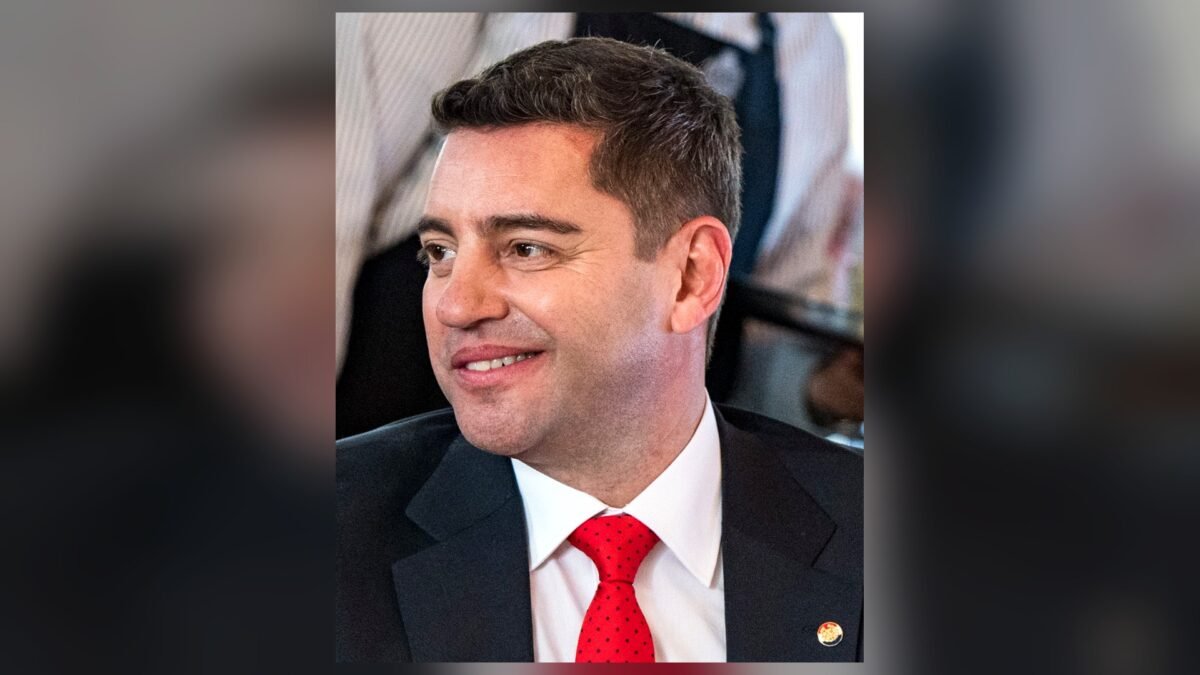
Paraguay’s Senate has removed Santiago Peña from the presidency and ordered him held under house arrest, ending one of the fastest political collapses in South American history and swearing in his vice president, Pedro Alliana, as the country’s new head of state.
According to CNN, 44 of the Senate’s 45 members voted on Friday to remove Peña from office for misconduct, with one abstention, less than 24 hours after he had offered his resignation over the collapse of the digital bank Ueno. The Associated Press reported that all 44 senators present voted in favour of his removal, making him only the second Paraguayan president ousted by impeachment since the end of General Alfredo Stroessner’s 35-year dictatorship in 1989.
Within hours of the vote, prosecutors ordered Peña placed under house arrest at one of his homes in the capital, Asunción, where police formed a cordon as crowds gathered outside. According to the Associated Press, he must appear before prosecutors on Saturday morning at the economic crimes unit to face charges including breach of trust, influence peddling and using public office for personal gain, the most serious of which carry up to 10 years in prison.
Paraguay’s attorney general has opened three criminal cases against Peña and other former officials over the bank crisis, and the impeachment vote strips him of the parliamentary immunity he would have enjoyed had Congress accepted his resignation. Instead of a lifetime seat in the Senate, the privilege constitutionally granted to former elected presidents, he now faces the prospect of standing trial as a private citizen.
Alliana, 52, was sworn in before Congress shortly after the vote as Paraguay’s 53rd president. He will serve out the remainder of the term, which runs until August 2028. “The Paraguay we receive today has urgent needs,” he said, according to the Associated Press — an understatement for a country whose banking system, public finances and political order have all been shaken in the space of a single week.
The vote that sealed a presidency
The Senate trial on Friday was the culmination of four days of political freefall. Peña was not present for the vote. His lawyers, Adolfo Ferreiro and Ricardo Preda, represented him before Congress after lawmakers rejected his request for a 72-hour extension to prepare his defence, according to CNN.
The charges against him had been brought by 35 opposition lawmakers and ruling-party dissidents, who accused him of “serious and systematic dereliction of duty” in connection with his dealings with Ueno Bank. On Thursday, within hours of Peña announcing his resignation, the Chamber of Deputies had voted 78-0 to trigger impeachment proceedings.
Peña’s offer to resign was, in the end, never accepted. According to Reuters, the Senate chose to finalise the impeachment process rather than accept his departure, and moved swiftly to install his second-in-command. The distinction matters enormously for Peña personally: had his resignation been accepted, he would have taken a lifetime Senate seat and with it parliamentary immunity. By removing him instead, Congress left him exposed to prosecution.
That was precisely what many lawmakers wanted. “This guy, Santiago Peña, needs to be jailed. An arrest warrant must be issued … pretrial detention, straight to jail,” Senator Yolanda Paredes told reporters earlier in the week, according to CNN.
Outside Congress, as the verdict came down, a roar rose from the crowds packed into the plaza. Depositors, retirees and students in national soccer jerseys waved Paraguayan flags, sang and hugged, chanting “Dictatorship never again!”, according to the Associated Press. As senators deliberated, protesters demanding their frozen savings back and accountability for Ueno’s failure marched through downtown Asunción chanting “Santi Peña to Tacumbú!” — a reference to the capital’s main prison, where Ueno’s founder and former chief executive, Miguel Vázquez, is now being held.
In a farewell message issued before the verdict, Peña said he did not want his “presence to be a cause of greater division or instability.” “I say goodbye with gratitude, without ignoring the anguish of those who are waiting for answers today,” he wrote.
The charges against a former president
The impeachment charges that led to Peña’s removal alleged that he had conflicts of interest, manipulated regulatory oversight, diverted pension funds and participated in an institutional cover-up involving the central bank, according to Reuters.
At the centre of the case is Ueno Bank, a digital lender that grew in just a few years from a niche fintech player into one of Paraguay’s largest banks, with accounts for nearly half the population. The Central Bank of Paraguay found that Ueno’s solvency ratio — with 2.9 million customers in a country of about 6.1 million people — had fallen below 50 per cent of the required minimum, according to CNN, after adjustments were made to its financial statements during a regulatory review.
Regulators seized the bank before dawn on Tuesday. Overnight, millions of customers lost access to their savings: they could no longer withdraw cash, use their cards or make payments. The bank had aggressively courted the poor and the unbanked with generous supermarket rebates, and more than one million Paraguayans had opened their first bank account there, according to the Associated Press.
The fallout spread quickly beyond savers. A ride-hailing app that relied on Ueno shut down, leaving 3,000 drivers without work. The state power company says 21 million dollars in loans from the Inter-American Development Bank and Taiwan, earmarked for public works, is trapped at the bank. Paraguay’s bonds have posted some of the worst losses in emerging markets this week, and the guaraní has slid against the dollar.
Prosecutors say the bank was turbocharged by public money. More than 800 million dollars in public funds flowed into Ueno, according to the Associated Press, including money from state institutions and pension-related bodies. Lawmakers accuse Peña of letting the state pension fund, the Social Security Institute, deposit 355 million dollars at the bank, beyond legal limits, and of using his political influence to steer hundreds of millions of dollars in public funds into Ueno while regulators overlooked risky insider lending.
Peña has denied wrongdoing and has said the affair was a regulatory issue. He had been a shareholder in Grupo Vázquez, the conglomerate that owns Ueno, until March 2025, when he says he sold his stake. Ueno says Peña never had a direct relationship with the bank as a shareholder or investor.
But the web of connections runs deep. Carlos Carvallo, who ran the finance company that became Ueno, was named by Peña to head the central bank in 2023. Prosecutors on Friday also issued an arrest warrant for Carvallo, and it was not immediately clear whether he had been taken into custody, according to the Associated Press. The central bank has denied any conflict of interest, saying Carvallo recused himself from all decisions related to Ueno.
In a separate case against Ueno’s executives, prosecutors have charged 27 people, including Vázquez, with crimes such as breach of trust and attempted fraud. A judge has ordered six former directors, Vázquez among them, held in pretrial detention, and two others confined to their homes with electronic monitors. Authorities have seized luxury cars, a yacht and two small planes linked to Vázquez.
Others from Peña’s inner circle also resigned this week, including his interior minister, his chief of staff and two advisers, according to Reuters.
Who is Pedro Alliana?
The man who now holds the presidency is no outsider to the crisis. Pedro Alliana, 52, served as Peña’s vice president since the two took office together on 15 August 2023, and he belongs to the same Colorado Party and the same Honor Colorado faction that dominated the last government.
Alliana was born on 19 February 1974 in Pilar, in the southern department of Ñeembucú. He began his political career as governor of Ñeembucú, serving from 2008, then spent nearly a decade in the Chamber of Deputies from 2013 to 2023, including three years as its president. He led the Colorado Party itself as its president from 2015 to 2023, and was elected vice president as Peña’s running mate in the 2023 general election.
His personal story is striking: a former national basketball player and a leukaemia survivor. In April this year he announced a preliminary bid for the presidency in the 2028 election, with declared support from Peña and from former president Horacio Cartes.
Yet Alliana takes office under a shadow of his own. According to the Associated Press, he is also under investigation in connection with the bank. Congress declined to open impeachment hearings against him, but the fact of the investigation will follow him into the presidency and will shape how every decision he makes is judged.
His first test will be whether he can present himself as a break with the government he served in, rather than its continuation. His wife, Fabiana Souto, stood beside him as he took the oath, and Brazil’s President Luiz Inácio Lula da Silva congratulated him on Friday, according to Brazilian media — an early sign that the region’s largest country is prepared to work with the new administration.
Alliana also inherits an empty vice presidency. Because the vacancy has arisen in the final two years of the five-year term, Paraguay’s constitution does not require a new popular election; instead Congress will name the next vice president in a joint session, where a candidate must win an absolute majority of at least 63 of the 125 votes.
How a bank brought down a president
The speed of Peña’s fall has stunned even seasoned observers of Paraguayan politics. On Tuesday morning, Ueno was seized by regulators. By Thursday afternoon, Peña had offered to resign as his own conservative Colorado Party turned on him, led by former president Horacio Cartes, the party chief and Peña’s longtime mentor. By Friday, he was under house arrest, with impeachment denying him the immunity he would have enjoyed if the Senate had accepted his resignation.
Peña, a 47-year-old Columbia University-trained economist who once worked at the International Monetary Fund, owed his rise to Cartes, a tobacco magnate who made him finance minister and twice backed him for president. He served as finance minister from 2015 to 2017 and as a director of the central bank before winning the presidency in 2023 with about 43 per cent of the vote, taking office as one of the youngest presidents in Paraguayan history at the age of 44.
Once in office, though, Peña sought to escape Cartes’ shadow by quietly building his own power base, analysts say — and Ueno, flush with public funds, became its linchpin. “It’s like a Shakespearean drama. He tried to displace his mentor, his political patron,” Miguel Carter, director of DEMOS, a Paraguayan research centre, told the Associated Press. “But he did so on very fragile grounds.”
Cartes struck back. In September, senators loyal to him began publicly questioning the central bank about Ueno’s risky lending to related companies. When the bank collapsed this week, so did Peña’s leverage, and Cartes, once sanctioned by the United States Treasury over alleged corruption, publicly called for the ouster of his erstwhile protégé. “Cartes put the nail in the coffin,” Andrew Nickson, a Paraguay expert at the University of Birmingham, told the Associated Press. “Peña had no political base to rely on, and he was left high and dry.”
Peña had defended the bank until mere weeks before it failed, telling reporters last month that a regulatory inquiry into Ueno did not mean it would close, and accusing the media of frightening people, according to the Associated Press. “Under Peña, the central bank began to lose credibility, lose neutrality and then relax all its control mechanisms to favor the business group that had Ueno as one of its pillars,” said José Tomás Sánchez, a political theory professor at the National University of Asunción.
Peña was also one of the staunchest allies of United States President Donald Trump’s administration, aligning with Washington’s priorities on immigration and security, and he met Treasury Secretary Scott Bessent as recently as late October. In response to his announced resignation, a US State Department spokesperson said the relationship between both countries remains strong. “We remain committed to the enduring relationship between the American and Paraguayan people and look forward to continuing our close cooperation on shared priorities,” the spokesperson said, according to CNN.
The depositors still waiting
For all the political drama in Asunción, the crisis is at its core about ordinary people’s money. Some depositors began recovering their funds on Thursday, starting with those holding up to 10 million guaraníes, about 1,500 dollars. Deposits are insured up to about 35,000 dollars, which the central bank says covers 97 per cent of Ueno’s customers, and the central bank said on Thursday night that it would start processing guarantee payments to certain customers in stages.
Paraguay’s Congress rushed through a deposit guarantee law earlier in the week, providing for repayment within five business days, with small accounts paid first. But the scale of the task is immense, and the anger on the streets has grown more thunderous by the day. Demonstrators have flocked to downtown Asunción demanding accountability for Ueno’s collapse and faster compensation for depositors whose savings remain frozen, and small groups of protesters gathered opposite the headquarters of the central bank on Friday chanting “We want our money,” according to Reuters.
Those unable to access their accounts include pensioners who receive state benefits through Ueno. The central bank has sought to reassure markets by guaranteeing most deposits and containing risks to the wider financial system, calling the collapse an isolated case and insisting the broader financial system is safe.
The stakes for the country go beyond the bank itself. Paraguay has been trying to position itself as a regional financial hub, capitalising on the investment-grade status it attained in recent years after receiving approval from two of the world’s leading rating agencies, according to CNN. A banking scandal that reaches the presidency, freezes the savings of half the population and sends the currency sliding is the worst possible advertisement for that ambition.
Brazil, Paraguay’s largest economic partner, is watching closely. A Brazilian government source told Reuters that Brazil’s immediate concern was avoiding social instability in Paraguay and ensuring the banking crisis is resolved without triggering wider unrest. “Protests over frozen savings will intensify if Peña’s exit appears to grant him impunity or if payouts to depositors and pensioners stall,” said Mariano Machado, Americas principal analyst at Verisk Maplecroft.
Analysis: Why It Matters
Resignation was not enough — accountability won the argument
The most consequential decision of the week was not Peña’s resignation but Congress’s refusal to accept it. By choosing impeachment over resignation, Paraguay’s lawmakers made a deliberate statement: a president who presides over the collapse of a bank holding the savings of half the country does not get to walk away with immunity and a lifetime Senate seat. That choice transformed a political exit into a legal reckoning, and it is why Peña spent Friday night under police guard at his own home rather than preparing a dignified farewell tour. For a region where disgraced leaders have often negotiated soft landings, the precedent is significant — accountability, for once, was not traded away for stability.
Alliana inherits a presidency under a cloud
Pedro Alliana’s problem is that he is both the solution and part of the problem. He was Peña’s running mate, his vice president, a leader of the same party faction and a man under investigation in connection with the same bank. Every appointment he makes, every prosecutor he leaves in place or removes, and every decision about the central bank will be scrutinised for signs that the old network is protecting itself. His best asset is that he was not the president who steered public money into Ueno — but his worst liability is that he stood beside that president for three years. Whether Paraguayans accept him as a genuine break or reject him as continuity with a new face will be decided in his first weeks, not his first speeches.
The Colorado Party chose survival over loyalty
The Colorado Party has dominated Paraguayan politics since 1948, and its behaviour this week was an exercise in institutional self-preservation. When the bank collapsed, the party’s leadership, led by Horacio Cartes, calculated that defending Peña would cost the party more than abandoning him — and moved with ruthless speed. The unanimous Senate vote, with even Peña’s own party voting to remove him, was less a moral judgment than a survival strategy: sacrifice one president to save the party’s grip on power. It worked, in the narrow sense — the party still holds the presidency through Alliana. But the cost is a public demonstration that the party’s loyalty is conditional, and that its internal rivalries can now destroy a sitting president in four days.
The depositors are the real verdict
For all the constitutional drama, the crisis will ultimately be judged by a single question: do people get their money back? The guarantee scheme covers 97 per cent of customers, but coverage on paper is not cash in hand, and the pension fund’s 355 million dollars and the trapped public-works loans are far harder to recover than small retail deposits. If repayments stall, the protests that cheered Peña’s removal will turn on Alliana with equal force. The new president’s authority depends less on his oath than on the speed with which frozen accounts are unfrozen — and on whether the investigation reaches everyone responsible, not only the men who have already fallen.
A stress test for institutions — and a warning for fintech
There is a genuine success story inside this crisis: Paraguay’s institutions worked. A regulator seized a failing bank. A Congress removed a president. Prosecutors opened cases and ordered arrests. Courts ordered detentions. None of that was inevitable, and in a region with a long history of impunity, it deserves recognition. But the institutions only acted after the damage was done — after years in which a politically connected bank grew at breakneck speed, took in public money and lent to related companies while oversight relaxed. The lesson travels far beyond Paraguay: wherever digital banks grow faster than the regulators watching them, and wherever political connections shield them from scrutiny, the same ingredients are present. Paraguay’s tragedy is that it learned the lesson the hard way; its opportunity is that the rest of the region does not have to.
What to Watch Next
- Peña’s appearance before prosecutors on Saturday. Whether formal charges are filed, whether he is kept under house arrest or moved to pretrial detention, and what a judge decides about where he stays while the criminal process runs will set the tone for everything that follows.
- The fate of Carlos Carvallo. Whether the former central bank chief is taken into custody, and what he tells investigators about the supervision of Ueno, could determine how far up the chain of responsibility the investigation reaches.
- The pace of deposit repayments. Whether the guarantee scheme delivers money to small depositors within days, and whether larger depositors and the pension fund’s money are recovered, will decide whether street anger eases or intensifies.
- Alliana’s first decisions. His cabinet appointments, his choice of central bank leadership, and whether Congress names a new vice president will show whether the new government represents renewal or rearrangement.
- Markets and the street. The guaraní, Paraguay’s bonds and the protests in Asunción will be the daily scoreboard: a stabilising currency and quiet streets would signal confidence, while fresh losses and fresh marches would signal that the crisis is far from over.
Sources
- CNN — Paraguay president impeached and under house arrest following bank collapse scandal
- Reuters via Devdiscourse — Paraguay swears in new president as Peña is put under house arrest
- Reuters via Global Banking and Finance — Paraguay’s Banking Crisis: New President Sworn In, Peña Detained
- Reuters — Paraguay President Peña resigns under mounting pressure from bank collapse
- The Times — Paraguay president resigns as digital bank collapse blocks accounts
- Wikipedia — Pedro Alliana (biography and political career)

About the Author — Abdul Mannan
Related Articles
Trump Says Iran War Decision Coming ‘Soon’ as He Weighs New Strikes, Economic Pressure or a Deal
President Donald Trump says he will soon decide whether to resume full-scale war with Iran, weighing new airstrikes,…
Tanzania Opposition Leader Tundu Lissu Cleared of Treason but Jailed for Four Years Over Incitement
Tanzania's High Court cleared opposition leader Tundu Lissu of treason but sentenced him to four years in prison…
Zelensky Says $16 Billion in Promised US Aid Never Arrived as Trump Meets Putin Envoy and Hails Near Ukraine Deal
Volodymyr Zelensky says $16 billion in promised American aid never arrived, as Donald Trump meets Vladimir Putin's envoy…