
When the Gates of Privilege Begin to Close: Britain’s Private Schools and the Price of Learning

What happens when the doors that were built to keep the many out begin, slowly, to close upon the few themselves?
That is the question staring back at Britain this week, and it is written not in speeches or manifestos but in the coldest language of all: numbers. Two hundred of the country’s 300 leading independent schools have seen their pupil numbers fall since the Labour government imposed VAT on school fees. Forty-three of them have lost at least one in every ten children. The classrooms that once echoed with the certainty of centuries are, in more places than anyone in Westminster expected, growing quiet.
I have spent my life watching how nations treat their schools, because a nation’s schools are its truest confession. A country will tell you many lies about itself — about its fairness, its mercy, its future — but its classrooms never lie. And what Britain’s classrooms are confessing today is a story older than this tax, older than this government, and older, perhaps, than the very idea of the “public school” itself.
The Numbers That Refused to Stay Quiet
Let me put the figures before you plainly, because they deserve to be read slowly. The Independent Schools Council, which represents the country’s private schools, counted 526,611 pupils in its census this year. Two years ago the figure was 556,551. Around 30,000 children have vanished from the independent sector since VAT was first announced, and some 20,000 of them disappeared in the past year alone. Julie Robinson, the Council’s chief executive, has called it the biggest reduction in pupil numbers since the Council’s records began — falling, she says, significantly faster than the government anticipated.
The Department for Education’s own census tells the same story from the other side of the ledger. In England, private school pupils numbered 560,300 in January 2026, down by more than 22,000 — a fall of 3.8 per cent — in a single year. And the Council has identified 105 schools that have shut their doors altogether since Labour’s tax changes took effect.
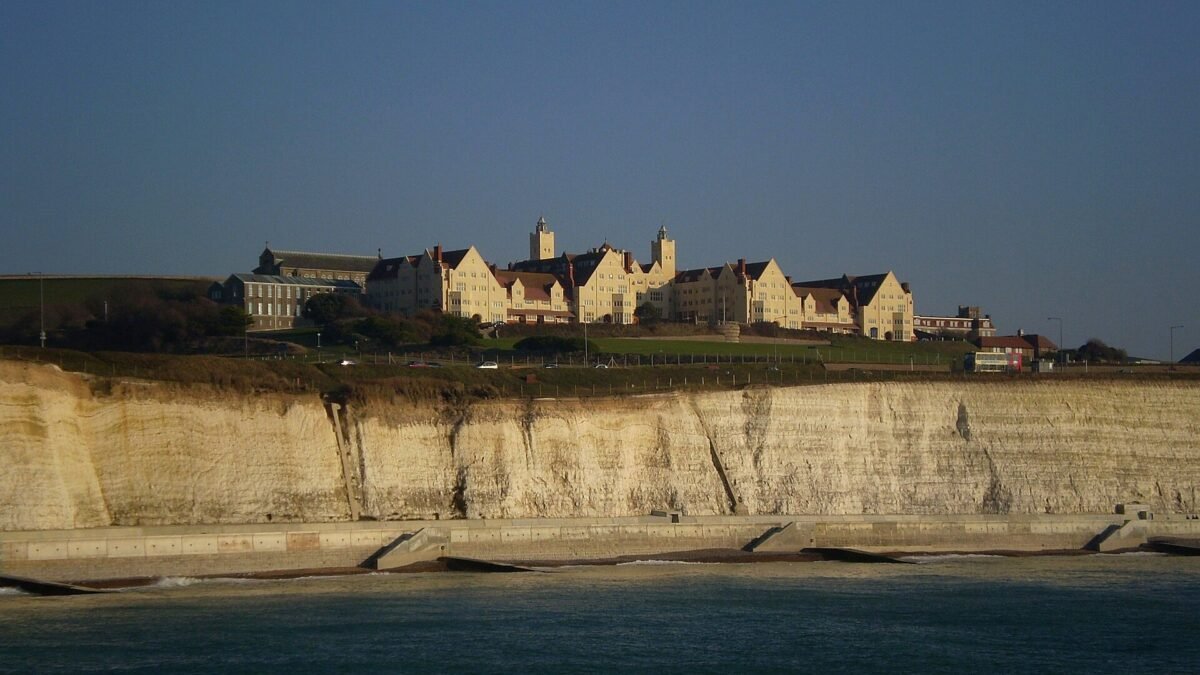
These are not abstractions. At Portsmouth Grammar School, a fee-paying school despite its name, the roll has fallen from 1,243 pupils to 946 in two academic years — nearly a quarter of its children gone. At Roedean, the great girls’ school on the cliffs above Brighton, the roll has dropped from 615 to 519 in a single year, a decline of 15.6 per cent. At St Peter’s in York, where the Chancellor himself once sat his A-levels, numbers fell from 1,330 to 1,273. At Benenden, the alma mater of Princess Anne, the roll stands at 480 — down almost a tenth in a year.
And yet — and this is the detail that makes the story worth telling — the very top of the pyramid barely trembles. Eton College moved from 1,346 pupils to 1,348. Wycombe Abbey rose from 644 to 647. St Paul’s Girls’ School slipped by three pupils, from 836 to 833. The citadels of privilege, it seems, are not emptying. It is the middle of the sector — the schools that served the professional family stretching to afford them, the doctor and the solicitor and the small business owner — that is hollowing out.
A Tax, a Promise, and a Reckoning
The story begins, on the surface, with a tax. From 1 January 2025, independent schools became obliged to charge VAT at 20 per cent on their fees. On 1 April 2025, their business rates relief was scrapped. In the same month, employers’ National Insurance contributions rose. Three blows, delivered in four months, upon a sector that had planned its finances in decades.
The government’s own estimate, published in 2024, was that 37,000 pupils would leave independent schools by 2030 as a result of the VAT policy. The Department for Education still insists the decline is “primarily driven” by falling birth rates. And there is truth in that — Britain’s birth rate has been falling, and the demographic tide reaches senior schools last, like a wave that takes years to arrive at the far shore.
But numbers have a way of exposing the difference between a reason and an excuse. Boarders — the children whose families pay the highest fees of all — fell by 7.7 per cent in the year to January 2026. Overseas pupils, who once filled the boarding houses of England’s great schools, numbered 22,941 this year, 12 per cent fewer than two years earlier. Birth rates do not explain why the boarding house empties faster than the day school. Birth rates do not explain why 105 schools have closed. Birth rates do not explain why the Council’s own chief executive is calling for an independent review of a policy whose effects, in her words, are running far ahead of what ministers forecast.
I am not here to mourn the private school. I am here to ask what its emptying means — and for whom.
The Schools That Held, and the Schools That Fell
Look closely at which schools are falling and which are standing, and you will see the anatomy of a class system laid bare. The schools that held their numbers are the ones whose parents do not feel a 20 per cent rise, because their wealth is measured not in salaries but in assets, in inheritances, in money that has never known a monthly budget. The schools that fell are the ones whose parents did feel it — the family that had already cut the holiday, already postponed the car, already done the quiet arithmetic at the kitchen table and discovered that the arithmetic no longer worked.
This is the oldest pattern in the history of education, and it repeats itself in every country that has ever tried to sell learning as a luxury. The tax was aimed, its supporters said, at privilege. But privilege, properly understood, is the one thing a tax on fees can never reach, because privilege is not a fee. Privilege is the house in the right postcode, the grandfather who went to the same college, the old boy network that opens a door before a child has even knocked. What the tax reached, instead, was the striving middle — the families who had clawed their way to the school gate and were holding on by their fingertips.
There is a cruelty in this that no spreadsheet will capture. A child who leaves Roedean or Portsmouth Grammar in the middle of her schooling does not simply change classrooms. She loses her friends, her teachers, her place in a story she had begun to tell about herself. The schools that closed did not merely cease to trade; they erased communities. And the state schools that received these children — many of them already stretched, many of them already short of teachers — absorbed them without ceremony and without, so far as anyone can see, the promised windfall that was meant to follow the tax.
What Macaulay Knew, and What We Forgot
History, as I have always believed, is a mirror, and if we hold it up to this moment it shows us a familiar face. In 1835, Thomas Babington Macaulay wrote his famous Minute on Indian Education, and in it he declared that Britain must create a class of Indians “English in taste, in opinions, in morals, and in intellect” — interpreters between the rulers and the ruled. Education, in that vision, was never about the child. It was about the empire. It was a machine for manufacturing the class that would run the machine.
The British public school was built on the same blueprint at home. It was never merely a place of learning; it was a forge. It forged the administrators of an empire, the officers of its armies, the judges of its courts, the prime ministers of its parliaments. Eton alone has produced twenty prime ministers. That is not an accident of geography. That is a system working exactly as it was designed to work.
And so the question Britain must ask itself is not whether private schools should pay VAT. That question is small, and it has already been answered by Parliament. The real question is the one Macaulay never asked and the one no government has yet dared to ask: what is a school for?
If a school is a forge for privilege, then let us say so plainly, and let us stop pretending that taxing its fees is an act of justice. If a school is, instead, a place where a child becomes fully human — where she learns to think, to question, to doubt, to dream — then the price of that becoming must never be set so high that only the already-rich can afford it, and the state must never be content to watch the middle fall away while the top remains untouched.
The Question No One in Westminster Will Answer
I think of the mother in Portsmouth who told her daughter that the school she loved was no longer possible. I think of the father who looked at the fee letter, did the sums for the third time, and quietly folded it away. These are not the people the tax was meant to punish, and yet they are the people it has punished. The very rich have not felt it. The very poor were never in these schools at all. It is the striving, hoping, sacrificing middle that has paid — as it so often does, in every country, in every age.
The Council calls for an independent review. Ministers call the decline a matter of birth rates. The Sunday Times will publish its Parent Power guide on 4 December, and parents will study it the way generals once studied maps. And somewhere in the middle of all this noise, the real question waits — patient, unanswered, and growing louder with every empty desk.
Who is education for?
If the answer is “every child,” then Britain’s task is not to tax the private school out of existence, nor to defend it as it is. It is to build a state system so good that no parent feels she must buy her child’s future — and to remember that a nation which treats learning as a luxury will one day discover that it has made ignorance affordable and wisdom a privilege.
The gates of privilege are closing, yes. But look carefully at who is being shut out, and who remains safely inside. The doors were built to keep the many out. They are doing their work. They always have. The only difference now is that the few inside have begun to notice the silence — and to wonder, perhaps for the first time, what a school sounds like when the children stop coming.
Sources & References
- The Times, “Two thirds of top private schools have lost pupils since VAT change”
- The Independent Schools Council, Census 2026 — pupil numbers 526,611, down 3.5 per cent in a year (reported via Internewscast)
- Department for Education, School Census January 2026 — 560,300 pupils in private schools in England, down 22,000 (3.8 per cent)
- Chapel & Tuck, “Are more private schools closing since VAT? What the figures show”
- The Sunday Times Parent Power schools guide 2027, to be published 4 December 2026 (via The Times)

About the Author — Abdul Mannan
Related Articles
When the Young Refuse to Pay for the Guns: Europe’s Students Rise Against the Great Betrayal
Thirteen thousand students marched on Copenhagen's parliament this month, chanting "Broken Promises". Across Europe, a generation is asking…
The Empty Lecture Hall: Kenya’s KSh20 Billion University Deal and the Promise Education Still Owes
After four weeks of empty lecture halls, Kenya's university lecturers have verbally agreed a KSh20 billion deal, with…

The Dog That Barked in Chinese: What the Galgotias ‘Orion’ Scandal Teaches Us About Dishonest Universities
In February, a private Indian university stood before the cameras at the India AI Impact Summit and introduced…