
South Africa Thrash Australia by an Innings and 31 Runs at Gqeberha to Level Test Series

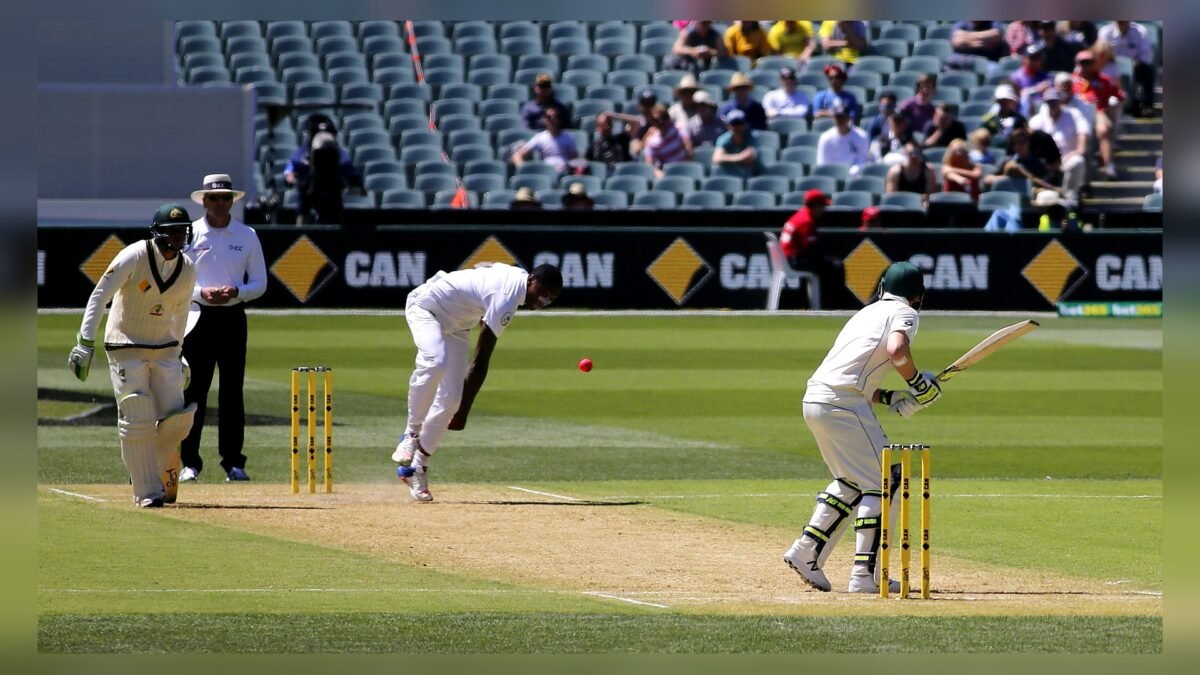
South Africa produced one of the most remarkable turnarounds in their recent Test history on Thursday, sealing an emphatic innings-and-31-run victory over Australia in the second Test at St George’s Park in Gqeberha to level the three-match series 1-1 and set up a mouthwatering decider in Cape Town next week.
The reigning world Test champions needed six wickets on the final day after reducing Australia to 156 for four in their second innings, still 170 runs adrift of South Africa’s imposing 425 for nine declared. A washed-out morning session raised the spectre of a rain-assisted escape, but the Proteas’ pace attack refused to be denied, wrapping up the victory an hour after tea to complete a triumph built on a stunning captain’s knock, a devastating new-ball spell, and relentlessly disciplined bowling in difficult conditions.
Rabada Breaks the Resistance
According to The Times, Kagiso Rabada, on his return to the side after a hamstring injury, led the attack with four for 77 in the second innings, well backed up by Wiaan Mulder’s three wickets, as Australia were bowled out for 295 in 107.1 overs. Marco Jansen, whose five-wicket haul had triggered Australia’s first-innings collapse, claimed the final wicket by dismissing Josh Hazlewood.
The morning belonged to the weather rather than either side. Heavy rain and a wet outfield wiped out the entire opening session on day five, shaving 16 overs from the day and giving Australia genuine hope that they could cling on for a draw with only a shortened day to survive. When play finally resumed after lunch, the tourists were banking on Travis Head, unbeaten overnight alongside nightwatchman Scott Boland, to anchor an improbable escape.
Head, according to The Times, played an excellent and battling innings. His dismissal, five overs before the new ball became available, broke the game open. Mulder, coming round the wicket, cramped the opener for room, and an uncertain, jabbed shot took the inside edge onto his stumps. Head’s 121 from 190 balls, featuring 15 boundaries, was only his second Test hundred outside Australia, following the 163 he made in the 2023 World Test Championship final.
Boland, according to Geo Super, showed remarkable defiance for a nightwatchman, grinding out 40 from 166 deliveries in a partnership that stretched past fifty with Head. He was joined by Steve Smith, but the veteran could only muster three from 20 deliveries before Rabada sent him back, Rabada celebrating the dismissal as Australia slipped further to 225 for six.
The nightwatchman and wicketkeeper Alex Carey carried the visitors to tea at 253 for six, but Boland’s resistance ended just two overs after the interval when Mulder bowled him. Carey fell before the end, and the tail offered little, confirming a victory by an innings with South Africa never having to bat again.
From 110 for Six to an Innings Victory
The scale of the victory was staggering given how the Test began. South Africa had been in deep trouble on the opening day, reduced to 92 for five at one point and later 110 for six, with their top order torn apart by Australia’s fast bowlers after the tourists inserted themselves into a dominant position early.
What followed, according to A Sports, was a captain’s knock for the ages. Temba Bavuma, under immense pressure after the heavy defeat in Durban, produced a monumental 179 off 334 balls, displaying what observers described as sublime patience and impeccable judgment outside off stump. He found an equally aggressive partner in tall all-rounder Marco Jansen, who pulverised the Australian attack with a rapid-fire 85.
Together, their lower-order rescue act completely flipped the momentum of the Test. South Africa’s recovery from the brink of collapse to a first-innings total of 425 for nine declared — built around the 132-run seventh-wicket partnership and a record 183-run eighth-wicket stand between Bavuma and Simon Harmer, who made 82 — put Australia under severe scoreboard pressure from which they never recovered. Bavuma was named Player of the Match for his defiant innings.
According to Sky Sports, the tourists had no answer in their first innings either. Jansen’s devastating spell of five for 33 on the fourth day skittled Australia for just 99, forcing them to follow on for the first time since 2019. It was a humiliation that stood in stark contrast to their own first-Test dominance, when they had won by a huge 214-run margin in Durban.
Weather, Injuries and Resilience
The victory was, according to The Times, one of South Africa’s finest Test wins given the amount of time lost to the weather — almost 200 overs across the match — the early collapse, and the absence of the injured Anrich Nortje for most of the match. Nortje’s mid-match injury had left South Africa a fast bowler short, yet Rabada’s return from his own hamstring trouble could not have been better timed.
For Australia, the defeat raises serious questions. Having won the opening Test by a huge margin in Durban only a week ago, they arrived in Gqeberha with the series seemingly in their grasp. Instead, they were bundled out twice for a combined 394 runs — still 31 runs short of South Africa’s single innings total — and must now travel to Cape Town with the series on the line.
The third Test begins at Newlands in Cape Town on Tuesday, 27 October, and will run to 31 October. With the series level at 1-1, the decider is now a straight shootout for series honours between the two sides, and on the evidence of Gqeberha, South Africa will carry the momentum.
Analysis: Why It Matters
One of South Africa’s finest Test victories
The raw facts barely do this victory justice. Almost 200 overs were lost to the weather across the five days. South Africa were 92 for five on day one, then 110 for six, and they lost Anrich Nortje — one of their strike bowlers — to injury for most of the match. Winning by an innings under those conditions, against Australia, inside five days, places this alongside South Africa’s great modern Test triumphs. It was a performance that married individual brilliance with collective steel, and it announced that the reigning world Test champions will not hand over this series quietly.
Bavuma’s transformation continues
Temba Bavuma’s 179 was not just a match-defining innings; it was another chapter in one of Test cricket’s most remarkable late-career transformations. The South African captain has remade himself as a leader who scores when his team is most exposed, and this innings — arriving with his side at 110 for six after a Durban defeat — will be remembered as the foundation stone of a famous win. His partnership with Jansen and Harmer did more than rescue a Test; it redefined the psychological balance of the series.
Jansen and Rabada: the two-act bowling story
South Africa’s bowling told a two-act story across the two Australian innings. On day four, Marco Jansen’s five for 33 was the wrecking ball that broke the first innings apart and enforced the follow-on — a first for Australia since 2019. On day five, after the rain had given the tourists genuine hope, it was Rabada’s returning-class burst of four for 77 and Mulder’s surgical removal of the set batters that finished the job. One team does not win by an innings without its entire attack functioning; here, every seamer had his moment, even with Nortje missing.
Australia’s batting fragility exposed
For all the defiance of Travis Head’s century — only his second away from home — and Boland’s extraordinary 166-ball resistance as a nightwatchman, Australia’s batting was comprehensively dismantled across both innings. Ninety-nine all out in the first dig, followed by a second innings that never genuinely threatened to erase the deficit, will concern a side that cruised in Durban. The top order, Smith included, found no answers to a disciplined, relentless attack on a wearing surface. The one-week turnaround to Cape Town leaves them with serious batting questions and no time for net-session reassurance.
A genuine decider at Newlands
Series deciders are the rarest prize in modern Test cricket, and Cape Town will now host one. Newlands, with its table-mountain backdrop and traditionally true surface, offers a neutral canvas — but the momentum has swung decisively. South Africa arrive with a captain in the form of his life, a returning strike bowler in Rabada, and the knowledge that they demolished Australia in all three departments at Gqeberha. Australia arrive knowing they were outplayed everywhere. That psychological arithmetic is precisely what makes 27 October unmissable.
What to Watch Next
- Nortje’s fitness: South Africa will hope Anrich Nortje can recover in time for Cape Town; his absence was covered brilliantly here, but a fully-fit four-seamer attack would be a frightening prospect for Australia.
- Australia’s top order: after scores of 99 and 295, the tourists’ selectors and batting coaches have six days to fix a top order that was dismantled twice; changes or a changed approach are both possible.
- The new ball in Cape Town: South Africa’s first-innings collapse at Gqeberha shows Newlands’ opening exchanges will matter enormously — whichever attack strikes early in the decider will seize the series narrative.
- Head’s away form: Travis Head’s 121 was a breakthrough overseas century after years of away struggles; whether it signals genuine improvement or a one-off will shape Australia’s middle order in the decider.
- Weather and pitch: Newlands in late October usually offers good batting conditions; South Africa will want a result pitch after this triumph, and the curators’ choices will be watched closely.
Sources
- The Times — Kagiso Rabada breaks Australia resistance to seal innings win and level series
- Sky Sports — Proteas complete emphatic innings-victory to level three-Test series
- A Sports — South Africa complete innings victory over Australia in 2nd Test
- Geo Super — South Africa inflict innings defeat on Australia in second Test to level series

About the Author — Abdul Mannan
Related Articles

Damian Lillard Scores 25 in Emotional Portland Return as Trail Blazers Obliterate Suns 124-83
Damian Lillard scored 25 points in his first game in nearly 18 months as the Portland Trail Blazers…

Walker Kessler Goes 12-for-12 in Historic Lakers Debut as Los Angeles Rout Warriors 127-105
Walker Kessler scored 26 points on a perfect 12-of-12 shooting in his Lakers debut as Los Angeles routed…

Temba Bavuma’s Career-Best 179 Drags South Africa Back Into Second Test Against Australia
South Africa captain Temba Bavuma struck a career-best 179 as the Proteas fought back from 110 for six…