
Russia Could Launch Nuclear-Armed Satellite Within Weeks, Western Intelligence Warns

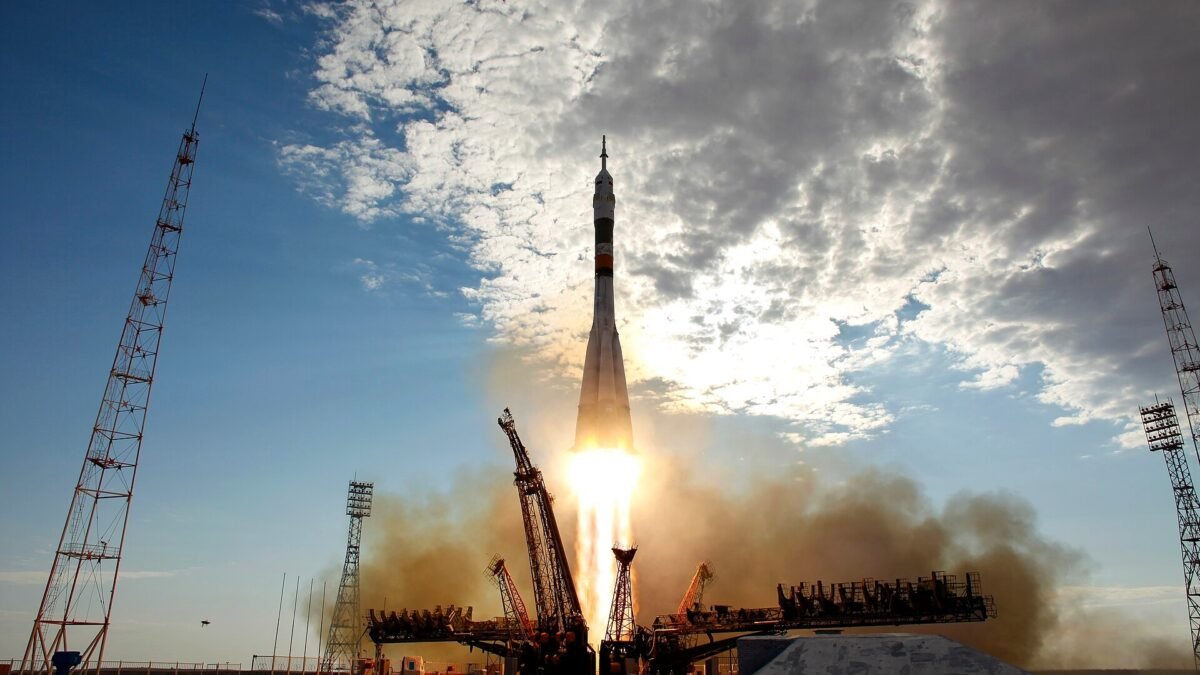
Western intelligence services believe Russia is preparing to launch a satellite carrying a nuclear weapon into orbit before the end of this year, according to a joint investigation by German media published on Monday, in a development that would cross one of the oldest red lines in international law and put thousands of satellites at risk. The satellite, identified in the reporting as Sputnik-S, is said to have been assembled several years ago and stored in the Moscow region, and intelligence shared among NATO allies in early November indicated that it could be launched within 60 days, possibly as early as December, according to the report by broadcasters NDR and WDR and the newspaper Süddeutsche Zeitung.
The claim, first reported by Reuters on Monday, has not been independently verified. No intelligence documents or satellite imagery confirming the reported deployment have been made public, and Russia has firmly denied the allegations. But the warning has been taken seriously at the highest levels in Berlin: Germany’s military space command considers a December launch possible, German military experts have briefed senior politicians including Defence Minister Boris Pistorius in recent weeks, and Chancellor Friedrich Merz’s spokesman said the government was taking the reports seriously. The United States Defense Intelligence Agency warned in an assessment published in October that Russia was developing a satellite designed to carry a nuclear explosive, with few effective countermeasures available once such a weapon is in orbit.
If the launch goes ahead, it would violate Article IV of the 1967 Outer Space Treaty, which prohibits placing nuclear weapons or other weapons of mass destruction in orbit around the Earth. Russia is a party to that treaty. It would also be the first time any country has openly placed a nuclear weapon in space, transforming a capability that has existed only in warnings and intelligence assessments into a deployed reality, and confronting the United States and its allies with a threat for which military planners acknowledge there is no good answer.
What the German investigation found
According to the joint investigation by NDR, WDR and Süddeutsche Zeitung, published on Monday 23 November, intelligence services of NATO member states have concluded that Russia plans to launch a satellite armed with a nuclear weapon into space this year. Western services, including Germany’s Federal Intelligence Service, the BND, and the German armed forces, the Bundeswehr, have exchanged intelligence on the programme, the report said.
The satellite is named Sputnik-S, the report said, a name that deliberately echoes the Soviet Union’s first satellite, Sputnik 1, launched in 1957. It was assembled several years ago and has been stationed in the Moscow region ever since, according to the investigation. Intelligence warnings circulated among several NATO countries in early November indicated that the spacecraft could be launched within 60 days and become operational shortly after reaching orbit.
Germany’s military space command considers a launch as early as December possible, according to the reporting. German military experts have briefed senior government officials about the potential threat in recent weeks, including Defence Minister Boris Pistorius. Germany’s Defence Ministry declined to comment, citing the confidentiality of the briefings, while the Chancellor’s spokesman, Stefan Kornelius, said the government was taking the reports seriously, according to the New York Post.
Reuters reported the findings on Monday, noting that Russia’s embassy in Germany, the BND and NATO headquarters in Brussels did not immediately respond to requests for comment. The Times of London also reported the story on Monday, citing the same German investigation, and said that analysts cited in the German reports had warned that once a nuclear-armed satellite was in orbit there would be no effective way of stopping the weapon from being used.
It is important to be precise about what has and has not been established. What is established is that a serious, multi-outlet German investigation, drawing on Western intelligence sources, has reported that allied services believe a launch is planned this year. What has not been established, in public at least, is the underlying intelligence itself. No documents, photographs or technical evidence have been published. The assessments have not been independently verified, and Moscow has rejected them outright. The story, as it stands, is a report about an intelligence assessment, not a confirmed fact about a weapon. That distinction matters, and this article keeps it in view throughout.
Sputnik-S: what is known — and what is not
Very little is known in public about Sputnik-S beyond what the German investigation has reported. The satellite is described as a spacecraft designed to carry a nuclear warhead, assembled several years ago and held near Moscow. No launch vehicle has been named, no launch site identified, and no orbital destination specified in the reporting. Russia has not publicly confirmed the spacecraft’s existence.
The timing suggested by the intelligence — a launch within 60 days of early November, possibly in December — is the most striking new detail in the German reporting. Until now, Western warnings about a Russian nuclear space weapon have been framed in open-ended terms: a programme under development, a capability being pursued. The German investigation is the first to attach a near-term timetable to it, and to suggest that the hardware is already built and waiting.
That timetable is consistent with the rhythm of how such assessments have hardened over the past two years. In February 2024, American officials first raised the alarm publicly about a Russian anti-satellite programme involving a nuclear device, when the then chairman of the House Intelligence Committee warned of a “serious national security threat”. In October 2026, the Defense Intelligence Agency went further, stating in its annual “Challenges to Security in Space” report that Russia was developing a satellite designed to carry a nuclear weapon. The German reporting now adds the assessment that the weapon could be launched before the end of 2026.
There are reasons to treat the December window with caution. Intelligence assessments about launch dates are frequently revised, and a satellite stored for years could equally be held in reserve as a bargaining chip, a deterrent, or a test article rather than an operational weapon. The German reports themselves note that no final decision by Moscow has been publicly confirmed. But the fact that multiple allied services have exchanged assessments pointing in the same direction, and that Germany’s own space command treats a December launch as possible, is what has given the story its weight in Berlin and beyond.
What a nuclear blast in orbit would actually do
The fear driving the warnings is not that Russia would drop a nuclear bomb on a city from orbit. A satellite carrying a nuclear warhead is, in the assessment of Western military officials, an anti-satellite weapon: a device designed to be detonated in space, where the explosion would disable or destroy other satellites across a vast area. The damage would come not from blast or heat, which have little effect in the vacuum of space, but from an intense burst of radiation and an electromagnetic pulse.
General Stephen Whiting, the commander of United States Space Command, has warned that a nuclear explosion in space could disable around one-third of all satellites in low Earth orbit within hours or days, according to The Times. The remaining satellites in low orbit would gradually fail over the following months as they passed through radiation belts created by the explosion. The Defense Intelligence Agency’s October assessment reached a similar conclusion, warning that such a weapon could cause the rapid loss or degradation of thousands of satellites operated by countries and companies around the world.
The consequences on the ground would be sweeping, because modern life runs on satellites in ways most people never notice. Global positioning signals guide aircraft, ships, lorries and farm machinery, and provide the precise timing that financial markets, power grids and mobile phone networks depend on. Weather forecasting, disaster warning, television broadcasting, internet connectivity in remote areas and the communications of armed forces all pass through orbit. A senior German officer, Major General Armin Fleischmann of the Bundeswehr’s Cyber and Information Domain Service, warned that such an event could cause power outages and severe restrictions on communications and navigation. German officials have acknowledged that the country is not adequately prepared for widespread disruption of that kind.
The particular worry for Ukraine is immediate and concrete. Ukrainian forces rely heavily on SpaceX’s Starlink satellite internet system for battlefield communications, and Reuters noted that American officials have alleged Russia has for years been developing a nuclear weapon capable of destroying entire satellite networks such as Starlink. A single detonation in the right orbit could degrade the constellations that Ukraine’s military depends on, along with the navigation satellites that guide precision weapons on both sides. That is one reason the warning has landed with such force in Europe, where the war in Ukraine is now in its fifth year.
History offers a partial preview of what would happen. In July 1962, the United States detonated a 1.4-megaton nuclear device about 400 kilometres above the Pacific Ocean in a test known as Starfish Prime. The explosion generated an electromagnetic pulse that disrupted streetlights and telephone services in Hawaii, nearly 1,500 kilometres away, and damaged or destroyed several satellites then in orbit, including the first commercial communications satellite, Telstar 1. The artificial radiation belt created by the test lingered for months, degrading satellites that passed through it. The test was one of the reasons the world’s governments moved within five years to ban nuclear weapons in space altogether. The satellites of 1962 were a handful; today there are thousands, and the world depends on them far more.
Military planners also stress the asymmetry of the threat. Once a nuclear-armed satellite is in orbit, there are few effective countermeasures. Shooting it down would risk detonating it, or scattering radioactive debris. Jamming it or hacking it would require capabilities that may not exist against a hardened military system. Cyber operations against its ground control might work, or might not. As the German reporting put it, once the weapon is in place there would be no effective way of stopping it from being used. That is what makes the deployment itself, rather than any use of the weapon, the decisive step.
The law: a treaty Russia signed
Deploying a nuclear weapon in orbit would violate Article IV of the 1967 Outer Space Treaty, the foundation stone of space law, which states that countries shall not place in orbit around the Earth “any objects carrying nuclear weapons or any other kinds of weapons of mass destruction”. Russia, as the successor to the Soviet Union, is a party to the treaty, as are the United States, China, the United Kingdom, France and more than a hundred other states.
The treaty was negotiated at the height of the Cold War, precisely because both superpowers understood that putting nuclear weapons in space would make every satellite a potential target and every crisis harder to control. For almost sixty years, the prohibition has held. No country has acknowledged placing a nuclear weapon in orbit, and the treaty has survived the end of the Cold War, the rise of China as a space power and the arrival of private satellite constellations.
Russia’s record on this point has already been tested. In April 2024, Russia vetoed a United Nations Security Council resolution, drafted by the United States and Japan, that would have reaffirmed the prohibition on nuclear weapons in space. Thirteen members of the Council voted in favour; China abstained. Moscow argued at the time that the resolution was unnecessary and politically motivated, but the veto removed any doubt that Russia was willing to block even a restatement of a rule it had signed up to in 1967. Western diplomats read the veto as a signal. The German reporting now suggests the signal was pointing at a real programme.
It is worth noting what the treaty does and does not cover. It does not ban all military activity in space: reconnaissance satellites, military communications and navigation systems are all lawful, and the United States, China and Russia all operate them openly. It does not ban conventional anti-satellite weapons, and Russia has tested those, including a direct-ascent missile that destroyed one of its own satellites in 2021 and scattered debris across low Earth orbit. What it bans, specifically and unambiguously, is weapons of mass destruction in orbit. A nuclear-armed satellite would cross that line in a way no previous Russian test has.
Enforcement, however, is another matter. The Outer Space Treaty has no inspectorate, no verification regime and no penalties. If Russia launches Sputnik-S, there is no court that can order it down and no police force that can remove it. The response would be political and diplomatic: condemnation, sanctions, and a debate about whether the treaty system itself has failed. That is part of why the warning matters now, before any launch, while there is still time for pressure, diplomacy and deterrence to change the calculation in Moscow.
A warning two years in the making
The German investigation did not appear out of nowhere. Western concern about a Russian nuclear space weapon has been building in public for nearly three years, and the record of warnings is worth setting out in full, because it shows how an intelligence judgement has hardened from a vague alarm into a specific timetable.
The story first broke into public view in February 2024, when Mike Turner, then chairman of the United States House Intelligence Committee, warned of a “serious national security threat” and urged the Biden administration to declassify information about it. American officials subsequently confirmed that the threat related to a Russian anti-satellite weapon involving a nuclear device. President Vladimir Putin denied in 2024 that Russia had any plans to put nuclear weapons in orbit, and Russian officials dismissed the American warnings as a pretext for increased military spending.
For the next two years, the warnings continued in quieter channels. United States Space Command’s posture statements referred to Russia’s continuing development of a nuclear-armed anti-satellite capability. Intelligence officials briefed allies. In October 2026, the Defense Intelligence Agency published the 2026 edition of its “Challenges to Security in Space” report, which stated explicitly for the first time in an unclassified American assessment that Russia was developing a satellite designed to carry a nuclear weapon. The report, released on 26 October with data current as of July 2026, also examined the counterspace programmes of China, Iran and North Korea, but it was the Russia judgement that drew the most attention. Peter Garretson, a senior fellow at the American Foreign Policy Council, described the explicit assessment of the nuclear-armed satellite as the most significant change from earlier American appraisals.
The German investigation, published on 23 November, is the next step in that sequence: from a capability being developed, to a satellite already built, to a launch that could come within weeks. Each step has been more specific than the last. None of the steps has been accompanied by public evidence. That pattern is characteristic of intelligence about a secret weapons programme: the assessments get sharper as more allies compare notes, but the underlying sources stay hidden, and the public is asked to trust the judgement of the services rather than examine the proof. It is a legitimate reason for scepticism, and also a legitimate reason for concern, because the same pattern preceded the public warnings about Russia’s invasion of Ukraine in late 2021 and early 2022, when American and British intelligence assessments were widely doubted until the invasion began.
Kosmos-2553 and the trail of clues
Western attention has long focused on a particular Russian satellite, Kosmos-2553, launched in February 2022, five days before Russia’s full-scale invasion of Ukraine, into an unusually high orbit. Russia has described it as a scientific research satellite studying radiation in space. Western officials have been sceptical of that explanation from the start, and the German investigation reported that German intelligence suspects Kosmos-2553 may have been used to test how satellite electronics behave under radiation conditions associated with a nuclear explosion.
American officials have raised similar suspicions. The United States has said that Kosmos-2553 may have tested components associated with a nuclear anti-satellite system, and the Defense Intelligence Agency’s reporting has treated it as part of the same programme. The satellite’s orbit, far higher than most Russian military satellites, and its long, quiet life in space have fed the suspicion that it is a pathfinder: a testbed for the technologies a nuclear-armed satellite would need, flown years before the weapon itself.
There are other clues in the open record. The French space analysis firm Aldoria has confirmed nearly 30 incidents in which Russian satellites have followed, or “shadowed”, European satellites since the invasion of Ukraine began, according to the German reporting. Such close approaches are a form of counterspace activity in themselves, demonstrating the ability to approach and track another country’s satellites, and they have been read in Europe as part of a broader pattern of Russian behaviour in orbit. Separately, an assessment published in October by the Royal United Services Institute, the British defence think tank, examined Russia’s conventional anti-satellite capabilities, including the A-235 Nudol missile system, and questioned whether they would be sufficient against large Western satellite networks — a gap a nuclear weapon in orbit would fill at a stroke.
None of this proves that Sputnik-S exists, or that it will be launched in December. Kosmos-2553 might be exactly what Russia says it is, a radiation research satellite. Close approaches between satellites can have innocent explanations. But taken together, the clues form a coherent picture, and it is the picture that Western intelligence services have now put their collective weight behind. The question for the coming weeks is whether any of it can be corroborated in public: a launch notice, a rocket on a pad, a change in the pattern of Russian space activity that outside observers can see.
Moscow’s denial
Russia has rejected the reports. Kremlin spokesman Dmitry Peskov dismissed the German investigation at a press briefing on Monday, saying it contained so many “alleged” and “possible” claims, attributed to unnamed sources, that it was hardly worth taking seriously. Russia’s embassy in Germany said it had no information about the reported deployment, described the accusations as unfounded and part of a propaganda campaign, and insisted that Russia’s space programme complies with its international obligations and serves peaceful purposes.
That denial is consistent with Moscow’s position since 2024, when President Putin denied that Russia would put nuclear weapons in orbit. It is also, on its own terms, uninformative. Governments deny secret weapons programmes as a matter of routine, and a denial issued before any evidence has been published cannot be tested against evidence that does not yet exist. But the denial does set the terms of the argument: if a launch does take place, Russia will have to explain a satellite in orbit that its own officials said did not exist; if no launch takes place, Moscow will say the whole affair was a Western fabrication. Both sides, in other words, have staked out positions that the next few weeks will test.
It is also fair to note the motives that critics attribute to the reporting. Some will argue that Western intelligence services have an interest in exaggerating a Russian threat, whether to justify defence spending, to hold NATO together at a moment of strain, or to put pressure on Moscow in the context of the war in Ukraine. Those are legitimate questions, and they are part of why the absence of public evidence matters. An assessment that cannot be checked can be neither confirmed nor refuted, and the public is entitled to ask for more. But the breadth of the sourcing — multiple allied services, German military and intelligence agencies, briefings to elected ministers — makes this harder to dismiss as a single government’s invention than the warnings of February 2024 were.
The wider moment: Poland, the Gulf and a strained alliance
The Sputnik-S warning has arrived at a moment of acute tension between Russia and NATO, which gives it a significance beyond the weapon itself. Three days before the German investigation was published, Russian missiles landed in Poland, a NATO member, after crossing its airspace during a large attack on Ukraine. Polish prosecutors confirmed that all three objects were Russian Kh-101 cruise missiles, manufactured in the final quarter of 2026. NATO’s North Atlantic Council held an emergency session in Brussels on Monday to discuss the incident, and Poland has asked for more allied air defence and surveillance on the alliance’s eastern flank. The Secretary General, Mark Rutte, has said NATO will defend every inch of Polish territory.
At the same time, the Middle East is in open conflict. Iran and the United States have exchanged strikes, Iranian attacks have hit targets in Bahrain, and oil tankers have been attacked in the Strait of Hormuz. The war in Ukraine continues, with Russian strikes killing civilians in Kyiv and Ukrainian strikes hitting targets deep inside Russia. In that environment, a warning that Russia may put a nuclear weapon in space reads not as an isolated technical development but as part of a pattern: a Russia willing to test the boundaries of what its adversaries will tolerate, and an alliance struggling to draw lines that hold.
The timing may also be deliberate. A launch in December would come as the year ends and as attention turns to the holidays, and it would present the incoming year with a fait accompli: a nuclear weapon already in orbit, a treaty already broken, and a debate about what to do that begins after the decisive step has been taken. That is a familiar logic in Russian strategy, from the annexation of Crimea in 2014 to the invasion of Ukraine in 2022: act quickly, present the world with a new reality, and let the response come afterwards. Whether that logic applies here is unknowable. But it is the reason Western officials are treating the warning as urgent rather than theoretical.
Analysis: Why It Matters
The Sputnik-S story matters for four reasons, and they are worth separating, because each points to a different kind of danger.
First, it would break a taboo that has held for nearly sixty years. The ban on nuclear weapons in space is one of the few arms control rules that has never been violated, and it has held because every spacefaring nation understood that breaking it would make space unusable for everyone, including the country that broke it. A nuclear detonation in orbit does not discriminate between friendly and hostile satellites. Russia’s own satellites, including its navigation and communications systems, would be at risk from the radiation belts its own weapon created. The decision to deploy such a weapon would therefore signal that Moscow values the threat it poses to Western satellites more than it values the safety of its own space assets, or that it believes the threat alone is worth the risk. Either reading is a measure of how far the relationship between Russia and the West has deteriorated.
Second, it would expose a gap in Western defences that has no quick fix. Satellites are hardened against natural radiation, but not against the radiation from a nearby nuclear explosion. There is no shield that can be fitted to thousands of satellites in the time available, and no interceptor that can reliably remove a nuclear-armed satellite without risking the very detonation it is meant to prevent. The United States and its allies would have to live with the weapon, deter its use through the threat of retaliation, and accept a new vulnerability in the infrastructure their economies and militaries depend on. That is a strategic problem of the first order, and it cannot be solved by spending alone.
Third, it would test the credibility of the arms control system at the moment when that system is already under severe strain. The Intermediate-Range Nuclear Forces Treaty is gone. The New START treaty, the last remaining limit on American and Russian strategic nuclear arsenals, is in doubt. The Outer Space Treaty has no verification mechanism and no enforcement body. If Russia can place a nuclear weapon in orbit and face no consequence beyond condemnation, the lesson for other states will be that the rules are optional. China, which is also developing counterspace capabilities, will be watching. So will every other country with a space programme and a grievance. The damage would not be limited to one satellite; it would be to the idea that space is governed by law at all.
Fourth, and most immediately, it would raise the risk of miscalculation in a crisis. A nuclear-armed satellite in orbit is a weapon that cannot be recalled, inspected or verified. In a confrontation over Ukraine, or Poland, or the Gulf, its presence would add a new and unstable element: a device that one side believes could blind the other side’s satellites, and that the other side must assume could be used at any moment. Deterrence works when both sides understand each other’s capabilities and intentions. A secret weapon, announced through intelligence leaks rather than declared openly, is the opposite of that. It creates the conditions for the kind of misunderstanding that has caused wars before.
There is a counter-argument, and it deserves to be heard. It is possible that the warning is wrong, or that the launch will not happen, or that Sputnik-S is a test article rather than a weapon, or that the intelligence has been misread. Intelligence assessments have been wrong before, most famously about weapons of mass destruction in Iraq in 2003, and the absence of public evidence in this case is a genuine weakness. It is also possible that the publicity itself is the point: that the leak was designed to deter a launch by exposing it in advance, and that the exposure will work. If December passes without a launch, that will be a good outcome, and it will be fair to ask whether the warning was a false alarm or a successful act of deterrence. The honest answer is that we may never know which.
But the balance of the evidence points in one direction. The warnings have grown more specific over two years, not less. They now come from multiple allied services, not one. They are consistent with the public record: the DIA assessment, the Kosmos-2553 mystery, the shadowing incidents, the veto at the United Nations. And the cost of ignoring them, if they are right, is far greater than the cost of taking them seriously if they are wrong. That is the logic of precaution, and it is the logic that should govern the response in the weeks ahead.
What should that response be? Publicly, the allies should demand a clear answer from Moscow, and they should make clear what the consequences of a launch would be, in terms of sanctions, diplomatic isolation and military posture. Privately, they should be preparing the practical measures that would reduce the damage if the weapon is deployed: hardening the most critical satellites, building redundancy into navigation and communications, and ensuring that a single detonation cannot cripple the systems that keep societies functioning. And they should be talking to China, which has as much to lose from a nuclear weapon in orbit as anyone, about whether Beijing is willing to add its voice to the pressure on Moscow. The window for all of this is short, measured in weeks, and it will close when the rocket leaves the pad.
What to watch next
The first thing to watch is whether any further evidence emerges. A launch cannot be hidden: rockets are tracked from the moment they leave the ground, and a satellite in orbit is catalogued by observers around the world within hours. If Sputnik-S is launched, the world will know quickly, and the debate will shift from whether the weapon exists to what to do about it. If December passes without a launch, the warning will need to be reassessed, and the intelligence services that issued it will face questions.
Watch also for the diplomatic response. The United States, the United Kingdom, France and Germany have not yet issued a coordinated public statement on the German reporting. Whether they do, and what it says, will indicate how seriously allied governments take the assessment. Watch for any statement from NATO, and for whether the issue is raised at the United Nations Security Council, where Russia’s veto would block any resolution but not the debate itself. Watch for China’s reaction, which has been silent so far, and which will matter more than any other single government’s, because Beijing is the one capital whose opinion Moscow cannot easily ignore.
Watch, too, for activity at Russia’s launch sites. A satellite of this kind would most likely be launched from Plesetsk, Russia’s military cosmodrome in the north, or from Baikonur in Kazakhstan, and preparations for a launch are visible to commercial satellite imagery and to the network of amateur observers who track Russian space activity. Any unusual activity, any closed airspace notice, any rocket movement in the coming weeks will be scrutinised. And watch for statements from Moscow: a more detailed denial, a counter-accusation, or silence. Silence, in this case, would be the most telling response of all.
Finally, watch the calendar. The German reporting speaks of a launch within 60 days of early November, with December as a possible window. That gives the world a deadline, and deadlines concentrate minds. Whether the launch happens or not, the next few weeks will answer a question that has hung over space security for years: whether the ban on nuclear weapons in orbit, agreed in 1967 and kept ever since, is a rule that still binds, or a relic of a more cautious age.
Sources
- Reuters — “NATO believes Russia is ready to launch nuclear-armed satellite, German media say”
- The Times — “Russia ‘plans to send nuclear-armed satellite into space this year'”
- The Defense News — “Western Intelligence Warns Russia Could Launch Nuclear-Armed Satellite as Early as December”
- CIVL — “Russia develops a satellite designed to carry a nuclear weapon” (DIA ‘Challenges to Security in Space’ 2026 report)
- New York Post — “Russia is preparing to launch a nuclear space weapon — as soon as next month, intelligence warns”

About the Author — Abdul Mannan
Related Articles
NATO Meets in Emergency Session as Poland Confirms All Three Intruding Objects Were Russian Kh-101 Missiles
NATO's North Atlantic Council meets in Brussels today after Polish prosecutors confirmed all three objects that entered Polish…

Search Resumes at Indonesian Candy Factory as Dozens Remain Missing After Deadly Fire
Rescue teams returned to the burned-out PT Fonusa Agung Mulia candy factory in Cikande on Monday morning, with…
Trump Pushes Ukraine Peace Deal by Early January as Zelensky Pleads for Patriot Missiles After a Week of 2,700 Russian Drones
Washington wants a Ukraine peace deal by early January, before Democrats take Congress — but as Zelensky pleads…