
Russian Strikes Hit Two Kyiv Bridges and Cut Water and Heat as Zelensky Warns of More Attacks

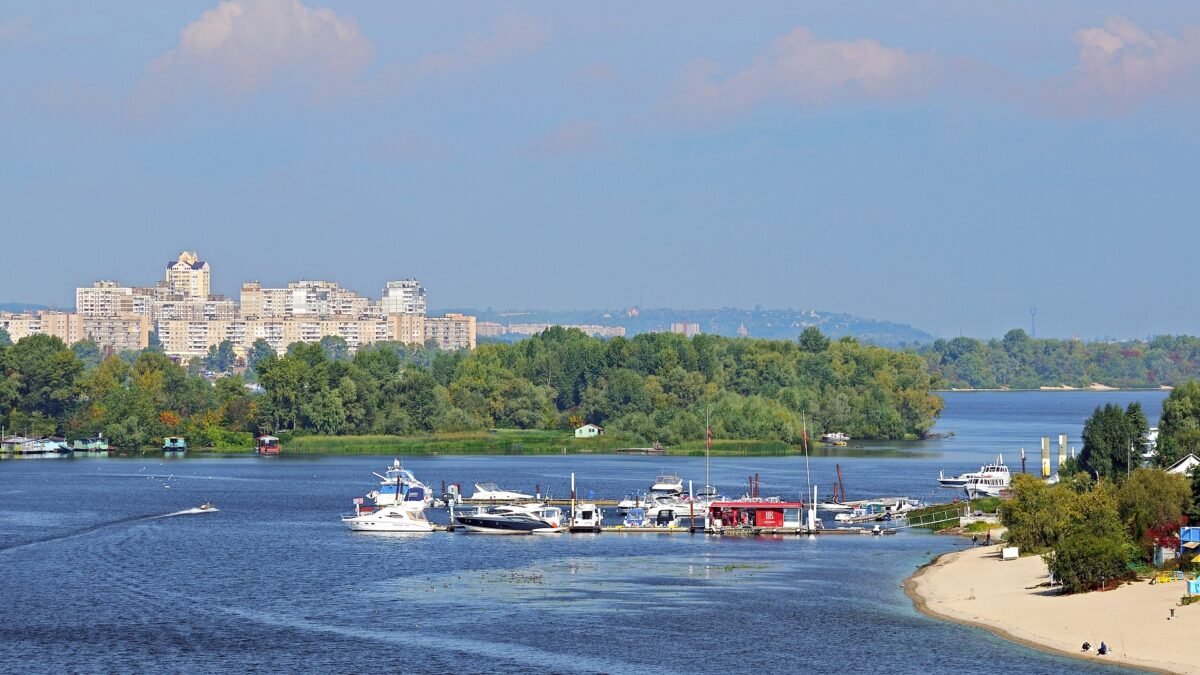
Russian forces struck two bridges across the Dnipro River in Kyiv late on Monday, according to the city’s mayor, Vitali Klitschko, hitting the crossings that carry traffic between the two halves of the Ukrainian capital and cutting water and heating supplies in parts of the city as winter closes in. The attack, which came hours after President Volodymyr Zelenskyy warned that Russian intelligence pointed to a fresh wave of strikes on Monday evening and through Tuesday, was one of the most direct blows against the capital’s civilian infrastructure in months, and it landed on the same day that Ukrainian forces attacked the Crimean Bridge, the crossing Russia uses to supply its forces in occupied Crimea.
Klitschko said the strikes hit the North and South bridges, the two crossings at the northern and southern ends of the capital, and he described the damage in the plain language of a city official dealing with an emergency in real time. “According to preliminary information, there have been hits on the North and South bridges in the capital,” he wrote on the messaging app Telegram, in a message posted at 11.45pm local time, shortly after Ukraine’s air force had warned of incoming missiles. He added later that water and heating supplies had been interrupted in some districts of the city, and that there were power cuts in parts of the capital as well.
Witnesses cited by the Reuters news agency reported a series of loud explosions across the capital, and the agency said air defence units were in operation over the city. Journalists from the Agence France-Presse news agency heard several strong blasts, and the Kyiv Independent described several explosions in a city of three million people, with smoke seen rising over the capital afterwards. Images circulating on social media appeared to show an explosion on at least one bridge crossing the Dnipro, although those images had not been verified.
Reuters said it could not immediately independently confirm the reports of hits on the bridges, and no figures had yet been released on the scale of the damage or on possible casualties from the attack on Kyiv itself. That caution matters. The first hours after a night strike are the hours when claims travel fastest and facts travel slowest, and the picture of what was actually damaged on the two bridges — the road decks, the approaches, the utility lines that run alongside them — will only become clear when engineers reach the structures in daylight. What is not in doubt is that something large hit the capital late on Monday, that the city’s mayor said the bridges were struck, and that residents in parts of Kyiv lost water, heat and power in the middle of the night.
Two bridges, one city cut in half
To understand why the two bridges matter, it helps to picture Kyiv’s geography. The Dnipro, the great river that runs through Ukraine from north to south, divides the capital into two unequal halves. The historic centre, the government quarter, the main railway station and most of the city’s ministries sit on the right bank, the western side. The left bank holds vast residential districts — Troieshchyna, Darnytsia, Pozniaky — where hundreds of thousands of Kyiv residents live, along with industrial zones and the roads that lead east towards Kharkiv and the front lines in the Donbas.
Only a handful of road bridges connect the two banks inside the city limits. The North Bridge, at the top of the city, and the South Bridge, at the bottom, are the two outermost crossings, and they carry a large share of the traffic that moves between the left bank and the centre, as well as the through traffic that passes around the city rather than through it. Hitting both of them in a single night is not a random choice of targets. It is a deliberate attempt to squeeze the city’s movement, to force traffic onto the remaining crossings in the middle, and to make the daily business of a city of three million people harder, slower and more dangerous.
The bridges also carry more than vehicles. Urban bridges of this kind routinely carry water mains, heating pipes and power and communications cables, and damage to a bridge can therefore cut services far beyond the span itself. Klitschko’s report of interruptions to water and heating supplies in some districts is consistent with that, and it is the detail that will worry Kyiv residents most. A bridge can be repaired. A heating system that fails in November, as temperatures fall towards freezing, is a different kind of problem, and it is one that affects the old, the sick and the very young first.
Russian forces have attacked the Dnipro crossings before. According to Reuters, Russian forces launched a series of attacks on bridges crossing the river earlier this month and in October. The November 16 attack is therefore not a new tactic but an escalation of an existing one, and it fits into a wider pattern that Ukrainians have come to recognise: as winter approaches, the strikes shift towards the infrastructure that keeps a city warm, lit and supplied. The question each time is not whether the campaign exists — it plainly does — but how much of it the city’s repair crews, its air defences and its reserves of equipment can absorb before the damage begins to outpace the repairs.
A wider night of strikes across Ukraine
Kyiv was not the only target on Monday night. Explosions were also reported in Smila, Kharkiv, Zaporizhzhia, Dnipro, Cherkasy and Pavlohrad, according to reports carried by the Kyiv Independent and other outlets, and the pattern of the night was that of a coordinated wave of drones and missiles aimed at cities and energy facilities across the country, rather than a single strike on the capital.
In the central city of Dnipro, the energy company DTEK said on Telegram that an attack on energy facilities in the region had left the city completely without electricity. Dnipro is one of Ukraine’s largest cities and a major industrial and logistical hub, and a total loss of power there is a serious event in its own right, whatever the eventual casualty figures turn out to be. The company gave no timetable for restoration, and the full extent of the damage to the city’s grid was not immediately clear.
A Russian missile attack injured three people in the region of Cherkasy, according to local officials cited by Reuters, and also targeted Kharkiv, Ukraine’s second-biggest city. The agency said Russian forces sent drones and missiles across other parts of Ukraine through the night. Russia and Ukraine both deny deliberately targeting civilians, a denial that has been repeated after almost every strike of this kind since the full-scale invasion began in February 2022, and one that sits uneasily beside the repeated pattern of damage to the infrastructure that civilians depend on.
What is striking about the night of November 16 is the breadth of it. A strike on two bridges in the capital, a blackout in a major regional city, injuries in Cherkasy, explosions in half a dozen other cities: this was not a single missile that went astray, but a planned operation across a wide front. And it came with a warning attached. Zelenskyy said earlier on Monday that intelligence showed Russia’s military planned strikes for Monday evening and throughout Tuesday, which means the night’s attacks may not be the end of the wave but the beginning of it.
Zelenskyy’s warning, and what it means
Zelenskyy’s warning deserves attention, because it tells us something about how this war is now fought in public as well as on the battlefield. The Ukrainian president did not wait for the strikes to happen and then describe them. He told his country in advance, on the basis of intelligence, that strikes were coming on Monday evening and would continue through Tuesday. That is a deliberate choice, and it serves more than one purpose.
First, it is a practical warning. Ukrainians who know that a wave of strikes is coming can charge their phones, fill their water containers, check on elderly neighbours and decide whether to spend the night in a shelter or a metro station. In a war in which the difference between a bad night and a fatal one can be a few minutes of preparation, a public warning is a form of civil defence.
Second, it is a political act. By announcing the strikes before they happen, Zelenskyy denies Russia the element of surprise and the narrative that follows it, and he frames the attacks, in advance, as a deliberate choice by Moscow rather than an accident of war. When the missiles then arrive on schedule, the warning looks like foresight, and the strikes look like exactly what they are: a planned operation against a civilian population, carried out in full knowledge of what it would do.
Third, and perhaps most importantly, it is a signal to Ukraine’s allies. A president who publicly predicts a wave of strikes is also publicly asking, without having to say so, for the air defence systems, the interceptor missiles and the repair equipment that would blunt the next wave. Every such warning is, in part, an argument for more help, made in the language of facts rather than of pleading.
Trump’s “backing off” remark — and Moscow’s answer
The strikes on Kyiv came on the same day that President Donald Trump, speaking to reporters on the White House lawn before departing for an Asian tour and the APEC summit in Shenzhen, offered a strikingly optimistic assessment of Russia’s intentions. Asked what it would take to force President Vladimir Putin to back down in Ukraine, Trump said he believed Putin was already softening his position.
“I think he’s already retreating a little. I think he could have been tougher. To be honest, he could have been much tougher. I think he’s backing off a little bit,” Trump said, according to reports of the exchange. He added that he believed Putin would like to see the war brought to an end, and he confirmed that he intends to discuss a settlement in detail at the coming talks in China with Putin and Chinese President Xi Jinping.
The contrast between those words and the night that followed them in Kyiv is the central irony of the day. While the American president was telling reporters that the Russian leader was “backing off a little bit”, Russian missiles and drones were on their way to two bridges in the Ukrainian capital, to the power grid of Dnipro and to cities across the country. It is possible that the timing was a coincidence. It is also possible that it was not, and that Moscow chose the evening of Trump’s departure for Asia to demonstrate, in the most concrete way available, that its definition of “backing off” differs considerably from Washington’s.
Moscow, for its part, offered its own answer to the idea of a pause in the fighting on the same day. Kremlin spokesman Dmitry Peskov said that Russia does not intend to agree to a temporary truce for the sake of giving Ukraine’s armed forces a respite, according to reports of his remarks. The message was blunt: there will be no ceasefire that merely allows Kyiv to regroup, and the war will continue until Moscow’s terms are met. That is a position Russia has held in various forms for much of the war, but its restatement on the very day of the Kyiv strikes, and on the eve of a three-way summit, gives it a particular edge.
The gap between Trump’s reading of Putin and Peskov’s reading of the war is not a minor difference of emphasis. It is the difference between a president who believes a deal is within reach and a Kremlin that is telling the world, in words and in missiles, that it is not interested in a pause. That gap will be the backdrop to everything that happens in Shenzhen on Thursday.
Thursday in Shenzhen: the summit the strikes now shadow
On Thursday, November 19, the leaders of the three largest nuclear-armed states will sit down together for the first time. China’s foreign ministry confirmed on Monday that President Xi Jinping will host a meeting of the heads of state of China, Russia and the United States in Shenzhen, attended by President Putin and President Trump, on the sidelines of the Asia-Pacific Economic Cooperation summit. The confirmation, delivered by foreign ministry spokeswoman Mao Ning at the ministry’s daily briefing in Beijing, closed the last open question about the meeting: the White House had announced it on Friday, November 13, and the Kremlin had confirmed Putin’s participation on Saturday, November 14, but Beijing had said nothing until Monday.
The meeting is, by any measure, a historic diplomatic event. The three presidents have never met together in a trilateral format before, and the gathering brings together the leaders of the world’s three largest nuclear arsenals at a moment when the last nuclear arms treaty between the United States and Russia expired in February, when a major war is raging in Europe, and when a second war, between the United States and Israel on one side and Iran on the other, has been fought through much of this year. The White House has said the meeting will focus on nuclear non-proliferation, a topic Trump has said could yield a new agreement between the world’s biggest nuclear-armed states, and Washington has also said that nuclear arms cuts and the Iran war are on its agenda.
What the meeting will not do, according to reports, is discuss Ukraine. Reuters reported, citing an administration official, that Trump is not expected to raise Russia’s war against Ukraine during the three-way session, and Beijing, when asked about nuclear arms and Iran, named neither as a topic. The Chinese foreign ministry said only that the leaders will exchange views on safeguarding world peace and promoting strategic stability in relations between the major powers. The absence of Ukraine from the agenda is itself a statement, and it is one that will be read with care in Kyiv, where the war is not an item on a summit agenda but a nightly reality of sirens, explosions and blackouts.
The strikes on Kyiv’s bridges will now shadow the Shenzhen meeting whether Ukraine is on the agenda or not. A summit of the three great powers that begins with one of them having just bombed the capital of a European country is a different event from a summit that begins with a ceasefire, or even with a quiet week. The images from Monday night — smoke over the Dnipro, a city of three million people losing water and heat as winter approaches — will be in the minds of everyone who watches the three presidents shake hands on Thursday, and they will shape the questions that are asked afterwards, even if they are not asked inside the room.
The Crimean Bridge, hours earlier
There is one more piece of context that makes Monday’s events harder to read, and more dangerous. Earlier on the same day, Ukrainian forces attacked the Crimean Bridge, the long crossing over the Kerch Strait that Russia uses to supply its forces in occupied Crimea and that has been a symbol of Moscow’s claim to the peninsula since it was built. The attack, which disrupted traffic on the bridge and stopped movement between Russia and the peninsula, was itself a major operation, and it was reported widely through the day.
The sequence matters. A Ukrainian strike on the Crimean Bridge in the morning, followed by a Russian strike on Kyiv’s bridges in the evening, is a pattern that looks, from the outside, like retaliation, and it is the kind of pattern that can escalate quickly. Each side hits a bridge, and each side can point to the other’s bridge as justification for the next one. The danger is not only that the exchanges continue, but that they widen: from bridges to power stations, from power stations to the dams and the heating plants, from military logistics to the civilian systems that keep cities alive through the winter.
It would be wrong to draw a straight line between the two attacks without evidence of a direct causal link, and the Russian campaign against Ukrainian infrastructure has its own long history that predates Monday’s events. Russia has been striking Ukraine’s energy grid in winter for years, and the attacks on the Dnipro crossings in October and earlier this month show that the bridges were already on the target list. But the timing of the two bridge attacks on the same day is unlikely to be lost on either side, and it is a reminder that in this war, escalation does not always announce itself with a declaration. Sometimes it announces itself with a second bridge, hit a few hours after the first.
Analysis: Why It Matters
A bridge is not just a bridge
The first thing to understand about the strikes on Kyiv’s North and South bridges is that they were not aimed at a military target in the narrow sense. Bridges in a capital city are civilian infrastructure first and military infrastructure second, and the people who suffer most when a bridge is damaged are not soldiers but the residents who use it to get to work, to school, to hospital and to the shops. The two crossings carry the daily traffic of a city of three million people, and damaging them makes every journey longer, every delivery slower and every emergency response harder.
That is the point. A strike on a bridge is a strike on the functioning of a city, and it is a form of pressure that works slowly rather than suddenly. A bridge that is closed for repairs does not kill people in the way a missile on a residential building does, but it degrades the life of a city day by day, and it forces a government to spend money, time and engineering capacity on repairs that could have been spent on something else. It is, in the cold language of military strategy, an attack on the enemy’s ability to sustain itself, and it is waged against civilians as much as against armies.
The fact that the strikes also cut water and heating supplies in parts of the city makes the point sharper still. In November, in a city where temperatures are falling towards freezing, heat and water are not conveniences. They are the difference between a home and a shelter, between a hospital that can function and one that cannot, between a population that endures and one that is forced to leave. The history of this war is full of winters in which the state of Ukraine’s heating and power systems has been the central question of the season, and the strikes on Monday night are an early answer to the question of how this winter will go.
The warning was the story, not just the strikes
The second thing to notice is that Zelenskyy warned about the strikes before they happened, and that warning is itself a significant fact. A president who can tell his country, with confidence, that a wave of strikes is coming on Monday evening and will continue through Tuesday is a president whose intelligence services are watching Russian preparations closely, and who is willing to use that intelligence in public rather than keeping it secret.
That willingness is a measure of how the war has changed. In the early months of the invasion, Ukrainian officials were careful about what they revealed, for fear of exposing sources and methods. Four and a half years on, the calculation has shifted. A public warning that proves accurate is worth more than the secrecy it costs, because it protects civilians, it demonstrates competence, and it puts the attacker in the position of confirming the victim’s account with every missile that lands. When the strikes arrived on schedule, Zelenskyy’s warning became a piece of evidence in itself, and it will be remembered the next time he issues one.
There is also a harder edge to the warning. A president who tells his people that more strikes are coming through Tuesday is telling them, in effect, to prepare for a bad night, and he is doing so at a moment when the world’s attention is about to turn to a summit in Shenzhen at which Ukraine will not even be discussed. The warning is a reminder that the war does not pause for diplomacy, and that the people who live under the missiles do not get to choose the agenda of the meetings that decide their fate.
Trump’s optimism meets Moscow’s reality
The third thing the night of November 16 exposes is the gap between how President Trump describes the war and how the war actually behaves. Trump told reporters on Monday that Putin is “backing off a little bit”, that he could have been much tougher, and that he would like to see the war ended. Those are the words of a president who believes a deal is close, or at least closer than it was. The missiles that landed in Kyiv a few hours later are the words of a Kremlin that does not appear to share that belief.
This is not the first time the gap has appeared. Throughout this year, American optimism about a settlement has repeatedly collided with Russian actions on the ground, and each time the pattern has been the same: a statement of confidence from Washington, followed by a strike, an advance or a statement from Moscow that narrows the space for a deal rather than widening it. Peskov’s rejection of a temporary truce on the same day is the clearest version of that pattern yet, because it was not a battlefield action but a political statement, delivered in plain language, that Russia will not accept a pause that merely allows Ukraine to recover.
The danger of the gap is not only that it leads to disappointment. It is that it leads to miscalculation. A president who believes his counterpart is “backing off” may be less inclined to apply pressure, less inclined to send weapons, less inclined to insist on terms, and more inclined to treat the next meeting as a formality rather than a negotiation. A Kremlin that sees that belief may conclude that it can afford to keep striking, because the strikes will not change the American assessment. The bridges of Kyiv are, in that sense, a test of whether the American reading of the war survives contact with the war itself.
Winter is the real battlefield
The fourth point is the simplest and the most important: the war in Ukraine is now, above all, a war about winter. The front lines in the Donbas move slowly, by metres and by villages, and the great offensives of earlier years have given way to a grinding war of attrition. But the war against Ukraine’s energy system, its heating plants, its water supply and its bridges is a war that can be won or lost in a single season, and it is the war that will decide how many Ukrainians can stay in their homes through the cold months.
Russia’s strategy is not mysterious. It has been the same for several winters now: destroy enough of the infrastructure that keeps a modern city functioning, and the city becomes harder to live in, harder to defend and harder to govern. The strikes on the bridges fit into that strategy, and so does the blackout in Dnipro, and so do the attacks on energy facilities that have been reported through the autumn. Each strike on its own is reparable. Taken together, over a winter, they amount to a campaign to make Ukraine uninhabitable in the places where its people live.
Ukraine’s answer, so far, has been repair crews working through the night, air defences that intercept a large share of what is fired, and a population that has learned to live with blackouts, with water stored in bottles and with heating that comes and goes. That resilience is real, and it is remarkable, but it is not infinite, and every winter tests it a little further. The question of this winter is whether the repair capacity, the air defence stocks and the public’s endurance can keep pace with a campaign that is now being waged against bridges as well as power stations, and the strikes of November 16 are an early and discouraging data point.
Shenzhen will be judged by what it does not say
The fifth and final point concerns the summit that begins on Thursday. The meeting of Trump, Xi and Putin in Shenzhen is a genuine diplomatic event, and it may produce something real on nuclear arms, on Iran or on the trade tensions that have defined the relationship between the three powers. But it will also be judged, fairly or not, by what it does not say about Ukraine, and by what it does not do about a war that was, on the eve of the summit, being fought against the bridges and the heating systems of a European capital.
A summit that discusses the future of the world’s nuclear arsenals while ignoring the war in which one of its participants is bombing a city of three million people is a summit that invites a question: what is the point of great-power diplomacy if it cannot address the war that the great powers are themselves involved in? The answer may be that the three leaders have other priorities, and that Ukraine will be dealt with separately, in another format, at another time. That is a defensible position. But it is also a position that will look thin in Kyiv, where the war is not a topic for a future meeting but a present fact of sirens, smoke and cold water in the taps.
The most important thing to watch in Shenzhen, therefore, is not only what the three presidents agree on, but what they choose not to mention, and how the world reacts to that silence. A summit that produces a nuclear agreement and says nothing about Ukraine will be a success on its own terms and a failure on the terms that matter most to the people who spent Monday night in Kyiv listening to explosions. The bridges, in that sense, will be present in the room even if Ukraine is not, and they will be the measure against which the summit is judged.
What to Watch Next
- The damage assessment on the two bridges. Engineers will inspect the North and South bridges in daylight, and the city administration will say how badly the spans and their approaches were damaged, how long repairs will take and whether traffic can continue. The difference between a bridge that is scarred and a bridge that is closed is the difference between an inconvenience and a crisis for the left bank.
- Whether the strikes continue through Tuesday. Zelenskyy warned that Russian forces planned strikes for Monday evening and throughout Tuesday. If a second wave arrives, it will confirm that this was a planned multi-day operation rather than a single night’s work, and it will test the city’s air defences and repair crews a second time in 24 hours.
- Restoration of water, heat and power in Kyiv. The speed with which supplies return to the affected districts will tell us how serious the damage was. A restoration measured in hours is a nuisance. A restoration measured in days, as temperatures fall, is a humanitarian problem.
- The situation in Dnipro. A city left completely without electricity needs power restored before its hospitals, its water pumps and its heating systems can function. DTEK’s statements in the coming hours will show whether the blackout was a brief interruption or a lasting failure of the grid.
- The casualty figures. No figures had been released for Kyiv itself in the first hours after the strikes, and three people were reported injured in the Cherkasy region. Updated figures from the Ukrainian authorities, and any response from the Russian side, will clarify the human cost of the night.
- The Shenzhen summit on Thursday. The first trilateral meeting of Trump, Xi and Putin will be watched for any mention of Ukraine, any comment on the Kyiv strikes and any sign that the war is on the agenda even though it is not officially listed. A silence on Ukraine will be as informative as a statement.
- Whether the bridge exchanges continue. Ukraine’s strike on the Crimean Bridge and Russia’s strike on Kyiv’s bridges happened on the same day. If either side hits another bridge in the coming days, the pattern will harden into a campaign, and the crossings that keep both countries’ logistics moving will become the front line of the war’s next phase.
Sources
- Reuters — “Kyiv Mayor Klitschko says Russian forces struck two bridges across the Dnipro River”
- Pollar News (reporting AFP and Kyiv Independent accounts) — “Russian strikes damage two Kyiv bridges and disrupt water supply”
- CNN — “Trump to meet with China’s Xi and Russia’s Putin at historic trilateral sit-down on nuclear non-proliferation”
- The Business Standard — “China confirms first Xi-Trump-Putin summit on Thursday”
- EADaily — “Trump: Putin is retreating… to be honest, he could have been much tougher”
- Daily Caller — “Trump, Xi And Putin Summit Officially On The Books”

About the Author — Abdul Mannan
Related Articles

Five EU Countries to Open Migrant Deportation Hub in Rwanda in 2027 in Landmark Return Deal
Five European countries have unveiled plans to send rejected asylum seekers to a deportation hub in Rwanda, with…
Estonia to Close All Border Crossings With Russia From 1 December After GRU-Linked Arson Attempt on Drone Maker
Estonia will shut all three of its border crossings with Russia from 1 December after blaming Russia's GRU…
Ukraine Launches Its Biggest Drone Attack of the War as 1,336 Drones Strike Russia and Hit the Crimea Bridge
Russia said its air defences downed 1,336 Ukrainian drones overnight, the largest such attack of the war, in…