
Democrat Scott Colom Wins Mississippi Senate Seat in Historic Upset, First Black Senator from the State Since Reconstruction

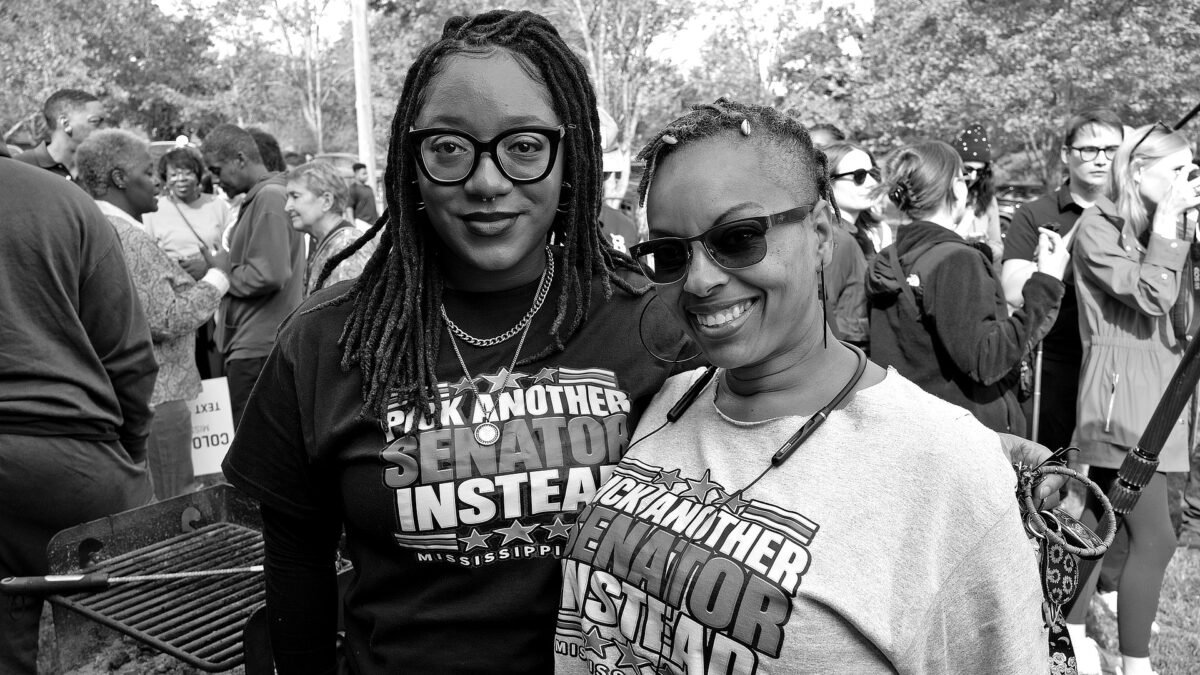
Democrat Scott Colom has won the United States Senate race in Mississippi, defeating the Republican incumbent Cindy Hyde-Smith in one of the greatest upsets in modern American politics, according to the Associated Press. Colom will become the first Black person elected to the Senate from Mississippi since Reconstruction, and the first Democrat to win one of the state’s Senate seats since 1982.
The Associated Press called the contest for Colom on Wednesday, more than a week after voters went to the polls on 3 November, after officials finished counting the absentee and provisional ballots that had kept the outcome uncertain since election night. CNN and NBC News also projected Colom as the winner on Wednesday evening. His victory was the closest Senate race in the country this year, decided by only a few thousand votes, and it gives the Democrats an eighth Senate seat flipped from the Republicans in the 2026 midterm elections, securing them a minimum 55-seat majority in the new Congress, with the race in Alaska still to be called.
Hyde-Smith conceded the race in a video posted to social media shortly after the Associated Press call on Wednesday. “While this is not the outcome we worked for or hoped for, I respect the decision of Mississippi voters,” she said. “I want to congratulate Scott Colom and wish him well as he takes on the tremendous responsibility of representing our great state.” Colom declared victory on 11 November, eight days after Election Day.
The result is a landmark in American political history. Mississippi has the highest share of Black voters of any state in the country, at close to 40 per cent, yet it had not sent a Black senator to Washington since the Reconstruction era. Colom will be the state’s first Black senator since Blanche K. Bruce, who was born into slavery and was elected to the chamber in 1874 by the state’s Republican-controlled legislature, serving a single term until 1881. He is also the first Democrat to win a Mississippi Senate seat since John Stennis in 1982, a man who, as CNN noted, was himself an avowed segregationist. The victory came in a state that President Donald Trump carried by 23 points in 2024, according to the Associated Press, and in a contest that the nonpartisan Cook Political Report had rated as Likely Republican going into election night.
Colom, 43, a seventh-generation Mississippian and the district attorney for Mississippi’s 16th judicial district, built his campaign on a single, relentless message about the cost of living. His slogan at every event across the state was “lower costs, higher wages, save our health care, save our hospitals.” He dubbed his opponent “Cindy High Prices”, arguing that her allegiance to the president’s economic policies had raised costs for Mississippi families. And he turned a single offhand remark by Hyde-Smith into one of the most viral advertisements of the entire election cycle, an advertisement that may come to be remembered as the moment the race changed.
The call and the count
The Mississippi Senate race was the last great unknown of the 2026 midterms. On election night itself, the outcome was far from settled. Hyde-Smith led early as the first results came in, but Colom began surging as the outstanding absentee and provisional ballots were counted over the following days, according to the Associated Press. The count stretched on for more than a week, with both parties sending legal teams to watch it. The Democratic Senatorial Campaign Committee and the National Republican Senatorial Committee both dispatched lawyers to monitor the ballot counting, according to USA Today, and the process at times, in that newspaper’s words, “flirted with legal action”.
By Wednesday evening, the picture had become clear. Colom held a razor-thin but growing lead as the remaining ballots were tallied, and the Associated Press called the race for him at 5.04pm Central Time, according to NPR. The Clarion Ledger, the state’s largest newspaper, reported that the two candidates were separated by about half a percentage point as of Wednesday evening, with Colom ahead. The Times of London reported that, with the final mail-in ballots counted on Wednesday night, Colom held a lead of more than 4,500 votes. That margin, tiny in a statewide race, was nevertheless decisive. Mississippi does not require a 50-per-cent-plus-one majority in a federal race, and the state has no recount process, according to the Clarion Ledger, so there was no procedural route left for the result to change.
State officials said they did not expect final certified totals until Friday at 5pm, according to the Clarion Ledger. But the direction of the count was no longer in doubt, and Hyde-Smith’s concession, posted to social media just before 5.30pm on Wednesday, ended it. She had said little since election night, making only rare remarks to reporters in the hallways of the Capitol on Tuesday, where she had projected confidence, according to CNN. On election night itself, she had claimed victory prematurely, telling supporters: “I blocked Scott Colom from being a federal judge, and you blocked him from being a US senator.” Within eight days, that boast had been turned upside down.
Colom had remained sure throughout the wait that he would win, according to CNN, even while privately voicing annoyance at those he saw jumping on the bandwagon after doubting him. His campaign had tracked the numbers from election night onward and saw him doing exactly what its model required: high turnout among the state’s Black population, coupled with a meaningful share of the White vote. The feeling inside the campaign, CNN reported, was less “I told you so” than exuberant disbelief that they had pulled it off.
Who is Scott Colom?
Scott Colom is, in the words of one of his own campaign’s advisers, a man who has been around Mississippi politics for decades. He is a seventh-generation Mississippian, a native of Columbus, and a graduate of Millsaps College. His father, Wilbur, worked for Ronald Reagan and was the Republican nominee for state treasurer as far back as 1987, written up by newspapers at the time as “A Different Kind of Black Leader from Mississippi”. His mother, Dorothy, was an elected judge on a local chancery court. Colom himself served as a municipal court judge and a local prosecutor before being elected in 2015 as the district attorney for four counties in the state’s 16th judicial district, a post he still held when he ran for the Senate.
Early in his career he caught the eye of the state’s lone Democratic congressman, Bennie Thompson, who included him in a leadership training programme called the Mississippi Black Leadership Institute. “We were trying to create a farm team for people who might pursue public service,” Thompson told CNN in October. In 2022, on Thompson’s recommendation, President Joe Biden nominated Colom to be a district court judge for the Northern District of Mississippi. The state’s senior senator, Roger Wicker, was ready to support the nomination. But Hyde-Smith refused to return her “blue slip”, the Senate’s traditional courtesy that allows a home-state senator to single-handedly delay or derail a judicial nominee from their state. Hyde-Smith said she objected to Colom’s support of transgender rights, and the nomination died.
About two and a half years later, Colom launched his campaign for Hyde-Smith’s seat. The blue slip episode became, in effect, his origin story, and Hyde-Smith’s own election-night boast about blocking him from the bench became a line his campaign threw back at her for the rest of the race. It also gave the contest a personal edge that few Senate races possess: this was not simply a Democrat challenging a Republican incumbent, but a man running against the senator who had personally stopped his path to the federal bench.
Colom had been talking about running for years, according to Brandon Presley, the 2023 Democratic nominee for governor in Mississippi and a longtime Democratic leader in the state. Presley recalled sitting with Colom and going over the numbers, including the fact that Barack Obama had won more raw votes in Mississippi in his 2012 re-election than the Republican Phil Bryant had received when Bryant won the governor’s race in 2011. “There were just a few of us who were idealistic enough to think that the chance was here, and if you did it in the right way you could win, and if you did it at the right time,” Presley told CNN. “We felt like Noah: nobody wanted to listen. And then it started to rain.”
The campaign that defied the forecasts
For most of the campaign, almost nobody in national politics believed Colom could win. The Cook Political Report rated the race Likely Republican going into election night, and the national Democratic Party spent almost nothing in Mississippi for most of the cycle. Colom told NPR earlier this month that the lack of investment from national Democrats until the last minute was a mistake. “The reality is, Mississippi has never been a lost cause, we’ve been a betrayed cause,” he said. “The Democratic Party has not been trying to win Mississippi. Let’s stop kidding ourselves, right? They spent hundreds of millions of dollars in other states. They spent almost nothing in Mississippi.”
He made the same point publicly after the race was called, writing on X on 9 November that the forecasters had hurt his campaign. “At some point, we have to talk about @CookPolitical and other ‘prognosticators’ who had me and other southern candidates labeled as solid R for much of the campaign cycle,” he wrote, according to USA Today. “They made it much more difficult to fundraise and are part of the reason the South has been neglected for so long.”
A small number of people had seen the possibility much earlier. Senator Raphael Warnock of Georgia had been beating the drum for the race since last November, pointing out to anyone who would listen that the percentage of Black voters in Mississippi was higher than in Georgia, which had defied history to elect him twice. At a Washington fundraiser in April, Warnock told the room: “There’s one race I think we’re sleeping on, and that’s Mississippi.” The audience laughed, according to a recording obtained by CNN, and quite hard, until Warnock cut them off. “Mississippi, yes,” he said, before launching into Colom’s biography. Warnock stayed involved throughout the campaign, calling and texting Colom with support and advice, and raising 750,000 dollars, much of it early, to help pay for voter registration and mobilisation, according to a person familiar with the conversations cited by CNN. He also spent the year pushing the Senate Democratic leader, Chuck Schumer, to do more.
Schumer himself had been sceptical. Colom had already set his mind on running when Schumer agreed to have him and his father over for lunch one afternoon in November 2024, according to CNN, and he was struggling even then to win national buy-in. But as the race tightened, the money began to move. Senate Majority PAC, the outside spending group affiliated with Schumer, had kept an eye on the race for months, intrigued by how Colom was performing on social media and by the way Hyde-Smith kept making mistakes. It was not until Labor Day, when polling gave way to a larger sense that other once-competitive Senate seats were becoming safe bets, that calls started going out to donors and partner groups encouraging them to move into Mississippi, however unlikely a prospect they believed it to be.
In the final stretch, the cavalry arrived in force. Former Vice President Kamala Harris campaigned for Colom in Columbus on 22 October, drawing 1,000 cheering people into his old high school gym, where he had played basketball as a teenager. Former President Bill Clinton headlined a large rally in Tupelo on 30 October, one of only two public campaign stops he made in the entire midterm cycle. Senator Cory Booker of New Jersey made trips to the state, as did the Senate’s other Black Democratic senators. Former Transportation Secretary Pete Buttigieg followed. New York Representative Alexandria Ocasio-Cortez spoke with Colom in early October and, though a joint appearance did not work out, wrote his campaign a 3,500-dollar check from her own account, the maximum allowed, and sent a fundraising email for him. Illinois Governor JB Pritzker put 1.4 million dollars into two television advertisements and a further 200,000 dollars into calls and texts targeting Black voters, according to a person involved with the placement cited by CNN. Former President Barack Obama recorded an advertisement for Colom. All told, Democrats outspent Republicans in the state by nine million dollars to 3.9 million dollars in the final two weeks, according to data from AdImpact cited by CNN.
On the other side, the Republicans sent their biggest weapon. President Trump flew into Mississippi in the final week to headline a rally for Hyde-Smith in Corinth on 26 October. Hyde-Smith took the microphone for just a few seconds, long enough to ask, “Is this not the best president in our lifetime?” and then walk away, according to CNN. Colom was at that same rally in Corinth, outside, shaking hands and taking selfies along the line of supporters. Days earlier, standing on the floor of his old high school gym in Columbus, he had challenged the president to a debate. “Other people are scared. No, I want him to answer why he didn’t release the Epstein files, why he betrayed the farmers,” he told CNN after the rally. “Listen, the reality is, I’m not scared, I ain’t Joe Biden. I’m ready to go. Let’s go. He ain’t gonna do it. He’s scared, too.”
“Pick another protein”: the advertisement that broke through
If one moment explains how a Democrat won a Senate seat in a state that Trump carried by 23 points, it may be a remark about the price of beef. Hyde-Smith, a cattle rancher and a former Mississippi Commissioner of Agriculture and Commerce, was asked by a television reporter earlier this year what Republicans were doing about soaring beef prices. “You know, you have so many other proteins to choose from,” she replied. The answer, from a senator representing a poor, rural, agriculture-heavy state, struck many voters as dismissive, and Colom’s campaign turned it into one of the most viral advertisements of the election cycle.
The advertisement, released last month, showed Hyde-Smith giving her answer, followed by scenes of Mississippians grilling and buying beef at a grocery store. “Pick another protein? She done lost her damn mind!” a woman in a diner said. A man grilling hamburgers said he would “rather pick another senator instead.” The advertisement was viewed 2.8 million times in its first 36 hours across social media platforms, according to USA Today. Its director and editor, Ryan Sayles, was described by Colom as the “breakout star” of the election cycle. “He did game-changing work with so little,” Colom said.
The idea came from Patrick Gaspard, the former Obama political director who had first met Colom through his criminal justice reform work as a prosecutor, and who had been advising him and helping him make connections since the spring. Gaspard said Colom’s relentless campaigning was the core of the success, whether that meant watching him work the six people who showed up to a cookout in a summer downpour, or the casino workers in Biloxi who took time out from an employee event to talk with him about the price of gas, data centres, and the corruption they saw in the Trump administration. “There was something he was getting back that made it abundantly clear that something had cracked in the Trump wall,” Gaspard told CNN.
The advertisement worked because it was not really about beef. It was about a senator who, in the eyes of many voters, had stopped listening. Colom’s campaign was a deliberate contrast in style with Hyde-Smith, who rarely spoke to reporters in Washington and had minimal presence in the state, according to NPR. Colom campaigned in every corner of Mississippi, repeated the same promises about costs, wages, health care and hospitals at every stop, and accused his opponent of avoiding voters by refusing to hold town halls or answer questions from reporters. He also singled out billionaires, calling for higher taxes on the wealthy to pay for health insurance and save state hospitals. “These people, Jeff Bezos, Elon Musk, all these people, they’re making plenty of money,” he said in a local television interview on 18 October, according to USA Today. “We don’t need to give them corporate subsidies. They need to pay their share.”
The numbers behind the win tell the same story. According to the USA Today Network, Colom flipped at least 18 counties that had voted for Trump in 2024, including some that had not elected a Democratic senator since the 1980s. His campaign’s formula, as his pollsters saw it, was high turnout among the state’s Black population, coupled with at least a quarter of the White vote. Mike Espy, a former agriculture secretary under Bill Clinton who had represented the state in the House, had tried to pull off the same formula against Hyde-Smith in 2020, but fell far short in a presidential year defined by the Covid-19 pandemic. Presley had come closer in his run for governor in 2023, losing by three percentage points, or just over 26,000 votes. This time, the formula held.
A Democratic wave, capped in Mississippi
Colom’s victory was the eighth Democratic flip of the Senate in these midterms, and it capped a night that had already delivered the party control of both chambers of Congress. According to race calls by the Associated Press, NBC News, CBS News and Decision Desk HQ, Democrats flipped Senate seats in North Carolina, where the former governor Roy Cooper won a Republican-held seat; in South Carolina, where Annie Andrews defeated the incumbent; in Texas, where James Talarico beat the Republican attorney general Ken Paxton; in Kansas, where Adam Hamilton unseated the incumbent; in Iowa, where Josh Turek flipped the seat; in Ohio, where the former senator Sherrod Brown won; and in Maine, where Troy Jackson unseated the five-term senator Susan Collins. Republicans did not flip a single Democratic seat.
The scale of the result is striking. Kansas last elected a Democrat to the Senate in 1932, Texas in 1988, and South Carolina in 1998. Before the Mississippi call, the Democrats already held 54 of the 100 Senate seats, including the two independents who caucus with them, against 44 for the Republicans, according to the same race calls. Mississippi takes them to 55. The one remaining uncalled race, in Alaska, could take them further: the Democratic candidate Mary Peltola was leading there, according to The Times, and if she wins, the Democrats would hold a 56-44 majority, their largest since 2008. The new Congress takes office on 3 January 2027.
The Democrats also won the House of Representatives, according to projections by the Associated Press and NBC News, ending Republican control of both chambers and giving President Trump an opposition Congress for the final two years of his presidency. Exit polls cited by several outlets found that about half of voters saw the midterms as a chance to rebuke the president. The Mississippi result is the most dramatic single piece of that story, because it happened in the state where, by every conventional measure, it should have been least possible.
The history of the state makes the result heavier still. Mississippi is the state with the largest Black population in America, a place, as USA Today put it, “often associated with racial segregation and the Civil Rights Movement”. It is also a state where the Confederate stars and bars were removed from the state flag only six years ago. Its last Black senator, Blanche Bruce, was born into slavery. Its last Democratic senator, John Stennis, was an avowed segregationist who fought, in his own words, to “preserve the Southern way”. Colom’s victory does not erase that history. But it does, for the first time in a century and a half, put a Black Mississippian in the United States Senate by the votes of Mississippians themselves.
Bill Clinton, who campaigned for Colom in Tupelo, congratulated him on social media with a line that captured the disbelief of the night: “We may have had to count One Mississippi, Two Mississippi, but Blue Mississippi sure has a nice ring to it!” Chuck Schumer, the Democratic leader in the Senate, said Colom was the only person who could have turned Mississippi blue. “Scott Colom was the only person who could’ve gotten this done,” Schumer said, according to The Times. “I knew it from the moment I met him.”
Analysis: Why It Matters
The electoral map is not fixed
The first lesson of Mississippi is that the map of American politics is not as fixed as the people who draw it believe. Every forecaster in the country, including the Cook Political Report, had this race rated as Likely Republican. The national Democratic Party treated Mississippi as unwinnable and spent almost nothing there for most of the cycle. The state had not elected a Democrat to the Senate in 44 years, and the president had carried it by 23 points two years earlier. Every one of those facts was true, and none of them determined the outcome. Colom won because he found voters the model had written off, in counties the model had written off, by talking about the things the model said did not decide elections in a state like Mississippi. The forecasters were not wrong about the history. They were wrong about whether history is destiny, and that is a mistake both parties will now have to reckon with in every state they have written off.
Affordability beat identity
The second lesson is about what actually moves voters. Colom did not win Mississippi by nationalising the race or by running a campaign about the great ideological questions of the day. He won it by talking, relentlessly, about the price of beef, the price of gas, the cost of health insurance, and the rural hospitals at risk of closing. His slogan was not a vision statement; it was a shopping list: lower costs, higher wages, save our health care, save our hospitals. Hyde-Smith’s “pick another protein” remark became devastating not because it was a gaffe in the ordinary sense, but because it confirmed, in a single sentence, the charge Colom had been making all along: that she did not understand what rising prices meant for the people she represented. In a state where hundreds of thousands of people have no health insurance, and where rural clinics face closure as Medicaid cuts from the president’s “One Big Beautiful Bill” take effect, a senator telling voters to buy different meat was not a slip of the tongue. It was a window into a governing attitude, and Colom held it open for the whole state to see.
A personal grudge became a campaign
The third lesson is that politics is, in the end, personal, and that the personal can be powerful. This race began, in a real sense, in 2022, when Hyde-Smith used a Senate courtesy to block Colom’s nomination to the federal bench. She did it quietly, by withholding a blue slip, and she later boasted about it on election night. But the block gave Colom something no amount of money can buy: a story that explained, in one episode, why he was running and who he was running against. He was not a generic Democrat challenging a generic Republican. He was a prosecutor whose path to the bench had been stopped by the very senator he was now asking voters to replace. That story gave his campaign a moral clarity that cut through the noise, and it gave voters a reason to believe that his candidacy was about something more than party. It also gave Hyde-Smith’s opponents a line they could repeat everywhere: she blocked him from being a judge, and then she tried to block him from being a senator. The voters declined to help her the second time.
What 55 seats actually buys
The fourth lesson concerns power. A 55-seat Democratic majority, or 56 if Alaska follows Mississippi, changes Washington in concrete ways, but it is worth being precise about what it does and does not do. It gives the Democrats control of the Senate’s committees, the power to set the chamber’s agenda, and the ability to confirm or block the president’s nominees, including judges. Combined with the House, it gives them the power to investigate the administration, to subpoena witnesses, and to pass legislation through both chambers. What it does not give them is the power to pass most legislation on their own, because the filibuster still requires 60 votes to break. A 55-seat majority is a governing majority and a check on a president, not a legislative blank cheque. The Democrats will be able to stop things, to expose things, and to confirm their own people to the bench. They will not be able to enact a sweeping programme without Republican votes. That is a real constraint, and it is one the party’s voters, who turned out in such numbers to deliver this majority, will have to understand.
The South is in play
The fifth lesson, and the one that will echo longest, is about the South. Brandon Presley, the Democrat who came within three points of winning the Mississippi governorship in 2023, told CNN that Colom’s victory “changes the political dynamics in Mississippi for the next 50 to 75 years”. That may be an overstatement, and it should be read as the enthusiasm of a man who has spent years being told his state was unwinnable. But the direction of travel is real. Presley predicted that more Democrats would now run for local offices in Mississippi, and more would win. The Colom campaign’s formula, high Black turnout plus a quarter of the White vote, is not unique to Mississippi; it is available, in different proportions, across the Deep South. The national party ignored Mississippi until the final weeks of this race, and it won anyway. The obvious question now is what happens when the party does not ignore it, and when the next candidate does not have to spend a year begging for attention before the money arrives. The other states in the region will be watching, and so will the people who laughed at Raphael Warnock in April.
What to Watch Next
- Alaska: The final uncalled Senate race will settle whether the Democratic majority is 55 or 56 seats. Mary Peltola was leading there, according to The Times, and a win would give the Democrats their largest Senate majority since 2008.
- Certification: Mississippi’s final certified vote totals are expected on Friday at 5pm, according to the Secretary of State’s office cited by the Clarion Ledger. The margin, about half a percentage point, is not expected to change the outcome, but it will fix the record.
- The new Congress: Colom takes his seat when the new Congress convenes on 3 January 2027. His committee assignments, and the role he plays in a Democratic majority, will show how quickly a freshman senator from a deep-red state can matter.
- Hyde-Smith’s future: The defeated incumbent has said nothing about her plans since her concession video. At 67, and after eight years in the Senate, her next move will be watched in Mississippi Republican circles.
- The investigations: With Democrats in control of both chambers, the probes they promised during the campaign, including into the administration’s spending and appointments, can now begin in earnest. The Senate majority is what makes subpoenas possible.
- The 2028 map: The parties will now fight over the lessons of Mississippi. If the Democrats conclude that the South is winnable, they will invest there earlier next time. If the Republicans conclude that affordability, not loyalty, decided this race, their own message will have to change.
- The model: Colom flipped at least 18 counties that voted for Trump in 2024. Whether that coalition holds in the next election, and whether it can be replicated in neighbouring states, is the question that will shape Democratic strategy for years.
Sources
- Associated Press, via NPR Illinois: “Democrat Scott Colom wins Mississippi Senate race”
- USA Today: “Scott Colom to become Mississippi’s first Black senator since Reconstruction”
- CNN: “How Scott Colom defied more than a century of history to win Democrats a Mississippi Senate seat”
- The Times: “Democrat Scott Colom secures historic Senate seat in deep-red Mississippi”
- Clarion Ledger: “Scott Colom wins U.S. Senate election in Mississippi, continues blue wave”
- ResPublica: “Democrats take Congress: what the new majority can and cannot do”

About the Author — Abdul Mannan
Related Articles

Trump Administration Moves to Cut Food Stamps for 6.3 Million Americans in Biggest SNAP Crackdown in Years
The USDA's proposed rule would end broad-based categorical eligibility, stripping about 6.3 million people of food stamps and…

House Republicans Elect Jim Jordan as Minority Leader in 106–73 Vote Over Steve Scalise
House Republicans have elected Jim Jordan of Ohio as their minority leader, defeating Steve Scalise 106–73 in a…

House Blocks Hegseth Impeachment Bid in 211-204 Vote as Republicans Send Articles to Committee
The US House of Representatives voted 211-204 on Tuesday to send eight articles of impeachment against Defence Secretary…