
Supreme Court to Decide Whether Trump Can Bar Asylum at the Southern Border

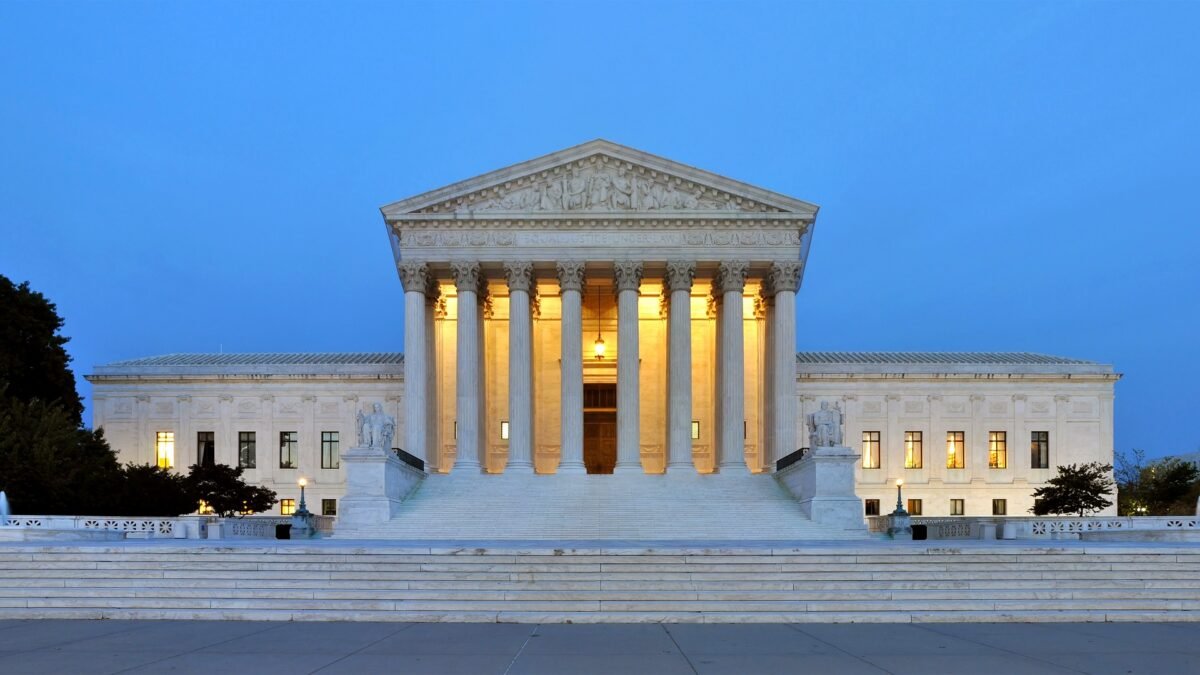
The United States Supreme Court agreed on Friday to decide whether President Donald Trump had the power to shut off asylum at the southern border, taking up the central legal fight over the immigration crackdown that has defined his second term.
The justices will hear Mullin v. Refugee and Immigrant Center for Education and Legal Services, known as Mullin v. RAICES, a challenge to the proclamation Mr Trump signed within hours of returning to the White House in January 2025 that declared an “invasion” at the border with Mexico and barred people who crossed it from seeking asylum. The court announced its decision on 13 November 2026, and it is expected to hear arguments in the spring of 2027 and deliver a ruling by the end of June.
The case is the third major immigration dispute the court will decide this term, and it goes to the heart of a question no court has yet answered: whether a president can use a power Congress wrote for controlling who enters the country to switch off, by proclamation, a right Congress wrote separately into the same law — the right of anyone who reaches the United States to ask for asylum. The ban has remained in force throughout nearly two years of litigation, so the ruling will decide not only whether the policy was lawful, but whether the most consequential border measure of Mr Trump’s presidency survives into its final years.
Nothing changes on the ground for now. The restrictions stay in place while the case is pending, as they have since the summer of 2025, when an appeals court paused the parts of a lower court’s ruling that would have lifted them. But the court’s decision to take the case, and the two questions it chose to answer, set up a ruling that could reach well beyond the border — into how far any president’s emergency powers extend, and how far lower courts can go in blocking a policy for everyone it affects rather than only for the people who sued.
What the ban does
Proclamation 10888, titled “Guaranteeing the States Protection Against Invasion,” was signed on 20 January 2025, Mr Trump’s first day back in office, and published in the Federal Register nine days later. It relied on two provisions of the Immigration and Nationality Act — Section 212(f), which lets a president suspend the entry of any class of noncitizens whose entry he finds detrimental to the interests of the United States, and Section 215(a) — to suspend the entry of people crossing the southern border and to bar them from invoking asylum and the other protections that might allow them to remain.
The proclamation stays in effect until the president determines that the “invasion” at the southern border has ended, according to Reuters. In practice, that has meant that for almost two years, people who cross the southern border between official ports of entry have been turned back without the opportunity to make an asylum claim at all — a sharp break with the system Congress built in 1980, under which anyone physically present in the United States, or arriving at its borders, may apply for asylum “whether or not at a designated port of arrival.”
The administration has described the measure as the foundation of its border policy. Solicitor General D. John Sauer wrote in the government’s petition to the Supreme Court that “since the proclamation took effect, border encounters have fallen by 93 percent, dropping to the lowest levels since the 1960s,” according to the Associated Press. James Percival, the general counsel of the Department of Homeland Security, called the executive order the “single most important factor in the President’s success at the border” in a social media post, according to the Associated Press.
Immigration lawyers who challenged the ban dispute that account of cause and effect. Attorneys from the American Civil Liberties Union and several immigration rights groups told the Associated Press that border crossings were already falling before Mr Trump took office, and they describe the order as an unlawful attempt to “invent by fiat a new removal system that eviscerates” the legal protections Congress created for people fleeing danger.
The human stakes were put plainly by Keren Zwick, the executive director of the National Immigrant Justice Center, one of the groups behind the challenge. “The plaintiffs in this case fled persecution and torture, including political imprisonment and threats from the Taliban,” she said, according to the Associated Press. “Yet, the Trump administration refused to honor its obligation to consider them for asylum.”
How the case reached the Supreme Court
The challenge was filed within weeks of the proclamation. Immigrant rights groups, represented by the ACLU and the National Immigrant Justice Center, sued in federal court in Washington, arguing that the proclamation and the Homeland Security Department guidance that put it into effect exceeded the president’s authority and violated the asylum statute.
On 2 July 2025, Judge Randolph D. Moss of the United States District Court for the District of Columbia agreed. He held the proclamation and its implementing guidance unlawful and certified a class of people subject to them, in a case docketed as No. 25-cv-306.
The victory was short-lived in practical terms. On 1 August 2025, the Court of Appeals for the District of Columbia Circuit partly stayed Judge Moss’s judgment. According to the government’s petition, the stay paused the parts of the ruling dealing with asylum, but not the parts protecting access to withholding of removal, protection under the Convention Against Torture, and the ordinary expedited-removal or full removal procedures. The asylum bar therefore stayed in force while the appeal went on.
On 24 April 2026, a divided three-judge panel of the appeals court affirmed Judge Moss’s ruling. Judge J. Michelle Childs wrote for the court, joined by Judge Cornelia Pillard, while Judge Justin Walker concurred in part and dissented in part. As summarised in the government’s petition, the panel held that Section 212(f) governs entry, not removal, and does not let the executive remove people without following the Immigration and Nationality Act’s removal procedures; that the asylum bar violates the asylum statute, 8 U.S.C. 1158, because discretionary denials of asylum must be made on an individual basis and the government cannot refuse even to accept applications on the theory that they are futile; that the guidance is unlawful to the extent it circumvents statutory withholding and torture-convention protections; and that the provision the government says bars classwide relief, 8 U.S.C. 1252(f)(1), does not bar the injunction, because the injunction does not order removals but only requires that removals follow the statute and the regulations.
The full appeals court declined to rehear the case on 23 July 2026, and on 27 July it held its mandate while the government sought Supreme Court review. The Solicitor General filed the petition for a writ of certiorari on 24 August 2026. It was distributed for the justices’ conference of 6 November, carried over, and granted on 13 November.
The case is named for the cabinet secretary who now runs the department that enforces the ban: Markwayne Mullin, the Secretary of Homeland Security. At the petition stage, Iowa and 21 other states, the Federation for American Immigration Reform, the America First Legal Foundation and America’s Future filed briefs supporting review, according to Immigration Analytics.
The two questions before the justices
The government asked the Supreme Court to answer three questions. The justices took two of them, and the one they left out may be as telling as the ones they accepted.
The first question is the merits question: whether Proclamation 10888 and its implementing guidance are lawful. That is the fight over the two statutes. The administration relies on Section 212(f), the entry-suspension power the Supreme Court itself read broadly in Trump v. Hawaii in 2018, when it upheld the travel ban of Mr Trump’s first term. The challengers rely on the text of 8 U.S.C. 1158(a)(1), which provides that any noncitizen physically present in the United States, or arriving here, may apply for asylum “whether or not at a designated port of arrival.” Their argument, in essence, is that Congress wrote a specific right to seek asylum into the law, and that a general power to suspend entry cannot be used to erase it.
The second question is about remedy: whether 8 U.S.C. 1252(f)(1) bars the classwide relief the district court entered. That provision generally prevents lower courts, other than in the case of an individual noncitizen, from enjoining or restraining the operation of key removal provisions — a limit the Supreme Court enforced in Garland v. Aleman Gonzalez in 2022. The appeals court held that the limit did not apply here, because the injunction does not stop removals but requires the government to carry them out lawfully. The Supreme Court’s decision to take up that question gives it a narrower path to a ruling: it could hold that the classwide relief went too far without deciding how far Section 212(f) reaches at all.
The third question, which the court did not take, asked whether the definition of the certified class satisfied the Constitution’s standing requirements and the federal rules governing class actions. The order gave no reasons, and the omission should not be read as a ruling on the class. But it means the appeals court’s modified class definition stands for now, and the case will turn on the statute and on the remedy rather than on class-action procedure.
The numbers behind the fight
Few disputes in American public life are argued as much through statistics as this one, and the numbers the two sides cite are not in dispute — only what they prove.
According to the Department of Homeland Security, the Border Patrol made 98,708 arrests at the southwest border in fiscal year 2026, the year that ran from October 2025 through September 2026. The department said in a release dated 16 October 2026 that it was the fewest in a single year since the late 1960s, about 58 percent below fiscal year 2025, and the first full fiscal year in which the Border Patrol released no one into the country. Nationwide encounters, which add ports of entry and the northern border, stood at 379,243, which the department called the lowest in its history and 88 percent below fiscal year 2023.
The year before was already a record of its own kind. In fiscal year 2025, the Border Patrol recorded 237,565 apprehensions along the southwest border, an 87 percent drop from the four-year average of 1.86 million and the lowest total since 1970, according to the department. Monthly apprehensions fell below 10,000 in every month from February through December 2025, bottoming out at 4,592 in July.
The administration presents those figures as proof that the proclamation worked, and the Solicitor General’s figure — a 93 percent fall in border encounters since the proclamation took effect — is the centrepiece of its case for keeping it. The challengers’ answer is about timing. Crossings were already falling before Mr Trump took office, they argue, as Mexico stepped up enforcement and as the previous administration’s own restrictions took hold; the fiscal year 2025 total looks high mainly because the year began in October 2024 and carried the higher months of late 2024 and January 2025. Two caveats apply to all of these totals, as analysts note: they count events rather than people, so repeat crossers appear more than once, and they miss anyone who crosses undetected.
Federal attorneys have also argued that yearslong processing times had previously contributed to a major influx at the southern border, because many migrants were released into the country while awaiting a decision on claims that could take years to resolve. That argument goes to the heart of the administration’s position: that it should not have to accept asylum applications destined, in its view, to be rejected, when the act of accepting them creates the very incentive the proclamation was meant to remove.
A crowded immigration docket
The asylum case does not arrive at the Supreme Court alone. It is the third major immigration case the justices will hear this term, according to the Associated Press. The others will decide whether people can be swiftly deported to countries other than their homelands, and whether immigrants can be detained indefinitely during deportation proceedings. Arguments in the third-country deportation case are set for 9 December 2026.
The court has largely sided with the administration on immigration this year, according to Reuters. In June it decided another asylum case in the administration’s favour, clearing the way for the government to potentially revive a “metering” policy that has been used to turn back immigrants at ports of entry deemed too overburdened. In September it let removals to third countries resume while that case proceeds. And on 9 November 2026, it stayed an injunction in a separate border case, Mullin v. Friends of the Ruidosa Church.
That record is part of why the grant matters beyond this one policy. The court has repeatedly allowed the administration’s immigration measures to operate while their legality is litigated, and it will now decide, in a single term, the three questions that have defined the legal fight over the crackdown: who can be sent where, how long they can be held, and whether they can ask for asylum at all.
The political backdrop has also shifted since the case began. Voters handed Democrats the House majority in the midterm elections of 3 November 2026, and Democratic lawmakers have pledged to use the majority they will wield from January to demand more transparency over the administration’s immigration and enforcement policies. A Supreme Court ruling in June 2027 would therefore land in a Washington where the two elected branches are pulling in opposite directions on immigration — and where the court’s word is likely to be the last one that counts.
Analysis: Why It Matters
The grant is the story, not the ruling
A grant of review decides nothing about the merits, and it is worth saying so plainly, because the temptation to read it as a signal is strong. The Supreme Court takes only a small fraction of the cases it is asked to hear, and it takes them when the question is important and when the lower courts need an answer. Both conditions are plainly met here. But the shape of the grant — two questions taken, one left behind — tells its own story. The justices did not take the case to referee a dispute about who belongs in a class action. They took it to decide a question of presidential power and a question about the power of lower courts. That framing favours the government in one respect and the challengers in another: the merits question is the one the administration most wants answered, because a win there settles the policy for good; the remedy question is the one the challengers most fear, because a loss there could leave the policy in force even if the court agrees with them on the law.
Two statutes, one collision
The legal fight is, at bottom, a collision between two sentences Congress wrote into the same law. One says the president may suspend the entry of any class of noncitizens whose entry he finds detrimental to the interests of the United States. The other says any noncitizen physically present in the United States, or arriving here, may apply for asylum, whether or not at a designated port of arrival. Both cannot be given their fullest possible meaning at the same time, and the court must decide which one yields.
The government’s reading is that the first sentence is the broad one: it was written precisely for emergencies at the border, it was upheld in Trump v. Hawaii, and it necessarily includes the power to suspend the procedures that entry would trigger. The challengers’ reading is that the second sentence is the specific one: Congress wrote the right to apply for asylum in terms that cover every person who arrives, however they arrive, and a president cannot switch that right off by declaring an emergency, because the right to apply is not the same as the right to be granted asylum. The executive still decides each claim on its merits; what it may not do, on this reading, is refuse to hear the claim at all. The distinction between the right to apply and the right to receive is the hinge of the whole case, and it is a distinction the lower courts drew with care.
The remedy question may matter more than the merits
There is a real chance that the court never reaches the question of whether the proclamation is lawful, and that is why the second question deserves as much attention as the first. If the justices hold that Section 1252(f)(1) bars classwide relief, the district court’s injunction falls even if the proclamation is unlawful, and the policy survives unless and until individual migrants bring individual cases. That would be a narrower ruling, but its consequences would be wider: many of the challenges to this administration’s enforcement policies rely on the same distinction the appeals court drew, between orders that block removals and orders that only require the government to follow the statute. A ruling on that ground would reshape class actions against immigration enforcement well beyond the border, and it would do so without the court ever having to say whether the asylum ban itself was legal. Watch the remedy question. It is the quiet one, and it may be the one that decides the case.
The numbers are the administration’s best argument — and its vulnerability
No administration in modern American history can point to a border record like this one: arrests down to levels last seen in the late 1960s, no releases into the country for a full fiscal year, nationwide encounters 88 percent below their recent peak. Those figures are the administration’s strongest argument, and they are the reason the proclamation is politically popular with the voters who returned Mr Trump to office. But the figures are also the administration’s vulnerability, because the challengers do not need to dispute them. They need only to dispute what caused them. Crossings were already falling before the inauguration, they argue, and the fiscal-year comparisons flatter the administration by measuring against the surge years. If the court accepts that the numbers prove the policy works, the administration’s case for deference grows stronger. If the court treats the numbers as beside the point — because a policy can be effective and still unlawful — then the statistics, however dramatic, will not save the proclamation. The hearing will show which of those two views the justices take, and the questions they ask the Solicitor General about causation will be the ones to listen for.
A term that will define the presidency’s immigration powers
Step back from this case and the shape of the term comes into focus. In a single term the court will decide whether migrants can be sent to countries other than their own, whether they can be detained indefinitely while removal is pending, and whether they can ask for asylum at the southern border at all. Those are not three separate questions. They are three facets of one question: how much of the immigration system can a president run by proclamation, and how much of it belongs to Congress and the courts. A ruling for the administration on all three would ratify the most far-reaching assertion of executive power over immigration in modern history, and it would hand every future president the same tools. A ruling for the challengers on any one of them would draw a line that future presidents would have to respect. Either way, the decision due by the end of June 2027 will outlast this presidency, and it will be read by the next one.
What to Watch Next
- The briefing schedule and the argument date. The docket does not yet list a date for oral argument. The schedule the court sets, and the questions the justices choose to highlight, will be the first indication of which of the two granted questions they regard as central.
- Arguments on 9 December 2026. The third-country deportation case will be heard first, and the tone the justices strike there — and the Solicitor General’s arguments about executive power — will be read as a preview of the asylum case.
- The amicus filings. Twenty-two states supported review at the petition stage. Watch for briefs from border states, from former immigration officials, and from refugee organisations once merits briefing begins; the breadth of the coalition on each side will signal how the case is understood outside Washington.
- Whether the court says anything about the 9 November stay. The justices stayed an injunction in the separate Mullin v. Friends of the Ruidosa Church border case four days before granting review here. Any further orders in that case may reveal how the court views the balance between letting a policy operate and preserving the status quo.
- The border numbers. The department’s monthly encounter figures will keep coming, and the administration will keep citing them. Watch whether the low levels hold through the winter months, when crossings have historically fallen, and whether the figures change anyone’s mind at the court.
- The new House majority. From January, Democrats will control the House and have pledged closer oversight of the administration’s immigration policies. Hearings and document demands could produce a parallel public record while the court deliberates.
- What happens to the people already affected. Under the August 2025 partial stay, the parts of the lower court’s judgment protecting withholding of removal, torture-convention protection and ordinary removal procedures were not stayed. Lawyers for people who entered between ports after 20 January 2025 should keep those claims alive and document any asylum claim they could not file, in case the court affirms the lower courts.
Sources
- Associated Press, “Supreme Court to consider Trump’s ban on seeking asylum at southern border”
- Immigration Analytics, “Border Asylum Ban: Supreme Court Agrees to Hear Trump’s Appeal”
- Constilumen, “Mullin v. Refugee and Immigrant Center: Supreme Court grants review”
- Zark News, “Supreme Court to Decide Whether Trump Can Bar Asylum at the Southern Border”
- The Catholic Telegraph, “Supreme Court takes up Trump ban on asylum claims at US-Mexico border”
- Immigration Analytics, “DHS Reports 98,708 Southwest Border Arrests for Fiscal 2026, the Fewest Since the Late 1960s”

About the Author — Abdul Mannan
Related Articles

Democrat Jonathan Kreiss-Tomkins Wins Alaska Governor’s Race, Ending 28 Years of Republican Rule
Jonathan Kreiss-Tomkins, 37, won 50.8 per cent of first-choice votes to become Alaska's first Democratic governor since 1998…

Trump Takes Elon Musk on Asia Trip but Will Not Raise the Nvidia Scandal With Xi
President Donald Trump will take Elon Musk with him on next week's trip to Asia, but the billionaire…

Tanker Loses Steering and Capsizes Docked Cruise Ship on the Mississippi in New Orleans; 32 Taken to Hospital
A tanker that lost steering struck the docked American Heritage paddlewheeler on the Mississippi River in New Orleans…