
Senate Passes Bill to End Longest US Government Shutdown as House Prepares Wednesday Vote

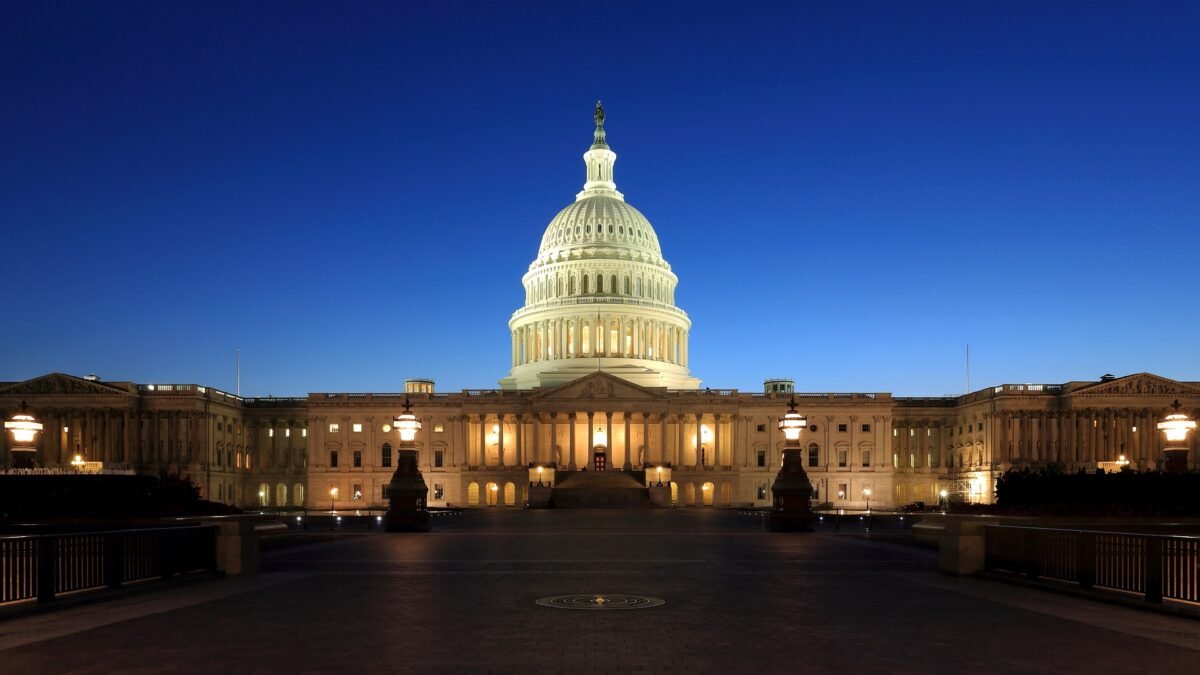
The United States Senate voted 60-40 late on Monday night to pass a bipartisan funding package that would end the longest government shutdown in American history, according to the Associated Press, breaking a stalemate that had kept the federal government closed for 41 days and left hundreds of thousands of workers unpaid.
The bill now goes to the House of Representatives, which has not been in session since 19 September, for a final vote expected on Wednesday evening. President Donald Trump has endorsed the legislation and is expected to sign it as soon as it reaches his desk, according to the Associated Press, and the government would then reopen within hours.
The Senate vote was the second 60-40 vote in two nights. On Sunday night, the same margin carried the procedural vote that broke the filibuster and allowed the package to move to final passage, after 14 earlier procedural votes on the House-passed funding bill had gone nowhere over six weeks, according to NewsOneUSA, which cited The Well News and Bloomberg.
Eight members of the Democratic caucus joined Republicans to pass the bill: Senators Jeanne Shaheen and Maggie Hassan of New Hampshire, Dick Durbin of Illinois, Tim Kaine of Virginia, John Fetterman of Pennsylvania, Catherine Cortez Masto and Jacky Rosen of Nevada, and independent Senator Angus King of Maine, who caucuses with the Democrats, according to the Associated Press and NewsOneUSA.
Senate Democratic leader Chuck Schumer voted against the package, after a caucus meeting lasting more than two hours, and said his party would not give up the fight over health care, according to the Associated Press. The vote exposed a deep split in the Democratic Party, which had held the government closed for six weeks in an attempt to force an extension of health care subsidies, and ended the standoff without winning that extension.
What the deal contains
The package uses the House-passed stopgap bill as its vehicle and combines it with three full-year spending bills, according to the Associated Press. It funds most of the federal government through 30 January, giving lawmakers about twelve more weeks to negotiate full-year spending bills for the rest of the fiscal year.
Three areas receive full-year funding through 30 September: the Agriculture Department, including the Food and Drug Administration; the Department of Veterans Affairs and military construction; and the legislative branch, according to NewsOneUSA. Fox News reported that they are three of the 12 individual bills that are meant to make up Congress’s annual appropriations, paired into a vehicle known as a minibus.
The measure also reverses layoffs of federal workers made by the Trump administration during the shutdown and guarantees retroactive pay for those who were furloughed, according to NewsOneUSA. Fox News reported that the deal would reverse federal layoffs conducted in October, with those workers getting paid for the time they were off, and would protect federal workers against further layoffs through January. The Associated Press reported that the legislation ensures back pay for furloughed federal workers, something the Trump administration had left in doubt.
Food assistance is also funded in the package. The Associated Press reported that the legislation provides funding to reopen the government, including for SNAP food aid and other programmes. Full food assistance funding runs through September of next year, according to reporting by the Associated Press, The Hill, the New York Times, the BBC and Fox News.
Senator Rand Paul of Kentucky was the lone Republican to vote against advancing the package on Sunday, according to reporting by Reuters and the Associated Press. He had objected to a provision in the bill restricting hemp-derived products.
What the deal leaves out: health care
The one major issue the package does not resolve is health care. It does not extend the Affordable Care Act subsidies that are due to expire at the end of December, which had been the central demand of Senate Democrats throughout the shutdown, according to NewsOneUSA and the Associated Press.
The subsidies are the enhanced premium tax credits that many of the 24 million people who buy insurance through the Affordable Care Act rely on to help defray costs, according to the Associated Press. Without an extension, millions of Americans face sharply rising insurance premiums from 1 January.
Instead of extending the credits, the deal gives Democrats only a promise of a vote. Senate Majority Leader John Thune has promised the Senate will vote by mid-December on extending the premium tax credits, according to NewsOneUSA. The Associated Press reported that the package guarantees a vote on the issue in December, which was not enough for most Democrats, who rejected the deal and voted against it.
On Monday, the Senate voted 47-53 along party lines not to extend the subsidies for a year, according to the Associated Press. That vote, taken on the same night as final passage, underlined how far the Democratic position had fallen: the party had shut the government down to win the extension, and ended the shutdown with the extension not only unpassed but voted down.
House Democratic leader Hakeem Jeffries said his party will fight the bill in the House, forcing Republicans to pass it largely on their own, according to the Associated Press. “We will not support spending legislation advanced by Senate Republicans that fails to extend the Affordable Care Act tax credits,” Jeffries said. “Donald Trump and the Republican Party own the toxic mess they have created.”
The anger inside the Democratic Party was visible well before the final vote. Senator Bernie Sanders called the deal a horrific mistake, Senator Chris Murphy urged colleagues to hold firm, and Representative Greg Casar called it a betrayal, according to reporting by the Associated Press, The Hill and the New York Times. Schumer himself voted no, but he did not hold his caucus together: the eight votes the deal needed were exactly the eight it received.
The House’s turn
The bill now moves to a House that has been out of session since 19 September. When it reconvenes on Wednesday, it will be the House’s first time in session in 54 days, according to NewsOneUSA. House Speaker Mike Johnson has told lawmakers to return to Washington, giving them 36 hours’ notice, and has said he expects the bill to pass quickly.
The House Rules Committee must first advance the measure, and the full House is expected to hold a final vote on Wednesday evening, according to NewsOneUSA and Fox News. Fox News reported that the bill is expected to pass with nearly all Republicans on board, according to people familiar with Republican leaders’ conversations.
There are obstacles. Democrats attempted to force votes on amendments dealing with the COVID-era enhanced Obamacare subsidies that are set to expire at the end of this year, and other issues opposed by Republicans, according to Fox News. Jeffries made a surprise appearance at the Rules Committee hearing to testify in favour of his own amendment to extend those subsidies for another three years, Fox News reported.
Another provision in the bill has drawn criticism from both parties. It would allow Republican senators to sue the federal government for $500,000 for secretly obtaining their phone records during former special counsel Jack Smith’s investigation, according to Fox News. Representative Chip Roy, a Texas Republican, said: “I think there’s gonna be a lot of people, if they look and understand this, they’re going to see it as self-serving, self-dealing kind of stuff. And I don’t think that’s right.” Roy said he was trying to find a way to force the Senate to repeal the provision without amending the bill in the House, since any House amendment would send the legislation back to the Senate, according to Fox News.
Trump signalled his support for the legislation in comments to reporters on Monday. “We’ll be opening up our country very quickly,” he said when asked if he backed the deal, according to Fox News. NewsOneUSA reported that if the bill passes the House, as expected, the president is likely to sign it the same night, and the government will reopen within hours, with furloughed workers returning and back pay following.
The cost of 41 days
The shutdown began on 1 October, when Congress failed to pass the annual spending bills, and at 41 days it is the longest in American history, beating the 35-day record set in 2018-19, according to the Associated Press and the New York Times.
The cost was visible in every part of American life. Hundreds of thousands of federal workers went unpaid, food aid for millions of families was delayed, and air travel across the country was disrupted, according to NewsOneUSA.
The Federal Aviation Administration reduced operations at 40 airports as staffing strain grew, with more than 1,000 flights cancelled on Saturday and thousands more on Sunday, according to reporting by the Associated Press, The Hill, the New York Times, the BBC and Fox News. Air traffic controllers and Transportation Security Administration officers were forced to work without pay since last month, and many had taken on second jobs to make ends meet, fuelling staffing shortages and flight delays that threatened to overshadow the Thanksgiving holiday, according to Fox News.
Millions of Americans who rely on SNAP food aid were also left in limbo amid the partisan fight over whether and how to fund those programmes during the shutdown, according to Fox News. The Associated Press reported that the legislation provides funding for SNAP and other programmes as part of reopening the government.
The shutdown also froze much of the ordinary work of government: national parks locked their gates, small-business lending stalled, federal courts slowed, and hundreds of thousands of workers were sent home without pay. The deal’s back-pay guarantee means those workers will eventually be paid for the time they lost, but the weeks without a pay cheque cannot be undone, and many families turned to food banks, second jobs and credit to get through.
How the deal was brokered
The deal was brokered over the weekend by Senate Majority Leader John Thune, Senate Appropriations Chair Susan Collins and White House negotiators, together with the centrist Democrats who ultimately backed it, according to NewsOneUSA. The Associated Press reported that three former governors, Senators Shaheen and Hassan of New Hampshire and independent Senator King of Maine, were central to the group that agreed to vote to advance the three bipartisan annual spending bills and extend the rest of government funding until late January.
The breakthrough came after six weeks in which Democrats had blocked the same House-passed bill 14 times, demanding that Republicans negotiate an extension of the health care subsidies. The eight Democrats who broke ranks did so knowing the move would infuriate their party’s base and its leaders. None of the eight faced re-election in 2026, according to reporting on the vote, which meant the political cost of defying the leadership fell on colleagues rather than on themselves.
Thune had said the Senate would move to final passage within hours, not days, telling reporters: “The American people have suffered for long enough,” according to reporting by the Associated Press and The Hill. Trump said on Sunday evening that it looked like the shutdown was close to ending, according to the Associated Press.
The politics around the deal are shaped by the midterm elections held on 3 November, in which Democrats won both chambers of Congress. The new Congress will be seated on 3 January 2027, which means the outgoing Republican House majority is voting on the funding package in its final weeks in power, while the incoming Democratic majority will inherit the January deadline for the next round of spending bills and the December vote on the health care subsidies.
Analysis: Why It Matters
The longest shutdown ends with a whimper, not a deal
The 41-day shutdown was the longest in American history, and it ended not with a grand bargain but with one side giving up. The Democrats’ central demand, an extension of the Affordable Care Act subsidies, was not in the bill. It was not even voted on as a freestanding measure: the Senate voted 47-53 against a one-year extension on the same night it passed the funding package. What the Democrats received in exchange for six weeks of closed government was a promise that Thune would allow a vote by mid-December, with no guarantee of the outcome and no commitment from the House at all. That is not a compromise. It is a timetable for a vote the Democrats may well lose. The shutdown’s lesson for future standoffs is stark: a party that closes the government to win a concession must be prepared to hold out until it gets one, and the moment eight of its own members decide the price is too high, the leverage is gone.
The Democratic split is the real story of the vote
The 60-40 margin tells the story more honestly than any speech. The deal needed exactly eight Democratic votes to clear the 60-vote filibuster threshold, and exactly eight arrived. Schumer voted no and said his party would not give up the fight, yet his caucus delivered the votes the Republicans needed anyway. That is a failure of leadership as much as a failure of strategy. The eight who crossed included the party’s second-ranking senator, Dick Durbin, and a former vice-presidential nominee, Tim Kaine, which made the break impossible to dismiss as the work of a fringe. The split also exposed a structural weakness in the Democrats’ position: the senators most willing to end the shutdown were those with the longest time before their next election, while the anger fell on a leader who had staked his authority on holding the line. The party now goes into the December subsidy vote divided, with its House leader promising to fight a bill its Senate wing has already passed.
Health care: the fight that was postponed, not resolved
The health care question has not gone away; it has simply been moved to December, when the consequences will be harder to avoid. The enhanced premium tax credits expire at the end of the year, and around 24 million Americans who buy insurance through the Affordable Care Act will see their premiums rise sharply from 1 January unless Congress acts. The December vote Thune promised is a vote on extending the credits, not a guarantee of extension, and it will take place in a Senate where the same 47-53 majority that rejected a one-year extension on Monday will still be sitting. In the House, where Jeffries has promised to fight, there is no promise of a vote at all. The Democrats’ gamble was that a shutdown would force Republicans to negotiate. The result is that the subsidies will now be decided in a lame-duck session, under a deadline, with the Democrats having already spent their strongest leverage and lost. If the credits lapse, the political damage will fall on both parties, but the Democrats will have to explain why six weeks of closed government bought them nothing.
The workers and families who paid the price
It is easy, in the language of vote counts and procedural motions, to forget what a shutdown actually does. Air traffic controllers worked without pay and took second jobs. Transportation Security Administration officers did the same. Hundreds of thousands of federal workers went more than a month without a pay cheque, and millions of families waited for food aid that did not arrive on time. The back-pay guarantee in the deal will eventually make the workers whole in money, but it cannot repay the rent that was late, the credit card debt that was run up, or the shifts that were missed. The shutdown also demonstrated, again, that the costs of a funding lapse fall hardest on people with the least cushion, while the politicians who cause it continue to be paid. Any honest account of the 41 days has to start there, not with the parliamentary arithmetic.
What the next twelve weeks hold
The deal buys twelve weeks, not a settlement. Most of the government is funded only through 30 January, which means Congress will face the same deadline again in the depths of winter, with a new Democratic majority in both chambers and the health care subsidy fight still unresolved. The December vote on the subsidies will be the first test of whether the Democrats can extract anything from a process in which they have already surrendered their leverage. The House vote on Wednesday will be the second test: if the bill passes with nearly all Republicans, as expected, the shutdown ends this week, but the $500,000 provision for senators’ phone records and the absence of any health care extension will remain as grievances for the next round. The shutdown is ending. The argument that caused it is not.
What to Watch Next
- The House vote on Wednesday evening: whether the bill passes with nearly all Republicans, as leaders expect, and how many Democrats vote for it despite Jeffries’ opposition.
- President Trump’s signature: whether he signs the bill on Wednesday night, as expected, and how quickly agencies are told to reopen.
- The reopening itself: when furloughed workers are told to return, when back pay is processed, and how quickly air travel and food aid return to normal.
- The December vote on the Affordable Care Act subsidies: whether Thune keeps his promise of a vote by mid-December, and whether the credits are extended before they expire at the end of the year.
- The $500,000 phone-records provision: whether Chip Roy or other critics force the Senate to address it, and whether it becomes a separate fight.
- The 30 January deadline: how the new Democratic Congress handles the next round of spending bills, and whether the shutdown returns in the new year.
- The political fallout inside the Democratic Party: whether Schumer’s leadership survives the split, and how the eight defectors are treated by their colleagues.
Sources
- Associated Press, “Compromise Nearing? A Look At What’s In The Legislation To End The Federal Government Shutdown”
- NewsOneUSA, “Senate Passes Shutdown Deal; House Vote on Wednesday” (citing The Well News and Bloomberg)
- Fox News, “Bill to end government shutdown survives key hurdle before House-wide vote”
- The New York Times, “Senate passes bill to reopen government amid Democrats’ rift”
- Associated Press, “The Latest: Bill to end government shutdown passes the Senate, now heads to the House for final vote”

About the Author — Abdul Mannan
Related Articles

Trump Says FBI Is Probing Nvidia Chief Jensen Huang Over Suspected Chinese Spy Affair as Shares Slide and Investors Sue
President Donald Trump has confirmed that the FBI is investigating Nvidia chief Jensen Huang's relationship with a woman…

Republican Thomas Massie Forces House Vote to Impeach Defence Secretary Pete Hegseth Over the Iran War
Republican Thomas Massie has forced the House to vote by Wednesday on eight articles of impeachment against Defence…
Lame-Duck Congress Returns With Five Weeks to Fund the Government and Decide Pete Hegseth’s Fate
The outgoing Republican-led Congress returned on Monday for a five-week lame-duck session, facing a 11 December funding deadline,…