
At Least 21 Dead as Migrant Boat Capsizes off Senegal’s Coast on the Atlantic Route to Europe

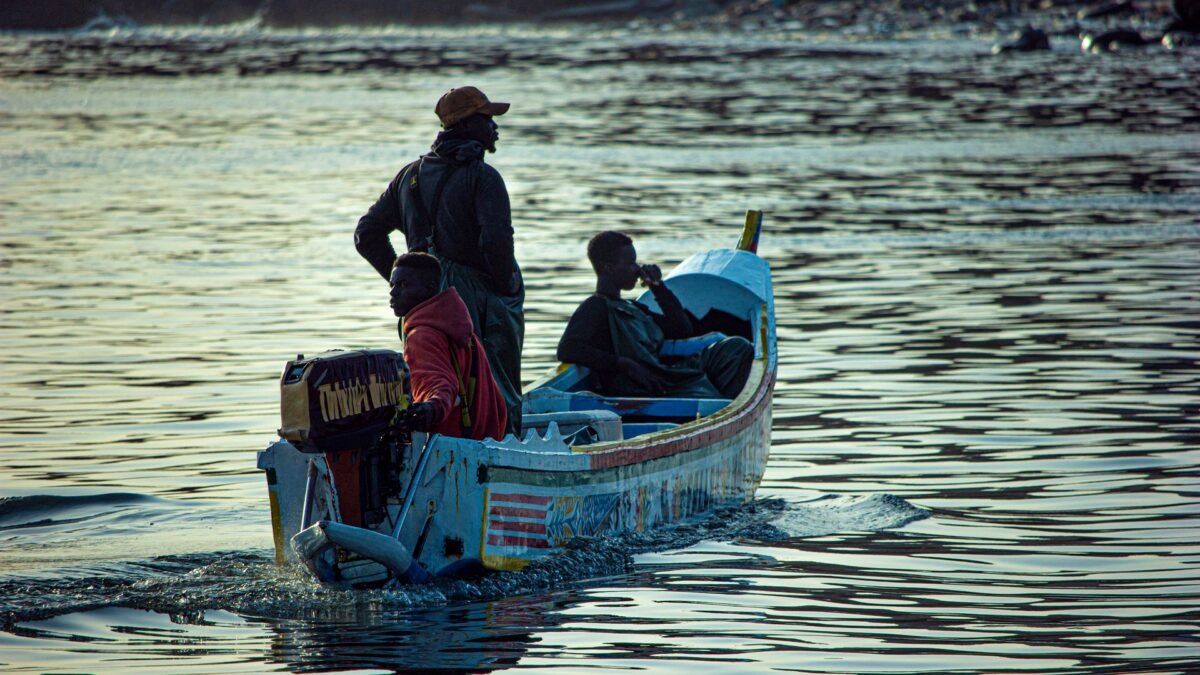
At least 21 people have died after a boat carrying migrants capsized off the coast of north-western Senegal, in the latest deadly wreck on the Atlantic route that links West Africa to Europe. Only one person is known to have survived.
Senegal’s Interior Ministry announced the toll on Sunday, saying that 21 bodies had been recovered and one survivor rescued as of Saturday evening, according to Reuters. Search and rescue operations were continuing, and the ministry described the death toll as provisional, warning that it could still change as the search goes on.
The accident happened off Kébémer, a town about 180 kilometres north of the capital, Dakar, the ministry said in a statement posted on X. The vessel was a pirogue, the traditional flat-bottomed wooden boat used by Senegalese fishermen, which had been carrying people seeking to migrate irregularly. The ministry did not say how many people had been on board, and the cause of the sinking has not been established.
According to the BBC, the pirogue got into difficulty off Kébémer in the north-west of the country, and the search for possible additional survivors was still under way on Sunday. The United Nations’ International Organization for Migration (IOM) describes the Atlantic route as a key pathway for West African migrants travelling to Europe, and the sinking is a grim reminder of how dangerous that crossing remains.
What Happened off Kébémer
The disaster unfolded on Saturday, 7 November, off the Loumpoul dunes in the Kébémer department, the stretch of Atlantic coast between Dakar and the northern city of Saint-Louis. According to Senegal’s APS news agency, citing a security source, about 20 bodies washed up on Lompoul beach on Saturday. The Interior Ministry’s statement, issued on Sunday, put the confirmed toll at 21 bodies recovered and one survivor rescued.
Senegalese newspaper Le Soleil reported that most of the victims came from the communes of Léona and Thiéppé, in the same department — farming communities a short distance inland from the coast where the boat went down. The ministry said assistance was being provided to the victims’ families, and that the search along the coastline was continuing.
What is not yet known is almost as important as what is. The ministry did not say how many people the pirogue had been carrying, so it is impossible to say how many may still be missing. Nor has any official account explained what went wrong — whether the boat was overloaded, struck bad weather or heavy surf, or suffered an engine failure. Pirogues used for these crossings are typically far larger than the fishing canoes seen in harbours like Soumbédioune in Dakar, often carrying dozens of people, with fuel, food and water for a voyage of several days. But until the survivor’s account or the findings of the search are made public, the sequence of events off Kébémer remains unclear.
The single survivor was found clinging to wreckage, according to reports of the rescue operation. That detail, small as it is, captures the reality of these crossings: when a wooden boat founders in the Atlantic swell, there is no second vessel nearby, no life raft, and often no distress call that anyone can answer in time. Survival depends on being found quickly, and on Saturday evening, only one person was.
Senegalese authorities also reported intercepting a separate vessel carrying 142 people on Friday as it attempted to reach Spanish territory. The interception, reported on the same weekend as the sinking, underlines how much traffic continues to move along this coast even as the death toll mounts — and how much of it the authorities never see until it is too late.
The Search and the Provisional Toll
The ministry’s careful use of the word “provisional” matters. In previous sinkings along this coast, the confirmed toll has risen over days as bodies have washed ashore or been recovered by search vessels, and it has sometimes taken weeks for a final figure to emerge. Because the number of passengers was never registered anywhere, there is no manifest to check against, and no way to know with certainty when the search can stop.
That uncertainty is itself part of the story of the Atlantic route. Boats leave quietly, often at night, from beaches and fishing villages rather than ports. Families may know a relative has gone, but the authorities frequently do not. When a boat disappears, the first sign of trouble is often bodies on a beach — as it was at Lompoul on Saturday — rather than a distress call.
Rescue teams spent the weekend combing the coastline near the Loumpoul dunes, and the ministry said operations were continuing on Sunday. The hope, however slim, is that more survivors will be found. The fear, grounded in the experience of many earlier wrecks, is that the toll of 21 is a floor rather than a ceiling.
A Route That Keeps Claiming Lives
The sinking off Kébémer is not an isolated tragedy. It is the latest in a long sequence of wrecks on the West African Atlantic route, the sea corridor that runs from the coasts of Senegal, Mauritania and Morocco to Spain’s Canary Islands. According to Reuters, thousands of people have died in recent years attempting the crossing, including 635 in the first five months of this year alone, according to the migrant-rights group Walking Borders.
The scale of the loss is difficult to grasp, and the numbers themselves are contested. Walking Borders, a Spanish organisation that tracks deaths on the route, counted more than 9,700 deaths in 2024, the deadliest year on record for the Atlantic crossing. The IOM’s own figures are lower, because the agency counts only deaths and disappearances it can verify through its Missing Migrants Project, but the direction of travel is the same: this is one of the deadliest migration routes in the world, and it has been for years.
What makes the latest figures striking is the paradox at their heart. Fewer people are making the crossing than at the peak, yet the dying has barely slowed. According to new data published by the IOM on 13 October, arrivals in Europe from four major West African countries of origin — Mali, Senegal, Guinea and The Gambia — fell by 59 per cent in the first half of 2026 compared with the same period in 2025, to 4,566 people. The West African Atlantic Route remained the principal route, accounting for 83 per cent of arrivals registered in that period.
But the IOM’s figures also show that while arrivals in the Canary Islands fell by 62 per cent between 2024 and 2025, recorded deaths and disappearances on the route fell by only 4 per cent over the same period, from 1,215 to 1,172. In the first half of 2026, according to the IOM, 3,708 migrants reached the Canary Islands via the West African Atlantic route, a 67 per cent decrease compared with the same period in 2025 — yet 168 people died or went missing on attempted crossings in those six months, and 59 boats failed to reach the islands at all. The risk per crossing, in other words, is rising even as the number of crossings falls.
The autumn has brought a fresh surge. According to data from Spain’s Interior Ministry reported in early November, 6,194 migrants reached the Canary Islands in October aboard 65 boats, making it the busiest October since 2023. More than 1,300 people died or went missing on migration routes to Spain between January and May 2026, according to figures cited by InfoMigrants. The sinking off Kébémer came at the start of the season when departures traditionally increase, as calmer autumn seas follow the summer months.
Analysis: Why It Matters
The Enforcement Paradox
The most important question raised by the Kébémer sinking is also the most uncomfortable one for the governments involved: why is the route becoming more dangerous even as fewer people use it? The IOM’s answer, published in October, is that enforcement is changing the geography of departure faster than it is reducing the desire to leave.
According to the agency, increased controls in the traditional embarkation areas in Morocco, Mauritania and Senegal have pushed departures further south, towards The Gambia, Guinea and Guinea-Bissau. Those alternative departure points can add up to 750 kilometres to the crossing, extending some journeys to approximately 2,200 kilometres and exposing people to longer periods at sea, more remote and less monitored coastlines, and greater risks of shipwreck, dehydration and disappearance.
This is the enforcement paradox in its starkest form. Patrols and interceptions — like the stopping of the 142-person boat on Friday — are real, and they do reduce departures from the places they cover. But the people they stop do not, for the most part, stop wanting to leave. They leave from somewhere else, further away, on a longer and more dangerous route, in boats that are harder to find when they get into trouble. The IOM’s director general, Amy Pope, put the point bluntly when the new data was released: “Fewer arrivals in one place doesn’t mean the pressures have gone away.”
None of this is an argument against enforcement. No government can be expected to watch unregulated departures from its own coastline with indifference, and Senegal has every right to police its waters. But it is an argument for honesty about what enforcement alone can achieve. A policy that measures success in arrivals prevented, without counting the deaths displaced to longer routes, will keep producing weekends like this one — and will keep being surprised by them.
The Pressures That Push People to Sea
The second question is why, in a year when the dangers are so well documented, people from villages like Léona and Thiéppé still board pirogues for the Canary Islands. Part of the answer lies in the economics of the coast itself. Fishing, the traditional livelihood of communities along Senegal’s Atlantic shore, has been squeezed for years by declining stocks and competition from industrial fleets, leaving young men with few ways to earn a living at home. The pirogue is both the symbol of that livelihood and, when converted for migration, the vehicle for escaping it.
The IOM’s data reinforces the point: even as arrivals fell by 59 per cent in the first half of 2026, the agency found that departures and interceptions continued at a level showing that “the drivers of irregular migration persist.” People are not leaving because they are unaware of the risk. The risk is discussed in every coastal town in Senegal; the names of the dead are known; the funerals are public. They are leaving because, for many of them, the risk of staying — of a life without work, without prospects, without a way to support a family — feels greater than the risk of the sea.
That calculation is easy to condemn from a distance and very hard to argue with from inside it. Until the calculation changes — until there are credible legal pathways to work in Europe, or credible livelihoods at home — the boats will keep leaving, and the sea will keep exacting its price. The sinking off Kébémer is a reminder that migration policy written only in the language of deterrence is, in practice, a policy written in the language of funerals.
Europe’s Dilemma
For Europe, and for Spain in particular, the sinking poses a dilemma that has no clean resolution. The Canary Islands remain the main entry point for West African migration by sea, and the archipelago’s reception system has been under severe strain since the record arrivals of 2024, when around 62,000 people reached the islands. The political pressure in Madrid and in Brussels is to reduce arrivals, and the tools available — funding and equipment for coastal patrols in West Africa, readmission agreements, visa restrictions — are all designed to do exactly that.
But the October surge, with 6,194 arrivals in a single month, shows how quickly the numbers can rebound, and the Kébémer sinking shows the human cost of the strategy that produced the decline. European policy has, in effect, outsourced the most dangerous part of the journey to the states of departure, and then measured success by what arrives on European shores. What happens in the water between Senegal and the Canaries is, in that accounting, someone else’s problem — until a weekend like this one makes it impossible to ignore.
There is also a narrower, more practical question for Europe: whether search and rescue capacity in the Atlantic has kept pace with the southward shift of departures. When boats leave from further south, they spend longer beyond the reach of coastal patrols and rescue services, in waters where commercial traffic is thin and surveillance is patchy. A rescue system built around departures from Morocco and northern Senegal is not necessarily a rescue system that works for departures from Guinea-Bissau. The IOM’s warning about “more remote and less monitored coastlines” is, among other things, a warning about rescue.
What to Watch Next
Several things will determine how this story develops in the coming days. The first is the final death toll. The ministry’s figure of 21 is provisional, and the search along the Kébémer coast will establish whether more bodies are recovered or more survivors found. The second is the survivor’s account, which may establish how many people were on board and what happened to the boat — information that matters both for the families waiting for news and for any investigation into who organised the crossing.
The third is the response of the Senegalese authorities. Previous sinkings have been followed by pledges to crack down on the networks that organise the crossings, and by renewed patrols along the coast. Whether this sinking produces anything more durable — prosecutions, a change in patrol patterns, or new support for the families of the victims — will be a measure of how seriously it is taken in Dakar.
The fourth is the wider trend. October was the busiest month for arrivals in the Canary Islands since 2023, and the autumn season is still under way. If departures continue at that pace, and if the southward shift of departure points continues to lengthen the crossing, then the Kébémer sinking may not be the last such tragedy of the year, but one of several. The IOM’s next data release, and the figures for the final months of 2026, will show whether the route is becoming safer or merely quieter — and the distinction matters enormously.
For now, the facts are stark and few. Twenty-one people are dead. One person survived. An unknown number may still be missing. And a wooden boat that left the Senegalese coast on an ordinary Saturday became, within hours, another entry in the long ledger of the Atlantic route — a ledger that grows longer even as the world looks away.
Sources
- Reuters — At least 21 dead after migrant boat sinks off Senegal coast, government says
- International Organization for Migration (via ReliefWeb) — West African Arrivals to Europe Drop 59 Per Cent as Routes Turn Deadlier
- InfoMigrants — Spain ups pressure on North African countries as irregular migration increases
- Sowetan (Reuters) — At least 21 dead after migrant boat sinks off Senegal coast

About the Author — Abdul Mannan
Related Articles
Four Killed and 88 Injured as Two Passenger Trains Collide South of Cairo in Egypt’s Al-Ayyat District
Two passenger trains collided near Al-Ayyat in Giza province on Sunday, killing at least four people and injuring…
Three Tankers Ablaze in the Strait of Hormuz as Missiles Target Riyadh in Sharp Escalation of the Iran War
Iran's Revolutionary Guard says three oil tankers exploded and caught fire in the Strait of Hormuz early on…
COP31 Opens in Antalya on Monday as Climate Plans Fall Far Short of the 1.5°C Goal
Nearly 200 nations gather in Antalya on Monday for COP31, the first climate summit held after the world…