
Shehbaz Sharif Pushes FBR Reform Overdrive, Weighs New Tax Agency as Rs650 Billion Shortfall Looms

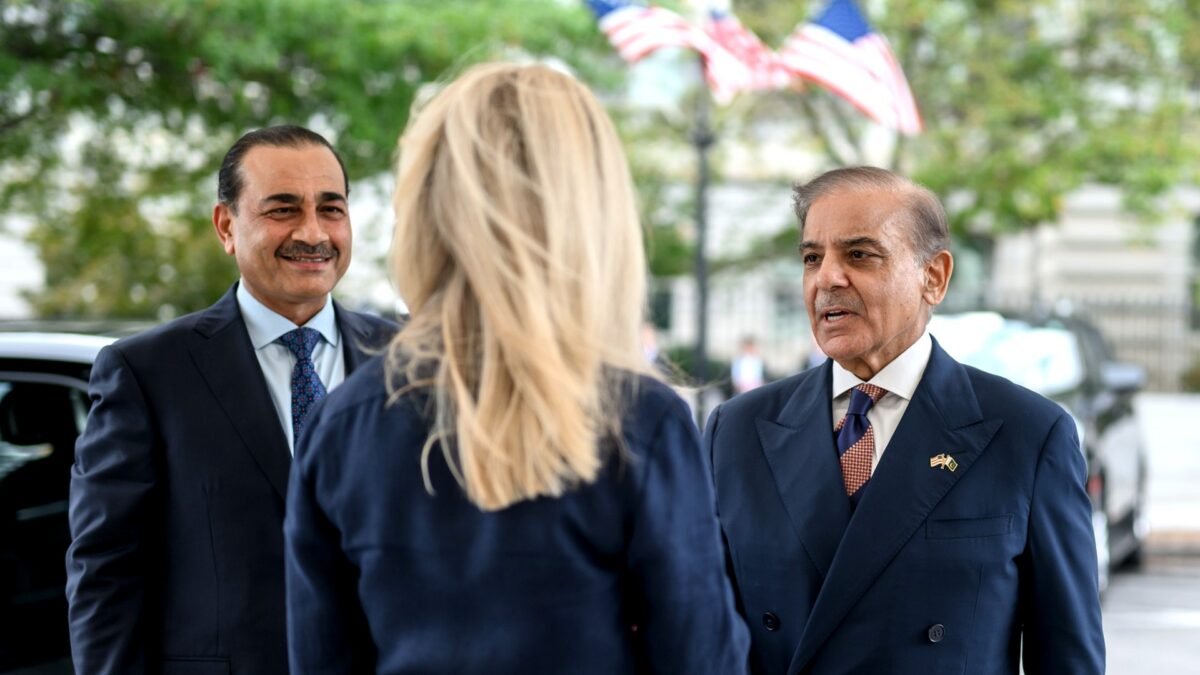
Pakistan’s Prime Minister Shehbaz Sharif has ordered an acceleration of long-stalled tax reforms, directing the Federal Board of Revenue (FBR) to roll out a “faceless” tax collection system across the country and warning of zero-tolerance action against corruption inside the department — a push that comes as the government quietly weighs the most radical overhaul of the tax machinery in three decades, including the possible creation of an entirely new revenue agency.
Chairing a high-level review meeting in Islamabad on Monday, the prime minister said the initial results of the ongoing reforms were encouraging and stressed that technology, professional training, transparency and accountability must remain central if the reform effort was to produce concrete outcomes, according to a press release issued by the PM Office Media Wing and carried by the state-run Associated Press of Pakistan (APP).
Sharif directed the swift nationwide rollout of a faceless tax collection mechanism — a system designed to minimise direct contact between taxpayers and revenue officials — and said FBR officials must enhance their performance in line with the nation’s expectations. He told the meeting that the reform agenda served the broader national interest and would proceed unhindered, while calling for “zero-tolerance and indiscriminate action” against corrupt elements within the department. Staff showing genuine improvement in conduct and performance, he said, should be given an opportunity to reform, but there would be no room for corruption or underperformance.
The meeting was attended by some of the most senior figures in the economic team, including Ministers Ahsan Iqbal, Azam Nazeer Tarar, Ahad Khan Cheema, Muhammad Aurangzeb and Attaullah Tarar, alongside Minister of State Bilal Azhar Kayani and Attorney General Mansoor Awan, underscoring the weight the government is placing on the revenue question.
Tax gap narrowed, but targets keep slipping
During the meeting, officials gave a detailed briefing on ongoing interventions across technology, procedural workflows and human resource management. According to the official briefing, reforms implemented over the past three years had successfully narrowed the estimated tax gap from 6 per cent to 5 per cent of GDP, while the effective use of technology had substantially reduced the discretionary powers of FBR officials.
Yet the scale of the challenge dwarfs the progress. The tax-to-GDP ratio stayed stuck at 10.3 per cent in the last fiscal year — among the lowest in the region for an economy of Pakistan’s size — and the FBR missed its annual collection target by over Rs1.1 trillion, according to reporting by The Express Tribune. This year’s target of Rs15.263 trillion requires growth of more than 17 per cent, but collection grew by only about 7 per cent in the first quarter. Sources cited by the newspaper expect growth of around 12 per cent, leaving a projected shortfall of over Rs650 billion.
The compliance numbers reveal the depth of the problem. Of the 19 million people holding national tax numbers, only 6.9 million had filed returns by Thursday evening, against 8.5 million in the last tax year — meaning the tax base is not merely narrow, it is shrinking. The FBR said collection had risen from Rs9.2 trillion to Rs13 trillion in two years under its transformation plan, but that trajectory is now clearly insufficient for the targets the government has set under its ongoing reform programme with the International Monetary Fund.
A new tax agency on the table
Against this backdrop, the government is considering establishing a new tax collection agency or restructuring the existing machinery altogether, after finding the FBR’s performance unsatisfactory despite repeated reform attempts, The Express Tribune reported. The idea of an entirely new organisation was first floated at a high-level meeting last Saturday, and FBR Chairman Rashid Langrial has since tasked officers with preparing a plan.
According to directives issued by the Prime Minister’s Office on Thursday, the FBR was instructed to present comprehensive proposals to the prime minister on October 19 regarding human resource reforms, improvements to the board and its restructuring — the very presentation that underpinned Monday’s meeting. The FBR will also brief on the tobacco sector, an area long associated with massive tax evasion through illicit cigarette trade.
Officials stress the discussions remain at an initial stage and no final proposal regarding the FBR’s future structure or the establishment of a new revenue collection agency has been approved. One arrangement under discussion would allow the FBR to continue operating alongside a new tax agency, with employees who do not transfer to the new organisation retaining their existing positions until retirement.
The FBR has pushed back on some of the reporting. Its spokesperson said reform was a “robust and ongoing process” and that dozens of ideas and proposals came under discussion, but until any of them became formally approved policy, no comment could be made. The spokesperson categorically denied talk that revenue collection would be outsourced to a private company, calling the claim “totally baseless”. In a second reply, the FBR confirmed the prime minister had directed it to bring forward comprehensive proposals for human resource reform and restructuring, adding that work was under way, and said the government’s aim was a “stronger, more efficient and more taxpayer-friendly FBR”.
Any move to transfer the FBR’s powers to a new agency would require amendments to the FBR Act 2007 and at least four tax laws, meaning Parliament would need to be brought into the loop — a potentially fraught process at a time when the government is already navigating a constitutional crisis over the emergency and governor’s rule in Khyber Pakhtunkhwa.
Faceless collection: the technology bet
The prime minister’s emphasis on a faceless tax collection mechanism points to where the government believes the real gains lie. The FBR said it had already introduced faceless assessment in Customs, digital invoicing, and an AI-based risk management system for audits. The logic is straightforward: direct contact between taxpayer and collector is where harassment thrives on one side and collusion on the other. Remove the contact, and you remove both the bribe and the shakedown.
It is a bet Pakistan has made before, in various forms, with mixed results. Top official sources told The News that various reforms had been tested over the past three decades. The Central Board of Revenue (CBR) was renamed the Federal Board of Revenue (FBR), two groups were formed within the tax machinery — the Inland Revenue Service and the Customs Group — and a new operating model was enacted through an act of parliament, with the promise that the transformation plan would achieve the desired results. A few years ago, FBR officials were categorised into A, B, C and D grades, and those placed in the lowest grades on intelligence-based reports were made officers on special duty. Subsequently, the Transformation Plan was approved, and the World Bank and Asian Development Bank provided loans worth millions of dollars. Despite all of that, the sources confirmed, the FBR’s performance remained below the desired level.
The question Monday’s meeting leaves hanging is whether this time is different — or whether the announcement of yet another reform drive is itself a signal that the existing machinery has run out of road.
Analysis: Why It Matters
A shrinking fiscal runway
Pakistan’s tax problem is not really a revenue problem; it is a state-capacity problem dressed up as arithmetic. When only about a third of registered taxpayers file returns and the tax-to-GDP ratio refuses to move, the issue is not the rates on paper but the distance between the law and its enforcement. The prime minister’s Monday directive acknowledges this implicitly: zero-tolerance for corruption, faceless collection, institutional capacity. These are not tweaks. They are an admission that the existing interface between citizen and state on taxation is broken.
The Rs650 billion hole shapes everything else
Context matters for why this story matters beyond the revenue bureaucracy. Pakistan is operating under a demanding IMF-backed reform programme, and a revenue shortfall of the projected magnitude would force the government’s hand elsewhere — either deeper spending cuts or fresh borrowing. The prime minister’s insistence that the reform agenda “serves the broader national interest and would proceed unhindered” reads as a pre-emptive message to both the bureaucracy and the political class: there will be no carve-outs this time. Whether that holds when the measures start biting politically connected sectors remains to be seen.
The new-agency option is the real story
Governments that are confident in reforming an institution do not publicly float replacing it. The consideration of a new tax agency — even at the “initial discussions” stage — suggests that inside the PM Office, a view is taking hold that the FBR’s culture may be beyond internal repair. Pakistan has tried renaming, reorganising, regrading and re-legislating the tax machinery for thirty years. The fact that abolition is now on the agenda, however informally, tells you how the last round of reforms is being judged behind closed doors. It also raises the stakes for the FBR’s own proposals: they are now competing for the institution’s survival.
Faceless systems cut both ways
Technology genuinely reduces the discretion that enables petty corruption — the briefing’s claim that it has “substantially reduced inherent powers of FBR officials” is plausible and measurable. But faceless systems also shift the point of failure. Algorithmic audit selection, digital invoicing and faceless assessment concentrate enormous power in whoever designs and controls the parameters. Transparency in the algorithm becomes as important as transparency in the officer. The prime minister’s promise of a taxpayer-friendly system will be tested not in press releases but in whether small businesses and salaried filers experience the new machinery as fairer, or merely as a different kind of opaque.
Timing is not accidental
The reform push arrives as the government is simultaneously fighting on multiple fronts: the constitutional crisis over KP, a restive opposition, and the demands of the IMF programme. Pushing tax reform now serves a dual purpose. It signals fiscal seriousness to the Fund and to creditors, and it gives the government a governance narrative — competence and delivery — at a moment when its democratic credentials are under intense scrutiny, including from the European Union over trade preferences. The risk is that an institution-building project this ambitious gets treated as a messaging exercise. The test, as always, will be in the collection numbers.
What to Watch Next
- The FBR’s own proposals: The comprehensive HR and restructuring proposals the PMO demanded — due around this meeting — will reveal whether the board is offering genuine transformation or defensive incrementalism. The wording of the government’s response will signal which way the wind is blowing.
- Legislative movement: If the government moves toward a new agency, watch for amendments to the FBR Act 2007 and the four tax laws involved. That is where the real fight will be — and where Parliament’s role becomes unavoidable.
- The Q2 collection figures: With the annual target requiring 17 per cent growth and Q1 delivering around 7 per cent, the second-quarter numbers will show whether the reform drive is changing the trajectory or merely the rhetoric.
- The tobacco sector briefing: The FBR was also directed to brief on tobacco, one of the most evasion-ridden sectors. Concrete action there would be an early credibility test for the “indiscriminate action” promise.
- IMF review implications: Any shortfall against targets feeds directly into programme reviews. Watch for whether the Fund treats the restructuring debate as a credible commitment or as a distraction from delivery.
Sources

About the Author — Abdul Mannan
Related Articles
Bilawal Bhutto-Zardari Says KP Emergency Could End if Opposition Engages on Counterterrorism Plan
PPP Chairman Bilawal Bhutto-Zardari said Sunday that the emergency and governor's rule in Khyber Pakhtunkhwa could be lifted…
Shehbaz Sharif Says Federal Government Was ‘Compelled’ to Impose Governor’s Rule in Khyber Pakhtunkhwa
Shehbaz Sharif said in Gujranwala on Saturday that the Centre was "compelled" to impose emergency and Governor's Rule…
CPJ Urges Pakistan to Scrap PEMRA Ban on Live TV Coverage of Terror Attacks and ‘Unpleasant’ Incidents
The Committee to Protect Journalists has urged Pakistan to withdraw a PEMRA directive barring TV channels from live…