
Spain’s Transport Minister Resigns After Two Deadly Train Crashes Kill 115 People

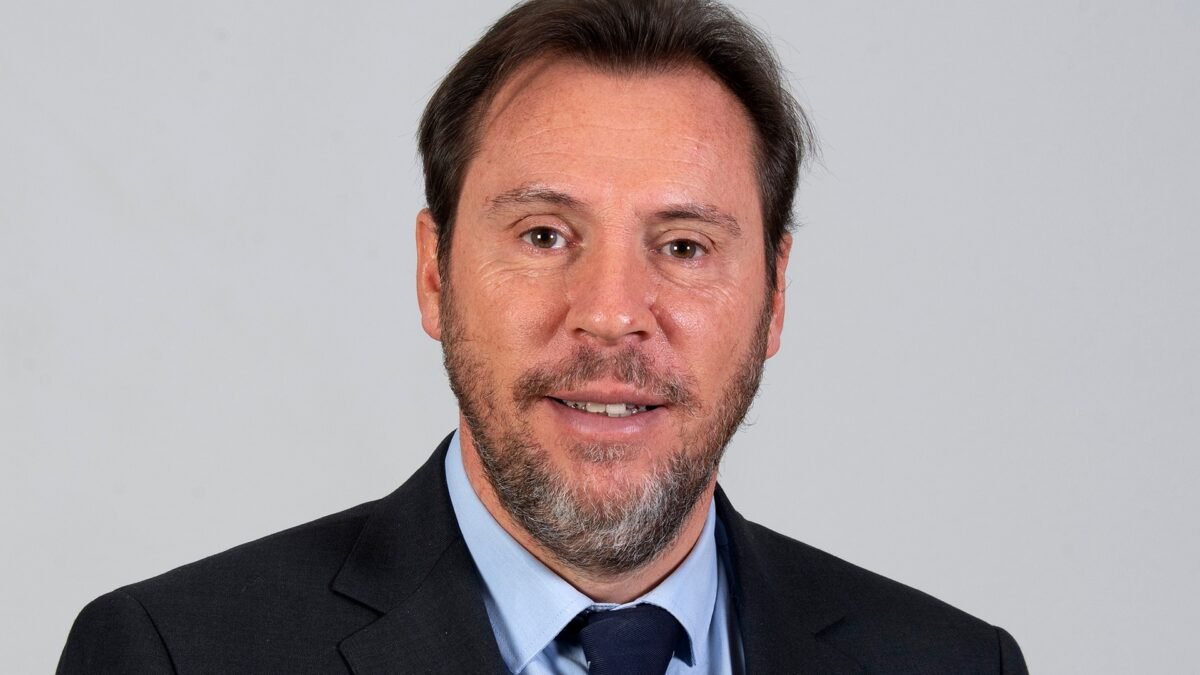
Spain’s transport minister, Óscar Puente, resigned on Tuesday night, six days after a high-speed train collision near the town of Urda killed 69 people — the second fatal rail disaster on his watch in less than a year. The two crashes, taken together, have killed 115 people and have become the gravest test of Prime Minister Pedro Sánchez’s government in the final weeks before a snap general election on 29 November.
Puente announced his decision at the end of a tense, four-hour hearing before lawmakers from the Permanent Deputation, the caretaker parliamentary body that sits while parliament is dissolved, according to Reuters. Most parties in the room had demanded that he accept responsibility for the two disasters. Only hours earlier, he had insisted that he would not resign.
“A transport minister in a country like Spain cannot remain in office after two accidents of this seriousness in less than a year, however different they may be and regardless of whether or not they bear direct responsibility for them,” Puente told the lawmakers, according to CNN. It was, he said, a matter of political dignity.
He also told the hearing that he had made up his mind within minutes of learning of the Urda crash, but had told only his family — keeping even Sánchez in the dark. He said he stayed in office only until the emergency response was running, the first inquiries had begun and the first steps to compensate victims and strengthen rail safety had been introduced. Alongside his resignation, he withdrew his name from the Socialist Workers’ Party (PSOE) electoral list for Valladolid, the city where he was once mayor, and said he would not stand as a candidate in the 29 November election.
His departure takes effect once it is published in Spain’s official state gazette, although the exact timetable remains unclear, Reuters reported. On Wednesday, Sánchez said his deputy, Carlos Cuerpo, the economy minister, would provisionally run the Transport Ministry, with the appointment to be formalised by an extraordinary royal decree.
Sánchez praised his departing minister in warm terms. “Politicians like him dignify our country and show us that not all of us are the same,” he wrote on social media, according to CNN. “While some only give lessons, others give everything.” The prime minister said Puente had decided to resign for three reasons, The Times reported: “Empathy with the victims, consistency and, finally, political dignity.” He added that Puente had “faced up, provided solutions and then stepped aside”.
For the families of the 115 people killed in Spain’s two major train collisions this year, the resignation was long overdue, The Times reported. For them, even Tuesday’s announcement was couched in careful language: Puente presented his departure as an act of political dignity while maintaining that he bore no personal responsibility for either disaster.
A decision made in minutes, kept secret for six days
The manner of Puente’s resignation was as striking as the decision itself. According to Reuters, he surprised lawmakers by quietly announcing that he was stepping down at the end of the hearing, after four hours of questioning in which most parties demanded he face responsibility for the two rail disasters. Sources close to Sánchez had told journalists on Tuesday that Puente would neither resign nor be dismissed, and would remain the Socialist candidate in Valladolid, The Times reported.
The reversal was total. On Friday, Puente had put his future in Sánchez’s hands, and the prime minister had rejected his departure, describing it as “unfair” because there was no evidence of political responsibility for the accident, according to an account reported by El País and cited by The Times. Hours before Tuesday’s hearing, Puente was still insisting that he would stay.
Yet, as he told the hearing, the decision had in fact been taken in the first few minutes after the tragedy. “I made the decision about my future in the first few minutes after the tragedy,” he told lawmakers in Madrid, according to CNN. He told only his family. Not even the prime minister knew.
That secrecy has become part of the story. It allowed Puente to present the resignation as his own act of conscience rather than a sacking, and it allowed Sánchez to praise it as dignified rather than defend it as forced. But it also raises an awkward question: if the minister had decided within minutes of the crash that his position was untenable, why did he spend six days publicly insisting on the opposite, and why did the prime minister spend the same six days defending him?
One answer, offered by Puente himself, is that he wanted to stay long enough to put the emergency response, the first inquiries and the first safety measures in place. Another, offered by his critics, is that a government 26 days from a general election could not afford to lose one of its most combative voices a moment sooner than it had to. Both explanations may be true at once.
Puente, 57, is a lawyer and a former mayor of Valladolid who took on the transport post in November 2023, Reuters reported. He also spent time as a stage actor earlier in his life. In government he oversaw the expansion of Spain’s rail network and the rollout of investments supported in part by EU recovery funds. But he had also, for years, been heavily criticised by unions and opposition parties for underinvestment in maintenance and increased disruptions, Reuters reported — criticism that culminated in a Senate motion demanding his resignation in February, after the first fatal crash on the same Madrid–Seville line where the Urda collision occurred.
Dubbed by media commentators as Sánchez’s “attack dog”, he frequently traded barbs with rivals on the messaging platform X and in parliament, in a pugnacious style that made him a top contender in discussions about Sánchez’s eventual succession, according to Reuters. His loss, The Times reported, is a significant blow to Sánchez just 26 days before a snap general election.
What happened at Urda
The disaster that ended Puente’s ministerial career happened at 8:53 a.m. on Wednesday, 28 October, at the entrance to Urda station in Toledo province, about 130 kilometres south of Madrid. The site is kilometre point 118+800 on track 2 of the Madrid–Seville high-speed line, Spain’s first high-speed route, which opened in 1992.
Iryo train 6076, a Hitachi ETR1000 trainset travelling from Madrid to Seville, was standing at the station’s entry signal when Renfe AVE 2080, a Siemens trainset on the same route that had left Madrid-Atocha at 8:00 a.m., ran into it from behind, according to Spain’s rail accident investigation authority, AITAT, in its first technical note, issued on 29 October. The leading car of the AVE embedded itself in the rear car of the Iryo train. Both overturned at the foot of the track embankment. All the remaining AVE cars derailed, as did every Iryo car except the two at the front.
AITAT estimates the impact speed at between 160 and 200 kilometres per hour. The exact figure will only be established once data is extracted from the trains’ on-board legal recorders. The authority has opened case 146/2026, classified as a serious train collision, and has in principle one year to publish its final report. The line remains closed, with no forecast yet for its reopening.
The toll stands at 69 dead and more than 200 injured, according to AITAT. On Monday, Spanish authorities said they had identified all 69 people killed. The list includes 54 Spanish citizens and 15 foreigners: four from the United States, two Australians, two Japanese, and one each from Argentina, Canada, France, Mexico, Portugal, Tunisia and the Czech Republic, The Times reported. The remains of 59 people had been returned to their families.
The chain of events began at about 8:30 a.m., when a computer fault interrupted the LZB system — the Linienzugbeeinflussung continuous train-control system fitted to the Madrid–Seville line since it opened — over a stretch of about 63 kilometres. Six trains were brought to a standstill. LZB monitors a train’s speed continuously, shows the driver the permitted speed in the cab, and brakes the train automatically if limits are exceeded. With LZB working, a rear-end collision of this kind should not be possible.
When the system dropped out, the affected section reverted to the lateral signalling block, known as BSL, with Spain’s national automatic train protection system, ASFA. Adif’s high-speed traffic control centre at Madrid’s Atocha station then managed traffic with the drivers through an exchange of information and instructions by telephone message. Investigators say a sequence of faults, instructions and actions may eventually have led to the collision, with the necessary safeguards failing to act.
According to recordings broadcast by Spanish media and reconstructions of the morning, the AVE driver received authorisation to continue his journey about six minutes after the breakdown, and was told to disconnect and reconnect the LZB and to resume circulation through the lateral signalling block with “normal movement”. The Iryo driver, meanwhile, reported that her train remained stopped before the entrance to Urda, that she could not restart the LZB, and that the entry signal was showing red. She was told to remain there. She reported again at 8:41 a.m. and confirmed at 8:48 a.m. that she was still stopped. Five minutes later, the AVE struck the Iryo from behind.
Puente himself described the authorisation given to the AVE as “erroneous” and “inexplicable”. “There was a red signal prohibiting movement, yet the train was authorized to proceed,” he said last week, according to CNN. “It is a decision made under inexplicable circumstances.” He said circulation should have been carried out at a speed of about 40 kilometres per hour — the speed at which a driver can stop short of any obstacle — instead of allowing the AVE to continue at considerably higher speeds. The AVE travelled approximately 25 kilometres in the 17 minutes between the authorisation and the collision.
AITAT has stressed that its work is at an initial stage, that all hypotheses on causes and contributing factors remain open, and that it cannot offer explanations beyond the confirmed data. Its investigation will also examine the LZB faults that created the risk, along with the environmental, organisational and procedural factors that could have mitigated or worsened possible failures. An investigation is also under way into the actions of the traffic controller and the frequency of train passages at the time, as well as the orders given to the trains involved.
The failure was not a one-off. Reporting of the investigation notes that LZB system failures had caused many trains to come to a standstill on the line in the weeks and days leading up to the accident, and Puente told lawmakers the system had failed about 170 times in the previous year, according to reports of his parliamentary evidence. The question at the heart of the inquiry is not only what one controller said on one morning, but why a safety-critical system was failing so often — and why the degraded-mode procedures that were supposed to keep trains safe when it failed did not do so.
The Adamuz crash that came first
The Urda disaster was the second fatal high-speed rail crash in Spain in less than ten months. The first came in January, at Adamuz in Córdoba, where an Iryo train derailed and struck an oncoming Alvia service, killing 46 people, according to Reuters and The Times. At the time, it was the deadliest crash Spain had seen in more than a decade, CNN reported.
The two accidents share more than a death toll. Both involved the same two operators, Renfe and Iryo, on the same Madrid–Seville line. Both raised questions about the condition of Spain’s high-speed infrastructure and the safety culture around it. And both fell on Puente’s watch as transport minister.
After Adamuz, Puente refused to resign. Only two weeks ago, days before the collision near Urda, he had justified that refusal in an interview with The Times. “I decided to remain in office because I don’t feel that I bear any responsibility for the accident,” he said. “I believe political responsibility arises if, through action or omission, you have contributed to causing the harm.” It took another 69 deaths before he stepped down, The Times noted.
The political pressure after Adamuz had been intense. Unions and opposition parties had long criticised Puente for underinvestment in maintenance and for rising disruption on the network, and in February the Senate passed a motion demanding his resignation. He survived it. After Urda, the pressure became impossible to withstand: numerous politicians and Spain’s transport workers’ union called on him to resign, and on the night of the crash, police scuffled with hundreds of protesters outside the transport ministry headquarters in Madrid, some of whom carried placards demanding that Prime Minister Sánchez resign, CNN reported.
Together, the two crashes have killed 115 people — 46 at Adamuz and 69 at Urda. That figure, repeated by almost every party in Tuesday’s hearing, is what made Puente’s position untenable. A single disaster, however terrible, could be presented as a tragic accident. Two disasters of the same kind, on the same line, within ten months, could not.
Aid, new safety rules and an interim successor
On Tuesday, before Puente announced his resignation, the government announced a €30 million aid package for the victims of the Urda crash and their families, including advance payments on compensation and an increase in compulsory passenger insurance, The Times reported. The package is worth approximately $33.5 million.
The government also announced new rail safety rules. Under the new rules, drivers must slow to 40 kilometres per hour after a signalling failure so they can check the track for obstacles — the speed Puente said should have applied on the morning of the Urda crash. The rule is, in effect, a formalisation of the procedure that investigators believe was not followed on 28 October.
The search for other possible fatalities at the Urda site has been closed, Spanish authorities said, and the provisional toll remains unchanged at 69. All 69 victims have been identified and their families or the relevant consulates notified.
On Wednesday, Sánchez moved to fill the gap. He said his deputy, Carlos Cuerpo, would provisionally run the Transport Ministry, Reuters reported. Cuerpo is the economy minister and first deputy prime minister. The appointment will be formalised by an extraordinary royal decree, according to The Times, which named the appointee as Carlos Cuerpo. Puente’s resignation itself will only become effective once published in the official state gazette.
Cuerpo inherits a ministry in crisis: a closed high-speed line, an unfinished investigation, grieving families awaiting compensation, and a rail network whose safety systems are now the subject of national debate — all with a general election 26 days away.
A loyal lieutenant lost 26 days before an election
Puente’s resignation arrives at a difficult moment for Sánchez. The prime minister called the 29 November election early, in the wake of several corruption scandals, a controversy over housing affordability and numerous setbacks for his socialist PSOE party in municipal elections, CNN reported. Polls run after last Wednesday’s crash showed a slight drop in support for the ruling Socialists, who had hoped to fight the campaign on their ability to uphold social services and tackle the housing crisis, according to Reuters.
Puente was one of Sánchez’s most loyal and high-profile ministers, Reuters reported, and one of his most combative voices. His pugnacious style — trading barbs with rivals on X and in parliament — made him both a prized attack dog for the government and a polarising figure. The Times reported that his loss just 26 days before the election is a significant blow to Sánchez, who must now fight the campaign without one of his most recognisable lieutenants, while the opposition uses the two rail disasters as evidence of a government that failed to keep its citizens safe.
The shadow of corruption hangs over the ministry as well. Puente’s predecessor as transport minister, José Luis Ábalos, once Sánchez’s right-hand man, was jailed for 24 years and three months over corruption involving pandemic contracts and appointments to public companies, The Times reported. Sánchez called the early election in part because of the scandals that have dogged his government, and the transport ministry now finds itself at the centre of two separate crises in succession: one of corruption, one of safety.
Sánchez sought on Wednesday to portray Puente’s resignation as an honourable personal decision rather than an admission of ministerial failure, The Times reported. That framing may hold for the prime minister’s supporters. For the opposition, and for the families of the 115 dead, the framing will be different: a minister who stayed too long, and a government that defended him until it could defend him no longer.
Analysis: Why It Matters
1. Two crashes turned an accident into a pattern
The decisive fact in this story is not the number 69, terrible as it is. It is the number 115. A single disaster can be, and often is, treated as a tragedy beyond any minister’s control: a technical failure, a human error, a cruel coincidence. Two disasters of the same kind, on the same line, involving the same operators, within ten months, cannot be explained away so easily. They invite a different question — not “what went wrong on that morning?” but “what was wrong with the system that allowed it to go wrong twice?”
Puente understood this. His own stated reason for resigning was not that he caused either crash — he maintained that he did not — but that no transport minister could remain after two accidents of such gravity in less than a year. That is a significant concession: it accepts that political responsibility is not the same as personal fault, and that a minister can be accountable for a system even when he did not personally cause its failure. It is also, notably, the opposite of the position he took after Adamuz, when he argued that political responsibility arises only if a minister has contributed to causing the harm. Something changed between January and November. What changed was the body count.
2. The safety system failed long before the trains did
The emerging picture of the Urda crash is not one of a single catastrophic failure, but of a chain in which a technical fault, a degraded-mode procedure, a control-room decision and the absence of an engineered safeguard all lined up. The LZB system failed at 8:31 a.m. That failure was not, by itself, supposed to be dangerous: the line was designed to fall back to lineside signalling, with drivers running on sight at 40 kilometres per hour. The danger came when the AVE was authorised to resume “normal movement” — a phrase that, in the context, appears to have meant normal speed — while the Iryo sat stopped at a red signal ahead of it.
But the deeper question is why the LZB system was failing so often in the first place. Puente told lawmakers it had failed about 170 times in the previous year. If that figure is accurate, then the Urda crash was not a bolt from the blue but the predictable end of a pattern: a safety-critical system failing repeatedly, on a line carrying high-speed trains at up to 300 kilometres per hour, with degraded-mode procedures that depended on every human in the chain getting every instruction right. AITAT’s investigation, which has a year to report, will have to answer not only what the controller said at 8:36 a.m., but why a system that failed 170 times was still being relied upon — and whether anyone in the ministry, in Adif or in the operators raised the alarm loudly enough.
3. The resignation reveals how Sánchez governs — and its costs
Puente was not an ordinary minister. He was, by Reuters’ description, one of Sánchez’s most loyal and high-profile ministers, and by media shorthand his “attack dog”: the minister who said the things the prime minister could not say, in the tone the prime minister could not use. Sánchez defended him after Adamuz, rejected his resignation on Friday, and praised him warmly on Tuesday night. The prime minister’s instinct was to hold on to a loyal lieutenant.
That loyalty has a price. For six days after the Urda crash, the government’s position was that Puente would stay. Sources close to Sánchez were still telling journalists on Tuesday that he would neither resign nor be dismissed. Then, in the space of a four-hour hearing, the position collapsed. The government now enters the final 26 days of an election campaign having lost one of its most recognisable faces, and having spent a week defending a minister who had already decided to go. The episode will be used by the opposition as evidence of a government that clings to its own until events force its hand — and the opposition will not need to exaggerate much, because the timeline speaks for itself.
4. Spain’s high-speed success story has a safety question to answer
Spain built its high-speed network into a source of national pride. The Madrid–Seville line, opened in 1992, was the first, and the network has grown into one of the largest in the world. High-speed rail is woven into Spanish life in a way it is not in most countries: commuters, families and businesses depend on it daily, and its safety record has been a point of pride.
Two fatal crashes in ten months, on the same line, threaten that record and that pride. The Urda investigation will examine not only the LZB failure but the age of the signalling systems on the oldest high-speed line in the country. The LZB system dates from the line’s opening in 1992; reporting on the crash has already raised questions about old signalling systems on the network. The government’s new 40 km/h rule after a signalling failure is a start, but it is a procedural fix to a problem that may also be a hardware problem — and hardware fixes take years and cost billions. The election campaign will now be fought, in part, over who is willing to pay for them.
5. The election is now, in part, a referendum on competence
Sánchez called this election early because of corruption scandals, housing costs and municipal defeats. He hoped to fight it on social services and housing. Instead, the campaign’s final weeks will be dominated by a question no government wants to answer: did you keep people safe?
Polls taken after the crash already showed a slight drop in Socialist support, according to Reuters. That may prove temporary, or it may not. What is certain is that the opposition now has a simple, devastating line of attack: 115 people died in two crashes on the same line in less than a year, and the minister responsible stayed in office until he could stay no longer. Puente’s resignation removes the most visible target, but it does not remove the question. The investigation, the compensation of victims, the reopening of the line and the future of the signalling system will all still be unresolved on polling day. Voters will be asked to judge a government that is, at the same time, asking them to trust it with the country’s safety.
What to Watch Next
- The AITAT investigation. Spain’s rail accident investigation authority has a year to publish its final report on the Urda collision, but its interim findings — on the LZB failure, the control-room instructions and the degraded-mode procedures — will shape the political debate long before then. Watch for the data from the trains’ on-board recorders, which will establish the exact impact speed, and for any findings on how often the LZB system failed before 28 October.
- The judicial inquiry. Alongside the technical investigation, a judicial inquiry is under way into the circumstances of the crash. Any decision to charge individuals — controllers, managers or officials — would transform the political story into a legal one, and could reach into Adif, Renfe and the ministry itself.
- The Madrid–Seville line. The line remains closed, with no forecast for its reopening. Its closure disrupts one of Spain’s busiest routes. Watch for the date it reopens, the conditions imposed, and whether the government accelerates investment in replacing the LZB system on the line.
- Carlos Cuerpo’s first weeks. The economy minister now provisionally runs the Transport Ministry as well. Watch how he handles the victims’ compensation, the €30 million aid package and the new safety rules — and whether Sánchez names a permanent transport minister before the election, or leaves the post in caretaker hands.
- The 29 November election. Puente’s resignation, the two crashes and the government’s handling of them will be central to the campaign’s final weeks. Watch the polls for whether the Socialists recover from the post-crash dip, and whether the opposition succeeds in making rail safety — and competence in government — the defining issue of the vote.
Sources
- Reuters — “Spain’s Sanchez loses key ally as transport minister quits over train crashes”
- CNN — “Spanish transport minister resigns after two deadly train crashes in one year”
- The Times — “Spanish transport minister resigns days after crash that killed 69”
- Railway Supply — “Urda train collision probe puts AVE impact at 160–200 km/h” (AITAT first technical note, 29 October 2026)
- The Times — “What losing Spain’s transport minister means for Pedro Sánchez’s survival”

About the Author — Abdul Mannan
Related Articles
Herzog Opens Coalition Talks as Israel’s Election Fraud Claims Collapse and Netanyahu’s Future Hangs in the Balance
Israel's President Isaac Herzog opened coalition consultations on Wednesday after the elections committee certified the 27 October results…
North Korea Fires Multiple Missiles Hours After Kim Yo Jong Rules Out Talks With Washington
North Korea fired multiple missiles toward the Sea of Japan on Wednesday, hours after Kim Yo Jong ruled…
Russia Bombs Aid Centre and Power Grid in Deadliest Week of the War as Abu Dhabi Peace Talks Loom
At least 33 people were killed when Russian bombs hit a humanitarian aid centre in Komyshuvakha, hours before…