
UK Ethics Watchdog Chief Stuart Sterling Steps Back Over Historic Sexual Misconduct Claims

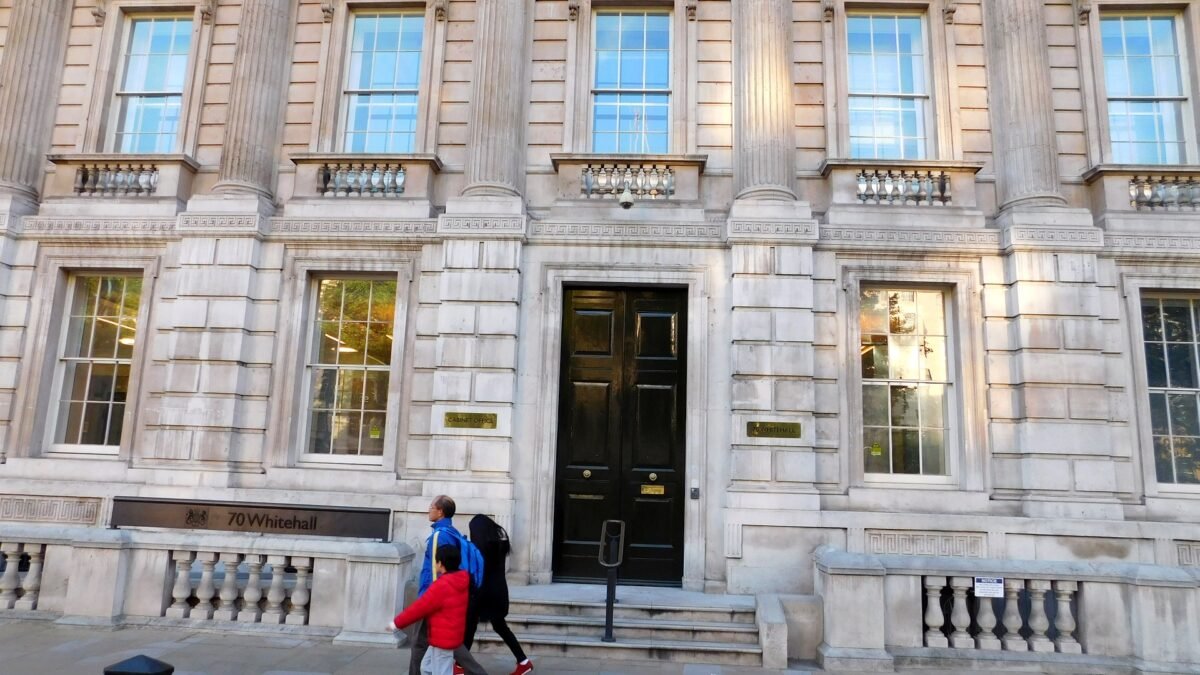
The head of Britain’s ethics watchdog has stepped back from his role after it emerged that he was investigated over alleged sexual misconduct during his earlier career as a police officer, and was sanctioned for one incident more than two decades ago. Stuart Sterling, the first chief executive of the Ethics and Integrity Commission, stood aside on Saturday while the government establishes the facts, according to a government spokesperson.
The allegations, first reported by the investigations team of the Sunday Times, concern Sterling’s time as a detective constable with Northamptonshire Police in the early 2000s. In one case, he admitted wrongdoing and was fined two weeks’ pay. In a second, later case, he denies that the alleged incident ever took place. The disclosure has placed the government in an uncomfortable position: the man appointed to lead the body that guards standards in public life is now himself the subject of a Cabinet Office inquiry into what he disclosed about his own past.
“These are serious allegations. Stuart Sterling has stepped back from his role while we swiftly establish the facts,” a government spokesperson said, according to the BBC. The statement, issued after the Sunday Times approached Sterling with its findings, stopped short of saying he had resigned. He has stepped back pending investigation, and the Cabinet Office will now examine whether appropriate and correct disclosures of information were made at the relevant points in his career.
The 2002 incident at Corby police station
According to the Sunday Times, the first incident took place in 2002, when Sterling was a junior officer with Northamptonshire Police. He and two fellow officers, one male and one female, had returned to the office at Corby police station after completing a routine patrol. The paper reported that Sterling grabbed a female colleague’s breasts inside the police station, and that a male colleague who allegedly witnessed the incident reported him to his superiors.
Sterling was suspended on full pay while the matter was examined. According to the Sunday Times, the force considered criminal proceedings against him but made what the paper described as a “wholly exceptional decision” to let him return to his duties after he admitted wrongdoing. The BBC reported that Sterling was subject to a “full misconduct hearing” in 2003, in what was treated as a case of sexual harassment.
A representative for Sterling told the BBC: “Stuart states that a full disciplinary process was held regarding the complaint in 2002. He complied with this fully. It resulted in a sanction.” The Sunday Times reported that the sanction was a financial penalty of two weeks’ pay, which the paper said was the maximum sanction possible at the time short of forced resignation. He then received two police commendations and was promoted to detective sergeant.
Northamptonshire Police has confirmed that it holds a digital record of a misconduct process from 2002. The force did not comment on the later allegation. The internal inquiry into the first incident was overseen by Alan Featherstone, who was then an assistant chief constable, according to the Sunday Times.
A second allegation, and his departure from the force
The Sunday Times also reported a second allegation of sexual misconduct, said to have been made several years later. By 2008, Sterling had been reported to the force again after another allegation of sexual misconduct against a female colleague, this time at a social gathering outside work. The BBC reported the same account.
Sterling denies that the alleged 2008 incident ever took place. His representative told the BBC: “He denies that the alleged incident in 2008 ever took place. He was never subject to any criminal investigation, but the allegation was examined by professional standards.” The representative added: “He was not required to resign from the force. He left voluntarily.”
By January 2008, Sterling had left Northamptonshire Police. The Sunday Times reported that by then, the force’s anti-corruption unit had made inquiries into the handling of the first investigation. Sterling’s representative, in comments reported by the Mail on Sunday, said: “He is not aware of any anti-corruption investigation ever taking place.”
The two accounts of the anti-corruption question are not the same, and neither side has produced documents to settle it. What is established is that no criminal proceedings followed either incident, that the first ended in a formal sanction after a full disciplinary process, and that the second was examined by the force’s professional standards department without resulting in a criminal investigation.
From police officer to the top of Whitehall’s ethics system
Sterling returned to public life as a senior civil servant in the Cabinet Office in December 2009, the year after he left the police, according to the Sunday Times. He went on to serve in a variety of senior roles, including in national security, and in 2019 he was seconded to the National Police Chiefs’ Council. In 2023 he was appointed OBE by the King for helping to plan the funeral of Queen Elizabeth II.
In October 2025, he was appointed the first chief executive of the newly formed Ethics and Integrity Commission, making him the most senior member of the civil service responsible for upholding the principles of “integrity”, “honesty” and “accountability” in the public sector, as the Sunday Times put it. The BBC reported that as its head, his role included advising the prime minister on tackling misconduct in public life.
The Cabinet Office would not provide details of the checks it conducted before Sterling joined the civil service, before he received an honour, or before he was appointed to the ethics role, according to the Sunday Times. It is understood that the department will now examine whether appropriate and correct disclosures of information were made — a question that goes to the heart of the case, because a disciplinary sanction that was properly declared and weighed is a very different matter from one that was not.
What the commission is, and why it matters
The Ethics and Integrity Commission was launched on 13 October 2025, replacing the Committee on Standards in Public Life, the body established by Sir John Major in 1994 to advise the prime minister on ethical standards. The Labour Party had promised in its 2024 manifesto to create the commission to “ensure probity in government”, in response to scandals during the Covid pandemic, according to the BBC.
The commission is an independent advisory, non-departmental public body, sponsored by the Cabinet Office. It is chaired by Lieutenant General (Retired) Doug Chalmers, the former chair of the Committee on Standards in Public Life, who is also the Master of Emmanuel College, Cambridge. Its members are appointed by the prime minister for single, non-renewable five-year terms.
Its remit is to promote the highest standards in public life. It is the custodian of the Seven Principles of Public Life, also known as the Nolan Principles: selflessness, integrity, objectivity, accountability, openness, honesty and leadership. It reports annually to the prime minister on the overall health of the standards system, convenes the leaders of ethics and standards bodies across government and Parliament, and advises public bodies on their codes of conduct. This year, the government enlisted the commission’s help on the Hillsborough Law, the legislation designed to stop institutional cover-ups within the police and intelligence services.
Crucially, the commission is not a regulator. It has no remit to investigate individual cases or potential standards breaches, and it cannot launch investigations or field complaints. That limitation now shapes the Sterling case in a specific way: the body that exists to uphold standards in public life cannot investigate its own chief executive. The inquiry into what he disclosed, and when, falls instead to the Cabinet Office, the department that sponsors the commission and employed him for most of his civil service career.
Last month, Sterling wrote that “standards should be a golden thread that runs through all public authorities”, according to the Sunday Times. The sentence, published weeks before his own past became public, is now the one most likely to be quoted back at him.
The political reaction
The political reaction so far has been limited, and it has come mainly from the opposition. Tory MP Greg Stafford told the Mail on Sunday: “These are very serious allegations which must be investigated with the utmost urgency.” No minister has yet spoken publicly about the case beyond the Cabinet Office statement.
That restraint is understandable. The government commissioned the review of the facts, and anything said before it concludes risks prejudging it. But the silence also reflects the difficulty of the position. The commission was a flagship of the last government’s promise to clean up public life, and it was launched with a fanfare only thirteen months ago. Its first chief executive stepping back within a year of its creation is, by any measure, a damaging start for a body whose entire authority rests on credibility.
The question that will dominate the coming days is not whether a man should be defined for ever by something he did in his twenties. It is whether the system that promoted him, honoured him and then placed him in charge of the nation’s ethics watchdog knew about his disciplinary record, and if it did, why it judged that record compatible with the job. If it did not know, the question is why not — and what that says about the vetting of the people entrusted with the highest standards roles in the country.
Analysis: Why It Matters
The irony is the story
There is no way around the central irony of this case, and it is the reason it leads the news. The Ethics and Integrity Commission exists to tell the rest of public life how to behave. Its chief executive is the most senior civil servant charged with upholding integrity, honesty and accountability. The revelation that he was once sanctioned for sexual misconduct as a police officer, and investigated a second time, does not merely embarrass the commission. It strikes at the one asset a standards body cannot function without: the belief that the people running it meet the standards they enforce. A regulator can survive a bad quarter. A standards body that loses its moral authority has very little left.
The real question is disclosure, not the sanction alone
It is important to be precise about what Sterling is accused of, and what he is not. The 2002 incident was dealt with at the time through a formal disciplinary process. He admitted wrongdoing, accepted a sanction, and was then commended twice and promoted. In the ordinary run of public life, a sanction served and a career rebuilt is the system working as intended: punishment, rehabilitation, and a second chance. The 2008 allegation was examined by professional standards, resulted in no criminal investigation, and is denied outright. Neither incident, on its own, would necessarily disqualify a person from senior public service twenty years later.
What changes the picture is the job he was given. The chief executive of the Ethics and Integrity Commission is not an ordinary senior post. It is the single most visible standards role in the civil service, and it was created precisely because the public had lost faith in the old arrangements. For that job, the question is not only whether the past was punished, but whether it was declared. The Cabinet Office inquiry will turn on whether Sterling gave an “appropriate and correct” account of his history when he joined the civil service, when he was considered for an honour, and when he was appointed to the commission. A sanction that was disclosed and weighed is a matter of judgement. A sanction that was not disclosed is a matter of trust. The distinction is the whole case.
Vetting in Whitehall has a pattern problem
The Cabinet Office’s refusal to say what checks were carried out is, on its own, unremarkable: departments do not normally publish the details of individual vetting. But the pattern it sits within is not unremarkable. The commission itself was born out of a period in which the public watched standards fail repeatedly, from lockdown gatherings in Downing Street to the long list of ministerial departures that followed. The promise of the new body was that the system had learned, and that the people running it would be beyond reproach. That promise now depends on an inquiry into whether the vetting of the body’s own chief executive was adequate, conducted by the same department that did the vetting. The public is entitled to ask whether that is a credible arrangement, and whether an independent element should be built into the inquiry from the start.
A body that cannot investigate now faces its own credibility test
The commission’s lack of investigative powers, which was a deliberate design choice, now looks like a structural weakness. It was set up to advise, to convene, and to report — not to investigate individuals. That means there is no mechanism within the standards system itself for dealing with a standards failure at the top of the standards system. The work falls to the Cabinet Office, which is both Sterling’s employer and the commission’s sponsor. The arrangement is not improper, but it is awkward, and awkwardness matters when the subject is public trust. The first annual report the commission delivers to the prime minister on the health of the standards system will now be read, inevitably, as a document about its own health too.
What the next week decides
Three things will determine how this ends. The first is the scope of the Cabinet Office inquiry: whether it looks only at what Sterling disclosed, or also at what the department asked, what it recorded, and what it did with the answers. The second is whether Sterling returns. A step back is not a resignation, and if the inquiry finds that his record was properly declared and properly weighed, there is a route back — though it would be a difficult one, given the publicity. The third is whether the commission itself is damaged in a lasting way, or whether a swift, transparent inquiry allows it to present itself as a body that applies its own principles to its own people. The commission was launched thirteen months ago. It has not yet delivered its first annual report. Its first real test has arrived before its first birthday, and it is a test of its own making.
What to Watch Next
- The Cabinet Office inquiry: its terms, its timetable, and whether it examines the department’s own vetting as well as Sterling’s disclosures.
- Whether the inquiry’s findings are published in full, or summarised, and how quickly the government commits to a date.
- Whether Sterling returns to the commission, resigns, or is moved to another role — and what that decision signals about the government’s view of the facts.
- Who leads the commission in the meantime, and whether the chairman, Doug Chalmers, makes any public statement.
- Whether Parliament takes up the case, including questions in the Commons and any hearing by the Public Administration and Constitutional Affairs Committee.
- Whether Northamptonshire Police releases any further record about the 2002 process or the 2008 allegation, beyond confirming the digital record it already holds.
- Whether the case prompts a wider review of vetting for senior standards and ethics appointments across Whitehall, including the honours system.
Sources
- BBC News — “Ethics watchdog chief steps back over sexual misconduct claims” (14 November 2026)
- The Sunday Times — “Government ethics boss accused of sexually assaulting police colleague” (14 November 2026)
- Institute for Government — “Ethics and Integrity Commission” explainer
- Full Fact — “Is the government on track to establish a new independent ethics commission?”
- Hansard (TheyWorkForYou) — “Government of Service” written statement launching the Ethics and Integrity Commission, 13 October 2025
- BBC News via NewsMadeClear — “Ethics commission chief steps back over misconduct allegations” (14 November 2026)

About the Author — Abdul Mannan
Related Articles
Russell Brand Accuser Mia Latter Waives Anonymity in Campaign to Stagger the Age of Consent
Mia Latter, who alleges Russell Brand raped her when she was 16, has waived her anonymity to campaign…

Suspected Drones Over RAF Lakenheath Force US Air Force to Sound Shelter Alarm at Britain’s Largest American Base
US Air Force security forces responded to suspected unauthorised drone activity over RAF Lakenheath on Friday evening, sounding…

Milburn Calls for Legal Guarantee of a Job or Training for Every Young Person in Radical Welfare Overhaul
Alan Milburn has called for a legal 'opportunity guarantee' for young people, alongside a sweeping overhaul that would…