
The Ceasefire That Exists Only in a Post

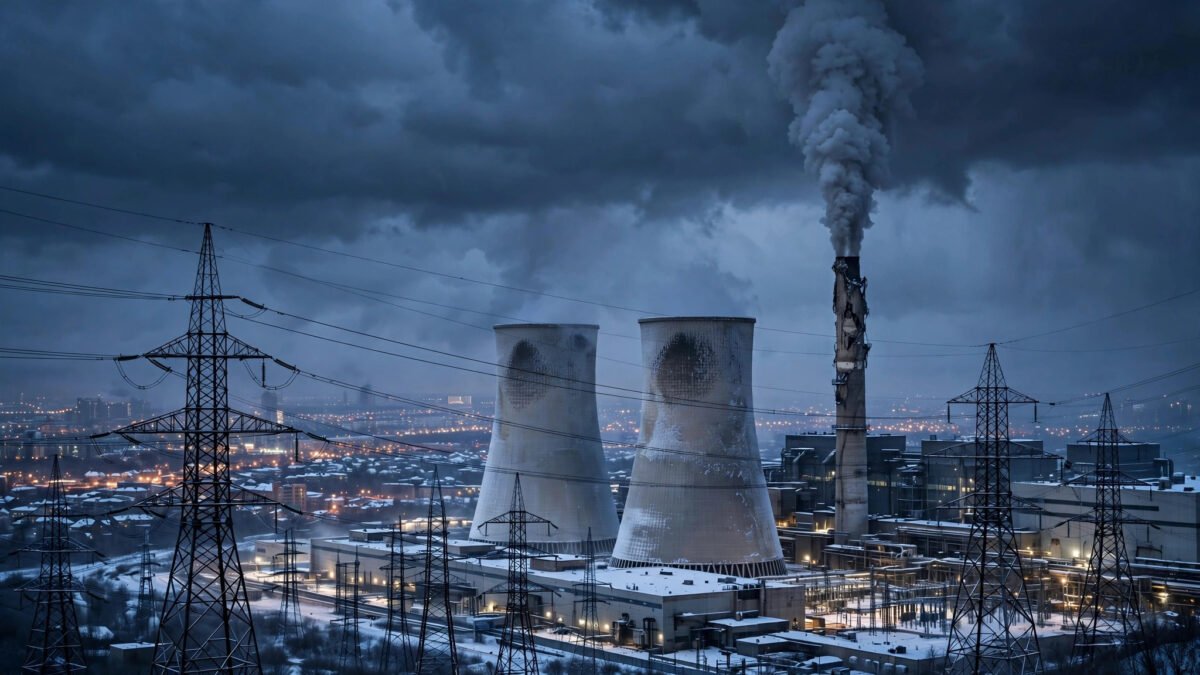
Sunday, October 11, 2026. A post appears on a social media feed, and the President of the United States declares, in language meant for the ages, that two warring nations have agreed to an “energy ceasefire” — effective immediately. No document. No signatures. No negotiators at a table. Just a post.
That same night, over Kyiv, the sky tells a different story. Ballistic missiles — five of them, by one count — fall on civilian infrastructure in the Ukrainian capital. In Kharkiv, a residential building is torn open; four people die under the rubble; forty-one are injured in a single evening. More than a hundred drones, missiles and loitering munitions, fired across nineteen regions of a country that, according to the American President, is already at peace — at least in its power plants.
Reader, sit with that image for a moment: a ceasefire declared from a phone screen, while the sirens sound in the streets below it. History has seen wars begin with a telegram. It has never seen one end with a post.
When Peace Was Written, Not Posted
Fourteen centuries ago, on the edge of Mecca, a truce was made that the world still studies. The Treaty of Hudaybiyyah, in the sixth year of the Hijrah, was not announced — it was written. The Prophet Muhammad (peace be upon him) sat with the envoy of the Quraysh, Suhayl ibn Amr, and the terms were dictated word by word, recorded, and witnessed by men from both camps. Ten years of peace. No fighting. No treachery. Every clause argued, every word weighed, every witness named. It was so meticulous that when Ali wrote “Muhammad, the Messenger of God,” Suhayl objected to the title itself, and the text was amended before the ink dried. That is what a truce looked like when men understood its weight: a document, an argument, a signature — peace you could touch.
Contrast it with Munich, September 1938. Neville Chamberlain steps off a plane at Heston, waves a piece of paper at the cameras, and declares “peace for our time.” The paper existed — but one side never intended to honour it. Within a year, the bombs were falling on Warsaw. The lesson of Munich is not that paper is useless; it is that a declaration of peace, without the consent and the intent of the parties, is not peace at all. It is theatre. And theatre, in the hands of statesmen, is how the innocent learn too late that nobody was actually negotiating for them.
There is a third story, quieter and sadder. In December 1914, Pope Benedict XV pleaded for a Christmas truce on the Western Front. The generals refused him — empires do not pause for holy days. So the soldiers did it themselves: Saxons and Scots climbed out of the trenches, buried their dead together, sang carols across no-man’s-land, played football in the frost. Peace came, but not from the proclamation. It came from the men the proclamation had forgotten to consult.
Hold these three images in your mind. You will need all of them before this column ends.
The “Energy Ceasefire” — A Timeline of the Mirage
On Sunday, October 11, President Donald Trump announced on social media that Ukraine and Russia had agreed to an “energy ceasefire,” taking effect immediately. Reuters, reporting the same day, noted the essential fact in a single devastating line: there was no immediate confirmation from Kyiv or Moscow.
By the next morning, Ukraine’s President Volodymyr Zelenskyy had responded with two words that will outlive this whole episode: “News to me.” He asked, reasonably, for a start date — the one detail any real ceasefire possesses. He added that Ukraine stood ready to accept such a pause if it truly existed. Read that sentence again. The leader of one of the two supposedly agreeing parties is asking the internet when the agreement begins.
On Monday, asked by reporters why neither side had confirmed the arrangement, President Trump replied: “They agreed. You know why? Because I said you agree — that’s why.” Then, as if amending history in real time, he added that the ceasefire “has to get settled.”
A ceasefire that has to get settled after being announced is not a ceasefire. It is a wish, dressed in the uniform of a fact. According to President Zelenskyy’s account on Tuesday, Ukraine had halted all strikes on Russian oil refineries and energy infrastructure for two full days following the American announcement — Kyiv honouring, in good faith, an agreement it had never signed. Russia, he said, did not reciprocate: over those two days, more than a hundred weapons — ballistic missiles, jet-powered drones, loitering munitions — struck across nineteen Ukrainian regions. At least six energy targets were hit. In Kyiv, five missiles struck civilian infrastructure in what Zelenskyy called a “particularly vile” attack, and Ukraine received no early warning of the launches from its Western partners. In Kharkiv, four civilians were killed in the ruins of an apartment block.
Only on Tuesday did Moscow’s own daily summary — as reported by Reuters — omit Ukrainian energy facilities for the first time since the announcement, while a Kremlin spokesman would say only that “contacts were ongoing,” declining all further detail. So here is the arithmetic of our moment: a ceasefire announced Sunday, denied Monday, violated for two days, and possibly — partially, maybe, no one can confirm — observed by Wednesday. If that is peace, then the word has lost all meaning, and we are simply watching language die in public.
The Diesel Deal: Peace, or Business?
But there is a second thread in this story, and it is made of money. In the same breath as the ceasefire, the Trump administration concluded a separate deal with Moscow: a temporary suspension of American sanctions on Russian diesel exports. Reuters reported that Trump’s envoys had told Ukrainian officials, as early as Friday, that the diesel deal was part of an attempt to “draw Russia back into negotiations” over a possible peace settlement. Kremlin spokesman Dmitry Peskov, for his part, saw “no direct connection” between the diesel arrangement and Russia’s stance on peace talks — describing it as simply “highly mutually beneficial.”
Let the reader judge. On one side of the table: a ceasefire announced without the other side’s knowledge. On the other side: Russian diesel flowing back into global markets with Washington’s blessing. Ukraine is asked to stop striking the refineries that fund Moscow’s war machine, while Moscow is handed a sanctions holiday on the fuel those refineries produce. The Ukrainians, I note, held their fire for two days anyway — and were rewarded with missiles on their power grid.
This is the old logic of empires, reader, and you have seen it before. The vocabulary changes — “energy ceasefire,” “mutually beneficial cooperation” — but the grammar is eternal: the strong negotiate with each other, and the weak are informed afterwards. When a great power announces your peace and sells your enemy’s diesel in the same week, you are not a party to diplomacy. You are its stage.
In the same days, France’s navy seized a tanker suspected of belonging to Russia’s sanctions-busting “shadow fleet,” escorting it toward the French territory of Réunion; Moscow denounced the seizure as “piracy.” In Gaza — where more than a hundred aid groups have just signed a letter saying the nearly year-old ceasefire exists “in name only” — Washington is pressing ahead with “phase two” of its peace plan and a new international “Board of Peace.” Everywhere, the pattern repeats: peace announced from above, war continuing below, the announcements growing louder as the reality grows thinner.
The Most Dangerous Sentence in Diplomacy
President Zelenskyy has also, in these days, made an offer of his own: he said Ukraine would hold presidential elections if President Putin agreed to a 60-day ceasefire. The Kremlin rejected it, saying it wants an overall peace deal instead. Consider the symmetry of refusals: Kyiv rejects nothing — it says yes to the American ceasefire it never saw, yes to elections under fire, yes to holding its drones on the ground. Moscow rejects the election-for-truce, confirms nothing, signs nothing, and keeps firing until, perhaps, Wednesday.
I am a partisan of the truth, and the truth is this: a peace that only one side observes is not a peace; it is a unilateral ceasefire wearing a bilateral costume. And a unilateral ceasefire, in the history of warfare, is simply called a target.
There is something else, and it troubles me more than the missiles. When the President of the United States says “they agreed because I said you agree,” he is announcing a new doctrine: that reality is what the powerful declare it to be, and the battlefield is expected to catch up with the press release. The Roman emperors tried governing by edict. The colonial governors tried it with gazettes. It has never once worked on men who are being shot at. The soldier in the trench, the family in the apartment block, the engineer at the power station — they do not live in the world of the announcement. They live in the world of the missile. And no post, however presidential, has ever intercepted one.
What History Will Record
So what will the historians write about this week? Not, I think, that peace broke out in October 2026. They will write that in the fifth year of Europe’s largest war since 1945, the American President announced an energy ceasefire on social media; that Ukraine’s president learned of it from the news; that Ukraine stopped its strikes for two days while Russia struck its power grid with more than a hundred weapons; that a diesel deal sweetened Moscow in the same breath; and that the world, for a few days, pretended — because pretending is easier than confronting — that words had become deeds.
Hudaybiyyah endures because it was written, witnessed, and honoured. Munich is remembered as a warning because the paper was waved while the tanks were being fuelled. The Christmas truce of 1914 is loved because peace was made by the powerless, in defiance of the powerful. Our moment belongs to a fourth category, the saddest of all: peace declared by those who will not bleed, announced to those who were not asked, and believed by those who were not watching.
I close with the question I opened with, and I put it to you directly, reader: when the next post arrives announcing the next peace — and it will arrive, they always do — will you check the sky over Kyiv first? Or will you, like the crowds at Heston in 1938, applaud the paper before reading what is written on it?
The missiles, I assure you, do not read posts. They only read targets. And until the day the signatures are on the page and the guns are silent on the ground, every announced peace is just another weapon — aimed not at the enemy’s army, but at our own judgment.
Sources & References
• Reuters — “Trump says Russia and Ukraine reached ‘energy ceasefire'” (October 11, 2026): the original announcement and the absence of confirmation from Kyiv or Moscow. https://www.reuters.com/world/europe/trump-says-russia-ukraine-reached-energy-ceasefire-2026-10-11/
• AnewZ live coverage — “Trump says Russia-Ukraine energy ceasefire is in effect” (October 11–14, 2026): Trump’s “because I said you agree” remarks, Zelenskyy’s account of the two-day Ukrainian halt and continued Russian strikes, the diesel deal, France’s shadow-fleet tanker seizure, and Russia’s first strike-free night. https://anewz.tv/world/world-news/25426/trump-says-russia-ukraine-energy-ceasefire-is-in-effect/news
• ZeroHedge — “Trump Declares Ukraine Energy Ceasefire; Zelensky Says ‘News To Me’ As Russia Attacks Powerplant” (October 2026): Kyiv’s response and continued strikes on energy infrastructure. https://www.zerohedge.com/geopolitical
• Global News (Global National, October 11, 2026): the Trump–Putin diesel arrangement reported alongside continued Russian bombardment of Ukrainian energy infrastructure; aid groups’ letter on the Gaza ceasefire. https://www.canada-channel.com/global-national-oct-11-2026-trump-claims-russia-ukraine-ceasefire-brokered/
• Worthy News — “Trump Pushes Gaza Phase Two Without Preconditions as Israel Presses Hamas on Hostage, Disarmament” (October 2026): Washington’s Gaza phase-two push, the Board of Peace timeline, and the final hostage issue. https://www.cometojerusalem.com/worthy-news?story=trump-pushes-gaza-phase-two-without-preconditions-as-israel-presses-hamas-on-hostage-disarmament
• Historical references: the Treaty of Hudaybiyyah (6 AH / 628 CE); the Munich Agreement and Chamberlain’s “peace for our time” declaration (September 30, 1938); Pope Benedict XV’s 1914 Christmas truce appeal and the soldiers’ informal truce of December 1914.

About the Author — Abdul Mannan
Related Articles
Pope Leo XIV Diagnosed With Lung Cancer After Successful Surgery to Remove Part of Right Lung
Pope Leo XIV has been diagnosed with lung cancer after surgeons at Rome's Gemelli hospital removed the lower…
Drones Hit Two Merchant Ships in the Black Sea Off Bulgaria, Sinking One as Sofia Turns to NATO and the EU
Bulgaria's prime minister says drones hit two merchant ships in the Black Sea on Tuesday, sinking one and…
Russia Says Europe Paid $320.7 Billion for Russian Energy Since 2022 — More Than EU Aid Given to Ukraine
Moscow says EU countries bought $320.7 billion in Russian hydrocarbons since 2022; Sweden's foreign minister says the bloc…