
Trump Ordered to Testify Under Oath in $10 Billion BBC Defamation Case

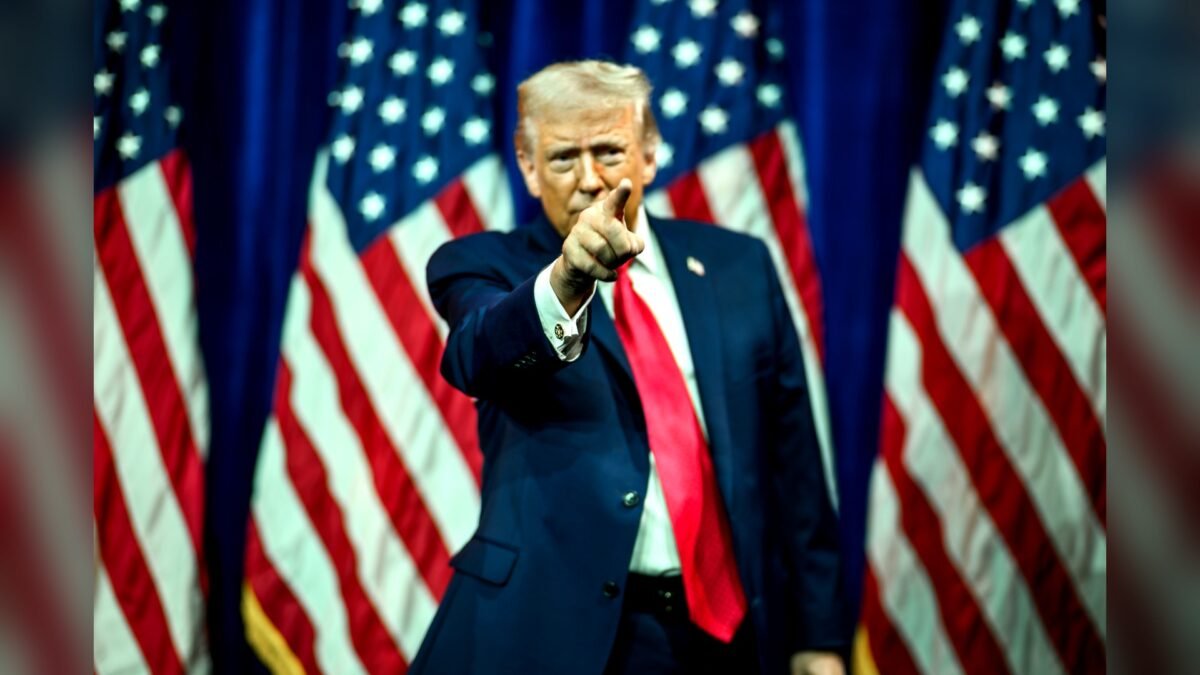
A federal judge has ordered President Donald Trump to sit for a sworn deposition by 11 December in his $10 billion defamation lawsuit against the BBC, warning that the case itself could be at risk if he refuses. The order, issued from the bench at a hearing on Thursday, is the most consequential ruling yet in one of the most unusual transatlantic media lawsuits in recent history.
According to the Associated Press, US Magistrate Judge Enjoliqué Lett directed Mr Trump to answer the BBC’s questions under oath before the current discovery deadline, rejecting his legal team’s request to push the session into January. Failure to comply could draw sanctions, including the possible dismissal of the lawsuit the president himself filed.
Reuters, reporting the AP account, noted that the BBC has accused Mr Trump of stalling to avoid being questioned, while the president’s team insists his duties and security requirements must take precedence. Neither side responded immediately to requests for comment after the hearing.
The deposition was originally scheduled for 16 October. When Mr Trump did not appear, his lawyers cited “matters of national importance.” The BBC’s lawyer, Charles Tobin, told the court a different story: the president had spent that day campaigning in Georgia. “He was participating in party politics and prioritised that over sitting for the deposition,” Mr Tobin said, according to court accounts carried by The Times.
Mr Tobin also pointed out that with roughly two months left in the discovery period — which is due to close on 18 December — the broadcaster had still not been able to depose the central figure in the case: the plaintiff himself. Trump’s lawyers, for their part, said in a filing that the BBC was “wrong to claim” the president was avoiding the session, and proposed dates between 11 and 22 January instead.
Judge Lett set the 11 December cut-off with an escape clause: the date holds unless the discovery period is extended past 18 December. His ruling means the sitting US president is now on a judicial clock to give sworn testimony in a libel case of his own making.
The Lawsuit at the Centre of It All
Mr Trump sued Britain’s publicly funded broadcaster in December 2025 in a Florida federal court, seeking at least $10 billion in damages. The case rests on a 2024 episode of the BBC’s flagship investigative programme Panorama, titled Trump: A Second Chance?, which was broadcast just over a week before the November 2024 US presidential election.
The president’s complaint alleges that the programme “maliciously” and “deceptively” edited his speech of 6 January 2021, the day some of his supporters stormed the US Capitol. According to The Times, the documentary joined Mr Trump’s line “we’re going to walk down to the Capitol … and I’ll be there with you” with a passage from much later in the same speech in which he questioned the election result and added: “And we fight, we fight like hell.” The effect, the lawsuit argues, was to create the false impression that the president had issued a direct call for violent action.
The BBC has apologised for the editing. Chairman Samir Shah described it as an “error of judgment” and accepted that the broadcast gave the impression of a direct call for violent action. But the corporation denies that the error amounts to defamation in law, and it is asking the court to throw the case out.
The fallout in London was severe. Tim Davie, then the BBC’s director-general, resigned in the wake of the incident, and Deborah Turness, who led the news division, also stepped down, according to reports carried by Deadline. The broadcaster has since argued that allowing the lawsuit to proceed would have a “chilling effect” on “robust reporting on public figures and events”.
It has also challenged whether a Florida court should hear the case at all, given that the programme was never aired in the United States — it was geoblocked there, though Trump’s lawyers claim hundreds of American viewers watched it using VPNs, according to Deadline.
A Discovery Fight With Bite on Both Sides
The quarrel over Mr Trump’s deposition is only one front in a widening discovery battle. In court filings, the BBC has accused the president and his lawyers of dragging their feet on requests for records, while the president’s team says the broadcaster’s demands are too broad and irrelevant.
Among the more aggressive moves, the BBC has sought financial records from Mr Trump’s Mar-a-Lago club and the web of business entities associated with him, arguing the information is necessary to defend against the enormous damages claim, according to Reuters. Trump’s lawyers counter that the requests go far beyond anything relevant to the case.
The broadcaster has also moved to depose Jack Smith, the former special counsel, on the basis that he may hold evidence relevant to the president’s intent on 6 January, according to TheWrap — a signal that the BBC intends to put the actual meaning of the 2021 speech squarely in dispute. Earlier reporting indicated the network had also sought depositions of Ivanka Trump, Jared Kushner and Donald Trump Jr.
A spokesman for Mr Trump’s personal legal team told the LSE financial news service that the lawsuit was aimed at holding the BBC accountable for defamation and “reckless election interference”, framing the case as part of a broader campaign against what the president regards as hostile coverage. Reuters noted that the BBC suit is one of several Mr Trump has filed privately against news organisations, describing them as part of a wider pressure campaign against coverage he dislikes.
Analysis: Why It Matters
1. The deadline changes the litigation calculus
Judges rarely put a sitting president under a testimonial clock in a civil case he initiated — and they do it even less often while attaching the sanction of dismissal. Judge Lett’s order reverses the normal gravity of this litigation. For months, Mr Trump’s side appeared to be treating the calendar as flexible, proposing January dates that would sit beyond the discovery deadline. The ruling says, in effect, that the plaintiff does not get to choose when he testifies while the defendant’s defence is starved of the central witness. That is a structural shift, not a scheduling nicety: from here on, the BBC’s lawyers get to plan their case around a fixed date, and every delay argument the Trump team makes will run into a bench order.
2. A $10 billion question: what the damages claim is actually built on
The figure in the headline is the case’s most quoted and least examined feature. Defamation law in the United States sets a famously high bar for public figures — the plaintiff must normally show not just a false statement but knowledge of falsity or reckless disregard for the truth, the standard known as “actual malice.” The BBC has already apologised and called the edit an error of judgment, which concedes a mistake but not the mental state defamation law requires. The broadcaster’s demand for Mar-a-Lago financial records is the tell here: it is preparing to argue that the damages number is speculative and must be tested against real financial evidence. Whether $10 billion is a serious valuation of harm or a negotiating posture — large claimed damages being a familiar feature of high-profile litigation — will now be subjected to the ordinary machinery of discovery rather than the headlines.
3. The BBC is fighting a two-front war — and only one is in Florida
The resignations of Tim Davie and Deborah Turness mean the corporation entered this fight already wounded at home. In London, the controversy became a crisis of institutional credibility; in Florida, it is a jurisdictional and First Amendment chess match. Those two wars interact. Every apologetic word uttered in London — the chairman’s “error of judgment” — is an exhibit in Miami, while every aggressive subpoena in Miami lands on the BBC’s own newsroom in London. The corporation’s stated fear of a “chilling effect” on journalism is a genuine legal argument, but it sits awkwardly alongside the admission that the journalism in question was flawed. The BBC’s strategy appears to be: concede the error, defend the principle, and make the plaintiff prove his case under oath — hence the hunger for the deposition.
4. Why the January proposal reveals where each side thinks the leverage lies
The Trump team’s offer of January dates was not just a calendar suggestion; it was a bet that delay helps the plaintiff. Push the deposition past the discovery deadline and the BBC must either seek an extension — conceding it cannot prepare in time — or defend a case without having deposed the man who filed it. Judge Lett saw the move for what it was and shut it down. Conversely, the BBC’s insistence on a pre-deadline date reflects its own assessment that Mr Trump’s testimony is the hinge of the case. Sworn testimony from the plaintiff creates a record he cannot walk back: whatever he says about his 2021 speech, his intent, and his knowledge of the programme becomes evidence. Neither side is fighting over procedure here; they are fighting over who has to be honest first.
5. The midterms clock is ticking underneath the legal one
It is no coincidence that the contested October deposition date collided with campaign season, or that Mr Tobin pointed to a Georgia rally. With the 2026 midterm elections approaching, every public development in this case lands in a political atmosphere. A president forced to sit for seven hours of sworn questioning by the lawyers of a British broadcaster is a story that writes itself — for his supporters as evidence of institutional hostility, and for his critics as overdue accountability. The judge’s 11 December deadline sits in the narrow window between the election and the year’s end, which means whatever happens in that deposition room will arrive while the political meaning of the midterms is still being fought over. That does not change the legal merits, but it changes the cost of losing — and both sides know it.
What to Watch Next
- The December 11 deadline. The critical question is whether Mr Trump sits for the deposition as ordered or whether his team seeks an extension of the discovery period past 18 December. Watch the docket: an extension motion would be the first sign of the next skirmish.
- The dismissal motion. The BBC wants the case thrown out on defamation grounds and on jurisdiction. How Judge Lett’s deposition order interacts with a ruling by US District Judge Jeffrey Kuntz, who oversees the lawsuit, will shape the case’s survival.
- The subpoena battles. The BBC’s moves to depose Jack Smith and members of the Trump family, and its pursuit of Mar-a-Lago financial records, are each likely to trigger objections. The outcomes will determine how wide the discovery net gets.
- The “chilling effect” argument. If the case proceeds to substantive hearings on the BBC’s motion, the corporation’s claim about the impact on journalism will collide with its own apology for the edit. Media organisations in both countries will be watching that hearing closely.
- London’s continuing reckoning. With the BBC’s leadership reshaped by the controversy, any further disclosures from the Florida case about what happened inside the Panorama edit suite will reverberate back through Westminster and the corporation’s own governance.
Sources
- Reuters: “Trump ordered to sit for deposition in his $10 billion BBC lawsuit, AP reports”
- The Times: “Judge orders Trump to sit for deposition in $10bn BBC lawsuit”
- Press Association / Gazette & Herald: “Trump handed deadline by judge to give interview under oath in BBC libel case”
- TheWrap: “Trump Must Sit for BBC Defamation Deposition by Early December”

About the Author — Abdul Mannan
Related Articles

UK Launches Ad-Smart Trial to Halve Time Needed to Test Alzheimer’s Treatments
More than 1,200 NHS patients will test metformin and atomoxetine in parallel under a new platform-trial design, backed…
Mahmood Battles Cabinet Revolt to Save 15-Year Settlement Plan as Burnham Weighs Care-Worker Exemption
Home Secretary Shabana Mahmood is fighting to save her 15-year settlement reforms as two cabinet colleagues publicly withhold…
Britain Approves Long-Delayed Jackdaw Gas Field in North Sea, Pairing Decision With £2 Billion Clean-Energy Fund
Britain has approved the long-delayed Jackdaw gas field in the North Sea, pairing the decision with a new…