
Trump Says US Warships Could Stop Off Cuba on the Way Back From Iran as Rubio Urges Cubans to Work With the CIA

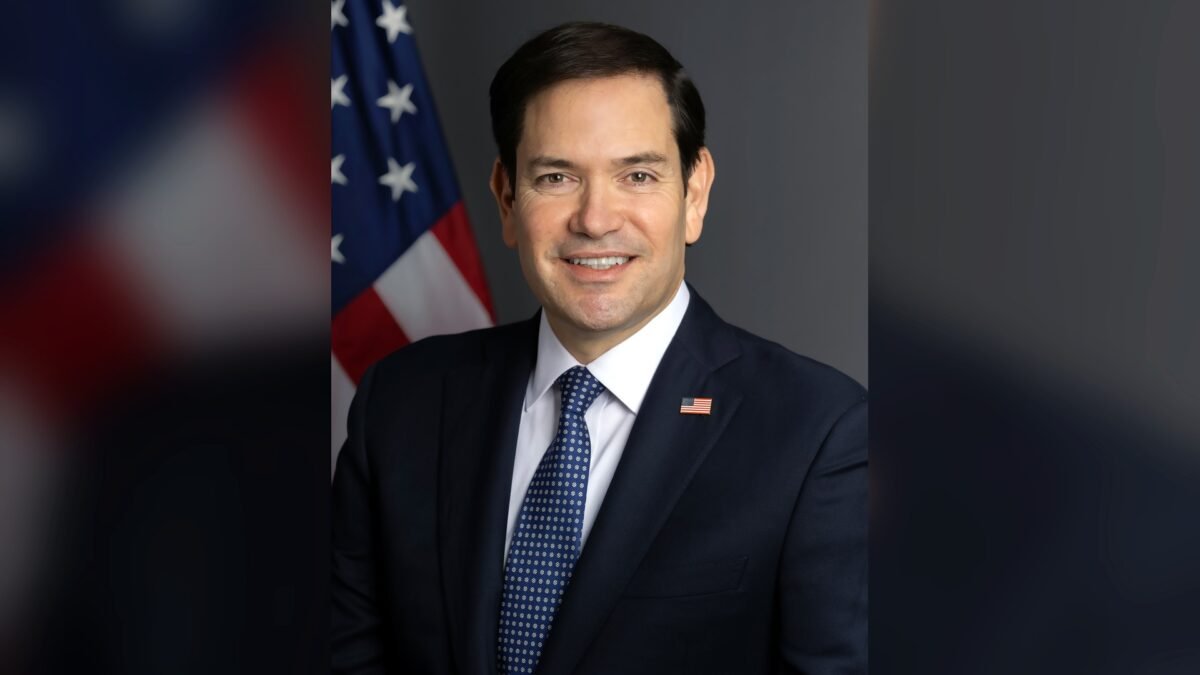
President Donald Trump has revived the prospect of American military pressure on Cuba, telling a campaign rally in Florida that United States warships returning from the war in Iran could stop just off the island’s coast, minutes before Secretary of State Marco Rubio urged Cubans seeking political change to pursue it through a partnership with the Central Intelligence Agency.
Speaking at a rally for candidates in Fort Myers, Florida, on Friday, Trump answered a shouted question from the crowd about Cuba by describing what he called a stopover on the way home from the Middle East, according to the Associated Press. “We’ll do a little stopover,” he said. “Actually, what we’re going to do with Cuba is, we’re going to come back from Iran. Those beautiful ships will pass Cuba. We’ll have one of them stop about 50 yards off the coast. They’ll raise up their hands. And then we’re going to send Marco Rubio in to finish up the deal.”
Trump did not explain what deal Rubio would be sent to finish, nor did he say whether the warship scenario reflected an actual military plan, according to USA Today. The remarks came days before the midterm elections, at a rally where voters’ worries about the cost of living — including the effect of the Iran war on petrol and grocery prices — have featured heavily in campaigning, the Associated Press reported.
Within moments of Trump’s remarks, Rubio published a message on social media addressed “to those who seek to create positive change” in Cuba, according to The Guardian. “Now is the time,” he wrote, pointing to what he called “the disappointment of failed promises, corruption, and the privileged lives of only a few”, and urging his readers to “seize this opportunity to create the change you desire through a discrete partnership with the CIA”. The Guardian noted that Rubio appeared to have written “discrete”, meaning separate, where he evidently meant “discreet”, meaning private or secret.
The CIA itself then echoed the message. In a reply to Rubio’s post, the agency wrote: “To those seeking to create positive change in Cuba — This is the moment,” and repeated the call for a discreet partnership, according to USA Today. It is highly unusual for an American intelligence agency to join a public appeal of this kind in its own name, and that unusual step is part of why the episode has drawn so much attention.
Havana’s response was swift and scornful. Foreign Minister Bruno Rodríguez said Cuba rejected “all threats regarding US ambitions toward Cuba”, according to USA Today, adding that the island’s shores held beautiful beaches but also what he called dogtooth limestone, inhospitable to those arriving with hostile intentions. Deputy Foreign Minister Carlos Fernández de Cossío mocked the appeal on social media, writing that the United States was now publicly recruiting for the CIA and suggesting the agency must be desperate to sell its services, in his words, like a tube of toothpaste, according to The Guardian. President Miguel Díaz-Canel also publicly rejected the statements as threats, according to contemporaneous reporting of the Cuban reaction.
Trump’s remarks revived an idea he had first raised earlier this year but had not discussed publicly in recent months, according to the Associated Press. He and Rubio had previously suggested that Cuba could be next for American intervention abroad once the Iran war wound down, a war that Trump has long forecast ending but which has not yet ended. In May, Trump and Rubio raised the prospect of military intervention in Cuba with fresh force after the administration announced criminal charges against the island’s former leader, Raúl Castro, according to the Associated Press.
The pressure campaign behind the rhetoric has been building all year through measures short of war. In May, the Justice Department indicted Castro and five other Cuban nationals, charging the former president with trying to kill Americans, a charge he denies, according to USA Today. In September, the State Department announced a fresh round of sanctions designating eleven figures in Cuba’s economic and security apparatus, including four state-run enterprises exploiting the island’s nickel reserves, four military entities involved in military research and development, and three senior military officials, according to reporting of the announcement. Rubio has repeatedly described Cuba as a national security threat because of its ties to countries hostile to the United States, and last month he called the island a failed state, according to The Hill’s account of his remarks.
Yet the administration’s own messaging has not been consistent. In March, the White House sought an economic deal with Cuba, according to USA Today. In September, speaking during the week of the United Nations General Assembly, Rubio told reporters he was “certainly not going to threaten anything”, while arguing that Cuba’s leaders had an opportunity to begin a process of permanently and positively changing the country, USA Today reported. He argued then that nobody would invest in Cuba under its current governance model, because investors could not be confident of making their money back with a profit or of not having it taken from them. Friday’s warship imagery and CIA appeal sit uneasily beside that investment argument, and the tension between the two tracks — deal-making and regime pressure — is one of the defining features of this administration’s Cuba policy.
For ordinary Cubans, the backdrop to all of this is hardship rather than high politics. The island of roughly ten million people has endured prolonged blackouts, food shortages and inflation, conditions that Washington’s pressure campaign is designed to worsen in the hope of forcing political change, and that Havana blames in large part on the American embargo. Any call from Washington for Cubans to act carries a different weight when the people being addressed are already living through scarcity: the message offers neither relief nor a concrete promise, only a suggestion that the moment to move is now.
Rubio is himself the son of Cuban immigrants who left the island before the socialist revolution, a biography that has shaped his long and hardline stance toward Havana and that gives his words a particular resonance in South Florida, home to a large Cuban-American community whose votes matter in the midterm contests Trump was campaigning for on Friday. The rally setting matters too. These were campaign remarks, delivered in response to a shouted question, in a state where Cuba policy is domestic politics as much as foreign policy. That does not make them empty words — a president musing about warships and a secretary of state publicly inviting cooperation with the CIA are consequential even as campaign theatre — but it does mean they should be read with the electoral calendar in mind.
Analysis: Why It Matters
Two messages, one audience — and the audience is not only Havana
The most striking feature of Friday’s sequence is its choreography. Trump supplied the military imagery; Rubio supplied the instruction; the CIA supplied the endorsement. Whether or not the three statements were coordinated in advance, they landed as a single package, and they were aimed at several audiences at once. One audience is Havana’s leadership, being told that American patience is finite. Another is ordinary Cubans, being told that Washington is watching and waiting for them to move. A third is the Cuban-American electorate in Florida, being told days before an election that this administration takes their cause seriously. And a fourth is the wider region, including Venezuela and other governments that have felt American pressure this year, being reminded that Cuba remains on the list. Messages with four audiences rarely mean exactly the same thing to all four, and that ambiguity is itself a tool of statecraft — but it is also a source of miscalculation, because Havana may hear a threat where Washington intended only a nudge, or vice versa.
A public CIA appeal breaks the usual rules — and that is the point
Intelligence agencies normally recruit in secret, precisely because publicity endangers both the recruiter and the recruited. A secretary of state publicly inviting citizens of another country to form a partnership with the CIA, followed by the agency publicly repeating the invitation, inverts that logic. The likeliest explanation is that the appeal is not really a recruitment drive at all, or not only one. It is a psychological operation conducted in the open: a signal to Havana that its internal security cannot be assumed, a signal to potential dissidents that they are not alone, and a signal to the American public that the administration is doing something about Cuba. The risk is that the theatre has real-world consequences for real people. Any Cuban who takes such an invitation seriously could face severe punishment at home, and Havana now has a public pretext for a crackdown on suspected contacts with Washington. When covert work is done in public, the people who pay the price are rarely the officials who posted about it.
Havana’s mockery is also a strategy
It would be a mistake to read Cuba’s derisive response as mere bravado. Mockery is a deliberate instrument for a small state facing a much larger adversary: it denies the larger power the dignity of a serious reply, it rallies domestic audiences around defiance rather than fear, and it frames Washington’s move as desperation rather than strength. The toothpaste jibe from the deputy foreign minister was designed to travel, and it did. But mockery also serves a defensive purpose. By treating the CIA appeal as absurd, Havana discourages its own citizens from taking it seriously, while avoiding the appearance of panic. The danger for Havana is that contempt can become complacency. If Washington’s rhetoric ever hardens into a concrete plan — a naval deployment, a new sanctions package, a covert programme — a government that has trained its public to laugh may find it harder to mobilise them to resist.
The Iran clock sets the Cuba timetable
Trump’s framing explicitly tied Cuba’s fate to the end of the Iran war: first Iran, then a stopover in Cuba. That sequencing matters, because it means Cuba policy is now hostage to a conflict thousands of miles away whose end date nobody can confidently predict. The administration has repeatedly forecast that the Iran war would end soon, and it has not. Each time the forecast slips, the Cuba timetable slips with it, and the credibility of the threat erodes a little further. Conversely, if the Iran campaign does conclude, the administration will face immediate pressure to show that its Cuba talk was more than campaign rhetoric — including from the Florida audiences it courted on Friday. Linking the two theatres creates a moment of maximum expectation at precisely the moment when military assets become available, which is a recipe for decisions taken under political pressure rather than strategic reflection.
The gap between rhetoric and a plan is where the risk sits
Nothing in Friday’s statements amounts to an announced policy: no deployment order, no new sanctions, no diplomatic initiative, no deadline. That gap between words and action is normal in coercive diplomacy — threats are meant to move an adversary without the cost of acting — but it is also where accidents happen. A warship that stops fifty yards off a hostile coast, even in international waters, is a physical fact that the other side must interpret, and interpretations can go wrong. A public invitation to cooperate with a foreign intelligence service is a fact that a security state must answer, and answers can be violent. The history of American policy toward Cuba is littered with episodes where rhetoric outran planning, most famously the Bay of Pigs invasion of 1961, when a covert plan collapsed into public humiliation. Friday’s statements are not that, but they belong to the same tradition of treating Cuba as a stage on which American resolve is performed. The performance is cheap; the consequences, if anyone mistakes it for a script, are not.
What to Watch Next
- Whether the Pentagon or the White House issues any statement clarifying the warship remarks — silence would suggest campaign rhetoric, while a formal statement would suggest policy.
- Whether Havana follows its mockery with concrete steps, such as arrests, diplomatic expulsions, or appeals to allies at the United Nations.
- Whether the administration announces new sanctions or economic measures against Cuba in the coming days, which would show the rhetoric is backed by action.
- How the midterm campaigns in Florida handle the issue, and whether Cuban-American voters reward or punish the escalation.
- Whether the Iran war’s trajectory changes, since Trump’s own sequencing makes Cuba the next chapter only after that conflict ends.
Sources
- Associated Press, via Military.com — Trump at South Florida rally revives the idea of military intervention in Cuba after Iran
- USA Today — Trump and Rubio escalate rhetoric on possible Cuba action
- The Guardian report, via World Right Now — Rubio tells Cubans ‘now is the time’ to act to see political change
- ANI, via Daily Prabhat — ‘Will take care of Cuba after Iran, US warships could do a little stopover near Cuban offshores’: Trump

About the Author — Abdul Mannan
Related Articles
Hundreds of Thousands March Across France for a Second Weekend as Evening Clashes Flare in Paris
Around 410,000 people joined largely peaceful protests across France on Saturday, with evening clashes in Paris and Marseille,…
US Cuts Staff at Four Middle East Embassies as Intelligence Chief Warns Iran Plots Against Americans Reach ‘Advanced Stages’
Washington is thinning its diplomatic footprint across the Middle East after U.S. intelligence warned that Iranian plotting against…
France Deploys 70,000 Police as Half a Million Protesters Take to the Streets
France has deployed some 70,000 police officers and banned or restricted protests in major cities ahead of a…