
Turkey Brings Seven Foreign Ministers to Istanbul for First R4+E3 Talks on Hormuz, Gaza and Ukraine

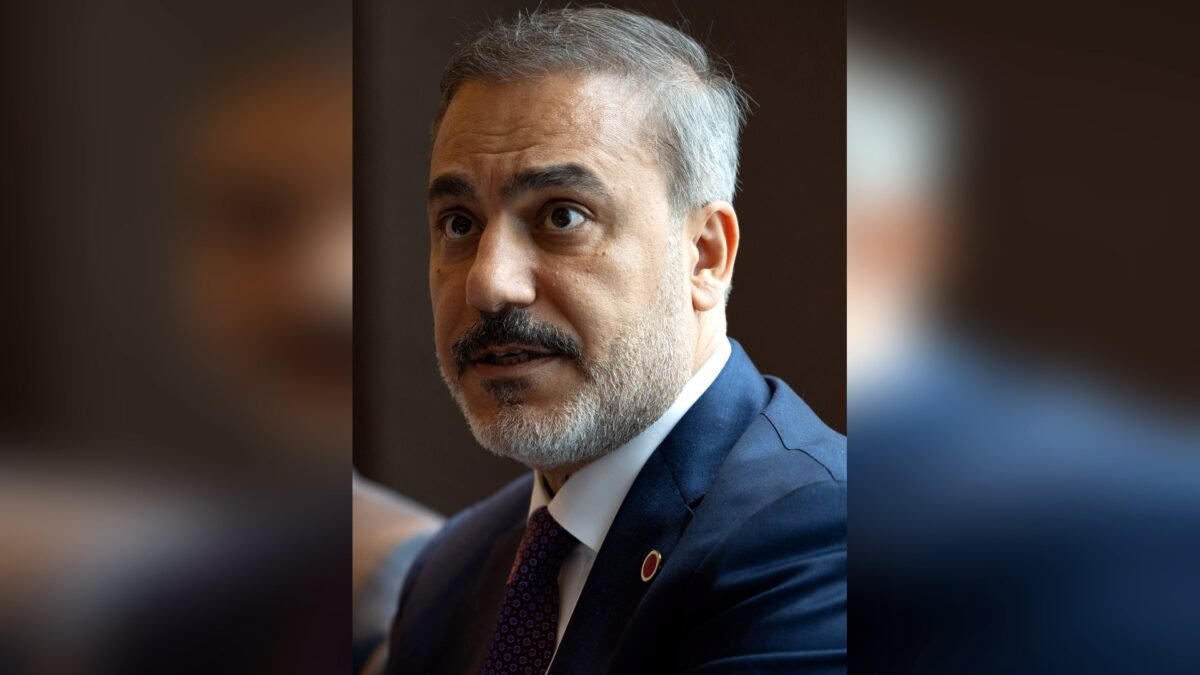
Foreign ministers from seven countries gathered in Istanbul on Friday for the first meeting between two of the Middle East’s most consequential diplomatic groupings, as Turkey pressed its argument that regional crises — from Houthi missile strikes on Saudi Arabia to the blockade of the Strait of Hormuz — can only be solved by the countries of the region themselves.
The meeting, hosted by Turkish Foreign Minister Hakan Fidan, brought together the so-called R4 — Turkey, Egypt, Pakistan and Saudi Arabia — with the European trio of Britain, France and Germany, known as the E3. It was the first time the seven countries had ever met in this combined format, and it came at Ankara’s initiative, a Turkish diplomatic source told Reuters ahead of the talks.
The agenda, according to the source, covered the Israeli-Palestinian issue, the latest situation in the Strait of Hormuz, developments related to Yemen, efforts to end the Russia-Ukraine war, and opportunities for closer cooperation between the regional and European powers.
Opening a conference on mediation in Istanbul ahead of the meetings, Fidan said diplomacy and mediation were needed more than ever in an “increasingly deteriorating environment,” telling delegates that lasting solutions could not be imposed from outside — a formulation that Turkey’s diplomats repeated throughout the day as the defining theme of the gathering, the Associated Press reported.
At a separate bilateral meeting ahead of the main session, Pakistan’s Deputy Prime Minister and Foreign Minister Ishaq Dar told Fidan that both countries were concerned about threats to regional stability and underscored “the importance of dialogue, diplomacy and coordinated efforts to promote regional peace and security,” according to Pakistan’s Foreign Office. The two men, Dawn reported, strongly condemned Houthi attacks on Saudi Arabia and reaffirmed their commitment to close coordination on regional issues, including under the Makkah Defence Agreement — the mutual defence pact signed by Turkey, Pakistan and Saudi Arabia in August.
Britain’s Foreign Secretary Ed Miliband arrived with a sharper focus. His office said the talks would revolve essentially around “the Strait of Hormuz and the situation in Saudi Arabia,” and noted that London had this week committed RAF Typhoons to help Saudi Arabia defend its airspace against Houthi attacks, GreenWatchBD reported.
The meeting unfolded against an unmistakably grim backdrop. October has seen the highest number of reported attacks on commercial shipping since March, according to the UK Maritime Trade Operations office cited by the AP, while Lloyd’s List Intelligence said Gulf operators had continued working despite 28 attacks on ships during the month — the highest number since the war began. Houthi missiles and drones have struck Saudi airports and oil facilities almost daily since their truce with Riyadh collapsed, and the United States and Israel have drawn up plans for renewed strikes on Iran after the November 3 US midterm elections, according to the New York Times.
Analysis: Why It Matters
1. A new diplomatic alphabet soup
Diplomatic formats matter less for their acronyms than for what their guest lists reveal. The R4 — Turkey, Saudi Arabia, Pakistan and Egypt — emerged in March 2026 and has focused on regional security and mediation between the United States and Iran, Dawn reported. Egypt is not a signatory of the Mecca defence pact, but its inclusion in the R4 signals that Cairo is being treated as a co-owner of the region’s security architecture. The E3 — Britain, France and Germany — emerged more than two decades ago to coordinate diplomacy over Iran’s nuclear programme, as Agence France-Presse noted. Marrying the two for the first time is Turkey’s attempt to build a single table where the countries with the ships, the money and the diplomats can talk to the countries with the history, the leverage and the guilt. It is a format designed to make one point above all: the region will no longer wait for Washington’s schedule.
2. The Hormuz file is why everyone showed up
Strip away the communiqués and the meeting is, at its core, about a single body of water. The Strait of Hormuz carries roughly a fifth of the world’s oil; Tehran has repeatedly threatened to close it, and the AP reported that the UK Maritime Trade Operations office recorded its busiest month of attacks on commercial shipping since March. The Lloyd’s List figure of 28 attacks in October is not a footnote — it is the reason the European foreign ministers got on planes. Europe buys Gulf energy, insures Gulf shipping and feels Gulf inflation, and Miliband’s framing of the talks around “the Strait of Hormuz and the situation in Saudi Arabia” is London’s way of saying it cannot outsource this to Washington forever. That Britain deployed Typhoons to Saudi airspace this week is a modest military step, but the political signal is the point: Europe is re-entering the Gulf as an actor, not an audience.
3. The Mecca pact goes public
The Istanbul meeting is also the diplomatic coming-out party of the Mecca Joint Defence Agreement. The pact, signed on August 7 by Turkey, Pakistan and Saudi Arabia, commits its signatories to treat an attack on one as an attack on all, and Turkey submitted it to its parliament for ratification earlier this week, as NEXA NEWS HD reported. Fidan told his counterparts that Turkey would reiterate its support for Saudi Arabia’s security under the agreement, according to the Turkish diplomatic source. The meeting therefore functions as the pact’s soft-power wing: parliaments ratify the legal machinery, diplomats sell the political logic. Whether the pact deters anyone — the Houthis have not paused their strikes — is a separate question, and one the meeting conspicuously did not answer.
4. Europe’s return to the Gulf table
For Britain, France and Germany, the meeting is a reminder that the E3’s original business — Iran — has become everyone’s business. Two decades ago the trio was a vehicle for managing Iran’s nuclear ambitions through negotiation; now they are being asked to help manage Iran’s war-making through a regional security forum. It is a delicate posture. Europe’s leverage over Tehran is real but second-hand: it runs through sanctions, shipping insurance, and the hope of a future nuclear deal, not through carrier groups. The RAF Typhoons committed this week are among the most visible European military moves in the Gulf in years — but they also underline the asymmetry. When the shooting starts, it will be American and regional forces that fire back. The E3 knows this, which is why its contribution at the table is mediation language: freedom of navigation, diplomatic solutions, pressure on Israel over settlements. These are not empty words, but they are not war plans either.
5. Ukraine on the menu, and why
The most unusual item on the agenda was the Russia-Ukraine war — unusual for a meeting framed around Middle Eastern crises. But Fidan’s brief was coherent: Turkey has positioned itself as the power working to stop the Ukraine war from spreading to the Black Sea, and the Turkish source said he would warn that existing disputes must not be allowed to “feed one another” or spread to new areas. The Black Sea and the Strait of Hormuz are both shipping chokepoints; both are vulnerable to the same toolkit of mines, drones and blockades. Linking them is Turkey’s way of arguing that the war system of 2026 is interconnected — and that regional powers that manage one chokepoint have something to teach about the other. It is also, quietly, Ankara reminding Europe that Turkey’s cooperation on Ukraine’s grain and shipping corridors is a strategic asset worth reciprocating.
What to Watch Next
- Any joint statement or action plan from Istanbul — the test is whether the R4+E3 format produces anything beyond a group photograph and a pledge of “coordinated efforts.”
- Egypt’s parliament vote on military support for Saudi Arabia, now delayed to October 26 — the first hard decision on whether the R4’s solidarity has teeth.
- The Turkish parliament’s foreign affairs commission debate on ratifying the Mecca defence pact, which could begin as early as this week, and the separate troop-deployment mandate expected to follow.
- Washington’s reaction to Fidan’s “regional ownership” framing — particularly whether the US sees the R4+E3 as a partner or a rival to its own mediation channels with Tehran.
- Whether Fidan’s diplomacy-first line survives contact with the post-midterm calendar, as US and Israeli strike plans for Iran reportedly mature after November 3.
Sources
- Reuters: Turkey to host regional and European foreign ministers for talks on regional conflicts, source says
- Dawn: DPM Dar meets Turkish FM ahead of R-4 bloc, European diplomats’ meetings
- The Media Line: Muslim, European Powers To Meet in Istanbul for First R4+R3 Joint Talks
- GreenWatchBD: European, Mideast foreign ministers to discuss Mideast crises

About the Author — Abdul Mannan
Related Articles
Netanyahu Orders West Bank Closure After Deadly Hebron Shooting Wounds Five
Israeli Prime Minister Benjamin Netanyahu ordered a West Bank closure after a shooting near Hebron wounded five people,…
Türkiye Submits Mecca Defence Pact With Saudi Arabia and Pakistan to Parliament for Ratification, Mulls Troop Deployment Mandate
Türkiye has submitted the trilateral Mecca Joint Defence Agreement to parliament for ratification and an AK Party lawmaker…
Iran’s IRGC Navy Claims Seven Vessels Hit in Persian Gulf, Warns US Bases Could Be Next
Iran's IRGC Navy said on Thursday its forces struck four vessels conducting what it called illegal oil transfers…