
Türkiye Ratifies Mecca Defence Pact With Saudi Arabia and Pakistan, Binding Three Nations to Mutual Defence

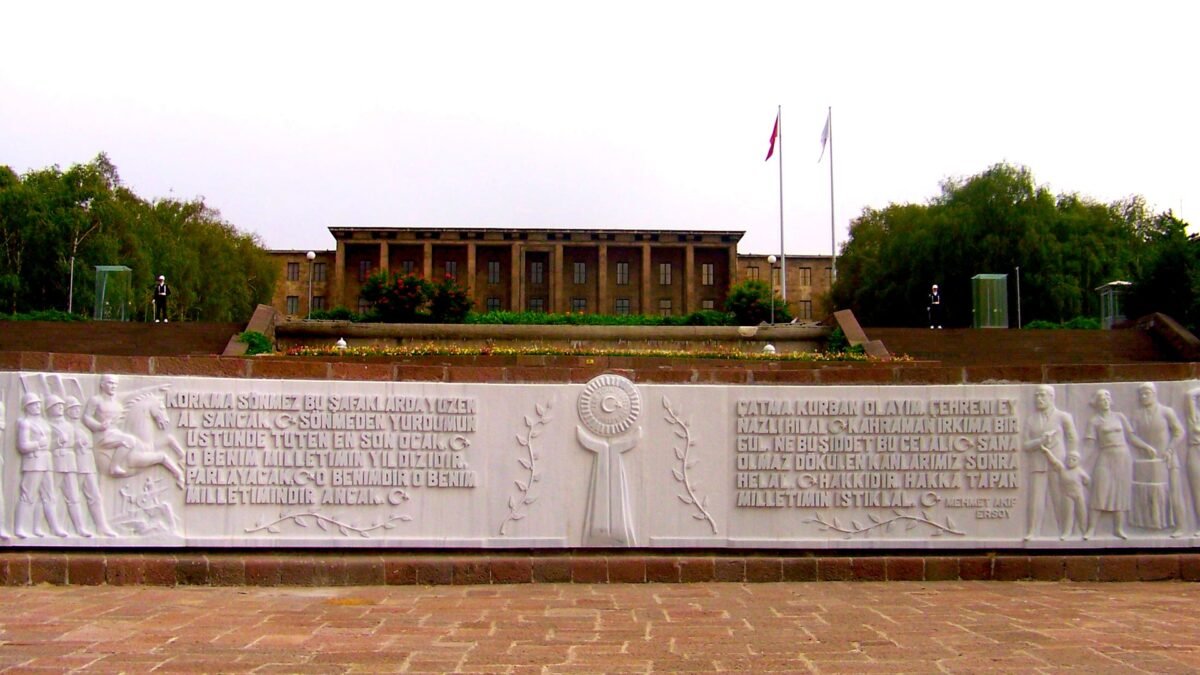
Türkiye’s parliament has ratified the Mecca Joint Defence Agreement with Saudi Arabia and Pakistan, completing the final legislative step for a trilateral pact that commits the three countries to treat an armed attack on any one of them as an attack on all three, according to reports from Ankara.
Lawmakers in the Grand National Assembly voted 279 to 119 on Thursday to approve the 16-article agreement, with 398 of the chamber’s 592 members taking part in the ballot, according to the Associated Press and Al Jazeera. The vote followed two days of heated debate in which opposition parties warned that the pact could draw Turkish soldiers into wars far from home, while the government insisted the agreement was defensive and that no Turkish troops would be sent anywhere without a separate parliamentary decision.
The agreement was signed on 7 August 2026 in the Saudi holy city of Mecca by President Recep Tayyip Erdoğan, Saudi Crown Prince Mohammed bin Salman and Pakistani Prime Minister Shehbaz Sharif. Its first article commits the signatories to use “all necessary means” to eliminate threats to one another’s territorial integrity, while its second article requires the parties to provide immediate assistance if one of them is subjected to an armed attack or military aggression by another country or group of countries, according to a copy of the document seen by the Reuters news agency and reported by Al Jazeera.
The language deliberately echoes Article 5 of the North Atlantic Treaty, the founding document of NATO, under which an attack on one member is treated as an attack on all. The parallel is impossible to ignore: Türkiye is a member of both alliances, and it possesses NATO’s second-largest military. Turkish officials have dismissed suggestions that belonging to two collective-defence arrangements could create a conflict of interest, describing such concerns as unfounded, according to Al Jazeera.
Ratification does not, by itself, send a single Turkish soldier anywhere. Under Article 92 of the Turkish Constitution, sending the armed forces abroad generally requires separate parliamentary authorisation, and the government has repeatedly stressed that any deployment under the pact would need a fresh vote. Fuat Oktay, chairman of parliament’s foreign affairs committee and a member of President Erdoğan’s ruling Justice and Development Party, told lawmakers that Türkiye would “not be drawn into an uncontrolled process against its will”, according to the Associated Press.
The bill now goes for publication in the Official Gazette, after which it enters into force and its implementation becomes the president’s responsibility, according to Turkish media reports. Pakistan and Saudi Arabia had already completed their own domestic ratification steps, a point confirmed last month by Pakistani Foreign Office spokesperson Sajjad Haider Khan, according to Dawn.
A pact signed in Mecca, sealed in Ankara
The road to Thursday’s vote began in Mecca in early August, when the three leaders put their names to the agreement at a trilateral summit. The choice of venue was itself a statement: a defence pact bearing the name of Islam’s holiest city, signed in the city itself, and framed from the start as a Muslim-majority security arrangement rather than an extension of any Western alliance.
The agreement builds on a bilateral strategic mutual defence agreement that Saudi Arabia and Pakistan signed in September 2025. That two-country deal already committed Riyadh and Islamabad to mutual defence; the Mecca agreement extends the framework to a third partner and, crucially, to the region’s most capable military power after Israel — Türkiye, whose armed forces are the second largest in NATO and whose defence industry has grown rapidly in recent years.
Ministers from the three countries have already met twice since the signing, in Istanbul and in Riyadh, and the machinery of the pact is being assembled before the ink is dry. At a meeting in Riyadh in September, the three governments agreed to implement what they described as their collective defence commitments immediately, including arrangements for the rapid deployment of agreed military forces and capabilities to Saudi Arabia, although they did not elaborate on numbers or timelines, according to the Associated Press.
High-level delegations from the three countries also held talks in Tehran last month in an effort to avert renewed fighting in the war between the United States, Israel and Iran, according to the Associated Press — a reminder that the pact’s members are not only preparing for conflict but are also trying, together, to prevent one.
The agreement’s institutional shape is already settled. Its secretariat will be based in Saudi Arabia, and retired Pakistani General Nauman Mahmood has been selected as its first secretary-general, serving a three-year term, according to the Associated Press. The pact binds its members for an initial period of ten years: no signatory may withdraw during that first decade, and after it a country seeking to leave must give the other two at least three months’ written notice through diplomatic channels, according to the Times of India.
The parliamentary process itself revealed how contested the pact remains at home. The first article of the ratifying bill was adopted on Wednesday, but Deputy Parliament Speaker Celal Adan then adjourned the session until Thursday afternoon, according to the Anadolu news agency. When lawmakers returned, they debated the remaining articles before putting the bill as a whole to an electronic vote. The ruling AK Party and its nationalist ally, the Nationalist Movement Party, backed the measure; 119 lawmakers voted against it, and 194 members did not take part in the vote at all.
Why Riyadh wanted this pact now
The timing of the ratification is inseparable from the war in Yemen and the attacks raining down on Saudi Arabia. Tensions between Saudi Arabia and Yemen’s Houthi movement had eased after a 2022 ceasefire, but the Houthis have sharply escalated their attacks on the kingdom in recent months, including a series of deadly strikes on King Khalid International Airport in Riyadh, according to Al Jazeera.
On Thursday, Saudi Arabia announced it had intercepted a drone in the region of Medina, and early on Friday Saudi air defences intercepted a Houthi drone aimed at the Mecca region and a cruise missile over the western kingdom, according to Saudi coalition statements reported by Arab media. Riyadh has accused the Houthis several times of targeting Mecca and Medina, the two holy cities of Islam — an accusation the Iran-backed group systematically rejects, according to Al Jazeera.
The escalation has a diplomatic backdrop as well. According to a report in The Wall Street Journal, Saudi Arabia recently approached the Houthis to explore a negotiated end to the war, and the group responded by demanding 51 billion dollars in compensation for years of Saudi airstrikes and a prolonged blockade, along with official recognition as Yemen’s legitimate rulers. The demand followed Houthi attacks on Saudi oil tankers in the Red Sea and the seizure of territory overlooking the strategic Bab el-Mandeb chokepoint, according to the report.
It is against this background that Riyadh has been building new security partnerships and reducing its dependence on the United States. The Mecca pact is, in the words of the Associated Press, part of Saudi Arabia’s efforts to diversify its security relationships beyond Washington — a striking development for a kingdom whose security has been underwritten by the United States for eight decades.
Türkiye’s Defence Minister, Yaşar Güler, said in October that the scope of potential Turkish support for Saudi Arabia would be determined after ratification. “We absolutely do not foresee entering into any conflict with the Houthis,” Turkish media reported him as saying. Instead, he said, Turkish support “would be to strengthen deterrence”. The distinction matters: Ankara is offering its military weight as a shield, not as a sword, and it is doing so in language designed to reassure both its own public and the Houthis’ backers in Tehran.
Turkish and Pakistani officials have stressed that the agreement does not target Iran or any other country, according to the Associated Press. That assurance sits uneasily alongside the reality that the pact was negotiated and ratified while the region remains embroiled in the war between the United States, Israel and Iran — a conflict that began with joint American-Israeli strikes on Iran on 28 February and has since spread to shipping in the Strait of Hormuz, to Gulf Arab states hosting American bases, and to Lebanon, where Israel has continued striking Hezbollah targets.
The opposition’s warning: Yemen, India and the ten-year lock
The fiercest opposition in Thursday’s debate came not from those who doubted the pact’s military logic, but from those who feared its open-ended obligations. Murat Emir, deputy leader of the opposition New Party’s lawmakers, told parliament: “They brought this agreement to send Turkish soldiers to the deserts of Yemen,” according to the Associated Press. The loss of Ottoman soldiers in early twentieth-century conflicts in Yemen looms large in Turkish cultural memory, and Emir’s warning was aimed squarely at that historical nerve.
Gülistan Kılıç Koçyiğit, deputy group leader of the pro-Kurdish People’s Equality and Democracy Party, argued that Turkish youth should not be sent to their deaths to serve the geopolitical interests of other countries, according to the Times of India. Lütfü Türkkan, a member of parliament from Kocaeli, warned that the agreement went beyond routine defence cooperation and could affect Türkiye’s national security, foreign policy choices and military responsibilities for a decade or more.
One question dominated the opposition’s attack: could a future war between India and Pakistan put Turkish soldiers on the battlefield? The agreement names no adversary, and its collective-defence provisions do not automatically require Türkiye to enter an India-Pakistan war. But critics asked whether the commitment to provide immediate assistance in the event of an armed attack could create irresistible political and diplomatic pressure on Ankara to help Pakistan if it became involved in an armed conflict — and whether Turkish soldiers and young people could pay the price for decisions taken by political leaders in Ankara, Islamabad and Riyadh, according to the Times of India.
Türkkan also objected to the ten-year withdrawal restriction, arguing that Türkiye could find itself bound by commitments made under circumstances that might no longer reflect its national interests. Governments change, alliances shift, and the geopolitical situation could look very different in a decade, he warned — a point that applies with equal force to all three signatories, and one that the treaty’s drafters evidently anticipated by locking the door for ten years.
Government supporters answered that the pact was defensive in nature and not directed against any particular country. AK Party lawmaker Ziya Altunyaldız said its objective was to strengthen regional security and prevent conflicts rather than escalate them, according to the Times of India. The distinction between a defensive pact and an entangling alliance is, in the end, a matter of political judgement — and on Thursday, 279 lawmakers judged it defensive, while 119 judged it a risk.
A new architecture, or a new entanglement?
The Mecca pact does not exist in isolation. It is one element of a regional security architecture being assembled at remarkable speed, and its expansion is already under discussion. Syria’s Foreign Minister, Asaad al-Shaibani, said last week at the Manama Dialogue conference in Bahrain that Damascus was evaluating whether to join the alliance, according to Al Jazeera. Syria has close relations with both Türkiye and Saudi Arabia, and joining the pact could give it more strategic leverage against Israel, which has launched strikes in Syria and occupied part of the country’s south since the rebel offensive that ousted former President Bashar al-Assad in December 2024.
A Turkish official confirmed that Syria’s possible entry was being discussed, but said the existing members were focused on efforts to “institutionalise” the agreement and that until they did, “there will be no question of any third country participation”, according to the Associated Press. The official was not authorised to discuss the issue publicly.
Syria’s interest in the pact was underlined this week in Riyadh, where President Ahmed al-Sharaa and Crown Prince Mohammed bin Salman oversaw the signing of several agreements, including a defence cooperation deal between the two countries’ defence ministries and more than 403 million dollars in Saudi loans for Syria’s energy, housing, health and infrastructure sectors, according to Al Jazeera. The agreements were signed on Wednesday, during al-Sharaa’s second visit to Riyadh in less than a month.
The Syria-Saudi defence deal came days after al-Shaibani said his government was weighing entry into the Mecca pact, and the two developments together sketch the outline of a widening Sunni-led security bloc — one anchored by Saudi money, Turkish military power and Pakistani manpower, and potentially extending to a Syria that is rebuilding its armed forces from scratch after thirteen years of civil war.
The pact also reflects how far Saudi-Turkish relations have travelled. Only a few years ago they were deeply strained, above all by the killing of Saudi journalist Jamal Khashoggi inside the Saudi consulate in Istanbul by Saudi operatives in 2018. The deal, as the Associated Press noted, showcases how close relations between the two countries have grown since then — close enough, now, for a mutual defence treaty.
For Pakistan, the pact formalises a role it has played informally for decades: the provider of trained military manpower to Gulf Arab states. The appointment of a retired Pakistani general as the pact’s first secretary-general is a recognition of that role, and it places a Pakistani officer at the centre of the new alliance’s institutions. For a country whose foreign policy has long balanced between Saudi Arabia, Türkiye, China and the United States, the pact is also a public declaration of where its closest security partnerships now lie.
Analysis: Why It Matters
1. A collective-defence clause outside the Western alliance system
The most consequential feature of the Mecca agreement is also the simplest: three major Muslim-majority states have now bound themselves to treat an attack on one as an attack on all, using language that mirrors NATO’s Article 5, without any Western member at the table. This is not the first mutual defence arrangement in the region — the Gulf Cooperation Council has a collective defence clause, and the Arab League’s Joint Defence Treaty dates to 1950 — but it is the first to combine Saudi Arabia’s wealth, Türkiye’s military-industrial capacity and Pakistan’s manpower in a single, binding, ten-year commitment. The message to Washington is unmistakable: the region’s largest powers are no longer content to rely on a single security guarantor, and they are building an alternative, even if that alternative is not yet capable of replacing the American umbrella. The message to Tehran is more ambiguous, and deliberately so: the pact is not aimed at Iran, its members insist, but its existence changes Iran’s calculations about the cost of striking any of the three.
2. Türkiye’s balancing act just became harder, not easier
Ankara now sits at the intersection of two collective-defence commitments that could, in a crisis, pull in opposite directions. As a NATO member, Türkiye is bound by Article 5 to treat an attack on an ally as an attack on itself; as a Mecca pact member, it is bound by an almost identical clause to three non-NATO states. Turkish officials dismiss the tension as unfounded, and in most imaginable crises the two commitments would point the same way. But imagine a scenario in which a Mecca pact partner is attacked by a state with which NATO has no quarrel, or in which a NATO operation conflicts with the interests of Riyadh or Islamabad. The pact does not resolve those tensions; it creates them. The ten-year lock-in makes the commitment harder to escape precisely when flexibility might be most valuable. What Türkiye has gained is influence over Gulf security and a formal role in a new regional order. What it has given up is a measure of the freedom to say no.
3. Deterrence against the Houthis — and a warning to everyone else
The immediate, practical purpose of the pact is deterrence against the Houthis. Saudi Arabia has spent the past year absorbing missile and drone attacks on its airports, its oil infrastructure and, most provocatively, the regions around Mecca and Medina. A bilateral Saudi-Pakistani agreement was not enough to stop those attacks; Riyadh plainly hopes that adding NATO’s second-largest military to the equation will change the Houthis’ calculus, and the calculus of their backers in Tehran. Defence Minister Güler’s careful formulation — support that strengthens deterrence, not participation in a war against the Houthis — suggests Ankara understands the danger of being dragged into Yemen’s quagmire, and is determined to keep its contribution at the level of presence, training, air defence and intelligence rather than combat troops. Whether deterrence works depends on whether the Houthis believe the threat is real, and that belief will be tested the next time a missile is launched towards a Saudi airport.
4. The opposition’s questions are the right ones, even if the answers are reassuring
It is easy to dismiss the opposition’s warnings as political theatre, but the questions Murat Emir, Gülistan Kılıç Koçyiğit and Lütfü Türkkan raised in parliament deserve to be taken seriously, because they go to the heart of what a collective-defence treaty means. A treaty that requires “immediate assistance” in the event of an armed attack creates political facts even when it does not create legal obligations: a government that has signed such a treaty and then refuses to help an ally in its hour of need pays a price in credibility that no constitutional safeguard can erase. Article 92 of the Turkish Constitution is a real protection — no troops can be deployed without a parliamentary vote — but it is a protection against formal deployment, not against the pressure to provide weapons, intelligence, airspace, logistics and money. The opposition’s India-Pakistan hypothetical may never materialise, but the logic behind it is sound: alliances are tested in crises nobody predicted, and the ten-year lock-in means Türkiye cannot quietly walk away if the world changes. The government’s reassurances are credible. They are also, by their nature, promises about the future — and the future is precisely what the opposition is worried about.
5. A bloc in the making — and the region is watching
The Mecca pact’s open door to new members is its most strategically significant feature. Syria is already knocking, and its entry would extend the alliance’s reach to Israel’s northern border and give Damascus a security guarantee it has never possessed. Other states will be watching, too: Jordan, Egypt and the Gulf monarchies have all been courted by one or another of the pact’s members, and each will now have to decide whether a new regional security architecture is something to join, to balance against, or to ignore. Israel, which has spent the past year striking targets in Syria, Lebanon and Iran, will read the pact as a constraint on its freedom of action — particularly if Syria joins. Iran will read it as a coalition assembled, at least in part, with it in mind, whatever the official denials. And the United States will read it as evidence that its partners are hedging, building insurance policies against a day when American guarantees are worth less than they once were. The pact’s first test will not be a war; it will be whether its members can turn a signed document into a functioning alliance, with shared planning, shared intelligence and shared procurement. That work begins now, in a secretariat in Riyadh led by a retired Pakistani general, and the region will be watching every step.
What to Watch Next
- Publication in the Official Gazette. The agreement enters into force once it is published in Türkiye’s Official Gazette, after which President Erdoğan is responsible for implementation. Watch for the publication date and for any accompanying presidential statement on the scope of Turkish support.
- The separate troop-deployment mandate. A ruling party lawmaker has told Reuters that Türkiye will seek a separate parliamentary mandate allowing the deployment of Turkish military personnel to Saudi Arabia under the pact. The debate over that mandate will be the real test of how far Ankara is prepared to go.
- The next Houthi attack. The pact’s deterrent value will be tested the next time Houthi missiles or drones are launched at Saudi airports or the holy cities. Watch whether the three members respond jointly, and whether Türkiye’s contribution stays at the level of deterrence or escalates.
- Syria’s decision. Foreign Minister al-Shaibani said Damascus was evaluating entry into the pact. A Syrian decision to join — and the reaction from Israel and from the pact’s existing members — would mark the alliance’s first expansion and its first direct intersection with the Israeli-Syrian front.
- The Tehran talks and the Iran war. The three countries’ delegations held talks in Tehran last month to try to avert renewed fighting in the US-Israel war on Iran. Watch whether the pact’s members act together as mediators, and whether the pact itself becomes a factor in the diplomacy around the Strait of Hormuz and Iran’s nuclear programme.
Sources
- Associated Press, via Reporter World News — “Turkey ratifies defence pact with Pakistan, Saudi Arabia amid regional tensions”
- Al Jazeera — “Turkiye’s parliament ratifies Mecca defence agreement”
- The Times of India — “Mecca pact with Pakistan creates uproar in Turkey parliament”
- Dawn — “Turkey ratifies trilateral security accord with Saudi Arabia” (via Real News Hub)
- The Pakistan Daily — “Türkiye’s Parliament Ratifies Makkah Defence Pact with Pakistan and Saudi Arabia”
- TRENDS MENA — “Turkiye ratifies Mecca defense pact amid Houthi attacks on Saudi Arabia”

About the Author — Abdul Mannan
Related Articles
Yemen Government Forces Seize Strategic Heights in Al-Jawf as Taiz Siege Deepens and UN Warns 260,000 Displaced
Yemeni government forces say they have seized strategic mountain heights in al-Jawf as the month-long siege of Taiz…
Trump Says US Will End $4 Billion in Annual Military Aid to Israel by Year’s End in Deal With Netanyahu
President Donald Trump says the United States will end nearly $4 billion in annual military aid to Israel…
Trump Says US Has ‘No Immediate Plan’ to Strike Iran as Tehran Hails Midterm Vote as a Rejection of War
President Donald Trump has said the United States has no immediate plan to strike Iran, telling the Financial…