
US Orders Non-Emergency Staff and Families Out of Saudi Arabia After Deadly Houthi Strikes on Dammam Airport and Oil Field

The United States has ordered non-emergency government employees and their families to leave Saudi Arabia, the most dramatic American response yet to a campaign of Houthi attacks on Saudi civilian infrastructure that killed three people in a single day and pushed oil prices back above $110 a barrel.
The State Department issued the ordered departure on Wednesday for its missions across the kingdom, according to Reuters, citing US officials who spoke after the Houthis struck a civilian airport in the eastern city of Dammam and a drone attack hit a Saudi oil field the same day. State Department spokesman Tommy Pigott confirmed the order in a post on X, writing that the department had ordered the departure of “non-emergency US government employees and their family members in Saudi Arabia only” amid attacks by the Iran-aligned Houthis on civilian targets.
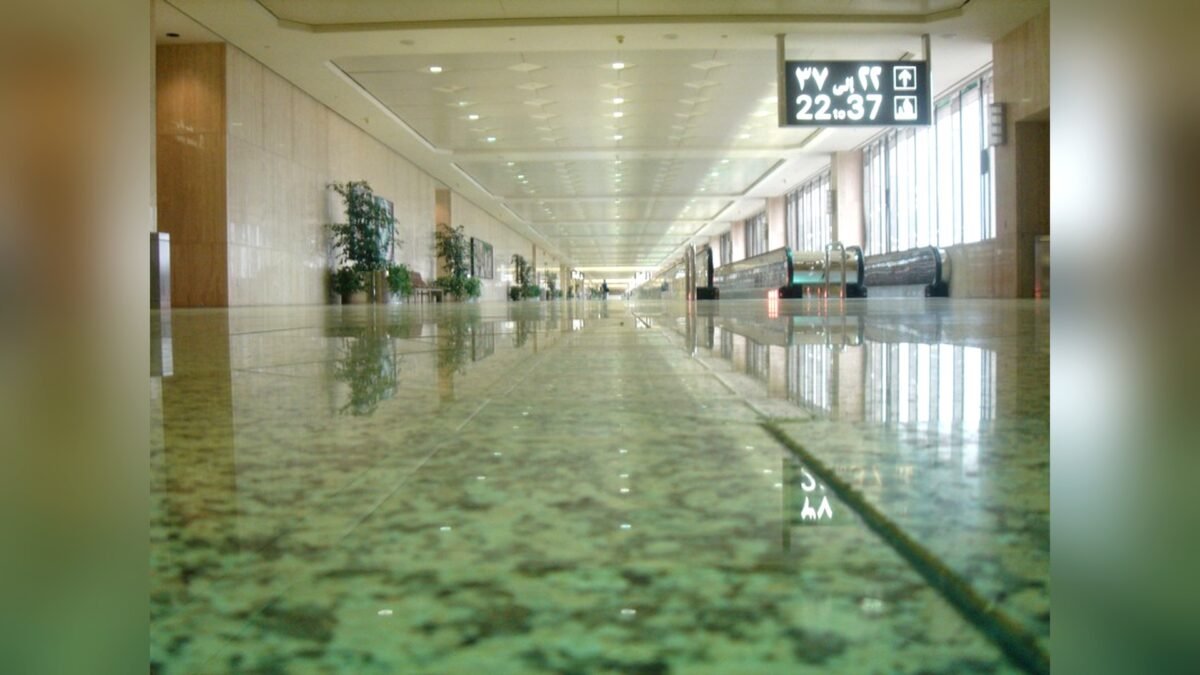
The Dammam strike hit King Fahd International Airport on Wednesday evening. Saudi Arabia’s General Authority of Civil Aviation said one resident was killed and eight others were injured, with injuries ranging from minor to critical, and confirmed damage to airport property whose full extent was still being assessed. Flight-tracking service Flightradar24 reported aircraft being diverted away from the airport in the aftermath.
Earlier the same day, two people were killed in a drone attack on the Shaybah oil field, one of Saudi Aramco’s major facilities, after Saudi air defences intercepted a drone aimed at the site, according to the kingdom’s energy ministry. The Houthis did not immediately claim responsibility for the Dammam attack, the Wall Street Journal reported.
Four US officials told Reuters the State Department also planned to withdraw family members from a number of other American missions across the region. Pigott, however, insisted publicly that the mandatory order applied to Saudi Arabia alone and did not address possible changes at missions elsewhere. Separately, a diplomatic source cited by Agence France-Presse said some embassy families were also being withdrawn from the United Arab Emirates, Jordan, Qatar and Bahrain — suggesting the precaution is wider than Washington is formally announcing.
“Increasingly Engaged in Hostilities”
Pigott’s statement laid the blame squarely on the Iran-backed movement in Yemen. “Iranian-supported Houthis have increasingly engaged in hostilities against Saudi Arabia, including attacks on civilian airports and other critical infrastructure resulting in civilian casualties and severe travel disruptions,” he wrote.
The department paired the evacuation order with a sharp security alert for American citizens in the kingdom, warning of potential attacks on airports and general travel disruption. CNN reported that US government employees in Saudi Arabia now require special authorisation from the chief of mission to use any airport in the kingdom following the recent missile and drone attacks — an extraordinary restriction for what is ordinarily a straightforward domestic journey. “This is about the Houthis,” a State Department official told CNN.
The move reverses a partial return to normality. Reuters reported that many American diplomatic personnel had been pulled out of the region earlier this year when Tehran launched attacks on US facilities after the US-Israeli war on Iran began in late February, and that Washington had returned some staff in recent months as the immediate danger appeared to recede. Wednesday’s order signals that assessment has collapsed.
A Campaign That Has Not Stopped
The Dammam attack follows the deadliest series of strikes on Saudi Arabia in a decade. Earlier this month, Houthi missile strikes hit the kingdom’s key international airport in Riyadh; the Wall Street Journal reported that in the October 10 strike at least 12 people were killed and hundreds injured. In recent weeks, according to CNN, Houthi attacks have also targeted Saudi military facilities, oil infrastructure and maritime traffic.
The war at sea is widening in parallel. Kpler data cited by Reuters showed at least 18 attacks on shipping over the past two weeks, while analysts at LSEG warned that Iran was targeting tankers well beyond the Strait of Hormuz, reaching into the Gulf of Oman — a shift that, if sustained, would jeopardise Gulf crude loadings and the ship-to-ship transfers that keep regional exports flowing.
And the geography of the conflict keeps spilling over borders in both directions. Iranian media reported explosions on Wednesday in Sirik, in southern Iran, saying the nature and origin of the blasts were unknown. The report could not be independently verified, but its timing — on the same day as the Dammam and Shaybah attacks — underlines how little of this conflict now happens out of public view and how much of it remains unexplained.
Diplomacy and the Clock
Iran’s foreign minister, Abbas Araqchi, told the Financial Times on Wednesday that Tehran was fully prepared to defend itself, while President Masoud Pezeshkian told state media the United States could not expect dialogue while it was blockading and threatening Iran. In a social media post, Araqchi offered a two-track formulation: “Iran is prepared to give diplomacy another chance if we see strong evidence of a sincere desire by US to build trust & reach a just solution. But if US chooses war over diplomacy, it’ll certainly result in an even greater strategic failure.”
The diplomatic track remains stubbornly empty. On Tuesday, Araqchi said neither Saudi Arabia nor the Houthis had answered Iran’s offer to broker talks to end the fighting — the third public Iranian mediation step to go nowhere. Egypt’s parliament has twice delayed a vote, now set for October 26, on authorising the country’s forces to support Saudi Arabia; Cairo previously told Tehran it would “not directly” interfere in the Yemeni conflict, according to Araqchi.
Meanwhile the war planners are also watching a calendar. The New York Times reported on Wednesday, via The Times, that the US and Israeli militaries are planning to resume strikes against Iran after the American midterm elections on November 3, citing US officials and others briefed on the deliberations. This week, US defence secretary Pete Hegseth met Israeli prime minister Binyamin Netanyahu in Israel to discuss the attacks, US officials told the paper. President Trump has said publicly the US will not bomb Iran before the midterms — which makes the timing of any resumption a matter of open calculation in every capital involved.
Oil Moves Again
Markets responded the way they have to every serious escalation in this crisis. Brent crude futures rose $1.29, or 1.2 per cent, to $110.11 a barrel in early Thursday trading, while US West Texas Intermediate gained 97 cents to $98.12, according to Reuters. Gulf exports of more than 24 million barrels per day — above prewar levels, according to Kpler data cited by the Wall Street Journal — are now moving through a corridor where tankers are being hit and loading terminals are under threat.
Analysis: Why It Matters
An ordered departure is a signal, not a drill
Diplomatic evacuations of this kind are among the most deliberate moves a foreign ministry can make. They are read as such everywhere: by markets, which price the risk premium within the hour; by host governments, which understand the vote of no confidence in their air defences; and by adversaries, who are meant to understand that a line is being drawn. When four US officials tell Reuters that other Gulf missions will follow, and the official statement says the order applies only to Saudi Arabia, the gap itself is the message — Washington wants to escalate the warning without declaring the region unsafe. Expect the discrepancy to be tested within days, because every other embassy in the Gulf is now making the same phone calls.
The airports are the front line
The choice of targets is the strategy. Civilian airports sit at the intersection of everything the Houthis want to disrupt: they carry passengers and cargo, they sit near industrial zones and military logistics, and hitting them forces every airline, insurer and travel ministry in the world to reprice the kingdom. The Dammam strike — near Bahrain, in the oil-producing Eastern Province, home to thousands of foreign industry workers — brings the war to the doorstep of the people who keep the oil flowing. King Fahd International was built as the gateway to the Eastern Province; its closure, even partial, is an attack on the supply chain itself. The Houthis have demonstrated they can reach deep inside Saudi Arabia, and the Oct 10 Riyadh toll showed what that reach costs.
The shadow war is expanding faster than the open one
The 18 shipping attacks in two weeks and the push beyond Hormuz into the Gulf of Oman are the quiet part of the story, and arguably the more dangerous. Pipeline and airport strikes are spectacular; tanker strikes are systemic. If loadings in the Gulf and ship-to-ship transfers become uninsurable, the effect on global supply would dwarf what a single airport closure can do. The unexplained explosions in Sirik — whether an accident, sabotage or a probe — sit in this same shadow zone: a conflict where the attribution lines are deliberately blurred while the economic effects accumulate. Watch insurance markets and tanker charter rates; they move before headlines do.
Two clocks are running on the diplomacy
Araqchi’s message is carefully balanced on a knife’s edge: Tehran is ready for diplomacy if it sees sincerity, but promises “strategic failure” if Washington chooses war. It is the standard Iranian posture, and it is aimed at two audiences — the Americans, and the region. But the real timetable is electoral. The reported US-Israeli plan to resume strikes after November 3, the Hegseth-Netanyahu meeting this week, and Trump’s own pledge of no bombing before the midterms create a defined window: Iran knows when the threat becomes actionable, Saudi Arabia knows when the deterrent might return, and the Houthis know exactly how much time they have to maximise pressure before the calculus changes. Egypt’s October 26 parliamentary vote fits neatly inside that window too — a regional decision being scheduled against an American election.
The oil arithmetic no one can escape
At $110 a barrel, the crisis is already taxing every economy that buys energy and rewarding — temporarily — those that sell it. The Washington dimension makes it more acute: high diesel and heating-oil prices are a live political issue in the United States weeks before the midterms, with the administration already spending billions on farmer fuel relief and emergency heating-oil loans. Every Houthi strike on Saudi infrastructure now lands directly in the American campaign conversation. That is a feedback loop the region has rarely seen: Gulf security decisions and Pennsylvania gas-station prices pulling on the same chain, with the midterms as the link.
What to Watch Next
- Which missions follow. Reuters’ four officials say other Gulf posts will order family departures; Pigott says the order is Saudi-only. The AFP report of withdrawals from the UAE, Jordan, Qatar and Bahrain suggests the wider move is already under way. Watch the travel advisories.
- The Houthi claim. The movement has not immediately claimed the Dammam attack. Whether — and how — it does will indicate whether the strikes are aimed at leverage, at escalation, or at demonstrating indifference to both.
- Sirik. Iran will eventually have to explain what exploded in its south. Accident, sabotage or probe: each answer points to a different war.
- Egypt’s October 26 vote. Parliament must decide whether to authorise force for Saudi Arabia under a two-thirds constitutional bar. A yes would internationalise the war; a no would confirm the limits of the coalition.
- After November 3. The reported US-Israeli strike plan, the Hegseth-Netanyahu meeting and Trump’s pledge together make the day after the midterms the most consequential date on the regional calendar. Every actor is positioning for it now.
Sources
- Reuters: Oil rises as US orders diplomats to leave Saudi Arabia amid escalating tensions
- Wall Street Journal: One Person Killed and 8 Injured in Airport Attack in Saudi Arabia
- CNN: US orders departure of some embassy staff and families from Saudi Arabia amid Houthi threat
- The Times: US withdraws diplomats from Saudi Arabia after deadly Houthi attacks
- Gulf Business: Latest Saudi airport attack kills one as US orders embassy staff to leave
- Reuters: Iran says Saudi Arabia, Houthis have not answered mediation offer

About the Author — Abdul Mannan
Related Articles
Tehran Tells Pakistan’s Army Chief No Talks With Washington Until Demands Are Met
Tehran has told Pakistan's army chief there will be no talks with Washington until its demands are met…
Iran Says Saudi Arabia and Houthis Have Not Answered Its Mediation Offer as Gulf Crisis Widens
Iran's foreign minister says Riyadh and the Houthis have not answered Tehran's offer to broker talks, as Egypt…
UK to Deploy RAF Typhoon Fighter Jets to Defend Saudi Arabia Against Houthi Attacks
Britain will fly RAF Typhoons on defensive missions over Saudi Arabia to intercept Houthi missiles and drones, Defence…